

Home to Disneyland, Anaheim is so much more than “the happiest place on earth.” With a rich historic heritage and an enticing Mediterranean climate, the city has a lot to offer to its residents. Part of the Orange County metro area, it is the 10th largest city in California. If you’re looking to live in a beautiful city nestled between Los Angeles and San Diego, then Anaheim is the place for you. If you’re planning to buy a home here — you decided it’s time to ditch living with roommates — in order to plant roots here, you should know the local housing market is very competitive in 2021.
Here are some steps you should take to find your dream home in Anaheim:
1. Determine whether you’re ready to buy a home
Taking steps towards homeownership can be a great way to build your financial standing, but you need to make sure you take this stride well-prepared. Buying a home in Anaheim means you will set roots in the city. Consider your job security, maintenance costs and your readiness to live in one place. Just from a financial standpoint, your lender will look at your income and your work history up to two years prior to the application to determine if your income is steady. You will most likely need to show proof of your pay stubs and W-2 forms.
2. Set up a budget
Preparing your budget for a home purchase means you need to plan for several types of expenses. Here are some of the most common ones:
- Down payment
A down payment typically represents 20% of your home price, which in Anaheim costs on average $583,700 (median house value with a mortgage). You could buy a home without a down payment, but that means you would have to pay private mortgage insurance, as a way to protect lenders when you start your mortgage with zero equity in your new home. You’d still have to contribute a minimum of 3% of the mortgage for a conventional loan.
- Housing expenses
A housing budget means how much you’re willing to pay for your home. You should probably decide on this before you take on a mortgage. Consider monthly payments and include borrowing costs into the equation. Try to keep your housing expenses below 30% of your income so you can still be financially comfortable.
- Moving costs
Start saving ahead of time for your move, as this type of expense can also take a toll on your budget. Moving can be even more costly if you’re moving to Anaheim from outside of town. Buy boxes and rent a truck if you intend to do the move without enlisting the help of a moving company. - Closing costs
Before moving into your new home, you also need to cover the closing costs. These are fees associated with the creation of your loan that goes to your lender. You should expect them to be about 3-6% of your home’s value, but the percentage can vary.
3. Check your credit score
Your credit score is another criterion that will decide the course of your home-buying adventure. It will help determine whether you qualify for a mortgage and also the rate you’ll pay for your home. While credit scores start at 300, with a maximum of 850, you should strive for a credit score of at least 760 if you’re looking to be a home buyer with good interest rates and mortgage conditions. The credit score necessary to buy a house depends on the type of mortgage and the type of lender. Check your score to make sure it hasn’t decreased outside of your knowledge. If that is the case, take steps to improve it so that you can get the best terms for your home purchase.
 4. Think timing
When is a good time to buy a home? A variety of personal reasons that include financial preparedness and preferences as well as the state of the market are what typically determine whether buying a home is the right decision for you. While having the right finances to start this sort of endeavor is the main factor helping you make take this step or not, there is a home-buying season when more listings are available, and that is traditionally spring. However, the pandemic has derailed the typical market dynamics, and a lot of that activity might be seen a few months later in 2021. Despite looking at market trends, think of your financial readiness and credit score as a surefire way to secure a mortgage and buy your dream home.
5. Shop the ideal mortgage for your needs
When you’re ready to buy a home, it’s time to look for getting preapproved for a mortgage. Based on your credit, assets and income, your lender will issue a letter stating the mortgage you can get approved for. There are several types of loans you can apply for.
Here are the types of loans you can get approved for:
- Conventional loans
They are sometimes called conforming loans and represent the most common type of US loans, as you can get one with a 3% down payment. Conventional loans are backed by Freddie Mac or Fannie Mae. - FHA loans
FHA loans are backed by the Federal Housing Administration, which makes them safer to lenders as the government insures them in case of delinquency. Therefore, FHA loans are less strict when it comes to credit score requirements. A down payment of 3.5% can get you an FHA loan.
- VA loans
VA loans are a type of mortgage designed for the veterans, members of the Armed Forces or even surviving spouses of the military. This type of loan requires no down payment. They are insured by the Department of Veterans Affairs.
- USDA loans
A USDA loan is another type of loan insured by the government aimed at people in rural and suburban areas who are looking to buy a home. This type of loan can be accepted with no down payment provided you meet the eligibility criteria and that your home is in an acceptable rural area.
6. Find a real estate agent
You will need a real estate agent to help facilitate the home purchase for you. The real estate agent is there to help you find the home you are looking for based on your preferences. They should also assist you in getting to showings and writing an offer. Typically, buyers work with a real estate agent for free, as the seller covers the agent’s commission (3% of the purchase price). You could buy a home without the assistance of a real estate agent, but it’s difficult to navigate the housing market if you’re a first-time buyer. Therefore, it’s recommended that you have a real estate agent to better represent your interest.
7. Pick a neighborhood
Decide which area is best for you based on your desired lifestyle and budget. Keep in mind that each neighborhood comes with its own price tag for homes. Here are some communities you can consider when house hunting:
- Anaheim Hills — $703,150
Located on the east side of the city, Anaheim Hills is a distinctive area with scenic views over the mountains and hills. This upscale neighborhood sports hilly streets – watch out, cycling enthusiasts! — and residential areas around main roads, such as those south of Highway 9 and east of Cannon St. - Anaheim Colony Historic District — $499,600
If you’re looking for an area with character, the Historic District is the place to be, as it’s the oldest neighborhood of the city. It’s located east of I-5 and north of Disneyland, if you’re looking for familiar landmarks to get you here. Famous residents from the sports world have rendered it glitzy. Both modern townhouses and mid-century homes are among the housing choices here. - West Anaheim — $539,400
With an overall family vibe, well-manicured lawns and ranch-style homes, the Northwest — located between Euclid Avenue and Beach Boulevard — paints the picture of the perfect suburb. Mid-century modern homes dominate the housing choices in this neighborhood, which come in an area with parks and a good school district. When you add to it the gorgeous Mediterranean climate of Anaheim, you have the perfect place! - Northwest Anaheim — $480,400
The Northwest Anaheim is another neighborhood that is mainly residential, perfect for families looking for a quiet area. However, grocery stores and restaurants are still accessible, as you can find them on North Euclid Avenue. It’s a highly walkable neighborhood that also sports several parks for a family outing.
8. Establish your preferences
Is there such a thing as the perfect house? Probably not, but you can still make a list of preferences.
Here are some of the things you should consider when buying a home in Anaheim:
- Price
- Home size (sq. ft.)
- Number of bedrooms
- Property condition (does it need repairs or not?)
- School district
- Proximity to public transportation
- Entertainment options
- Property value and taxes
Determining your priorities will help you see which compromises you can make when buying your home.
 9. Start browsing houses
You can view listings yourself and also have your real estate agent search the ones you’re looking for based on your list of priorities. Once you find one that matches your preferences, you can schedule a viewing. You can go the extra mile to make sure you increase your chances of finding your dream home. Drive through your target neighborhood in Anaheim and see which houses are for sale and even attend open houses. Write down specifics about each property, so you don’t forget the details. As the housing supply is low at the moment, you’re better off having a flexible schedule so you can be ready to put an offer in when a home is listed.
10. Make an offer
Now that you’ve found your dream home, it’s time to make an offer. Typically, buyers submit a letter including the price you’re willing to pay, the deadline for the seller to respond and an earnest money deposit representing 1%-2% of the purchase price. This amount will be included in your closing costs or down payment if you decide to buy the home. You could lose the deposit if you decide to withdraw your offer.
The seller can accept the offer, which means you can move on to the next step. Alternatively, they can reject it. In this case, you can submit another offer, or you can consider another house. Sellers can also give you a counteroffer of their own. This generally indicates a change of the terms of the sale, most often with a different purchase price.
If you’ve decided not to walk away from the property, allow your real estate agent to take care of the negotiations. If the seller takes on an offer, the appraisal and the inspection are the next steps in purchasing your house.
11. Proceed with the home inspection
A home inspection offers you a general overview of the property’s potential issues. During the inspection, an inspector will look at the house to make sure there are no red flags. Electrical systems, roofing, structural soundness are the main points that an inspector will look at. Go over each inspection result to determine whether the house has major issues (mold or lead paint) and ask the seller to solve the problem prior to closing. If the seller refuses to do so and you go on with the home purchase, you will be responsible for home repairs. Therefore, homebuyers include a home inspection contingency in their offer. This procedure allows them to back out of a purchase or negotiate repairs without losing their earnest deposit.
 12. Go through the home appraisal
The home appraisal is an assessment that provides the value of the home you intend to purchase. Getting an appraisal is a prerequisite for getting a mortgage loan. This step is necessary to make sure your mortgage provider doesn’t approve you for a loan larger than the value of your home. If the appraisal is lower than the offer you put in, you might encounter some issues getting your loan approved. Make sure your offer matches the home value. Including an appraisal contingency is also considered good practice for homebuyers. This document allows buyers to withdraw from a purchase while keeping their earnest deposit.
13. Don’t skip on the final walkthrough
Before closing, you should do a final walkthrough, even if you’re buying the property. This allows you to check whether the seller has made the requested repairs and that the property is vacated and that the owner removed their items. Check your home’s plumbing and electrical one more time to make sure everything is working. If the home seems in order, you can safely proceed to closing.
14. It’s closing time
Once the final walkthrough is successfully completed, you can close on your new house. The mortgage originator will issue a closing disclosure which details your closing costs and the loan specifics three days prior to the closing. Read the document carefully and check to make sure the costs included are not different from your initial loan estimate, which buyers typically receive three days after the application.
If everything is in order, you can attend the closing, where you will meet with your real estate agent, the seller, the seller’s real estate agent and the closing agent. You will sign a settlement statement that stipulates payment of the closing costs and the down payment, typically wired from the escrow account at this time. Additionally, the buyer also signs the mortgage note, through which you pledge to return the loan. Once you also sign the mortgage or deed of trust, you have fully secured the mortgage note. You become a homeowner once the closing is completed.
15. Rent a self storage unit
Whether you’re moving out of town or you’re moving into your home from another neighborhood, you should explore your Anaheim self storage options to help you get settled into your new home. Most people rent a 10×10 self storage unit, but if you’re moving from out of town, you might consider a larger unit like a 10×20 or a 10×30 that can fit the contents of your previous home. Consider using self storage even after you get settled to help reduce the clutter that naturally tends to build once you accumulate more belongings.



Moving From a House to an Apartment: What to Expect, How to Downsize & How Self Storage Helps
For some, moving from a house to an apartment is a financial decision. For others, it’s about simplifying life. Maybe the kids have moved out and half the house sits empty, or you’re approaching retirement and no longer want to spend weekends on repairs. Or perhaps you’ve been weighing the cost of buying a home and wondering whether renting simply makes more sense right now.

Family Heirlooms Overload: How to Handle Family Inheritance Without Regret
Handling family heirlooms after a loss requires managing legal authority, emotional pressure and practical logistics at the same time, and the order you take them on matters more than most people expect.
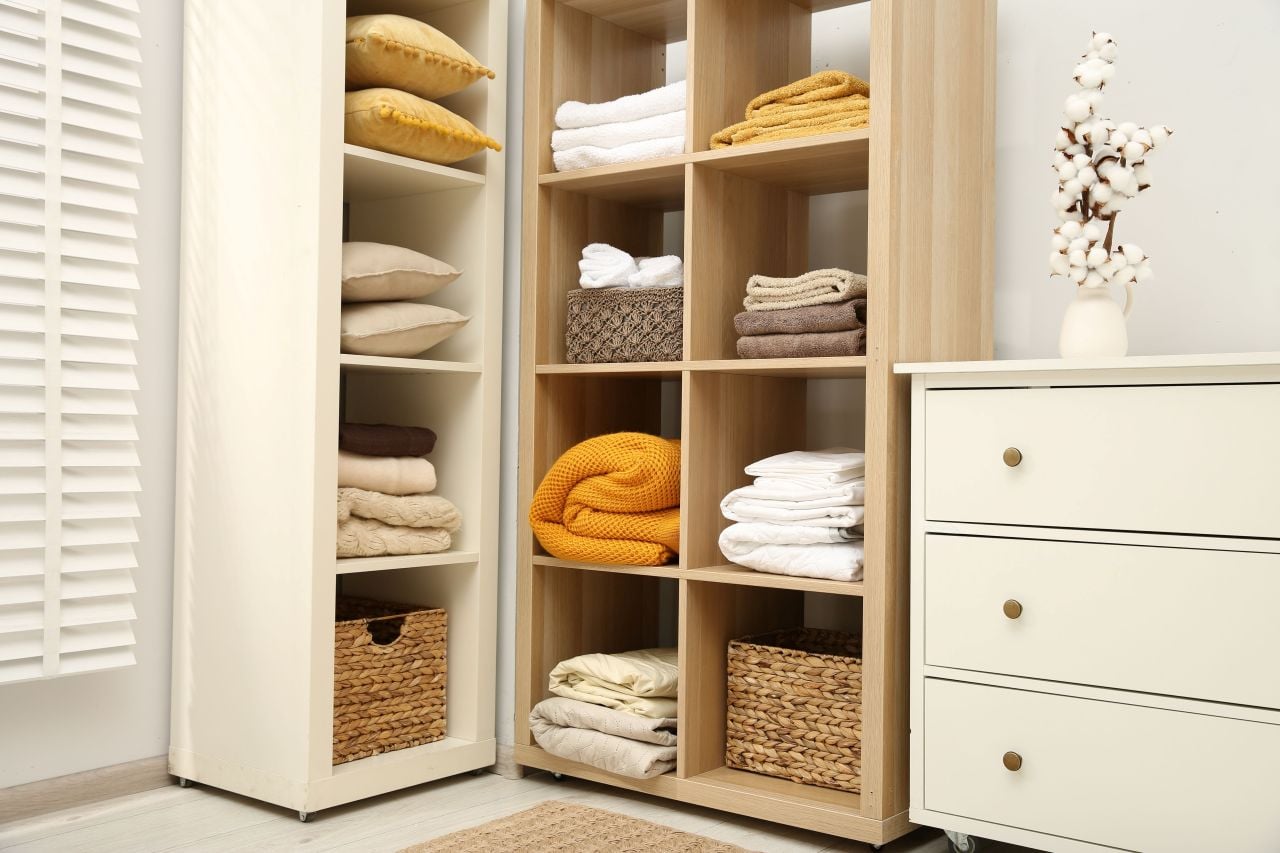
Blanket Storage: The Right Method for Every Space and Season
Blankets make our lives cozier, and storing them well is what keeps them soft and comfortable in the long run. Knowing how to store a blanket properly means your favorites come out of storage smelling fresh, feeling the same as when they went in, and lasting years longer than they otherwise would.

Board Game Storage Ideas That Keep Your Collection in Fighting Shape
Nobody warns you that getting into board games usually unlocks a second hobby, the much dreaded one that includes figuring out where on earth to put them. One game becomes a few, expansions start spawning beside their base boxes and before long, board game storage requires as much strategy as whatever is waiting on the other side of those lids.

Storage Locker vs. Storage Unit: What’s the Difference?
A locker and a unit may sound like two names for the same four walls and a lock, and depending on the storage facility, you may even see the terms used that way. However, once you start comparing available spaces, storage lockers tend to occupy the smaller end of the spectrum, while storage units(opens in new tab) give you considerably more room to work with.

Storage Ideas for Small Spaces: 9 Ways to Max Out Your Home
A messy home contains the seeds of its organization. Those seeds are everywhere: the space above doors, under beds, behind sofas and inside furniture can all become storage. Here are the best storage ideas for small spaces, so you can make the most of your cozy home.

Best U.S. Cities to Live Uncluttered: Plano, TX, Offers the Most Room to Breathe
Clutter is in our homes as much as in our heads. Both are shaped by where we live.
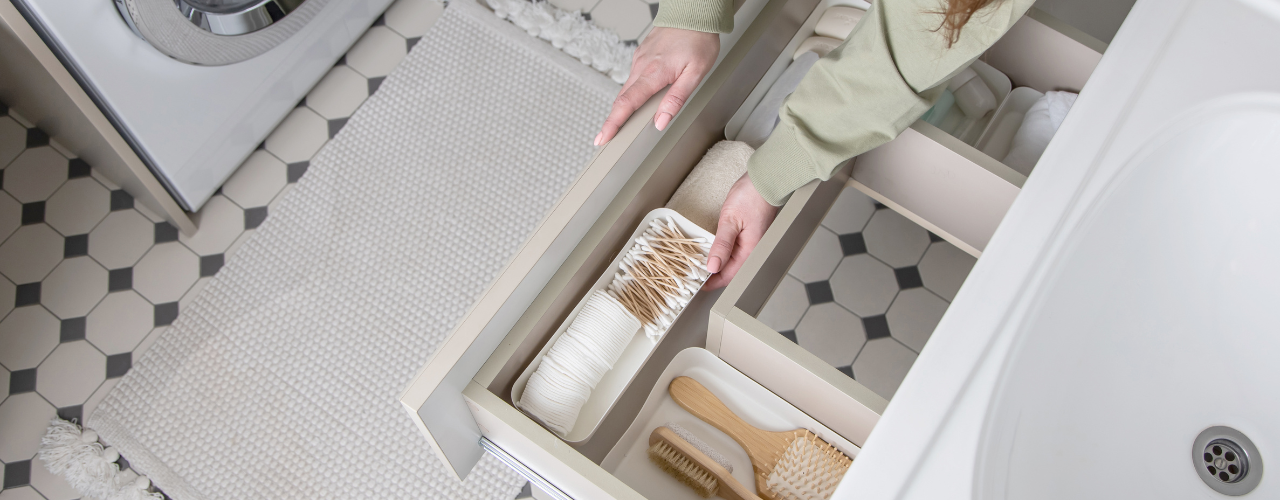
How to Organize Your Bathroom: 8 Ways to Stay Tidy
You already know why an organized bathroom is worth the effort, but let us remind you: it makes rushed mornings easier, keeps counters cleaner and just helps get you in the mood to go through your skincare routine like you should. Plus, in bigger households, it helps everyone find what they need. And you know how much a tidy bathroom counts for your self-esteem when a guest or a partner shows up. Luckily, you don’t need a degree to know how to organize your bathroom. The secret is keeping less, giving every item a home and making that home simple to use. Let’s go through some practical steps can help you create a bathroom that stays functional and nice to look at.

How to Use Silica Gel Packets for Storage
Moisture can cause significant damage to items in storage, leading to rust on tools, mold on clothing and warping in documents. Silica gel uses science to fix that. Often found in small packets inside product packaging, silica gel is a desiccant that absorbs moisture from the air, keeping your stored items dry and protected. This guide explains what silica gel is, how it works and how you can use it to preserve your belongings in self storage.