

Pantries have a way of becoming chaotic – it might be that we tend to cram in there all of the things we don’t want to see around the kitchen, or we bulk buy all sorts of ingredients than promptly forget about them. So, if your pantry is overflowing with half-empty cereal boxes, dusty cans of soup, and mystery bags of flour, you’re certainly not alone.
The good news? Pantry organization doesn’t have to be overwhelming or expensive. With a few clever pantry organization ideas and a little strategy, you can create a space that not only looks great but actually makes your kitchen run more smoothly. Here’s how to organize your pantry, whether you have a walk-in pantry or a single cabinet.
How to organize your pantry step by step
Shopping for organizing items for the kitchen pantry can be fun, but, before you buy a single basket or jar, start with a clean slate. A well-organized pantry is less about pretty containers and more about systems that actually make sense for your household.
Step 1: Empty everything out
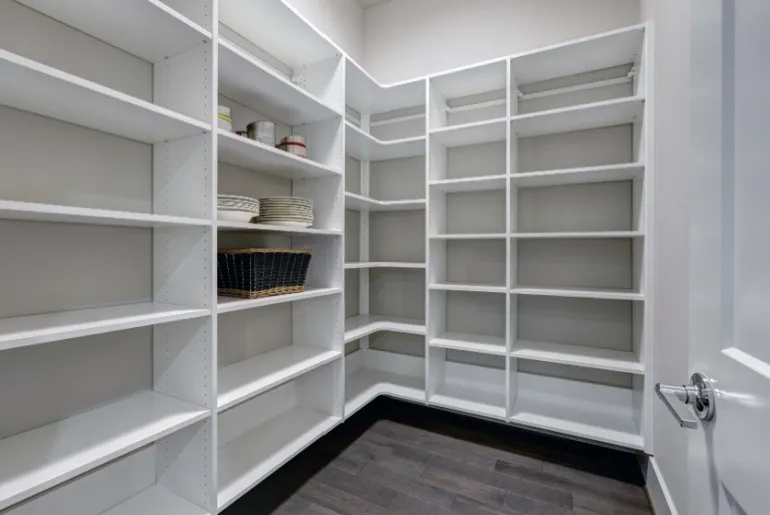
Yes, everything. Take every item off the shelves, clear your counters, and get a good look at what’s been hiding in the back. This part always feels a bit chaotic, but it’s necessary. You’ll probably discover expired spices, old open bags of rice or a can of pumpkin from Thanksgiving five years ago. Discard everything that’s expired or has been opened for a long time.
As you empty things out, wipe down your shelves. Dust, crumbs, and sticky spots tend to build up over time, especially around oils or syrups.
Step 2: Sort and categorize
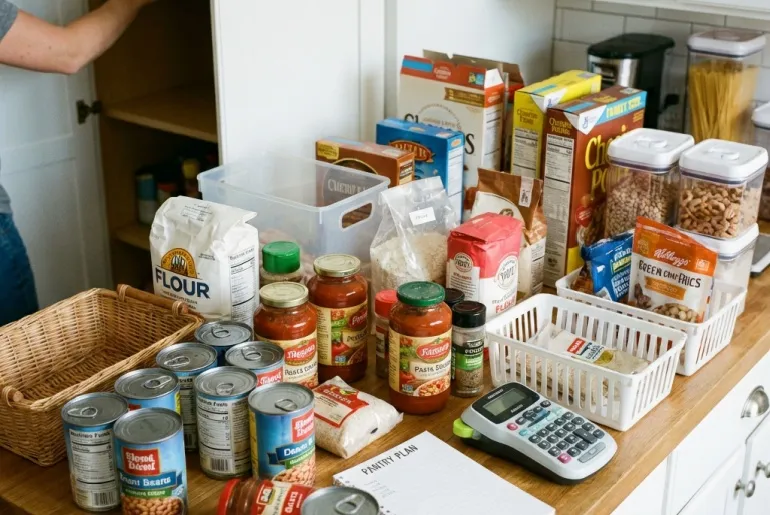
Group items by category: canned goods, baking supplies, snacks, breakfast items, grains, pasta, sauces, and so on. Seeing your food grouped together will reveal a lot about your shopping habits. Maybe you keep buying black beans because you can’t see the six cans you already have.
This is also the perfect time to pare down. If you know you’ll never use something, donate it to a local food pantry (as long as it’s unopened and within date). A good rule of thumb: if it’s been sitting untouched for more than a year, it’s probably time to let it go.
To avoid future food waste, it’s a good idea to set up a small “use first” bin for anything nearing its best-by date.
Step 3: Contain and label
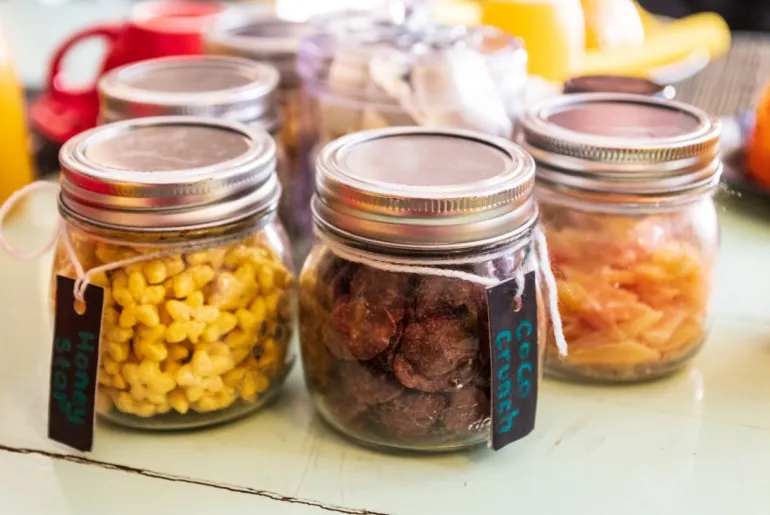
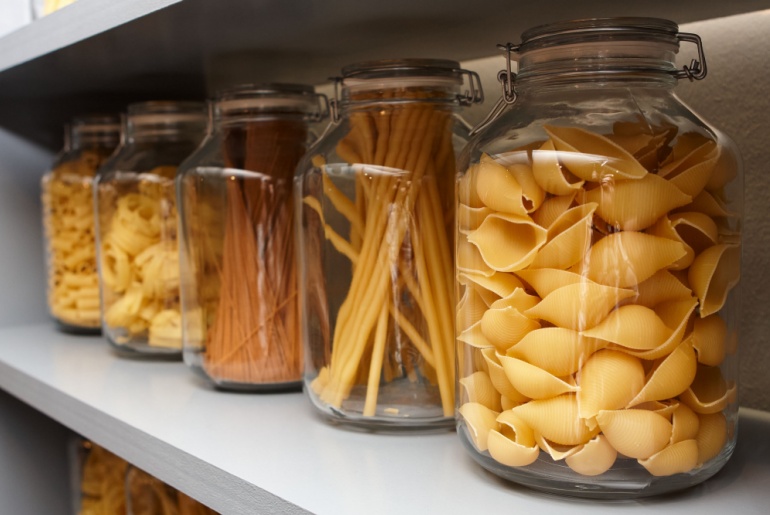
Clear containers or bins are your best friends when it comes to pantry organization, as they make it easy to see what you have and when you’re running low. They’re definitely better than the original bags in which many cooking staples come and that tear and rip easily. Nobody wants sugar and lentils on the floor, so make sure your dry goods are in sturdy, safe, transparent containers.
If you don’t own any, now’s the time to go online and order some. However, you don’t necessarily need to buy fancy matching sets (though if you enjoy that aesthetic, go for it). For example, old jars make for perfect kitchen pantry storage.
Make sure you label each container, and it’s not enough to write “flour” or “rice” on the label – you should also add the date when you filled the container. Get yourself some self-adhesive removable labels to make things easier.
Step 4: Create zones
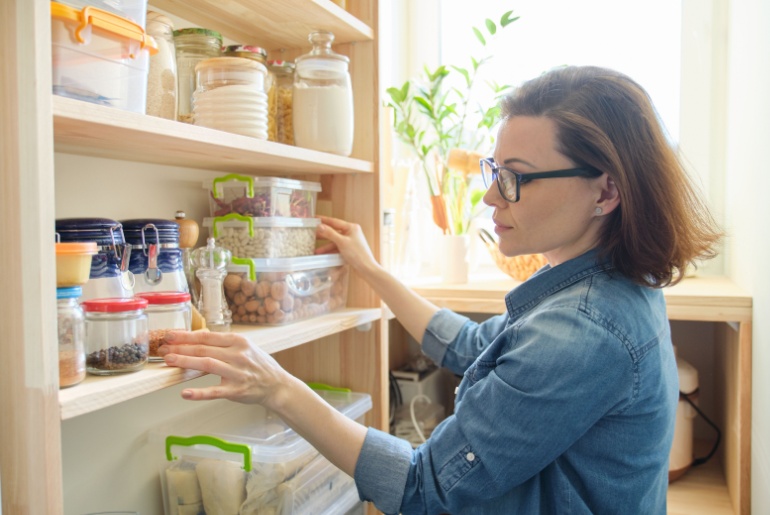
Think of your pantry in zones. Everyday items, like breakfast foods, snacks and dinner staples should go on shelves at eye level. Reserve higher or lower shelves for things you use less often, like bulk goods or seasonal baking supplies.
If you have kids, dedicate a lower “snack zone” they can reach on their own. It’s a small shift that makes mornings and after-school chaos easier to manage.
Step 5: Maintain regularly
Organization isn’t a one-time project; it’s a habit. Do a quick tidy-up every week to maintain the progress you achieved. Toss empty boxes, straighten bins, and wipe down any spills. A little upkeep keeps things from slipping back into disorder.
Simple pantry organization ideas that actually work
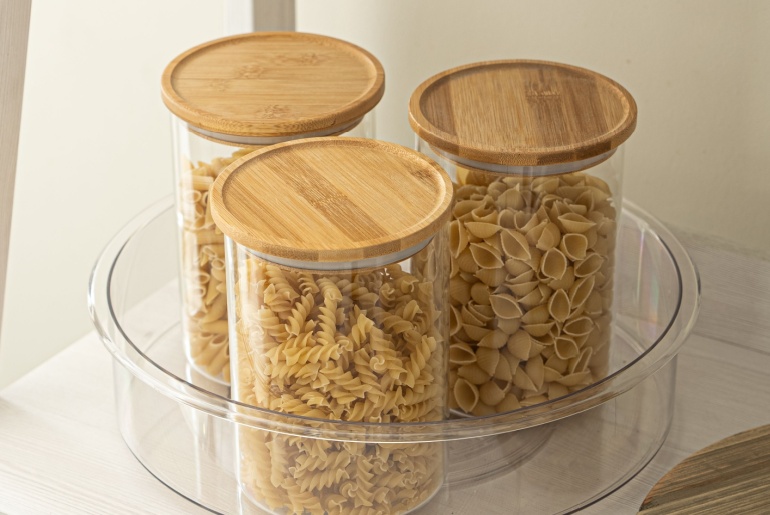
There’s no shortage of pantry organization ideas online, but the best ones are simple, realistic, affordable and adaptable. Here are a few suggestions for items that will improve pantry organization majorly without costing too much:
- Lazy Susans are great for oils, vinegars, or sauces that otherwise get lost in deep corners.
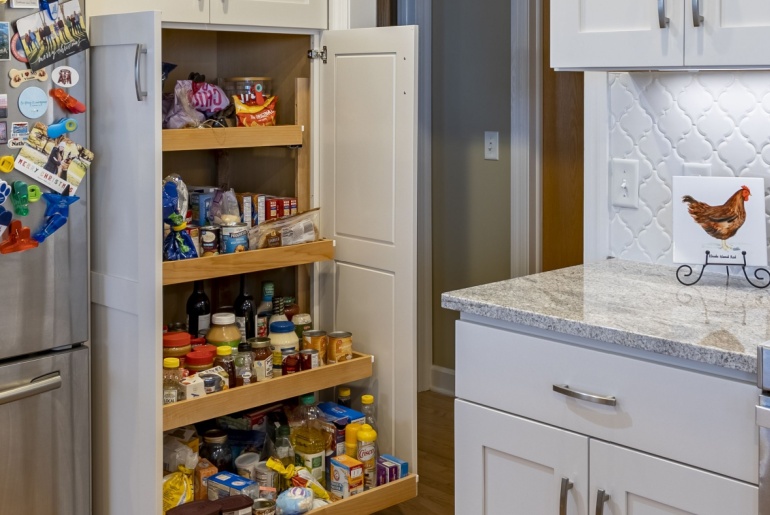
- Pull-out drawers help you see everything without playing pantry Jenga.
- Over-the-door racks are perfect for spices or snacks.
- Clear bins keep everything visible so you don’t end up buying duplicates.
- A pegboard fitted with S-shaped hooks is great for hanging cutting boards, wooden spoons, whisks, strainers, ladles, and even pots and pans. Basically, you can put all the things that can be hanged here, freeing up space on your shelves and also making it easier for you to pick up your utensils while cooking.
- A lid holder keeps pots and pans lids neat and organized. You can get one that’s wall-mounted, or one that simply sits on the shelf.
- A can rack organizer prevents your cans from crashing down from the shelves when you try to extract one. Also, it allows you to check your canned food supply easily and plan your meals and shopping trips based on that.
You can always layer in more aesthetic touches later — like matching baskets or glass containers — but start with function first. The goal isn’t to make your pantry look like a magazine spread; it’s to make it easier to cook, eat, and shop efficiently.
Pantry shelving ideas that make the most of the existing space
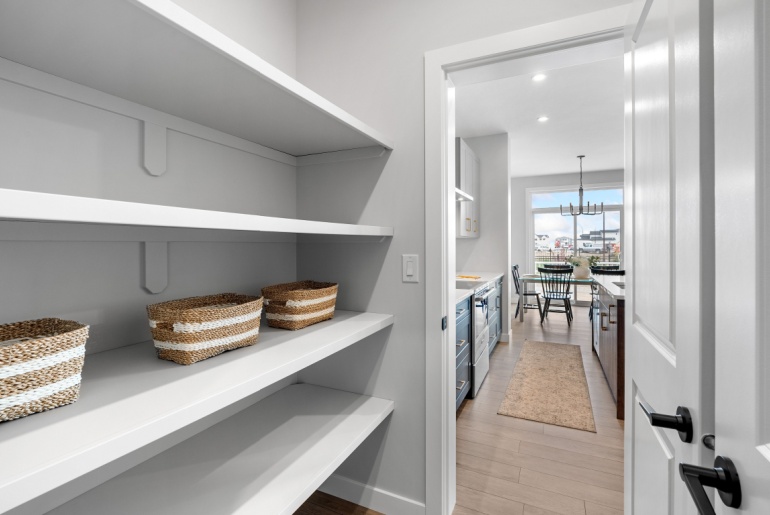
Shelving is what makes or breaks a pantry. If you’re designing your pantry from scratch, it’s smart to consider the depth of the shelves as well. You might think that deep shelves are better as they provide more storage space, but, in fact, shelves that are too deep invite clutter; you end up with forgotten items shoved in the back. Twelve to sixteen inches deep is usually the sweet spot for visibility and reach.
- Adjustable shelves are ideal because they evolve with your needs. You can make space for that tall pasta container if needs be or you can add a new shelf for baking supplies down the road.
- Open shelving is usually the go-to-option for pantries, as they’re both practical and inexpensive.
- Closed cabinets are an excellent option as well as they hide the visual clutter and keep the containers, surfaces, and the cooking gear from getting all dusty.
- If you rent or don’t want to commit to a big overhaul, try adding freestanding shelves or rolling carts. They can fit into awkward spaces and give you that extra bit of storage you’ve been craving.
Small pantry ideas: How to make it functional when space is a challenge
A small pantry can feel like it’s working against you. They’re generally either too shallow, or, on the contrary, very deep but narrow. However, with the right approach, even the tiniest pantry can function like a well-designed storage hub.
The first step is accepting that visibility matters more than capacity in a small space. When items disappear behind each other, the pantry stops working. That’s why shallow pantries often perform better when treated like display shelves. Instead of crowding them, think about how to keep everything in full view:
- Use full-width tiered shelves so cans and jars line up neatly and nothing gets hidden.
- Add vertical file-style holders for tortilla bags, baking mixes, and other packets that usually get lost in a pile.
- Keep a small “landing zone” at the very front for everyday items so they never drift out of reach.
Deep, narrow pantries need a different kind of strategy. Their biggest flaw is that the front becomes prime real estate while the back turns into long-term storage you forget exists. Here, movement is your best friend.
- Add slide-out wire baskets on the lower shelves to eliminate the usual “reach and rummage” struggle.
- Use the middle shelves for items you reach for often, stored in shallow bins or trays you can pull forward in one motion.
- Turn the top shelf into real working storage with large gravity-fed containers for flour, cereal, rice, or oats. They can stay up high, but you only need to dispense from the spout, not lift the whole container down.
If your small pantry lacks a door, aesthetics becomes part of the function. A row of matching jars or containers on the most visible shelf immediately makes the space feel calmer and more organized, even if the upper shelves are storing less camera-ready items in opaque bins. It’s a simple shift, but it changes how the whole pantry reads in the room.
No pantry? Here’s how to make room for one
If your home doesn’t come with a pantry, you just need to think creatively about where one could live. In many apartments and older homes, a pantry isn’t a built-in feature, but a space you carve out intentionally from what you already have.
Often the easiest place to start is inside the kitchen itself. A single cabinet can become a surprisingly efficient mini-pantry when you rethink its layout. Tall shelves become more usable with tiered risers, and under-shelf baskets create instant space for smaller items that would otherwise float around. Clear stackable bins turn the cabinet into organized “zones,” making it feel more like a true pantry than a catch-all.
If cabinet space is tight, look just outside the kitchen. A hallway closet can be transformed into a pantry with a few narrow shelves or wall-mounted racks, especially in older homes where kitchen storage is notoriously limited. Even a small stretch of wall can work: a set of slim shelves or a shallow cabinet can hold more pantry staples than you’d think, all without taking up much floor space.
And, in even tighter layouts, like small apartments, a rolling cart can function as a mobile pantry that tucks beside the fridge or slides into a corner when you’re not cooking.
Your pantry overflows despite all the organizing? Here’s the case for self storage
Sometimes, no amount of clever shelving, baskets, or rearranging can solve the real problem — your home is pulling double-duty for too many items. This is where self storage becomes a surprisingly practical tool.
While you shouldn’t store food in a storage unit, you can store the bulky, once-a-year kitchen gear that takes up precious room at home. That giant roasting pan, the pressure cooker that comes out seldomly, the punch bowl that you use only when entertaining, or your specialty baking molds — all of these can live off-site without affecting your daily routines. Suddenly, the shelves in your pantry (or the cabinet you’re turning into one) open up for the items you actually reach for every day.
Self storage also comes in handy when there’s no pantry to speak of. Carving out space for a pantry might mean shifting other household items out of closets or cabinets. Storing rarely used items like camping gear, off-season décor, luggage and hobby supplies can free up the square footage you need to create a functional pantry area inside your home.
Self storage is especially useful if:
- You live in a home with limited built-in storage and need to reassign space for a pantry.
- You have large appliances or kitchen tools that only get used once or twice a year.
- You run a home-based business that requires equipment or packaging supplies, and you want to keep your kitchen for actual cooking.
The key is to treat your storage unit as organized auxiliary space, not a catch-all. Use shelving so items stay accessible, store things in labeled bins, and keep pathways clear so it’s easy to grab what you need when you need it.
Rent the self storage unit in a facility located as close as possible to your home to make things easy. Prices for a self storage unit vary a lot depending on where you live, but generally speaking, renting self storage space is far more affordable than getting a larger home or apartment.
Below, you can check out self storage prices and availability in the country’s major cities:
Self Storage Costs and Availability in the Country’s Largest 150 Cities
StorageCafe analysis of data from Yardi Matrix. (Data as of Jul. 2026 | Pub: Aug. 2026).Pantry organization shouldn’t be about pretty shelves or matching jars but about creating a space that makes everyday life easier. When you can see what you have and find what you need, cooking becomes less stressful and more enjoyable.



Living Room Storage Ideas: 28 Ways to Reclaim Your Hosting Space
If a living room is where most of a household’s living happens, good storage should be the top priority for setting up or revamping the place. After all, think of how easier it would be to have people over when tidying up the place is just a matter of putting things in their right place (in a time when fewer and fewer people are entertaining friends at home(opens in new tab)). The trick is making room for all those wayward clothes, blankets, chargers and other small things that end up on (or, inexplicably, in) the sofa. Here are 28 living room storage ideas to get you started and make tidying up a quick affair.
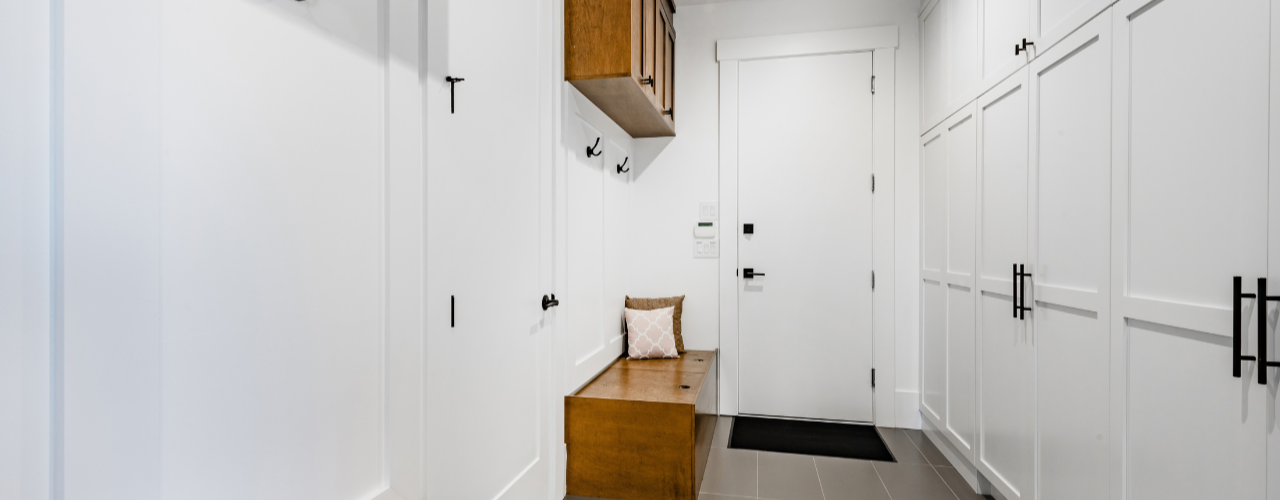
25 Mudroom Storage Ideas (And Mistakes to Avoid)
When you come home with muddy boots, an armful of bags and a coat you can’t wait to take off, it’s nice to have somewhere to put it all. With a mudroom, you can leave the outdoor mess at the door instead of carrying it through the house. Traditionally, you’d set aside a separate room, but you can just as easily use a hallway, an entryway closet, a laundry-room corner or a stretch of wall near the entrance.
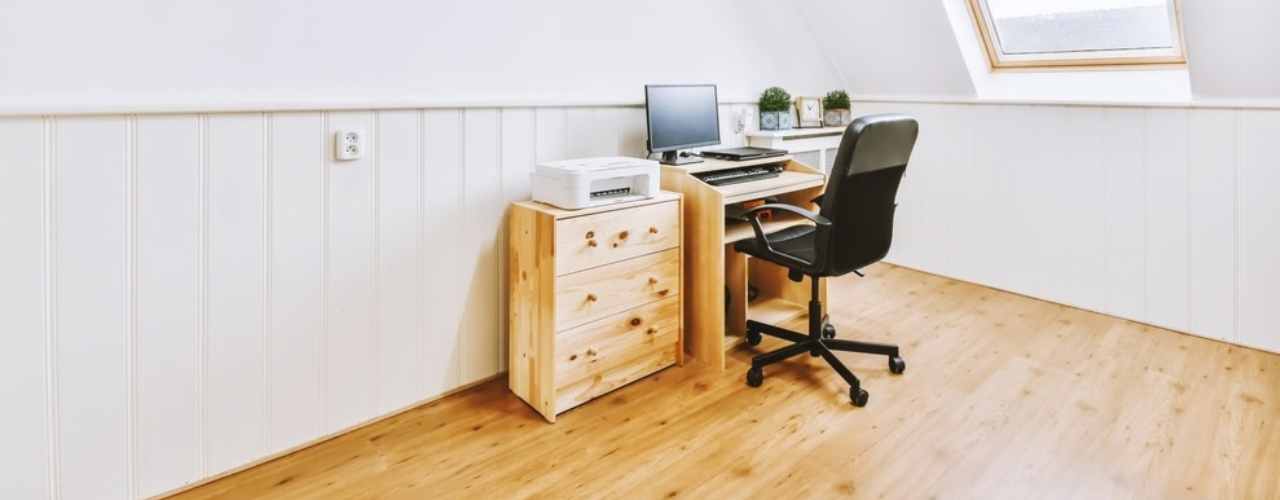
Is Your Home Office Worth the Rent? What Coworking and Self Storage Could Save You
Every square foot of your apartment comes with a price tag, and a home office claims more of them than most renters expect. It starts with a desk. Then come the second monitor, the printer, the filing cabinet and the overflow boxes. Before long, the corner you set aside for work has turned into a small room you are paying for every month.

Best U.S. Cities to Live Uncluttered: Plano, TX, Offers the Most Room to Breathe
Clutter is in our homes as much as in our heads. Both are shaped by where we live.

America’s Top Snowbird Destinations for 2026–2027: Florida Leads in Numbers, Texas Wins on Value
For Americans living in colder states, the approach of winter is reason enough to start looking south. Cold weather carries costs that go beyond the heating bill and shoveling snow. Seasonal affective disorder(opens in new tab) is far more prevalent in northern states, so a temporary move south isn’t simply an escape from the cold, but a chance to spend the hardest stretch of winter outdoors and in the sun.

How Much Does Halloween Really Cost in 2026? Plan Wisely to Avoid the Scare of Hidden Costs
Americans’ love for Halloween is almost frightening — this year alone, we are on our way to spending $13.5 billion, according to data from the National Retail Federation(opens in new tab). That breaks down to about $115 Halloween costs per person, a whopping 49% more than 10 years ago.
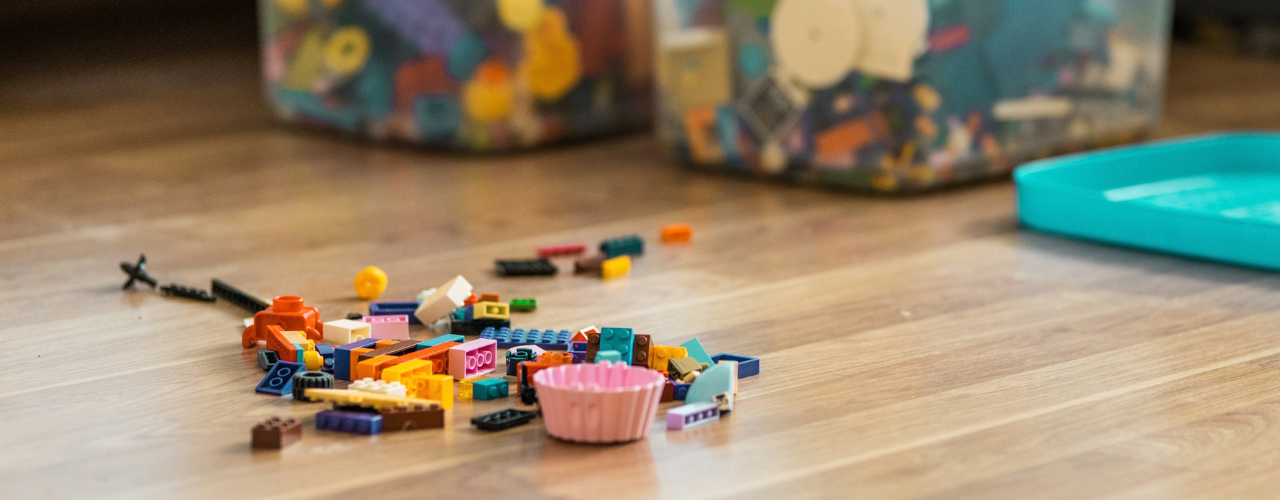
How to Store LEGOs: All the Fun, None of the Clutter
How to store LEGOs largely comes down to how your household uses them. If the bricks are part of everyday play, you need a setup that keeps them within easy reach and makes cleanup quick (for your feet’s sake, at least). Toy storage(opens in new tab) such as simple bins, playmats or containers that children can put away themselves may be enough. Larger or more serious collections usually need more organization, such as labelled drawers for loose pieces, trays for unfinished builds, shelves for completed models and separate storage for retired sets.

Cardboard Costume Guide: Tips and Ideas for a DIY Halloween
Whether for kids or adults, cardboard costume ideas often make the biggest splash once materialized, and that’s for a simple reason: doing a lot with a little is a universally impressive feat (especially in this economy). If you don’t have enough boxes you could temporarily repurpose, don’t worry! There are many places where you can find free moving boxes(opens in new tab), from stores and supermarkets to online groups and recycling drop-off spots. On the run? Try your luck at a self storage(opens in new tab) facility that sells moving supplies, often for cheap. This way, you can choose moving boxes of different shapes and sizes(opens in new tab), so you can make your costumes as complex as you want.

How to Celebrate Halloween: 9 Non-Spooky Ways To Enjoy It
As soon as October starts, it’s the official Halloween month. And while for many people it means it’s open season to get the scare of a lifetime, others, especially families with small children, might prefer to celebrate in a tamer way that’s both kid- and adult-friendly. While you’re likely to find more events where the spook factor is high, here’s how to celebrate Halloween in a not-so-scary way: