

Key Takeaways
- The best sites for comparing storage units across brands are StorageCafe, SpareFoot, Storage.com, FindStorageFast and Neighbor.
- StorageCafe is the strongest starting point, as it combines the widest coverage (32,000+ facilities) with the deepest filters and transparent price guidance.
- For non-traditional, lower-cost space, Neighbor is the peer-to-peer alternative.
If you’re looking for a storage unit, you likely want two things: to see what’s available near you and to avoid overpaying.
Instead of jumping between individual facility websites, the fastest way to compare options is by using storage unit search websites that show prices, sizes, and features side by side. With the national average storage rent sitting at $133 a month as of May 2026, knowing where to compare prices can be the difference between a fair deal and overpaying by $30 to $50 a month.
This guide breaks down the best storage unit websites in the U.S., based on coverage, pricing transparency, usability, and comparison tools – so you can quickly find the right unit at the right price.
Top 5 storage websites — best for comparing units across brands
These five platforms aggregate listings from multiple operators in one place, so you can compare prices, unit sizes, and features side by side without bouncing between facility websites.
1. StorageCafe
StorageCafe is a nationwide storage marketplace powered by Yardi, built to answer the three questions everyone starts with: What’s available near me? What kind of unit do I need? What does it cost?
It brings together one of the largest selections of storage units under one roof, with over 32,000 facilities ranging from national chains to locally owned properties. That breadth shows up right away in the results: a search by city, ZIP code, or neighborhood pulls up a clean map and list of nearby facilities — with unit sizes, prices, and key amenities all visible at once, without phone calls or tab-switching.
A few things that make it worth starting here:
- Custom location-based search. Search by city, ZIP code, or draw your own area to focus on exactly the part of town that works for you — near your commute, your new place, or a specific neighborhood.
- Price guidance. Shows what’s typical in your area, so you can quickly spot cheaper units and avoid overpaying just because a listing shows up first.
- Detailed facility pages. Unit types (standard vs. climate-controlled, drive-up vs. indoor), security features, and access hours are clearly listed, so there are fewer surprises on move-in day.
- Size guide and calculator. Translates “a one-bedroom apartment’s worth of stuff” into an actual unit size before you commit to something too small — or unnecessarily large.
Best for: Saving time and finding the best-value storage unit with smart filters that quickly narrow down options by specific needs like climate control, car storage, RV parking, 24/7 access, and drive-up access.
2. SpareFoot
SpareFoot is one of the largest storage marketplaces in the U.S., aggregating listings from both major brands and independent facilities. Enter your ZIP code and you’ll see a broad list of options that can be filtered by size, price, distance, and amenities like drive-up access or vehicle storage.
Because of its extensive inventory, results can feel more list-heavy, but that also means you’ll often see a wide mix of facility types, including smaller, locally operated properties. The platform also surfaces additional services – like truck rentals and portable storage – alongside traditional units.
A few things that stand out:
- Large inventory. Access to a wide range of facilities, including many independent operators.
- Flexible filters. Sort by price, size, distance, and key amenities.
- Online reservations. Ability to reserve units directly from the platform.
- Extra services. Includes moving-related options like truck rentals in search results.
Best for: Browsing a high volume of listings and comparing a wide mix of facility types, especially if you don’t mind spending a bit more time sorting through options.
3. Storage.com
Storage.com is another major storage marketplace, but with a slightly different feel: simple search bar, clean lists, and a strong emphasis on current promotions from facilities that list there.
Enter a city or ZIP Code, and you’ll get nearby facilities with unit sizes, prices, and specials clearly laid out so you can skim quickly.
This site shines if you:
- Like a straightforward list view where prices, sizes, and discounts are easy to scan without a lot of extra clutter.
- Want to spot local deals or move‑in specials that might tip the balance between two similar facilities.
- Already checked one marketplace and just want a second opinion on what’s available and how the promos compare.
For many people, Storage.com is the quick double‑check before they lock in a reservation somewhere else.
4. FindStorageFast
FindStorageFast is designed to give you a fast snapshot of storage prices in your area. Search by ZIP code to see nearby facilities, starting rates, and a basic map view showing where options are located.
The platform focuses on speed and simplicity, making it useful for getting a general sense of pricing before diving into more detailed comparisons elsewhere.
Reach for FindStorageFast when you:
- Care most about price and want an instant sense of what “cheap” looks like in your area.
- If you need a quick snapshot of rates before deciding whether to downsize your unit, move a bit farther out, or switch neighborhoods.
- Are a student or budget‑conscious renter who’d rather spend time packing than comparing 20 different websites.
Use it as a fast gut‑check on local prices, then click into a few facilities to dig into details like security and access hours.
5. Neighbor
Neighbor works differently from the traditional marketplaces above: it’s a peer‑to‑peer platform where people rent out spare space in their homes, garages, driveways, or extra rooms, alongside some more conventional storage options. Think of it as booking a parking space or part of a garage from a neighbor instead of a row of roll‑up doors at a big facility.
Keep in mind: Neighbor works best for items you’d be comfortable keeping in a trusted neighbor’s garage or spare room. If you’re storing very high‑value, business‑critical, or highly sensitive belongings, a traditional self storage facility with professional security and climate control is usually a safer bet.
Neighbor is worth a look if you:
- Are open to non‑traditional storage and like the idea of something very close by in a residential area.
- Are primarily focused on price and proximity and your stuff doesn’t require all the bells and whistles of a large, staffed facility.
- Need space for seasonal items, hobby gear, or a vehicle and you’re comfortable reviewing host ratings and protections before you book.
It’s not a replacement for every self storage scenario, but for the right renter and the right type of items, it can be a flexible, hyper‑local option.
Big brand websites — best for comparing locations within one company
Many large self storage companies maintain their own websites where you can search their locations, view unit availability, and sometimes complete an online rental. These aren’t comparison sites in the same way, but they are still important websites for finding and refining storage unit choices — especially once you’ve narrowed things down.
They’re most useful when:
- You’ve decided on a particular brand you like.
- You’re choosing between multiple locations owned by that same company.
- You want to confirm details such as real-time prices and availability, gate hours, insurance rules, or vehicle storage requirements.
Brand websites complement the comparison sites and can help you finalize your decision.
A quick guide to start things off
If you’re not sure where to start, here’s a simple way to begin:
- Start with StorageCafe to see what’s available near you. It gives you a broad, side-by-side view of unit sizes, prices, and features, so you can quickly understand what storage typically costs in your area and spot options that fit your needs and budget. You’ll often find direct links to facilities and contact details, making it easy to move forward without extra searching.
- Next, reach out to the facility or visit its website to confirm details and complete your booking.
- If you’re open to non-traditional storage, check Neighbor as well — you may find convenient, lower-cost space in a nearby home, garage, or driveway for items you don’t need regular access to.
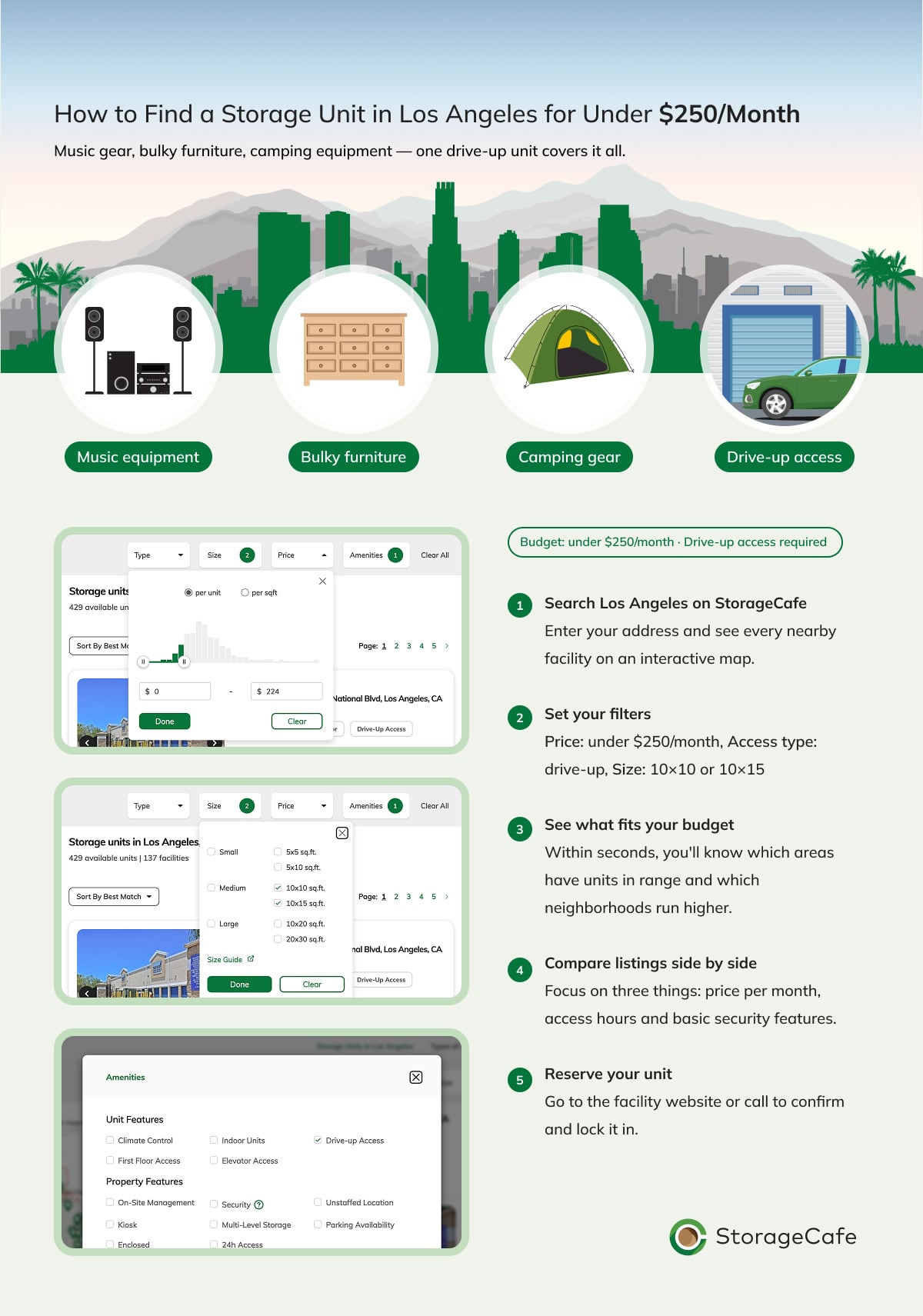
Example: How to find a cheap storage unit in Los Angeles (under $250/month)
You need a storage unit in Los Angeles for music equipment (including amps and instruments), a couple of bulky furniture pieces, plus camping gear like a tent and canoe equipment – all within a $250/month budget. Because some of these items are heavy and you’ll likely access them occasionally, drive-up access is essential.
Knowing the local baseline helps you spot a deal. The average storage rent in Los Angeles is currently around $259 a month – well above the $131 national average – so a $250 budget is realistic but tight, which makes side-by-side comparison especially worth the few extra minutes.
Start with StorageCafe and set your filters right away:
- Location: Los Angeles
- Price: under $200/month
- Access type: drive-up
- Unit size: around 10×10 or 10×15 (enough for furniture + gear)
Within seconds, you’ll see which facilities actually meet those criteria. Instead of guessing, you can quickly identify which areas – like parts of the San Fernando Valley or South LA – offer units within your budget, and which neighborhoods are priced higher.
From there, compare a few listings side by side, focusing on:
- Price per month
- Access hours
- Basic security features
Once you’ve found a unit that fits your needs and budget, use the listing to go directly to the facility’s website or contact them to confirm availability and reserve the unit.
How we chose the best storage websites
We reviewed the most widely used storage search platforms in the U.S., testing each one with real searches across multiple markets and unit types. Sites were evaluated on how easily a typical renter could compare options, understand pricing, and identify the right unit without bouncing between facility websites. The five platforms featured above stood out across the criteria below; StorageCafe ranked first for combining national coverage with the deepest filtering and the most transparent price guidance.
To identify the most useful platforms, we evaluated each site based on:
- Coverage: Number of facilities and geographic reach
- Price transparency: Ability to compare real rates and promotions
- Search experience: Filters, map tools, and ease of use
- Listing quality: Detail on unit types, amenities, and policies
- Comparison value: How easily users can evaluate multiple options
Frequently asked questions about websites for finding storage units
What is the best website for finding storage units?
The best website depends on your needs, but platforms like StorageCafe offer a strong balance of coverage, pricing transparency, and comparison tools, making them a reliable starting point.
Is it cheaper to find storage units online or go directly to a facility?
Usually, yes. Searching online gives you a real sense of the local price range before you talk to anyone, which is the biggest advantage. You’ll also spot online-only discounts and move-in specials that facilities don’t always advertise at the door. Even brand websites occasionally run promotions you’d only find if you looked.
How do I compare storage unit prices on these websites?
Start by filtering for the unit size and type you need — say, a 10×10 climate-controlled unit — then look at five to seven facilities in the same area. That sample is usually enough to see what’s typical, what’s a deal, and what’s overpriced for your market.
What should I look for besides price when I search for storage units online?
A few things matter more than people expect: whether the unit is climate-controlled, what the access hours are, what security features the facility has (cameras, gated entry, on-site staff), whether it can accommodate a vehicle if you need that, and what recent reviewers say about the day-to-day experience.
Bottom line on best websites to find storage units
No matter which website you use, always take a moment to scan reviews – both on the marketplace and on Google or the facility’s own site. Marketplace reviews show how past renters felt about booking and move-in, while Google and brand site reviews often surface patterns around cleanliness, customer service, and how the facility handles problems over time.


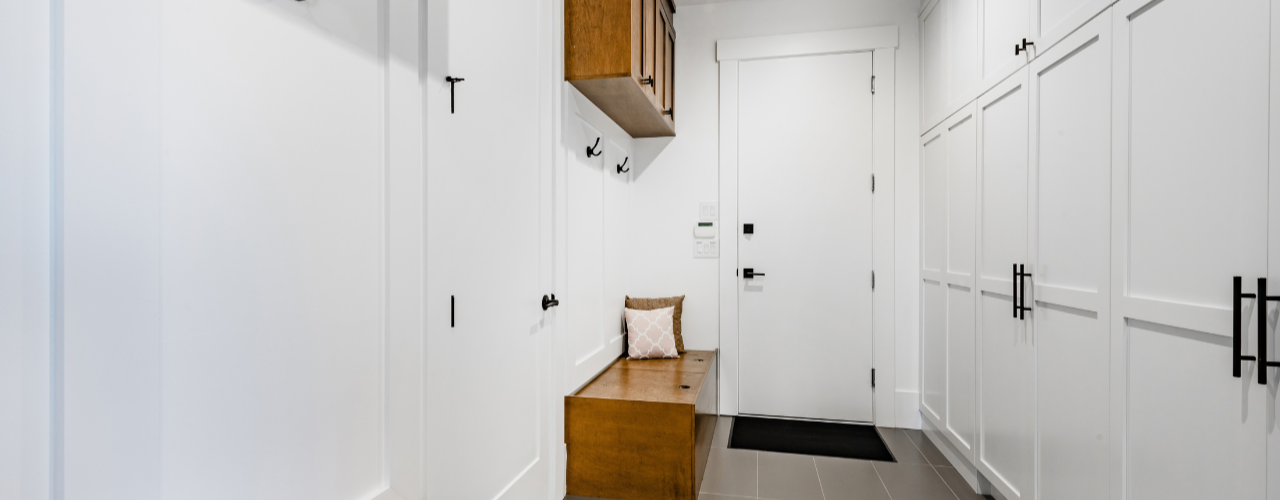
25 Mudroom Storage Ideas (And Mistakes to Avoid)
When you come home with muddy boots, an armful of bags and a coat you can’t wait to take off, it’s nice to have somewhere to put it all. With a mudroom, you can leave the outdoor mess at the door instead of carrying it through the house. Traditionally, you’d set aside a separate room, but you can just as easily use a hallway, an entryway closet, a laundry-room corner or a stretch of wall near the entrance.

Is Your Home Office Worth the Rent? What Coworking and Self Storage Could Save You
Every square foot of your apartment comes with a price tag, and a home office claims more of them than most renters expect. It starts with a desk. Then come the second monitor, the printer, the filing cabinet and the overflow boxes. Before long, the corner you set aside for work has turned into a small room you are paying for every month.

America’s Top Snowbird Destinations for 2026–2027: Florida Leads in Numbers, Texas Wins on Value
For Americans living in colder states, the approach of winter is reason enough to start looking south. Cold weather carries costs that go beyond the heating bill and shoveling snow. Seasonal affective disorder(opens in new tab) is far more prevalent in northern states, so a temporary move south isn’t simply an escape from the cold, but a chance to spend the hardest stretch of winter outdoors and in the sun.

How Much Does Halloween Really Cost in 2026? Plan Wisely to Avoid the Scare of Hidden Costs
Americans’ love for Halloween is almost frightening — this year alone, we are on our way to spending $13.5 billion, according to data from the National Retail Federation(opens in new tab). That breaks down to about $115 Halloween costs per person, a whopping 49% more than 10 years ago.

How to Store LEGOs: All the Fun, None of the Clutter
How to store LEGOs largely comes down to how your household uses them. If the bricks are part of everyday play, you need a setup that keeps them within easy reach and makes cleanup quick (for your feet’s sake, at least). Toy storage(opens in new tab) such as simple bins, playmats or containers that children can put away themselves may be enough. Larger or more serious collections usually need more organization, such as labelled drawers for loose pieces, trays for unfinished builds, shelves for completed models and separate storage for retired sets.

Cardboard Costume Guide: Tips and Ideas for a DIY Halloween
Whether for kids or adults, cardboard costume ideas often make the biggest splash once materialized, and that’s for a simple reason: doing a lot with a little is a universally impressive feat (especially in this economy). If you don’t have enough boxes you could temporarily repurpose, don’t worry! There are many places where you can find free moving boxes(opens in new tab), from stores and supermarkets to online groups and recycling drop-off spots. On the run? Try your luck at a self storage(opens in new tab) facility that sells moving supplies, often for cheap. This way, you can choose moving boxes of different shapes and sizes(opens in new tab), so you can make your costumes as complex as you want.

How to Celebrate Halloween: 9 Non-Spooky Ways To Enjoy It
As soon as October starts, it’s the official Halloween month. And while for many people it means it’s open season to get the scare of a lifetime, others, especially families with small children, might prefer to celebrate in a tamer way that’s both kid- and adult-friendly. While you’re likely to find more events where the spook factor is high, here’s how to celebrate Halloween in a not-so-scary way:

Motorcycle Storage Guide: How to Store Your Bike Safely
Motorcycles may be born to be wild, but eventually even the wild ones need somewhere to park. Whether riding season is winding down or your current living situation comes with plenty of square footage for you and less for your bike, motorcycle storage is one of those parts of ownership that doesn’t get as much airtime as the open road.

Halloween Decorating on a Budget (And Cheap Ideas for Everything Elsee)
Halloween has crept a long way from its eerie origins. While All Hallows’ Eve has transformed through the centuries, it wasn’t until the 1930s that trick-or-treating became a tradition in the U.S. and businesses began conjuring up mass-produced Halloween costumes. Now, Halloween is a monster-sized, billion-dollar industry, with a cauldron full of costumes and decorations ranging from the mainstream to the macabre. But is it all really worth your wallet? Maybe, but we’ll let you in on a little secret: You can keep your Halloween decorating on a budget and save on everything else, too. Take this plan and see it through!