

Key Takeaways
- Always clean blankets before storage, because residual oils and moisture cause odors, mold, and pest damage.
- The ideal storage environment is dry, with moderate temperature and adequate air circulation.
- Never vacuum-seal wool, cashmere, or other natural-fiber blankets. Compression permanently damages the fibers.
- A climate-controlled self storage unit is a practical solution for households running short on closet space.
Blankets make our lives cozier, and storing them well is what keeps them soft and comfortable in the long run. Knowing how to store a blanket properly means your favorites come out of storage smelling fresh, feeling the same as when they went in, and lasting years longer than they otherwise would.
Blanket storage mostly comes down to three things: how often you use it, what it’s made of, and what space you have available. A throw you grab every night needs to be somewhere within arm’s reach. A heavy comforter you swap out once a season can go somewhere more out of the way. And an heirloom quilt needs to be treated differently from either of those.
Before storing: Clean, dry and inspect
This step matters more than any container you choose. Soils, skin oils, and residual moisture are the root causes of odors, mold, and pest problems in stored textiles. It’s especially important to clean wool before long-term storage — food stains and body oils, even if faint, attract clothes moths. The same logic applies to any natural-fiber blanket.
Wash or dry-clean according to the care label, then dry completely. A blanket that feels dry to the touch can still hold interior moisture, so air it thoroughly before packing. It’s generally recommended that we keep stored textiles in an environment with relative humidity between 30 and 50 percent. Dryness before packing is your first line of defense. Inspect thoroughly for pest activity or staining before sealing anything away.
Storage for blankets you use every day
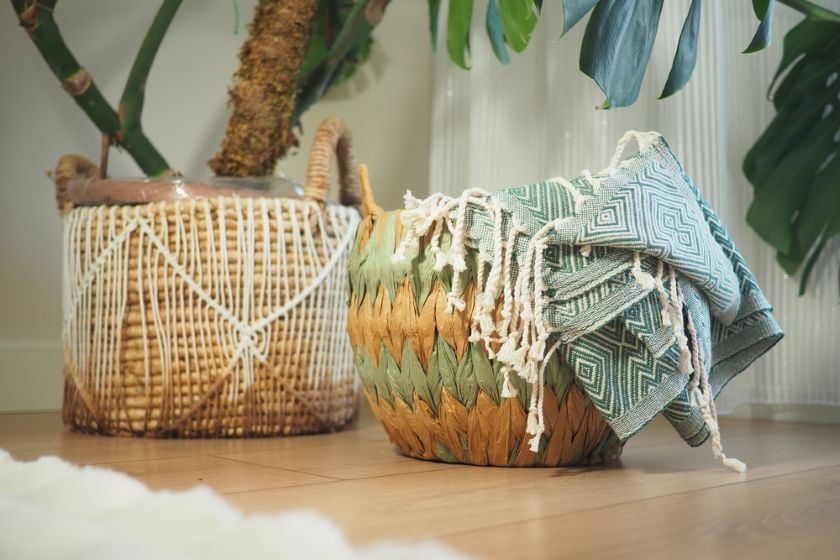
A large decorative basket is the simplest and most effective solution for throws you reach for frequently. A wide-mouth floor basket requires no folding precision and doubles as living room decor. Home stores carry seagrass, rattan, and wire options across a wide price range.
A storage ottoman or bench is a step up: it provides seating and conceals two or three folded throws inside the lid. Capacity can be hard to judge from outside dimensions, so measure the interior before buying.
A blanket ladder keeps attractive throws on display without drilling or permanent installation, but blankets draped in open air accumulate dust quickly and shouldn’t be used for anything you want to preserve over time.
Storage for seasonal and bulky blankets

Blankets you rotate by season need protection from dust, moisture, and pests rather than instant accessibility. The goal shifts from convenience to ensuring the right conditions for longer-term storage.
Under-bed storage(opens in new tab) is a space-efficient option for apartments and smaller homes — it makes use of otherwise unused square footage and keeps seasonal blankets hidden but retrievable. The trade-off: that space can get warm, air circulation is often poor, and pests can thrive in dark, undisturbed spots. Inspect and air out stored blankets periodically to reduce the risk.
When shopping for under-bed containers, measure bed clearance before buying. Seven inches of external height is the typical threshold for platform beds and lower frames, and many under-bed cases run taller than expected. A lidded plastic bin is reliable provided the blanket is completely dry when packed — residual moisture sealed in plastic for months is the primary cause of the musty smell people notice when pulling out seasonal bedding. Breathable fabric storage cases offer more forgiveness: they keep dust out while allowing enough airflow to prevent moisture buildup.
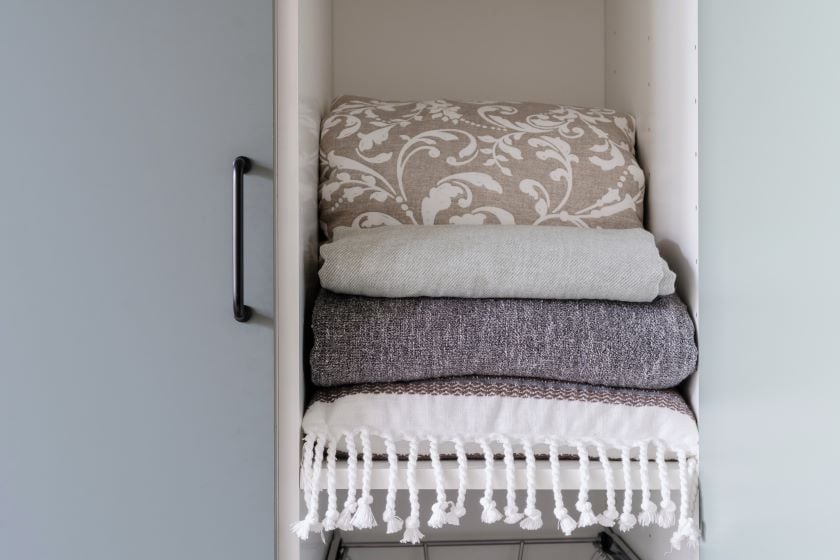
The linen closet or the bedroom closet are the best options if space allows, a rare situation indeed, as just one bulky blanket will take up an entire shelf. Cedar chests provide substantial storage capacity and genuine aesthetic value as a room accent, if you can fit one in the bedroom or even in a hallway. Cedar is often marketed as moth protection, but it has limits: cedar oil may affect very young moth larvae but does not kill eggs or adults and loses potency as the wood ages. Cedar is a pleasant supplement to good storage habits — not a substitute for cleaning and inspecting before storing.
Vacuum bags: When they help and when they don’t
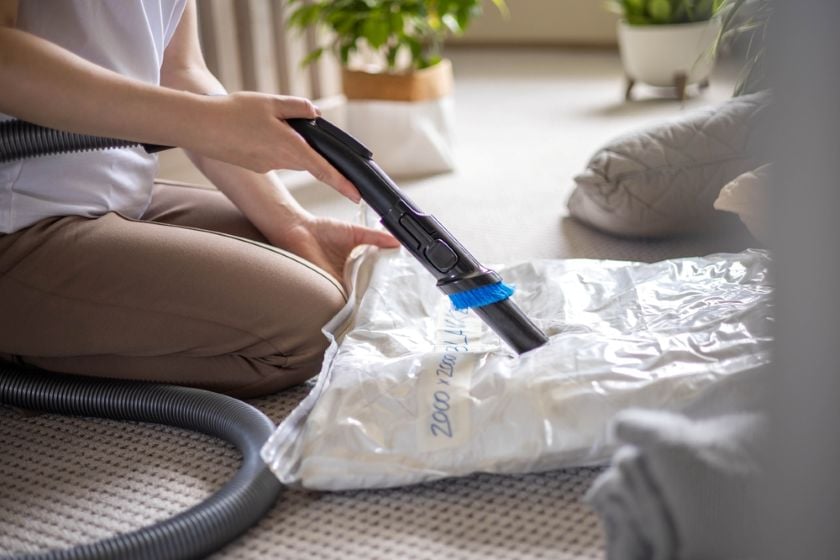
Vacuum bags can be a useful tool in specific situations, but they’re not a default recommendation for bulky blankets. They work well for polyester fleece and synthetic throws with no loft to protect, and for cotton blankets going into seasonal storage when space is genuinely the overriding constraint. Any blanket you access only once or twice a year is a reasonable candidate, since the repacking inconvenience is tolerable at that frequency.
One practical tip: place the bag inside a rigid storage bin before vacuuming it. The bag molds to the shape of the bin, creating a stackable, puncture-protected package rather than an awkward deflated shape that’s hard to store neatly.
Vacuum bags are the wrong choice for wool, cashmere, or delicate woven blankets, where compression stresses fibers. Heirloom and antique textiles should never be compressed. And any blanket you retrieve frequently is a poor candidate — the friction of repacking will quickly make the system feel more trouble than it’s worth.
Special cases: Wool and heirloom quilts
Wool and cashmere-blend blankets need to be cleaned thoroughly before storage — moth larvae feed on the residue in unwashed fibers, not on clean wool itself. Store in an enclosed container in a cool, dry location and inspect periodically, especially before spring.
Heirloom quilts require extra care. Flat storage is the gold standard where possible. Pad any unavoidable folds with acid-free tissue paper or clean muslin to reduce friction and stress to the fabric. Periodically refold in a different configuration to prevent permanent crease damage along the same lines. Store in a stable interior environment away from light, heat extremes, and humidity fluctuations.
Small-space storage solutions worth trying
When storage space at home(opens in new tab) is genuinely insufficient, a few less obvious approaches can make a real difference.
- Rolling a throw and tucking the end in on itself creates a compact bundle that stacks neatly in baskets or bins and takes up considerably less volume than a loosely folded blanket.
- A wall-mounted coat rack can work as a creative blanket display — no folding required, access takes one second, and it turns your collection into wall decor. The limitation is dust accumulation, which makes it unsuitable for seasonal storage or anything you want to preserve. It works best for everyday throws you wash regularly.
- For renters who can’t drill into walls, over-door racks hold two or three medium-weight throws without any installation.
- Suitcases are an underused option for seasonal storage — a large one can hold several blankets and makes otherwise idle luggage work double duty. Make sure everything inside is fully dry before zipping it closed.
When to use a self storage unit
For households short on closet space, a climate-controlled self storage unit(opens in new tab) is one of the most practical (and underused) options for seasonal blankets. If you’re rotating heavy comforters twice a year with little closet space to spare, a storage unit eliminates the problem rather than forcing a compromise.
Just a couple of thick, bulky blankets can consume an entire closet shelf, and most households own more than a couple. Moving them off-site frees that space for items you reach for every week.
A climate-controlled unit maintains consistent temperature and humidity year-round, exactly what stored textiles need, and what attics and basements typically fail to provide. Before renting, a unit size calculator can help determine how much space you actually need for a seasonal textile rotation, so you don’t overpay for a unit that’s larger than necessary.
Preparation for self storage follows the same steps as any long-term storage, but with less margin for error. Wash everything before it goes in. Dry completely — even small residual moisture sealed inside a container for three to six months is enough to cause mold. Use breathable fabric cases over sealed plastic where possible. Label each container with its contents. Elevate everything off the concrete floor with a pallet, low shelf, or piece of plywood to guard against moisture wicking up through the slab.
A storage unit works best as a seasonal rotation tool, not a long-term set-and-forget solution. Plan to retrieve and inspect blankets at least twice a year.
Keeping stored blankets fresh
Store blankets in a space that smells clean — a lidded bin in a musty corner will absorb that environment over months. Air out and inspect seasonal blankets before the first use of each season and wash anything that comes out smelling musty before putting it back in rotation.
Cedar, lavender, or other natural sachets can help maintain a fresh scent and offer mild pest-deterring properties. Another option: tuck a wrapped bar of soap among folded blankets. Keep the soap in its original packaging so it doesn’t contact the fabric directly, and only use this trick in a cool, dry space — in warmer or more humid conditions, soap can soften and sweat, staining the textiles.
Frequently Asked Questions
What’s the best way to store blankets?
Match storage method to usage frequency. For blankets you reach for regularly, a large basket or storage ottoman keeps them accessible. For seasonal blankets, a breathable fabric case or lidded plastic bin in a cool, dry location is the better choice.
How do I store very large blankets?
Oversized blankets are best stored loosely in a large breathable bag or wrapped in a clean cotton sheet — compression does them no favors. Under-bed storage cases in larger size ranges work well for flat storage, and a cedar chest can accommodate most oversized pieces without folding them too tightly.
Is it bad to store blankets in plastic bins?
Not if the blanket is completely dry and the environment is stable. The risk is sealing in residual moisture. For down, wool, and delicate textiles, breathable storage is safer. For clean, dry synthetic and cotton blankets, lidded plastic bins are a practical, stackable choice.
Can I vacuum-seal wool or down?
Not recommended for either. Compression can damage wool fibers and permanently reduce loft in down fill. Use breathable storage that lets the fill expand naturally.
Can blankets go in the attic or basement?
With caution. Both are harder to control than interior living spaces. If those are your only options, use sealed containers, keep them off the floor and away from exterior walls, and check periodically for moisture.
How do I store blankets when I have no room?
Under-bed bins, storage ottomans, suitcases, over-door racks, and decorative baskets all work without permanent installation. A basket for daily throws plus under-bed bins for seasonal blankets handles most collections without any closet space. For seasonal rotation of bulky comforters, a climate-controlled self storage unit is worth considering — StorageCafe(opens in new tab) lets you filter by amenity, including climate control, across thousands of facilities nationwide.
Take good care of your blankets and they’ll take care of you on cold nights for years to come. Wash them before putting them away, dry them thoroughly, and store them somewhere that works for how you actually use them.



Moving From a House to an Apartment: What to Expect, How to Downsize & How Self Storage Helps
For some, moving from a house to an apartment is a financial decision. For others, it’s about simplifying life. Maybe the kids have moved out and half the house sits empty, or you’re approaching retirement and no longer want to spend weekends on repairs. Or perhaps you’ve been weighing the cost of buying a home and wondering whether renting simply makes more sense right now.

Family Heirlooms Overload: How to Handle Family Inheritance Without Regret
Handling family heirlooms after a loss requires managing legal authority, emotional pressure and practical logistics at the same time, and the order you take them on matters more than most people expect.
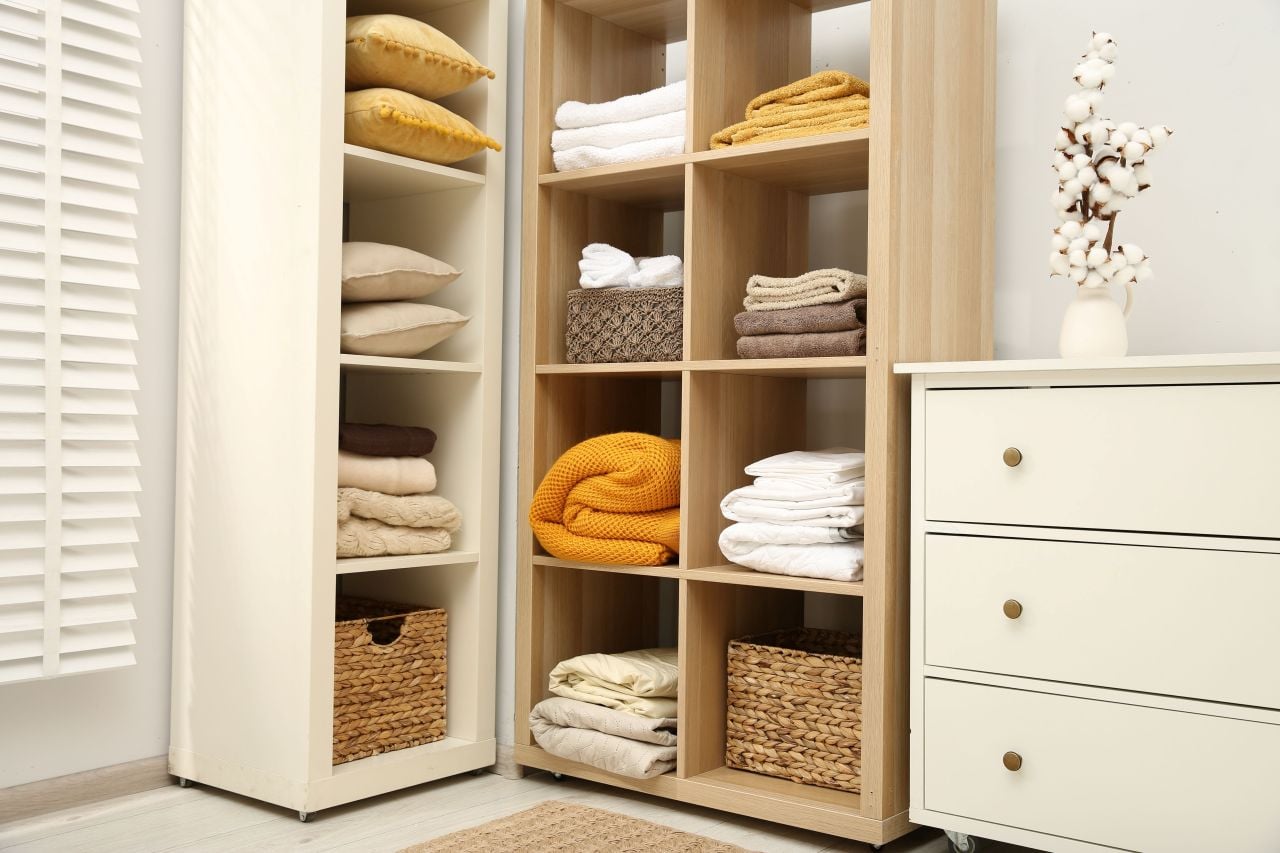
Blanket Storage: The Right Method for Every Space and Season
Blankets make our lives cozier, and storing them well is what keeps them soft and comfortable in the long run. Knowing how to store a blanket properly means your favorites come out of storage smelling fresh, feeling the same as when they went in, and lasting years longer than they otherwise would.

Board Game Storage Ideas That Keep Your Collection in Fighting Shape
Nobody warns you that getting into board games usually unlocks a second hobby, the much dreaded one that includes figuring out where on earth to put them. One game becomes a few, expansions start spawning beside their base boxes and before long, board game storage requires as much strategy as whatever is waiting on the other side of those lids.

Storage Locker vs. Storage Unit: What’s the Difference?
A locker and a unit may sound like two names for the same four walls and a lock, and depending on the storage facility, you may even see the terms used that way. However, once you start comparing available spaces, storage lockers tend to occupy the smaller end of the spectrum, while storage units(opens in new tab) give you considerably more room to work with.

Storage Ideas for Small Spaces: 9 Ways to Max Out Your Home
A messy home contains the seeds of its organization. Those seeds are everywhere: the space above doors, under beds, behind sofas and inside furniture can all become storage. Here are the best storage ideas for small spaces, so you can make the most of your cozy home.

Best U.S. Cities to Live Uncluttered: Plano, TX, Offers the Most Room to Breathe
Clutter is in our homes as much as in our heads. Both are shaped by where we live.

How to Organize Your Bathroom: 8 Ways to Stay Tidy
You already know why an organized bathroom is worth the effort, but let us remind you: it makes rushed mornings easier, keeps counters cleaner and just helps get you in the mood to go through your skincare routine like you should. Plus, in bigger households, it helps everyone find what they need. And you know how much a tidy bathroom counts for your self-esteem when a guest or a partner shows up. Luckily, you don’t need a degree to know how to organize your bathroom. The secret is keeping less, giving every item a home and making that home simple to use. Let’s go through some practical steps can help you create a bathroom that stays functional and nice to look at.

How to Use Silica Gel Packets for Storage
Moisture can cause significant damage to items in storage, leading to rust on tools, mold on clothing and warping in documents. Silica gel uses science to fix that. Often found in small packets inside product packaging, silica gel is a desiccant that absorbs moisture from the air, keeping your stored items dry and protected. This guide explains what silica gel is, how it works and how you can use it to preserve your belongings in self storage.