
What Makes Phoenix A Great Place To Live: From Its Thriving Economy To Its Attractive Lifestyle And Family-Friendly Ways

There’s a reason why more and more people every year are choosing Phoenix, Arizona, as their home. The city, long known for its stunning desert landscapes and warm climate, has transformed over the past few decades into an economic powerhouse, a hub for innovation, and a place where quality of life takes center stage.
With new businesses flocking to the region, housing developments keeping pace with demand, and a lifestyle that embraces both relaxation and adventure, Phoenix is proving itself as one of the best places to live in the United States.
Phoenix’s rise as a top-tier city isn’t just a matter of perception—it’s backed by numbers. The city consistently ranks among the best places to live in national and international reports, reflecting its growing appeal. Part of this success comes from its ability to blend economic opportunity with an excellent quality of life, making it an ideal destination for professionals, families, and retirees alike. Several of the studies we have done over the past few years are once again proving Phoenix’s status as one of the fastest-growing, most-attractive urban hubs in the United States.
A city built on economic growth and opportunity
Phoenix has rapidly emerged as an economic powerhouse, attracting industries ranging from technology to manufacturing and undergoing an impressive transformation in terms of real estate inventory. Whether residential or commercial, new projects are changing the face of the city, ranked second-nationally in an exhaustive analysis of 44 years of real estate growth in the United States. Since 1980, Phoenix permitted over 215K homes and 187K apartments and delivered 26.6M square feet of self storage space, 292M square feet of industrial space, 117M square feet of retail space, and 170M square feet of office space.
Phoenix’s flourishing real estate market goes hand in hand with a dynamic economy, where locals and newcomers get access not only to attractive jobs, but to pursuing independent activities as well. The city currently holds the top spot for manufacturing job growth in the U.S., providing thousands of opportunities for skilled workers and reinforcing its reputation as a business-friendly destination. Additionally, Phoenix also ranks among the best in the country for gig economy jobs, making it a haven for freelancers and independent workers who thrive on flexibility and remote opportunities.

Naturally, economic growth and opportunities are attracting numerous newcomers to Arizona, and its main urban hotspot, Phoenix, is a prime destination for those relocating to the Grand Canyon State. The largest group of newcomers to Arizona in general and Phoenix in particular originate from California, being attracted here by a far more affordable housing market, the advantageous taxation system, professional opportunities, and a desirable lifestyle. Speaking of lifestyle, Phoenix gains serious points on that front as well.
The trademark Phoenix lifestyle: luxurious, active, and charming
Beyond its economic success, Phoenix stands out for the lifestyle it offers. The city caters to those who enjoy an active, outdoor-centered way of life, ranking among the best places for people with an active lifestyle. From its miles of hiking trails in the surrounding mountains to its well-maintained parks and golf courses, there’s no shortage of ways to enjoy yourself, have fun and stay fit while admiring the stunning Arizona scenery.

For those who prefer a luxurious, comfortable lifestyle, Phoenix delivers in spades. Many apartment complexes in the metro area offer resort-style pools, fitness centers, playgrounds, and co-working spaces, making it easier than ever to balance family life, work, and leisure. These lifestyle amenities add tremendous value, providing residents with access to recreational and wellness facilities without leaving their area.
More than that, in the very heart of the city, Phoenix has managed to create a vibrant downtown experience, attracting people who crave the energy of an urban setting while still enjoying the perks of living in the Southwest.
Perhaps one of Phoenix’s most unexpected charms is its thriving thrift shopping scene, making it a dream location for vintage enthusiasts and bargain hunters. And for those who love to cool off in the desert heat, another city in the metro area, Chandler, has earned the title of the best city in the U.S. for pool lovers, proving that luxury and relaxation are trademarks of to the Phoenix lifestyle.
A welcoming environment for families
Phoenix isn’t just a great place to work and play—it’s also an ideal setting to raise families. The city ranks among the best places in the country for families with children, thanks to its excellent schools, family-friendly parks, and community-oriented neighborhoods.

Another key advantage for families in Phoenix is the generous living space the city offers. Compared to other major metros, Phoenix residents enjoy larger homes, bigger yards, and more storage space—a rarity in many fast-growing cities. Whether you own a home or rent an apartment, you’re more likely to have room to grow and store your belongings comfortably. For those who need extra space for seasonal items, recreational gear, or business inventory, self storage provides a convenient and affordable solution. With plenty of storage options across city, Phoenix makes it easy and affordable for families to stay organized and clutter-free. Renting a self storage unit in Phoenix hovers around $121 per month, significantly under the national average of $135 per month.
The city also exudes a sense of calm, despite its growing population. In fact, Phoenix is considered one of the most relaxed cities in the country, based on the relatively low volume of resident complaints and community issues. This speaks volumes about the balance Phoenix has struck between urban growth and maintaining a high quality of life for its residents.
A forward-thinking, sustainable city
Phoenix is not just growing; it’s evolving with a clear focus on sustainability. Often mentioned among the most sustainable metros in the country, the city has implemented extensive initiatives aimed at preserving resources, reducing emissions, and making urban living more eco-friendly. It has also embraced the future of transportation, earning recognition as one of the best cities in the U.S. for electric vehicle adoption, thanks to an expanding network of charging stations and incentives for eco-conscious drivers.
For those looking for a place that blends economic opportunity with a rich, fulfilling lifestyle, Phoenix is hard to beat. The city offers the best of both worlds—a strong job market and housing options for every preference, combined with the kind of lifestyle that makes every day feel like an adventure.



Suburban Giants and Urban Risers: Where America’s 100 Largest Metros Fall on the Self Storage Map
Self storage has long been a suburban story. Across America largest 100 metros, 59% of the inventory built over the past decade sits outside city cores, largely preserving the ratio of the total existing inventory.

Sweatshirt Storage Ideas Worth Keeping Up Your Sleeve
Sweatshirts are great until you realize how much room they take up. A few thick hoodies can fill a drawer fast, with lighter crewnecks getting squashed underneath or pushed somewhere you forget about. Good sweatshirt storage can make that pile much easier to manage without requiring a bigger closet.

Living Room Storage Ideas: 28 Ways to Reclaim Your Hosting Space
If a living room is where most of a household’s living happens, good storage should be the top priority for setting up or revamping the place. After all, think of how easier it would be to have people over when tidying up the place is just a matter of putting things in their right place (in a time when fewer and fewer people are entertaining friends at home(opens in new tab)). The trick is making room for all those wayward clothes, blankets, chargers and other small things that end up on (or, inexplicably, in) the sofa. Here are 28 living room storage ideas to get you started and make tidying up a quick affair.
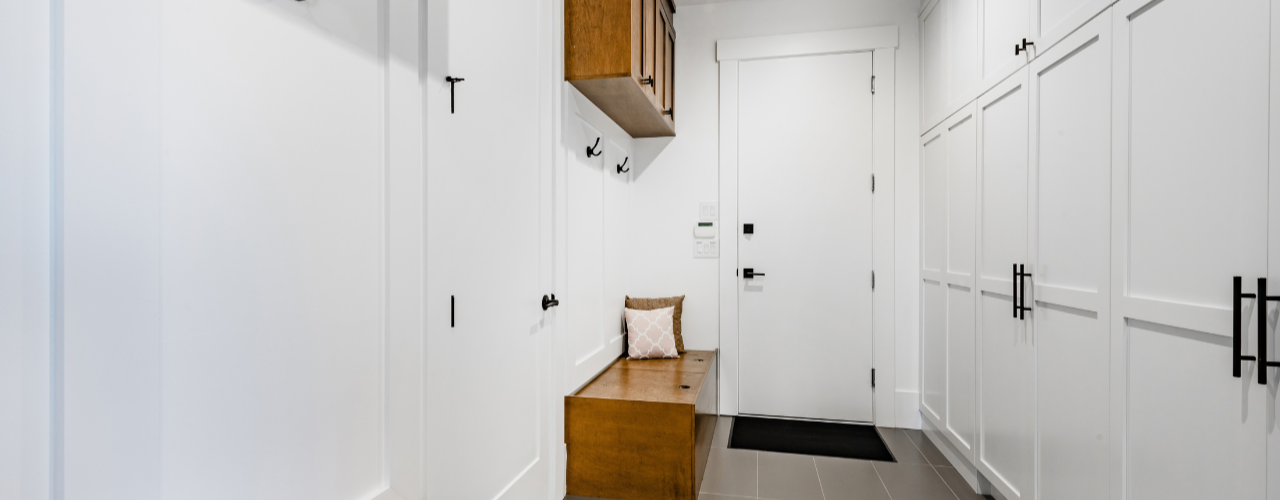
25 Mudroom Storage Ideas (And Mistakes to Avoid)
When you come home with muddy boots, an armful of bags and a coat you can’t wait to take off, it’s nice to have somewhere to put it all. With a mudroom, you can leave the outdoor mess at the door instead of carrying it through the house. Traditionally, you’d set aside a separate room, but you can just as easily use a hallway, an entryway closet, a laundry-room corner or a stretch of wall near the entrance.

Is Your Home Office Worth the Rent? What Coworking and Self Storage Could Save You
Every square foot of your apartment comes with a price tag, and a home office claims more of them than most renters expect. It starts with a desk. Then come the second monitor, the printer, the filing cabinet and the overflow boxes. Before long, the corner you set aside for work has turned into a small room you are paying for every month.

Best U.S. Cities to Live Uncluttered: Plano, TX, Offers the Most Room to Breathe
Clutter is in our homes as much as in our heads. Both are shaped by where we live.

America’s Top Snowbird Destinations for 2026–2027: Florida Leads in Numbers, Texas Wins on Value
For Americans living in colder states, the approach of winter is reason enough to start looking south. Cold weather carries costs that go beyond the heating bill and shoveling snow. Seasonal affective disorder(opens in new tab) is far more prevalent in northern states, so a temporary move south isn’t simply an escape from the cold, but a chance to spend the hardest stretch of winter outdoors and in the sun.

How Much Does Halloween Really Cost in 2026? Plan Wisely to Avoid the Scare of Hidden Costs
Americans’ love for Halloween is almost frightening — this year alone, we are on our way to spending $13.5 billion, according to data from the National Retail Federation(opens in new tab). That breaks down to about $115 Halloween costs per person, a whopping 49% more than 10 years ago.

How to Store LEGOs: All the Fun, None of the Clutter
How to store LEGOs largely comes down to how your household uses them. If the bricks are part of everyday play, you need a setup that keeps them within easy reach and makes cleanup quick (for your feet’s sake, at least). Toy storage(opens in new tab) such as simple bins, playmats or containers that children can put away themselves may be enough. Larger or more serious collections usually need more organization, such as labelled drawers for loose pieces, trays for unfinished builds, shelves for completed models and separate storage for retired sets.