

Key Takeaways
- Store hats in a cool, dry place away from direct sunlight and heat to prevent fading and material damage.
- Avoid pressure on brims by storing hats upside down on their crowns or on wide stands to maintain shape.
- Clean hats before storage to remove dust, sweat, and oils that can cause discoloration or odor.
- Use vertical storage (wall racks, pegboards, over-the-door hooks) for everyday hats to keep them accessible and undamaged.
- For long-term storage, use rigid, acid-free boxes with tissue to preserve shape and protect from dust and moisture.
Growing up is realizing that there’s a wrong and a right way to store your hats. It’s up to you whether they stay sharp or end up crumpled, discolored, and linty. Back when hats were an everyday essential and travel didn’t involve A/C, leather hat boxes were such a hit that even panettone boxes borrowed their iconic design. So let’s honor the tradition and get serious about hat storage.
How to store everyday hats and caps
Everyday caps and beanies need to be easy to grab, but not tossed onto the nearest chair to die. Wall storage and vertical organizers are usually the sweet spot.
- Wall-mounted racks or pegboards let you hang caps by the back strap or buckle so the front panel and brim keep their shape. That’s the logic behind wall-mounted cap hangers and adhesive hat racks: many small hooks or clips, each taking one hat off a surface and into its own “parking space.”
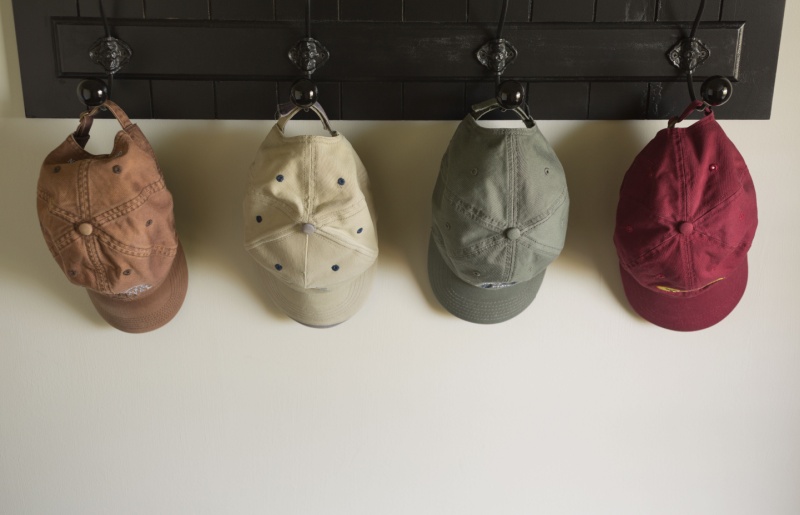
- Over-the-door or closet-bar hangers do the same thing vertically. Each cap gets its own pocket or clip so none of your hats get crushed at the bottom of a pile.
- Beanies are a different story. Hanging them by the fabric stretches them out, so they do better folded and stacked in a shallow bin, drawer divider, or even the pockets of a hanging shoe organizer.
For everyday storage, think “visible and reachable,” but still supported and separated enough that nothing gets smashed.
How to store hats long term and on display
When hats are out of season or part of a collection, you want them protected and, ideally, nice to look at. That’s when you should look for hat organizers, storage boxes, and stackable hat boxes.
Clear plastic hat boxes and stackable cubes do the job with a little more visibility. They’re great for baseball caps because you can see logos at a glance while keeping dust and lint out. The main thing to watch is moisture: if a hat goes into an airtight box while even slightly damp, you’re inviting odor or mildew.
Shelves and cubbies can work just as well if you want to treat each hat like its own “unit.” Give every hat its own footprint, stored on its crown instead of sitting on the brim, and avoid stacking more than two or three light caps together. For display, use wide hooks, rounded pegs, or head-shaped stands so weight is spread out rather than digging into one stressed point in the band.
How to clean hats before storing them
Here’s the nice thing about storing anything: a few low-effort habits make a big difference.
- Brush off dust and lint before you store a hat, especially wool, felt, and dark cotton. Use a soft hat brush or lint roller to keep fibers from matting and stop that grayish cast from building up over time.
- Sweat and oils are the other big culprits, so spot-clean the sweatband and any obvious marks, then let hats dry fully before they go into a box or closed bin. Otherwise, you’ll get yellowing and odor baked into the fabric.
- Avoid putting damp hats into sealed plastic bins or airtight boxes; trapped moisture is an invitation for mildew. Air-dry first, then store.
Finally, be wary of how light can affect the coloring. Hats stored in direct sun fade faster and can end up with “tan lines” along edges and seams, so it pays to keep long-term storage in a closet, on a shaded wall, or behind doors. If pests are a concern, cedar blocks or sachets are kinder to fabric and your nose than mothballs. And if you’re using tissue or cardboard around light-colored hats, stick to acid-free, dye-free materials so color doesn’t transfer over time.
Hat storage ideas for small spaces
If you have more hats than space, you’re in the same boat as most collectors. The ones who win are ruthless about smart, scalable storage.
- Use adhesive hooks in a tight grid on a wall or behind a door so each cap has its own hook and you can add more as your collection grows. Think of it as a “hat wall” that doubles as decor.
- Clear, stackable boxes are the other workhorse: they keep dust off, make logos visible at a glance, and let you dedicate an entire column or shelf to hats without crushing a single brim.
- Treat your display like a rotating gallery: a few favorites on wide, gentle hooks or stands; the rest tucked safely into boxes you swap in and out.
As for the truly special or vintage pieces, give them heirloom treatment: boxed with tissue, labeled, and kept away from heat and light.
Storing hats in self storage
If your hats have outgrown your home, self storage(opens in new tab) can act as a second closet. With a climate-controlled unit(opens in new tab), which keeps temperature and humidity stable, you can protect delicate wool, felt, leather, and vintage fabrics better than you would in a packed hallway closet.
- Short term (during a move): Use sturdy boxes, store hats upside down on their crowns, lightly stuff the crowns, and keep heavy items in separate boxes.
- Medium term (a season or two): Use clear, stackable containers, avoid overfilling, and keep boxes off the floor for easier access and cleaner storage.
- Long term (collections and heirlooms): Use rigid hat boxes lined and stuffed with acid-free tissue, and label each box so you can find specific pieces without unpacking everything.
If you’re already using self storage for clothes or seasonal gear, it’s the logical place for your hats too: one climate‑controlled, organized spot that protects everything you actually want to keep.
Why proper hat storage matters
Hats take abuse in three main ways: pressure, light and heat, and grime. If you control those, even cheap caps look expensive for longer.
- Pressure: Piled hats flatten brims and warp crowns.
- Light and heat: Sun fades fabric and dries out natural fibers.
- Grime: Sweat, dust, and lint dull colors and stain seams over time.
The adult move is to give hats a bit of structure and separation, the way you’d treat decent shoes.
Hats last as long as you store them well. Hang daily caps on racks or hooks, box and support the ones you love, and keep every piece away from pressure, sweat, and harsh light. If your collection has outgrown your closets, consider giving your most delicate or vintage hats a climate-controlled “second closet” in self storage so they can age like heirlooms instead of ending up crushed in the back of a shelf.



Moving From a House to an Apartment: What to Expect, How to Downsize & How Self Storage Helps
For some, moving from a house to an apartment is a financial decision. For others, it’s about simplifying life. Maybe the kids have moved out and half the house sits empty, or you’re approaching retirement and no longer want to spend weekends on repairs. Or perhaps you’ve been weighing the cost of buying a home and wondering whether renting simply makes more sense right now.
Family Heirlooms Overload: How to Handle Family Inheritance Without Regret
Handling family heirlooms after a loss requires managing legal authority, emotional pressure and practical logistics at the same time, and the order you take them on matters more than most people expect.
Blanket Storage: The Right Method for Every Space and Season
Blankets make our lives cozier, and storing them well is what keeps them soft and comfortable in the long run. Knowing how to store a blanket properly means your favorites come out of storage smelling fresh, feeling the same as when they went in, and lasting years longer than they otherwise would.

Board Game Storage Ideas That Keep Your Collection in Fighting Shape
Nobody warns you that getting into board games usually unlocks a second hobby, the much dreaded one that includes figuring out where on earth to put them. One game becomes a few, expansions start spawning beside their base boxes and before long, board game storage requires as much strategy as whatever is waiting on the other side of those lids.

Storage Locker vs. Storage Unit: What’s the Difference?
A locker and a unit may sound like two names for the same four walls and a lock, and depending on the storage facility, you may even see the terms used that way. However, once you start comparing available spaces, storage lockers tend to occupy the smaller end of the spectrum, while storage units(opens in new tab) give you considerably more room to work with.

Storage Ideas for Small Spaces: 9 Ways to Max Out Your Home
A messy home contains the seeds of its organization. Those seeds are everywhere: the space above doors, under beds, behind sofas and inside furniture can all become storage. Here are the best storage ideas for small spaces, so you can make the most of your cozy home.

Best U.S. Cities to Live Uncluttered: Plano, TX, Offers the Most Room to Breathe
Clutter is in our homes as much as in our heads. Both are shaped by where we live.
How to Organize Your Bathroom: 8 Ways to Stay Tidy
You already know why an organized bathroom is worth the effort, but let us remind you: it makes rushed mornings easier, keeps counters cleaner and just helps get you in the mood to go through your skincare routine like you should. Plus, in bigger households, it helps everyone find what they need. And you know how much a tidy bathroom counts for your self-esteem when a guest or a partner shows up. Luckily, you don’t need a degree to know how to organize your bathroom. The secret is keeping less, giving every item a home and making that home simple to use. Let’s go through some practical steps can help you create a bathroom that stays functional and nice to look at.

How to Use Silica Gel Packets for Storage
Moisture can cause significant damage to items in storage, leading to rust on tools, mold on clothing and warping in documents. Silica gel uses science to fix that. Often found in small packets inside product packaging, silica gel is a desiccant that absorbs moisture from the air, keeping your stored items dry and protected. This guide explains what silica gel is, how it works and how you can use it to preserve your belongings in self storage.