

Pillows are one of those household items we don’t think much about until we pull one out of a closet and it smells stale, feels flat or looks oddly misshapen. Whether you’re rotating seasonal bedding, setting up a spare bedroom for guests, moving homes, or just trying to declutter, knowing how to store pillows properly makes a real difference.
The good news is that storing pillows well isn’t complicated. The bad news is that small mistakes, especially around moisture and compression, can permanently damage your pillows. So, let’s walk through how to store pillows so that you can always enjoy fluffy, hygienic, nice smelling ones.
Always store pillows clean and completely dry
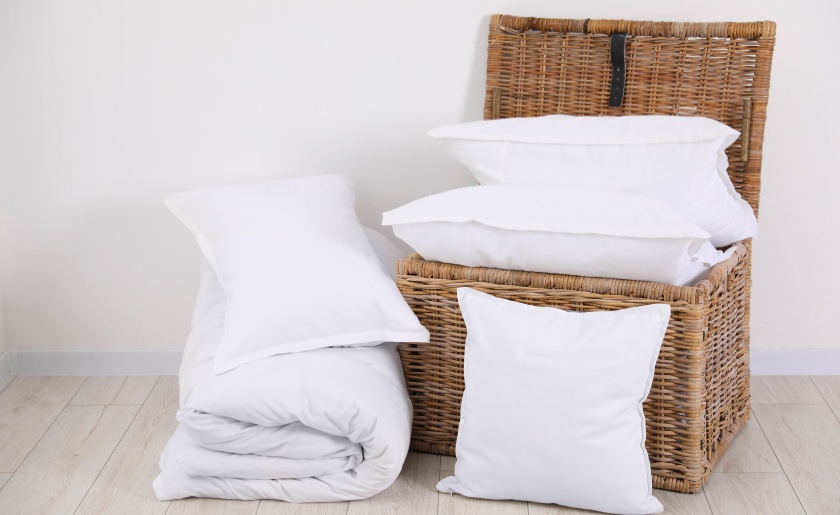
If there’s one rule that matters more than any other, it’s this: never store a damp pillow. Even a small amount of trapped moisture can lead to musty odors or mold over time.
Pillows should be cleaned according to their care instructions and dried thoroughly before being packed away. If you’ve washed a pillow, give it extra drying time and allow it to air out before sealing it in a bag or container. “Mostly dry” isn’t enough for storage. When in doubt, give it more time.
Choose the right environment to store your pillows
Ideally, pillows should be stored in a cool, dry, and dark space with minimal temperature swings. Interior closets and linen cabinets usually work well. Avoid hot attics, damp basements, or garages that fluctuate with the weather.
Humidity is the real concern. Excess moisture encourages dust mites and mildew, particularly for high-quality pillows made of down and feather. A space that feels dry and comfortable for you is usually appropriate for pillow storage. If a room feels damp, it’s not a good storage location.
The best storage containers for pillows
Not all storage containers are created equal. The right one depends on the pillow’s material and for how long you’re storing it.
Breathable fabric bags
For most indoor pillows, breathable cotton or linen storage bags are the safest option. They protect against dust while allowing air circulation. This helps prevent trapped humidity and keeps the pillow from developing stale odors.
Plastic storage bins
Plastic bins are helpful for keeping out dust and pests, but they don’t allow airflow. That means they’re only safe if the pillow is completely dry before sealing it inside.
Used correctly, bins can be practical for long-term storage. Used carelessly, they can trap moisture and cause damage. If you choose this option, inspect the contents occasionally rather than forgetting about them for years.
Vacuum storage bags
Vacuum bags can be excellent space savers, but not for all pillows and are usually not recommended for long-term storage.
Synthetic and down pillows can tolerate compression reasonably well for a few months. On the other hand, you should never vacuum-seal memory foam and latex pillows. Long-term compression can permanently affect the structure and support of these types of pillows and leave them flat or lumpy.
Cedar chests
Cedar has a reputation for protecting textiles during storage, due to a high concentration of natural oils within the wood itself that function as a built-in repellent for insects or fungi. However, it’s not a cure-all and, over time, its pest-deterring properties fade while direct contact with cedar can affect delicate fabrics.
If you use a cedar chest, treat it as an outer container and place pillows inside a protective fabric bag first.
How to store different types of pillows
The type of filling is the most important aspect that determines how to care for and how to store your pillows. Here are the most common types of pillows and how you should go about storing them:
- Down and feather
These pillows rely on loft for comfort. They can usually be washed gently and dried thoroughly, but they don’t love being crushed for long periods. Absolutely no vacuum bags and also, don’t store anything particularly heavy on top of them. Pack them in a roomy breathable bag rather than tightly packed.
- Synthetic
Pillows made of synthetic fiber are generally more forgiving. They bounce back more easily after compression, which makes them more suitable for short-term vacuum storage. For longer storage, breathable protection is still the better choice.
- Memory foam and latex
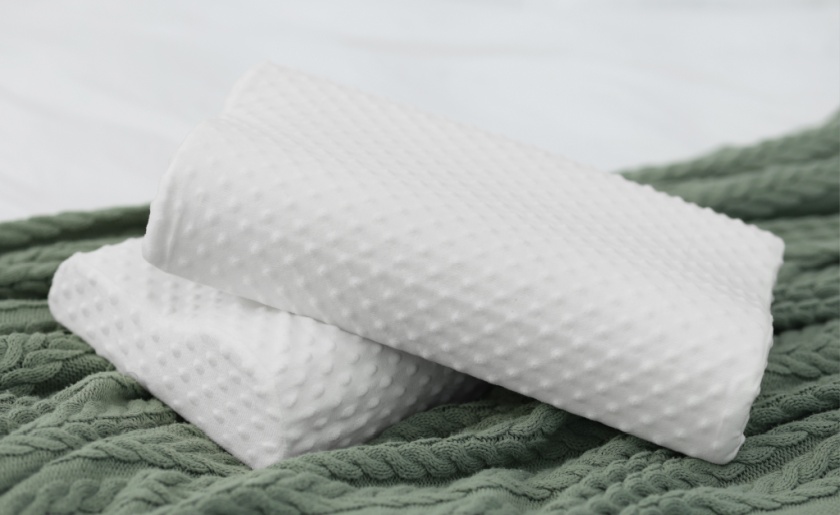
Memory foam and latex pillows require more caution when it comes to maintenance and storage. They should not be soaked or machine washed. If you want to clean them, remove and wash the cover according to label instructions. If the foam or latex itself is stained, do gentle, spot cleaning of that area with mild detergent, lukewarm water and clean cloth. If you spot clean the with water, air dry flat in a well-ventilated spot for at least 24 hours, as memory foam traps moisture easily. Don’t try to vacuum seal them. Instead, store them flat, uncompressed and fully dry.
- Outdoor pillows
Outdoor pillows and cushions require a bit more preparation before storage because they’re exposed to dust, pollen and changing weather conditions throughout the season. Even when they look clean, debris often settles into seams and fabric.
Start by shaking them out well or vacuuming both sides to remove surface dirt. If you notice stains, spot clean according to the care label. As with all pillows, it’s important that they’re clean and fully dry before being put away, especially after a season outdoors.
For longer off-seasons, storing outdoor cushions indoors is usually the safest choice. A closet, basement or storage unit offers more consistent protection than leaving them in a shed or on a covered patio. Storage bags designed for outdoor cushions can also work well, provided the pillows are properly prepared beforehand.
Not enough space at home to store your pillows? Use self storage
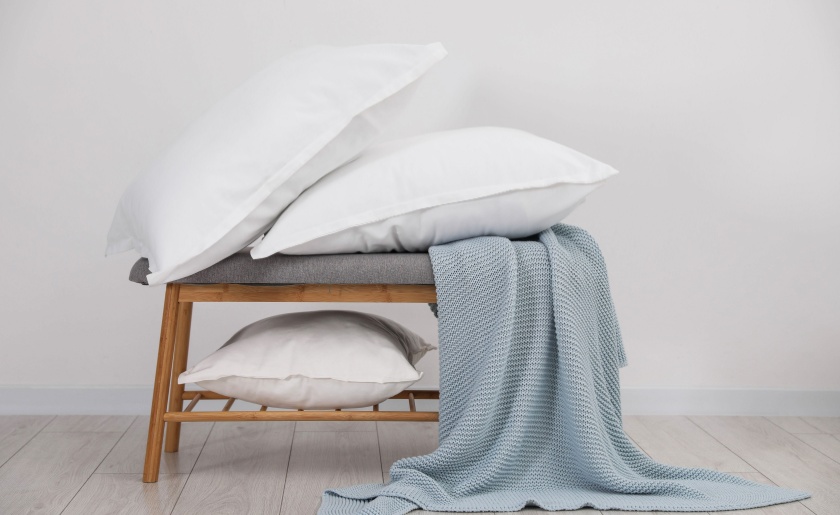
For many households, the real challenge isn’t knowing how to store pillows but finding where to put them while not in use.
Seasonal bedding, guest-room pillows, decorative cushions and outdoor inserts add up quickly. In apartments or homes with limited closet space, storage can feel cramped no matter how organized you are. That’s why self storage makes a good option for storing extra pillows and other household belongings that you don’t use on daily basis.
If you plan to store pillows outside your home, conditions matter more than location. For short-term situations — such as during a renovation or move — a standard storage unit can work as long as pillows are properly cleaned, fully dry and packed in a way that protects their shape.
For longer-term storage, especially for higher-quality down, feather or specialty pillows, climate-controlled units offer more stable temperature and humidity levels. Consistency helps preserve loft and prevents materials from breaking down over time.
Here’s a short round-down of the most important things to check before storing your pillows in self storage:
- Make sure they are clean and completely dry.
- Use breathable storage bags when possible.
- Avoid vacuum sealing down, feathers, foam or latex.
- Keep items elevated off the floor.
- Avoid overcrowding the unit so air can circulate.
There’s no universal deadline for stored pillows. If kept clean, dry and in stable conditions, they can remain in good shape for extended periods.



Living Room Storage Ideas: 28 Ways to Reclaim Your Hosting Space
If a living room is where most of a household’s living happens, good storage should be the top priority for setting up or revamping the place. After all, think of how easier it would be to have people over when tidying up the place is just a matter of putting things in their right place (in a time when fewer and fewer people are entertaining friends at home(opens in new tab)). The trick is making room for all those wayward clothes, blankets, chargers and other small things that end up on (or, inexplicably, in) the sofa. Here are 28 living room storage ideas to get you started and make tidying up a quick affair.

25 Mudroom Storage Ideas (And Mistakes to Avoid)
When you come home with muddy boots, an armful of bags and a coat you can’t wait to take off, it’s nice to have somewhere to put it all. With a mudroom, you can leave the outdoor mess at the door instead of carrying it through the house. Traditionally, you’d set aside a separate room, but you can just as easily use a hallway, an entryway closet, a laundry-room corner or a stretch of wall near the entrance.

Is Your Home Office Worth the Rent? What Coworking and Self Storage Could Save You
Every square foot of your apartment comes with a price tag, and a home office claims more of them than most renters expect. It starts with a desk. Then come the second monitor, the printer, the filing cabinet and the overflow boxes. Before long, the corner you set aside for work has turned into a small room you are paying for every month.

Best U.S. Cities to Live Uncluttered: Plano, TX, Offers the Most Room to Breathe
Clutter is in our homes as much as in our heads. Both are shaped by where we live.

America’s Top Snowbird Destinations for 2026–2027: Florida Leads in Numbers, Texas Wins on Value
For Americans living in colder states, the approach of winter is reason enough to start looking south. Cold weather carries costs that go beyond the heating bill and shoveling snow. Seasonal affective disorder(opens in new tab) is far more prevalent in northern states, so a temporary move south isn’t simply an escape from the cold, but a chance to spend the hardest stretch of winter outdoors and in the sun.

How Much Does Halloween Really Cost in 2026? Plan Wisely to Avoid the Scare of Hidden Costs
Americans’ love for Halloween is almost frightening — this year alone, we are on our way to spending $13.5 billion, according to data from the National Retail Federation(opens in new tab). That breaks down to about $115 Halloween costs per person, a whopping 49% more than 10 years ago.
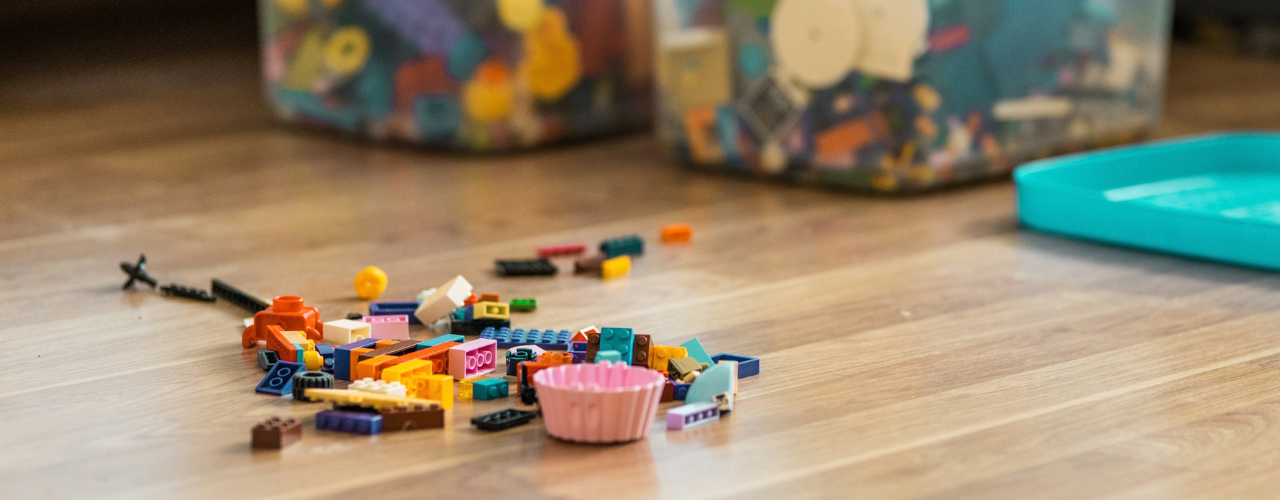
How to Store LEGOs: All the Fun, None of the Clutter
How to store LEGOs largely comes down to how your household uses them. If the bricks are part of everyday play, you need a setup that keeps them within easy reach and makes cleanup quick (for your feet’s sake, at least). Toy storage(opens in new tab) such as simple bins, playmats or containers that children can put away themselves may be enough. Larger or more serious collections usually need more organization, such as labelled drawers for loose pieces, trays for unfinished builds, shelves for completed models and separate storage for retired sets.

Cardboard Costume Guide: Tips and Ideas for a DIY Halloween
Whether for kids or adults, cardboard costume ideas often make the biggest splash once materialized, and that’s for a simple reason: doing a lot with a little is a universally impressive feat (especially in this economy). If you don’t have enough boxes you could temporarily repurpose, don’t worry! There are many places where you can find free moving boxes(opens in new tab), from stores and supermarkets to online groups and recycling drop-off spots. On the run? Try your luck at a self storage(opens in new tab) facility that sells moving supplies, often for cheap. This way, you can choose moving boxes of different shapes and sizes(opens in new tab), so you can make your costumes as complex as you want.

How to Celebrate Halloween: 9 Non-Spooky Ways To Enjoy It
As soon as October starts, it’s the official Halloween month. And while for many people it means it’s open season to get the scare of a lifetime, others, especially families with small children, might prefer to celebrate in a tamer way that’s both kid- and adult-friendly. While you’re likely to find more events where the spook factor is high, here’s how to celebrate Halloween in a not-so-scary way: