

If a living room is where most of a household’s living happens, good storage should be the top priority for setting up or revamping the place. After all, think of how easier it would be to have people over when tidying up the place is just a matter of putting things in their right place (in a time when fewer and fewer people are entertaining friends at home(opens in new tab)). The trick is making room for all those wayward clothes, blankets, chargers and other small things that end up on (or, inexplicably, in) the sofa. Here are 28 living room storage ideas to get you started and make tidying up a quick affair.
1. Start by letting a few things go
Before you buy a single basket or bookcase, take ten minutes to look around and ask: does this belong here? The living room tends to collect things brought in from elsewhere and never taken back to their rightful place.
Start with the usual suspects: old magazines and junk mail, duplicate chargers and remotes, toys your kids have outgrown, books you will not read again, board games with missing pieces and decor you keep out of habit rather than because you like it (yes, even that china piece your grandma got you; she won’t mind).
Of course, no need to empty the room in one go. Clear one surface, like the coffee table, a shelf or the basket beside the sofa. Give away all you know you won’t need (Buy Nothing groups accept most stuff).
Once the room holds only the things you use and enjoy, the storage ideas below become much easier to put into practice (without the risk of buyers’ remorse). This way, even with some extra storage, your place can look like the minimalist home(opens in new tab) you’ve always wanted.
2. If you have kids, plan for toys from the start
Kids don’t mess around about their storage. It needs to be easy to access or they just won’t use it. Here’s what to do: use low shelves with bins to let the little ones help tidy up and add lidded baskets to hide some of the loot. A system like IKEA’s TROFAST (opens in new tab) combines a frame with pull-out bins, so kids can put away their toys at bedtime and put them back to work the next day.
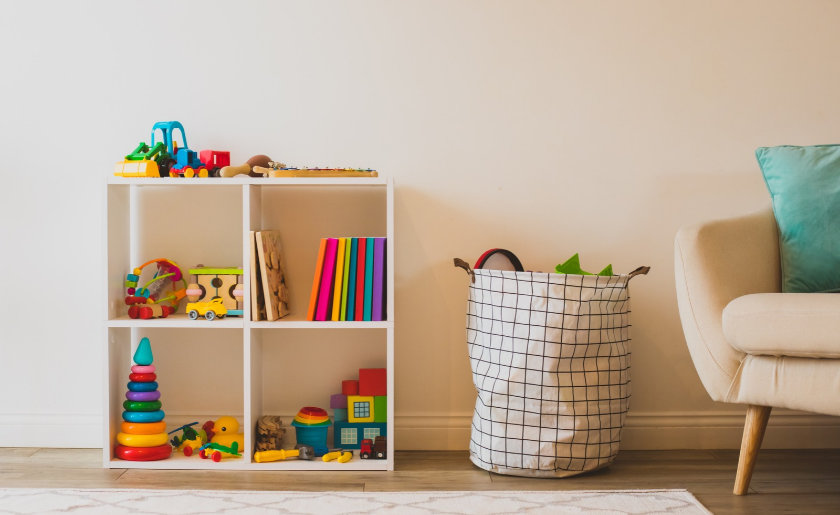
For ideas that work beyond the living room, these toy organization tips(opens in new tab) are a solid starting point and LEGO fans can find a more specific approach in this guide to storing LEGOs(opens in new tab).
3. Free-standing versus built-in furniture
Built-in furniture pieces make the most of awkward spaces, but they cost more and cannot come with you when you move. With freestanding pieces like vintage cabinets, accent chests or simple bookcases, you can move them from room to room and house to house. Plenty of people use both: built-ins for the tricky alcove, freestanding furniture everywhere else. Plus, if you go for cube shelves, fabric or woven baskets can be the free-standing solutions to your built-in storage.
4. Make the most of nooks and alcoves
That awkward recess beside the chimney, under the window or between two walls may look weird, but it’s actually an interior designer’s dream: free storage space that can also look cool. Put in a fitted shelf or cabinet to turn it into something useful and make the room look more like something out of a Homes and Gardens magazine than an oddly shaped dorm.
5. Go tall with the shelves
Tall shelves have a way of elevating how we see a room (both figuratively and literally). With a full-height bookcase, you can store far more than you would in a low unit, while also giving your living room a piece that pulls the eye upward, which can make the space feel less boxed in. Use the top shelves for things you rarely use or that are meant for ceiling-maintenance (think spare lightbulbs) and keep a step stool nearby. Now, tall furniture needs to be anchored to the wall studs with the hardware the maker recommends. That part is non-negotiable, especially if children are around, so do not skip this step.
6. Give each activity its own spot
Storage is easier to keep up with when it sits where you use the stuff. Remotes belong near the sofa (hello, tray table(opens in new tab)), books beside the reading chair (maybe in a tree bookshelf(opens in new tab)) and chargers near the TV (tackle boxes(opens in new tab) are great for this).
7. Use a bookcase as a room divider
If you have an open-plan home, you can also use a low cabinet or bookcase as a room divider to mark where the living area ends and the dining or work zone begins.
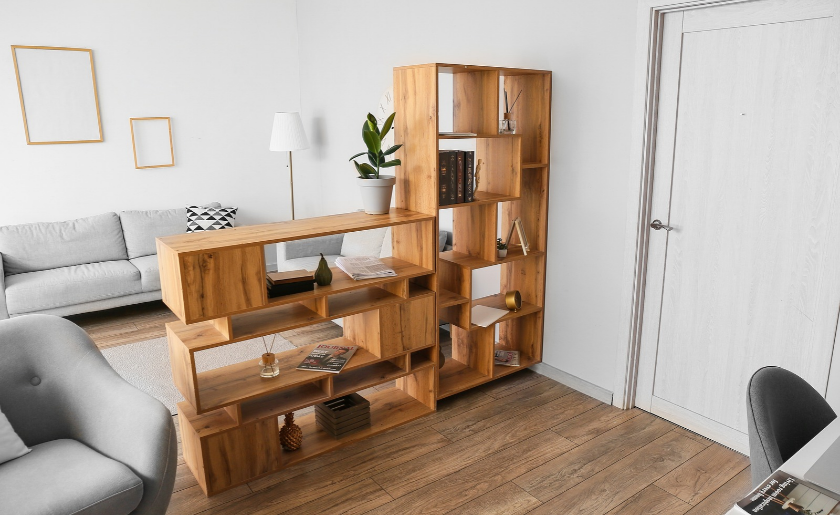
That’s particularly handy in multi-purpose spaces(opens in new tab) that have to do several jobs at once.
8. Put corners to work
While corners may have been claimed by a household spider or two, it is still your property. Therefore, it is your right to make the most of that tricky space, be it with a tall corner cabinet, a corner shelving unit or a pair of angled shelves to hold books, plants, baskets or a few favorite objects without crowding up shelves you’ve already got.
9. Get a storage ottoman
The ottoman is as great as the empire that gave its name: it holds throws, spare cushions and board games, then doubles as a footrest or extra seat when people come over. Look for a lid that stays open by itself or choose a removable top and make sure you have somewhere to put it while you dig around inside.
10. Pick a lift-top or drawer coffee table
Some coffee tables are built different. With an extra shelf or cabinet built in, they can keep remotes, coasters, magazines and chargers within arm’s reach and out of the grip of the sofa’s oblivion-like wedges.
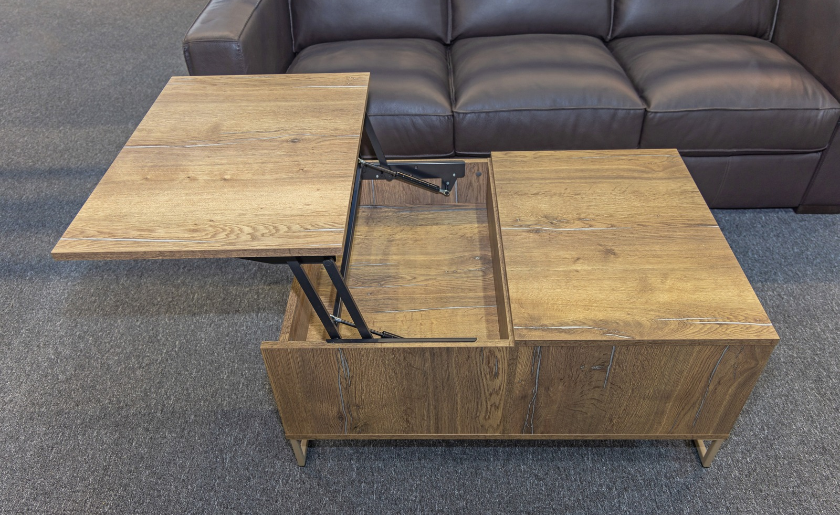
Choose a lift-top model with a deep compartment and adjustable shelf, and watch it swallow a surprising amount of clutter.
11. Add a storage bench
Add a bench under a window or at the end of the sofa, and you get both a place to sit and a place to stash blankets, toys or electronics. If anyone will sit on it, check the weight rating first (of the bench).
12. Consider a sofa with hidden storage
Certain sectionals and chaise sofas come with a storage trick that puts them above your average furniture: they have a compartment under one section of the cushions. It is a good place to keep spare bedding, bulky stuff or the things you only need when guests stay over.
13. Choose side tables with drawers or shelves
You know you’re an adult when you appreciate the power of a good side table. The best also have a lower shelf or small drawer, where you can keep a book, charger, reading glasses and lip balm without the risk of them falling into the shadowland beneath the sofa (except if you’re clumsy; no judging).
14. Use the space behind the sofa
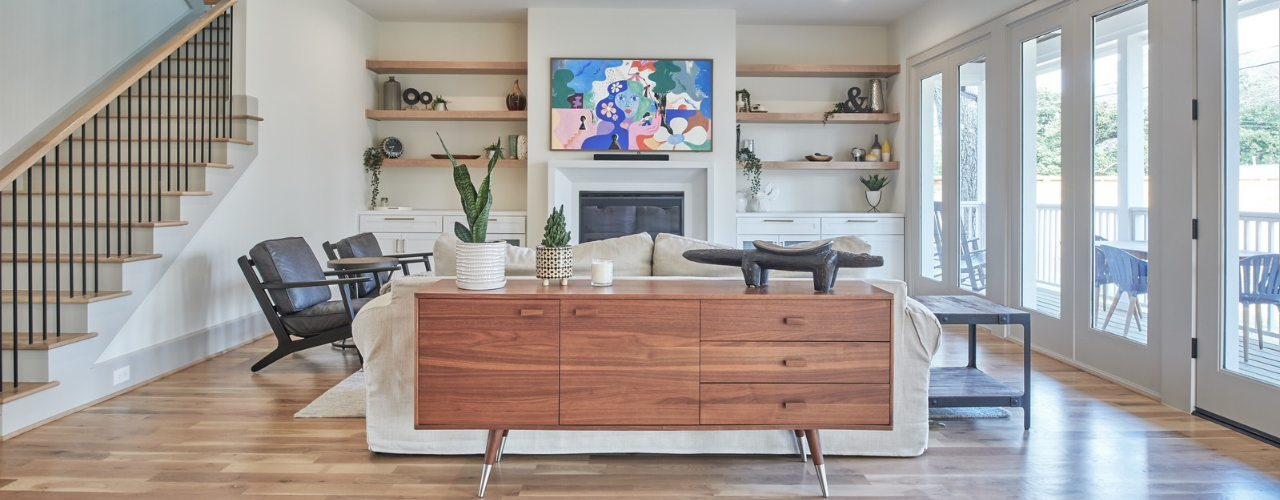
If your sofa does not have its back against the wall, the back of it may seem a bit sad to you, all bare like that. Luckily, humanity has invented the low media cabinet, which, if you measure it to the height of the sofa, can give you a surface for lamps and some hidden storage.
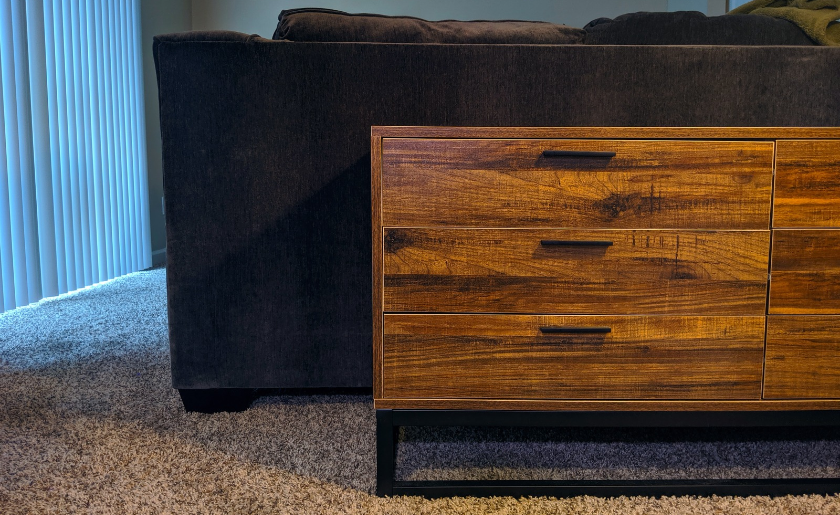
Plus, it just makes the place look more intentional, and thus, cooler. Just leave enough room behind it for people to walk past.
15. Use the gap under the sofa
Does your sofa has legs? If so, that’s free storage space right there. Simply slide flat bins or baskets underneath and, if you’re into interior design, choose colors close to the upholstery so they do not stand out and measure the gap first (many sofas leave less than six inches).
16. Try nesting tables
If there’s a piece that will make guests think “I should also get that”, it’s nesting tables. They’re clever, they’re stylish and they give you extra surface space when guests visit, then tuck away into a small footprint. Some sets have a lower shelf or drawer, so you get even more storage without sacrificing any more floor space.
17. Mix open and closed storage
When you use both open and closed storage, the guests know that you’ve really thought about your home. Open shelves show off books, ceramics, plants and framed photos. Closed cabinets and drawers hide the less glamorous stuff, be it chargers, remotes, puzzles, craft supplies or spare batteries. Still, leave a little breathing room around anything you put on show, too, since packed shelves are harder to dust and start to feel cluttered fast.
18. Add doors to the bottom of a bookcase
This is the universe telling you to test your woodworking abilities (or to give a local woodworker your business). Open shelves above, cabinets below: it is a classic for a reason. The lower section is perfect for games, electronics and kids’ things. For the extra-ambitious, here’s a DIY guide(opens in new tab) to get you started.
19. Use baskets and trays
There’s something in rustic elements that can fit most rooms. Woven baskets add warmth and texture, while shallow trays help you keep small items in one place (and away from the underworld of Where-Did-I-Put-That?). But while comfort is assured, there’s a proper way to go about this: use sturdy baskets for heavy things and softer ones for textiles.
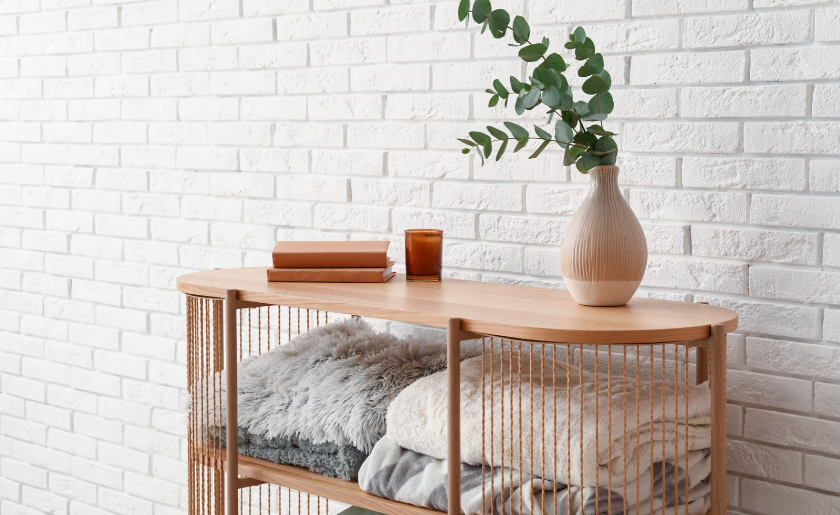
20. Give blankets a proper home
It’s easy to get discouraged seeing those blankets strewn about your living room. But what if those same clothes could be part of the décor? They can be, just by you storing them on a blanket ladder, a quilt rack, a wall-hook rack or in a large basket beside the sofa. If you use hooks or racks, make sure they can take the weight of a thick quilt. If not, a storage ottoman or a regular shelving unit works too.
21. Put up a wall pegboard
Pegboards have come a long way from their humble garage-bound beginnings. In a living room, pegboards can hold baskets, small shelves, hooks and even framed art and you can rearrange them whenever your needs change. With one setup, you’ll have easy access to your craft supplies, headphones, or small toys.
22. Use the back of a door
A great way to make use of vertical space, over-the-door rack or hanging pocket organizer can hold magazines, gift wrap, board games, pet leads or spare throws. It’s also one of the easiest renter-friendly ways to add storage without giving up floor space (plus, when you leave one apartment, it’ll be much easier to take the over-the-door rack you bought with you).
23. Add a rolling cart
A more laid-back descendant of the room service trolley, the rolling cart is a slim cart on wheels where you can store books, craft materials, toys, barware or electronics, then move wherever you need it. When guests arrive, roll it into a corner or another room or leave it in the living room to show off. If you want to win at living room storage, look for one narrow enough to fit beside the sofa or in a tight gap.
24. Make the TV part of a bigger picture
Depending on your interior design tastes, you might not want the focal point of your living room to be a television on a bare wall. To avoid this, surround your TV with shelves, cabinets or a built-in unit so it reads as one part of a larger display. If you’re feeling a bit extra, hide the screen behind sliding panels or artwork.
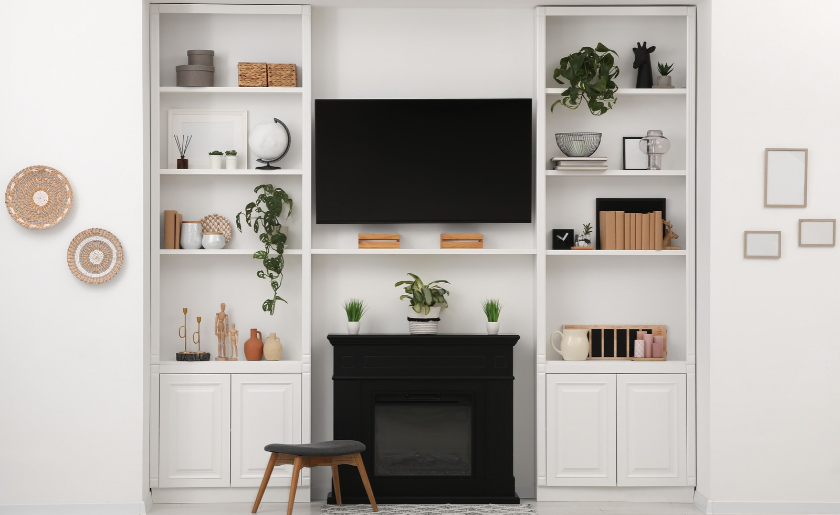
If you are buying a media console, check three things first:
- Ventilation: Electronics need airflow, so look for vents or an open back.
- Cord access: A cable opening in the back panel keeps wires tidy without trapping them.
- Access: A removable back panel or reachable outlet makes it easier to swap devices later.
25. Hide technical stuff with a custom cabinet
Add a custom cabinet to hide the more awkward but necessary gizmos in your home, be it a wall air-conditioning unit, radiator or router, but make sure air can still move through. You can go for slatted or drilled doors, which let it breathe while keeping things looking neat. Still, do make sure to check the manufacturer’s clearance guidance before you enclose a radiator or air conditioner.
26. Use the fireplace and mantel
If (and only if) the fireplace no longer works or is no longer in use, you can revamp it and use it to store stacked logs, baskets, books or a low cabinet. The mantel can take decorative boxes or shallow baskets for matches, candles and remote controls, just keep anything flammable well away from heat. If you still light the fireplace, obviously keep flammable items off the mantel and hearth (please).
27. Add mirrors behind or beside storage
For homes that are short on space, mirrors can go a long way to making the place feel bigger. For instance, if you put a mirror at the back of an alcove, that lets light bounce around and makes shelves feel less heavy. It also adds depth without adding clutter and just brings a bit more self-reflection to your day-to-day.
28. Turn a window seat into storage
Once a place where royal persons could stare longingly from a castle, the window seat has evolved into a multi-purpose piece of furniture: it has storage now!
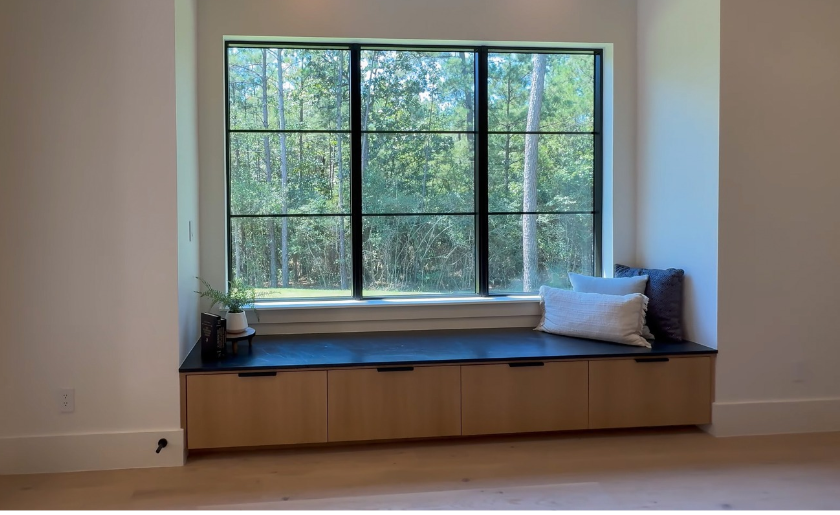
Get a cushioned seat with doors or a lift-up lid to turn an unused window area into a bench and a hidden spot for toys, games or office supplies.
Measure the furniture before you buy
It’s a story old as ads themselves. A piece can look perfect online and be a nuisance once it arrives. Before you commit, check:
Depth and walkways: A deep cabinet may offer lots of space but crowd a narrow path. A shallow console can make better use of the same wall.
Clearance: Drawers need room to pull out fully, hinged doors need room to swing and lift-tops need room to rise.
Inside dimensions: A shelf that fits paperbacks may not fit oversized art books and baskets need enough room to slide out.
Weight limits: Check the stated capacity for shelves, especially if you are storing books, records or other heavy things. Spreading the weight evenly does not replace following the limit.
Wall type and fixings: Wall-mounted shelves depend on the wall construction, the right hardware and the rated load.
Anchoring: Tall freestanding furniture should be secured as the manufacturer directs, particularly in homes with children.
Furniture materials that hold up
Solid wood has character and can usually be refinished. Veneer gives you a real-wood surface over a core, while engineered wood offers consistent finishes at a lower price, though quality depends a lot on construction and edge protection. Meanwhile, metal frames feel lighter and more structured and glass doors keep collections visible while keeping dust down.
For drawers you open every day, smooth glides and solid hardware will help you more than fancy details. Also, please respect the wood: Use coasters on surfaces, clean with products the maker recommends and wipe spills up promptly.
When the room is still too full
Even a well-organized living room can run out of room. Often the problem is not that the room lacks storage, but that it is holding things that do not need to be there all year. In this case, it may be a good idea to find a small storage unit near you(opens in new tab) and use it as an extension of your home: a place for the things you need a few times a year rather than every week.
What often makes sense to move out:
- Off-season items: Seasonal clothes(opens in new tab), holiday decorations(opens in new tab) and extra pillows(opens in new tab) can wait in labelled bins until you need them.
- Extra furniture(opens in new tab): A second armchair, spare side table or piece you plan to pass on can stay out of the way until it has somewhere to go.
- Toys your kids have outgrown or rotated: Keep a small selection in the room and swap them every few weeks. Children often treat rotated toys as if they are brand new.
- Collections and archives: Extra books, records you rarely play, board games you pull out once a year and boxes of photos or keepsakes are all good candidates.
- Hobby and sports gear: Instruments, craft supplies, camping equipment(opens in new tab) and seasonal sports gear take up a lot of floor space for the limited time they are in use.
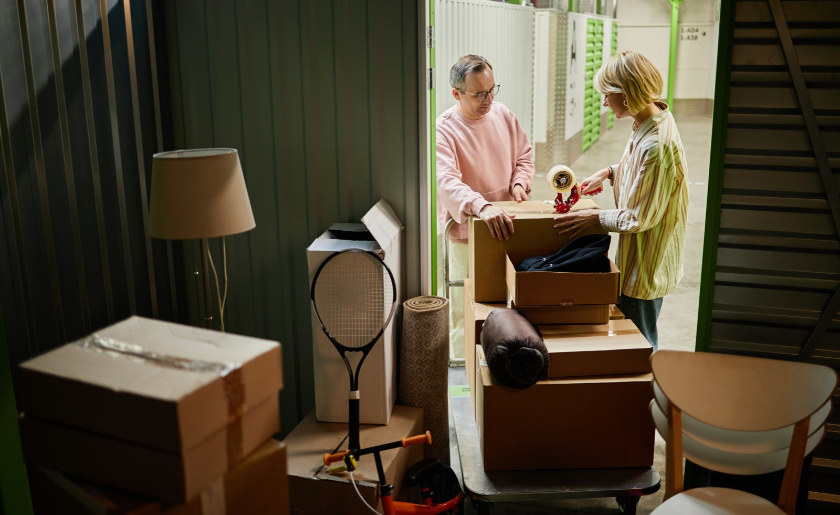
A few ways to make it work:
Pick a size that matches what you are storing. A 5×5(opens in new tab) unit is roughly the size of a large closet, while a 5×10(opens in new tab) can take a bedroom’s worth of boxes and a few furniture pieces, while a 10×10(opens in new tab) can hold the contents of a larger room. Our storage unit size guide(opens in new tab) helps you match the space to your things before you commit.
Think about climate control(opens in new tab). Wood furniture, upholstered pieces, leather, electronics, records, photos and books can warp, crack or grow mildew in extreme heat, cold or humidity. For anything you plan to keep for months, climate-controlled storage is the safer bet.
Label everything and keep a list. Mark each box with the room and contents and keep a short inventory on your phone. Put the things you might need first near the door and leave a narrow aisle so you can reach the back.
Your storage unit will work best as a rotation space, not somewhere to park decisions you keep putting off. Before renting, check what a storage unit costs in your area(opens in new tab), since prices vary by size, location and features. The point of the unit is to protect what matters in the living room: a comfortable sofa, clear walkways and shelves with room to breathe. Keep what you use weekly in the room and send the rest away on a seasonal schedule.
The takeaway
A calmer living room comes down to a few simple choices: mix open and closed storage, choose furniture that does more than one job and give the things you do not use every week somewhere else to live. Start with one zone, measure carefully and build from there. The room will feel bigger and putting things away will stop feeling like a chore.
Living room storage FAQs
What are the best storage options for a small living room?
Furniture that does two jobs: storage ottomans, lift-top coffee tables, benches, nesting tables and sofas with built-in compartments. Meanwhile, tall narrow shelves, corner units and under-sofa bins add capacity without eating up floor space.
How do I hide a TV and cables?
Surround the television with shelves or cabinets or cover it with a panel or artwork. You can also choose a media console with cable openings and ventilation and keep the back accessible for future changes.
Should I choose built-ins or freestanding furniture?
Built-ins fit awkward spaces precisely but can add value, while freestanding pieces usually cost less and can move with you. Many rooms work best with a mix of both.
How do I store blankets in the living room?
Use a storage ottoman, lidded basket, blanket ladder, quilt rack or wall hooks. Also, fold thick throws into thirds and stack them neatly if you want to leave them on display.
What can I store behind the sofa?
A slim console table or low cabinet is usually the best fit. Keep at least a walkway’s width between the sofa and the wall if people need to pass through.


Living Room Storage Ideas: 28 Ways to Reclaim Your Hosting Space
If a living room is where most of a household’s living happens, good storage should be the top priority for setting up or revamping the place. After all, think of how easier it would be to have people over when tidying up the place is just a matter of putting things in their right place (in a time when fewer and fewer people are entertaining friends at home(opens in new tab)). The trick is making room for all those wayward clothes, blankets, chargers and other small things that end up on (or, inexplicably, in) the sofa. Here are 28 living room storage ideas to get you started and make tidying up a quick affair.
25 Mudroom Storage Ideas (And Mistakes to Avoid)
When you come home with muddy boots, an armful of bags and a coat you can’t wait to take off, it’s nice to have somewhere to put it all. With a mudroom, you can leave the outdoor mess at the door instead of carrying it through the house. Traditionally, you’d set aside a separate room, but you can just as easily use a hallway, an entryway closet, a laundry-room corner or a stretch of wall near the entrance.
Is Your Home Office Worth the Rent? What Coworking and Self Storage Could Save You
Every square foot of your apartment comes with a price tag, and a home office claims more of them than most renters expect. It starts with a desk. Then come the second monitor, the printer, the filing cabinet and the overflow boxes. Before long, the corner you set aside for work has turned into a small room you are paying for every month.
Best U.S. Cities to Live Uncluttered: Plano, TX, Offers the Most Room to Breathe
Clutter is in our homes as much as in our heads. Both are shaped by where we live.

America’s Top Snowbird Destinations for 2026–2027: Florida Leads in Numbers, Texas Wins on Value
For Americans living in colder states, the approach of winter is reason enough to start looking south. Cold weather carries costs that go beyond the heating bill and shoveling snow. Seasonal affective disorder(opens in new tab) is far more prevalent in northern states, so a temporary move south isn’t simply an escape from the cold, but a chance to spend the hardest stretch of winter outdoors and in the sun.
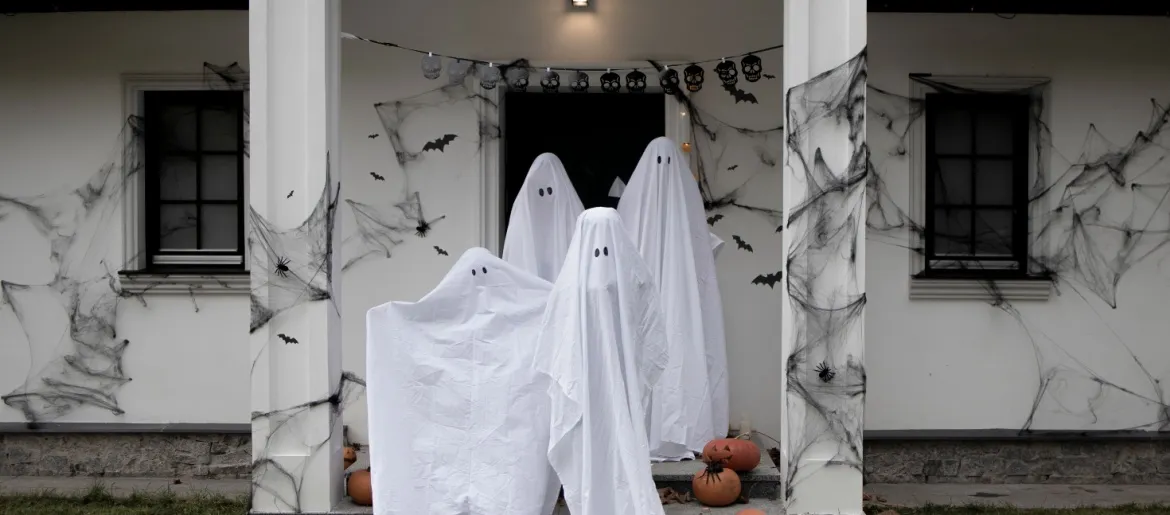
How Much Does Halloween Really Cost in 2026? Plan Wisely to Avoid the Scare of Hidden Costs
Americans’ love for Halloween is almost frightening — this year alone, we are on our way to spending $13.5 billion, according to data from the National Retail Federation(opens in new tab). That breaks down to about $115 Halloween costs per person, a whopping 49% more than 10 years ago.
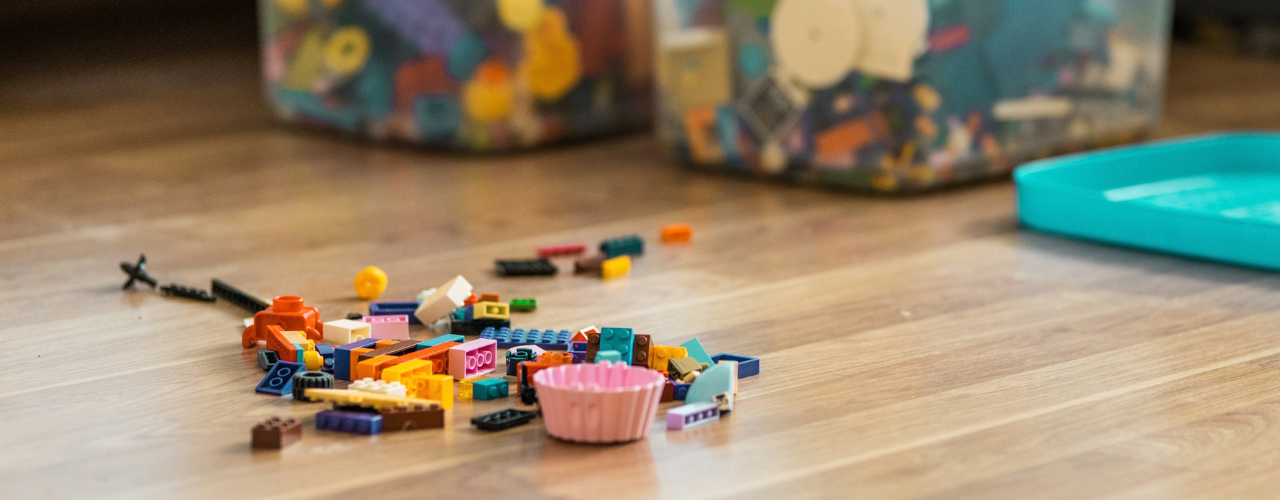
How to Store LEGOs: All the Fun, None of the Clutter
How to store LEGOs largely comes down to how your household uses them. If the bricks are part of everyday play, you need a setup that keeps them within easy reach and makes cleanup quick (for your feet’s sake, at least). Toy storage(opens in new tab) such as simple bins, playmats or containers that children can put away themselves may be enough. Larger or more serious collections usually need more organization, such as labelled drawers for loose pieces, trays for unfinished builds, shelves for completed models and separate storage for retired sets.

Cardboard Costume Guide: Tips and Ideas for a DIY Halloween
Whether for kids or adults, cardboard costume ideas often make the biggest splash once materialized, and that’s for a simple reason: doing a lot with a little is a universally impressive feat (especially in this economy). If you don’t have enough boxes you could temporarily repurpose, don’t worry! There are many places where you can find free moving boxes(opens in new tab), from stores and supermarkets to online groups and recycling drop-off spots. On the run? Try your luck at a self storage(opens in new tab) facility that sells moving supplies, often for cheap. This way, you can choose moving boxes of different shapes and sizes(opens in new tab), so you can make your costumes as complex as you want.

How to Celebrate Halloween: 9 Non-Spooky Ways To Enjoy It
As soon as October starts, it’s the official Halloween month. And while for many people it means it’s open season to get the scare of a lifetime, others, especially families with small children, might prefer to celebrate in a tamer way that’s both kid- and adult-friendly. While you’re likely to find more events where the spook factor is high, here’s how to celebrate Halloween in a not-so-scary way: