
America’s Top Snowbird Destinations for 2026–2027: Florida Leads in Numbers, Texas Wins on Value


Key Takeaways
- Florida and Texas own the snowbird map, accounting for 88 of the 100 highest-ranking destinations. Florida alone places 63 cities in the top 100, versus 25 in Texas.
- Central Florida takes the crown, with Winter Haven ranking #1 and nearby Lakeland #2; Lake Wales also makes the top 10.
- Texas combines warmth with value: McAllen and Mission rank #3 and #4 overall, while Brownsville and Harlingen also land in the national top 10.
- Arizona is the strongest alternative to Florida and Texas, placing six cities among the 100 highest scorers.
- Texas dominates the affordable end of the ranking, claiming 14 of the top 15 spots.
- Seasonal rentals abound in top snowbird markets: They make up 65% of rentals in Vero Beach, FL, 60% in Hollywood, FL, 58% in Yuma, AZ, and 57% in Clearwater, FL.
For Americans living in colder states, the approach of winter is reason enough to start looking south. Cold weather carries costs that go beyond the heating bill and shoveling snow. Seasonal affective disorder(opens in new tab) is far more prevalent in northern states, so a temporary move south isn’t simply an escape from the cold, but a chance to spend the hardest stretch of winter outdoors and in the sun.
If we look broadly at retirees and remote workers living across the colder northern half of the country, we’re talking about a potential snowbird pool on the order of 40 million-plus people — not an estimate of how many actually migrate seasonally, but of those whose age or work setup may give them the flexibility to do so.
But where should they go? A good snowbird destination has to pass a harder test than a good vacation spot. Sunshine and warm temperatures may get you there, but when you’re staying for months rather than a week, things like the price of groceries, access to healthcare, internet speeds and even where you keep your extra stuff start to matter.
In order to find out what places are best for snowbirds during the 2026-2027 winter, we analyzed close to 500 cities nationally, focusing on factors that can make or break a snowbird destination:
- Snowbird-friendly climate: October–March temperatures and air quality
- Beach access: Beaches within 10 miles
- Parks: Park space per capita
- Golf: Golf courses per capita
- Seasonal housing: Vacancy of rentals and seasonal-use homes
- Housing costs: Apartment rents and home prices
- Average annual revenue from short-term renting per housing unit
- Living costs: Price of groceries
- Retail: Number of stores
- Walkability index
- Self storage: Rental rates
- Internet: Local internet speeds
- Safety: Local safety levels
- Healthcare: Access to hospitals, healthcare facilities and medical professionals
Florida’s versatility versus Texas’s affordability
Florida and Texas remain the undisputed centers of snowbird country, together accounting for 88 of the 100 highest-scoring destinations in our ranking. Florida has the deepest bench, with 63 cities and arguably the widest range of winter lifestyles, from high-energy coastal hubs to laid-back beach communities and quieter inland towns. Texas contributes another 25, pairing warm winters with generally more approachable housing costs — and its particularly strong showing near the top suggests affordability can compete quite successfully with Florida’s more polished snowbird appeal.
Texas also shows just how much seasonal residents can matter to local economies. Nowhere is that clearer than the Rio Grande Valley, where the long-established “Winter Texan” population is part of the regional fabric: a UTRGV study(opens in new tab) estimated that roughly 57,000 Winter Texan households generated $761 million in local spending in a single season.
Beyond the big two, Arizona is the clearest alternative, with six cities among the 100 highest scorers and a very different draw: dry, sunny desert winters. Georgia follows with four cities, while Louisiana and Hawaii each place one.
With the big-picture winners clear, it’s time to zoom in. So, what does a winning snowbird destination actually look like on the ground? The top 10 offer very different answers, mixing warm winters and manageable costs with everything from beaches and golf to a well-established seasonal social scene.
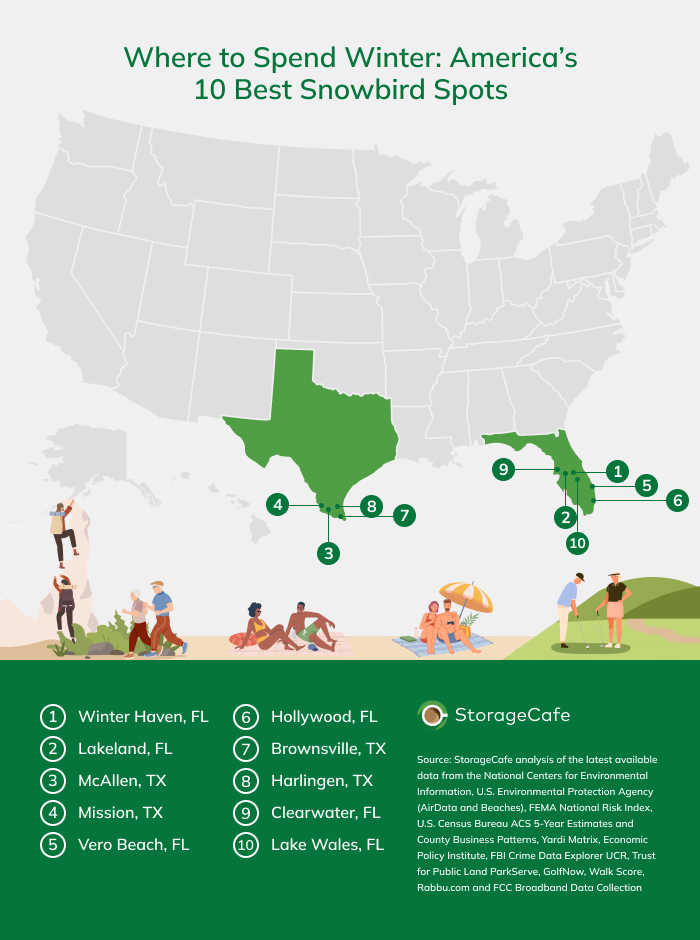
1. Winter Haven, FL
Winter Haven takes the #1 spot in our ranking, putting Central Florida firmly in the snowbird spotlight. In fact, three Polk County cities make the top 10, with Winter Haven joined by Lakeland and Lake Wales, pointing to the region as a compelling inland alternative to Florida’s traditional coastal snowbird hubs.
Winter Haven is built around water, although not the ocean. Its interconnected Chain of Lakes makes boating, fishing and waterfront dining part of everyday life, while eight golf courses offer plenty of ways to stay active. Housing is particularly snowbird-friendly, too: almost half of local rentals are available for seasonal visitors.
LEGOLAND Florida is a bonus for families and visiting grandchildren, while Orlando and Tampa are both within day-trip range. For snowbirds who want warm-weather Florida living without paying for (or dealing with the crowds of) a classic beach destination, Winter Haven offers an appealing middle ground.
2. Lakeland, FL
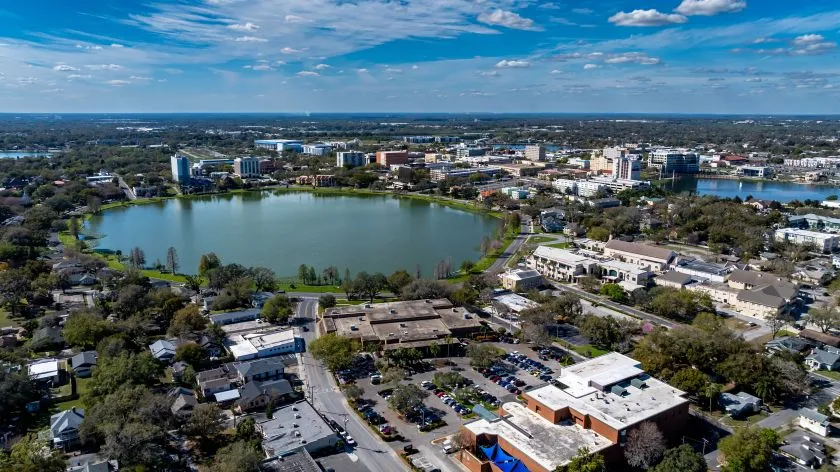
Sitting almost midway between Tampa and Orlando, Lakeland gives snowbirds Central Florida convenience without the bustle or price tag of either big metro. Same as in Winter Haven, not having ocean beaches doesn’t mean there’s no fun to have on the water. The city lives up to its name, with 38 lakes within its boundaries, including Lake Hollingsworth and Lake Morton, where the resident swans have become something of a local trademark.
About a third of the rentals in the area are destined for seasonal use, ensuring easy access to housing for snowbirds, while also bringing in significant money to the local economy. According to Rabbu(opens in new tab), a short-term rental data platform, a vacation property in the city brings in an annual revenue of close to $32K.
Downtown is compact and lively, while Florida Southern College houses the world’s largest single-site collection of Frank Lloyd Wright architecture. Add golf (no fewer than 12 courses locally), parks and easy day trips to both Gulf beaches and Orlando attractions, and Lakeland makes a particularly well-rounded winter base.
3. McAllen, TX
McAllen offers a more urban take on the Rio Grande Valley’s famously affordable Winter Texan lifestyle. Winter days are warm and generally dry, while the city has the shopping, healthcare and everyday services that make a multi-month stay easy rather than merely pleasant. Cost of living is among the most affordable among the cities analyzed, with monthly groceries around $680 for a four-person family per month.
It’s also in one of America’s great birding regions: Quinta Mazatlán, a 20-acre urban sanctuary, is right in the city, with several major Rio Grande Valley nature destinations nearby. Mexican and Tex-Mex food add a foodie dimension that’s hard to replicate elsewhere.
4. Mission, TX
Mission sits at the heart of one of the country’s most established snowbird regions, where seasonal residents are known simply as Winter Texans. RV resorts, golf courses and seasonal communities are part of the local fabric, while the combination of warm winters and relatively low living costs makes longer stays particularly practical. More than half of the local rental units are earmarked for seasonal use, proving that the city has built a serious economic ecosystem around snowbirds.
Nature is another major advantage: Mission is home to Bentsen-Rio Grande Valley State Park that brings more than 750 acres of protected subtropical landscape right to Mission’s doorstep, with trails for walking and cycling, waterways for paddling and easy access to the Rio Grande.
5. Vero Beach, FL
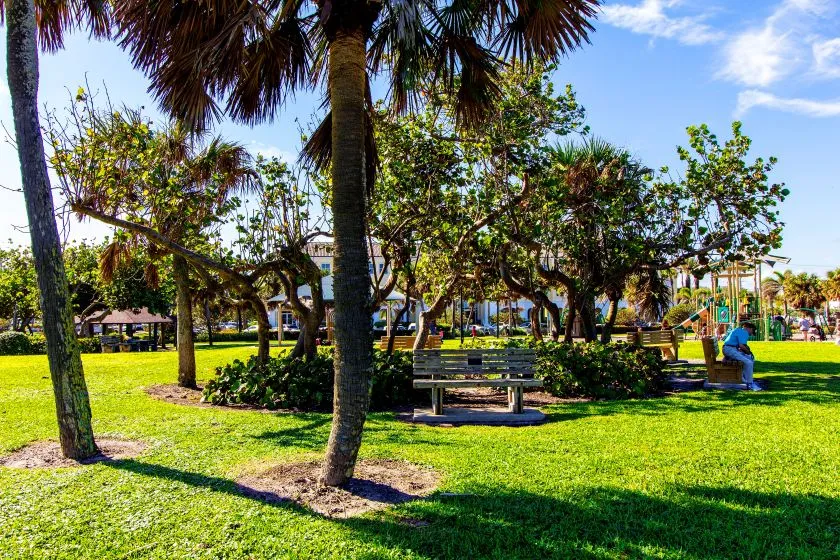
The infrastructure for visitors in Vero Beach is unparalleled: 65% of the vacant housing units are for seasonal and recreational use, it’s the second safest and has the third best retail access among all the cities analyzed, it’s very walkable and there are plenty of golf courses around. Naturally, all that comes at a cost, with Vero Beach also being one of the more expensive cities in our ranking.
Atlantic beaches and the Indian River Lagoon put swimming, boating, kayaking and fishing at the center of winter life, but the city also punches above its size culturally, with the Vero Beach Museum of Art and Riverside Theatre among its local institutions. It’s considerably quieter than South Florida’s major coastal hubs, making it a strong fit for snowbirds looking for the ocean without the Miami/Fort Lauderdale pace.
6. Hollywood, FL
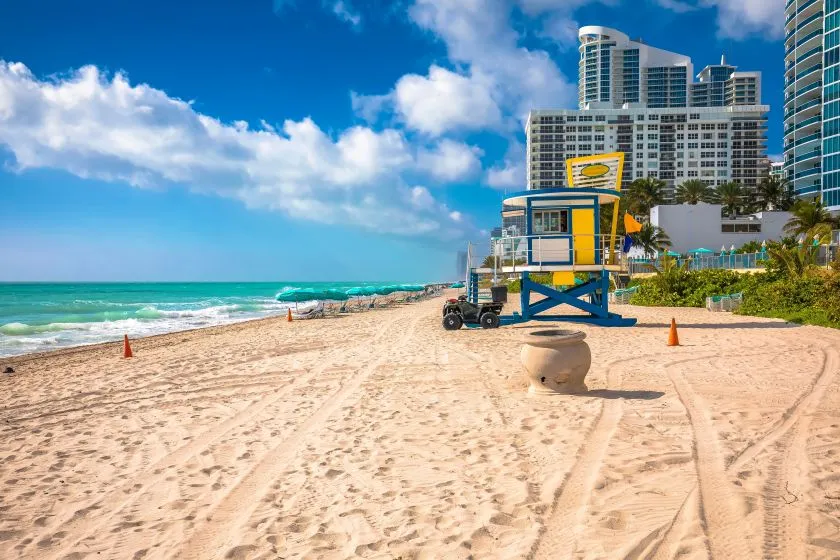
Hollywood delivers the classic South Florida winter, but on a somewhat more relaxed scale than neighboring Miami. Its signature feature is the Hollywood Beach Broadwalk, a roughly 2.5-mile promenade running alongside the Atlantic that’s made for walking, cycling and lingering over lunch outdoors in the middle of winter.
The almost tropical weather (71 degrees average between October and March) and the 50 miles of beaches turn it into a top destination for those who appreciate sunbathing, swimming and water sports. The city itself is relatively walkable and stores abound, adding another layer of fun for snowbirds.
The housing market is teeming with short-term options, as 60% of the vacant housing units are destined for seasonal use. A short-term rental unit here generates, on average, over $63K annually, a clear indicator of the huge impact snowbirds and tourists have on the local economy.
The location is another major asset of Hollywood, FL: Fort Lauderdale is immediately north, Miami to the south, and two major airports make getting in and out unusually easy.
7. Brownsville, TX
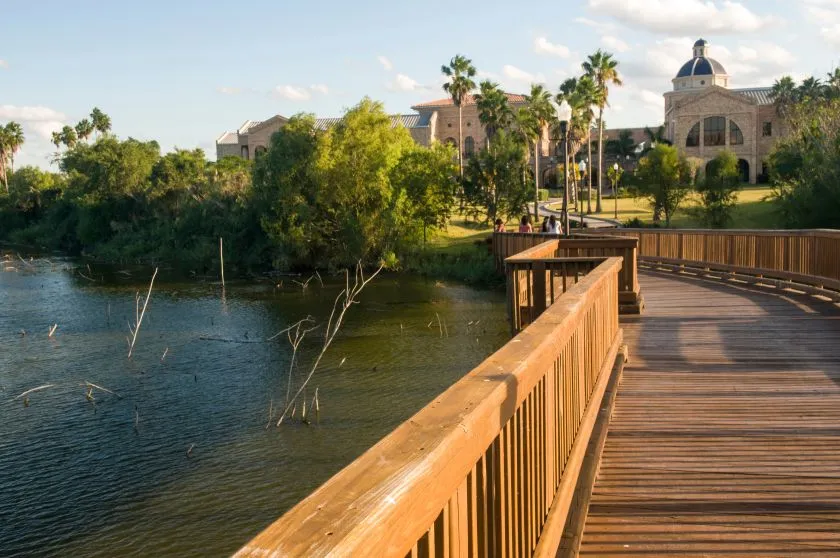
Brownsville pairs subtropical South Texas winters with easy access to beaches. Even if the city itself is not on the coast, South Padre Island’s beaches are roughly a 40-minute drive away, while closer to home the resacas, wetlands and wildlife refuges make this another excellent base for birding and nature. Brownsville’s historic downtown also gives it considerably more character than the typical purpose-built winter resort.
All of that comes with a very affordable bill – renting and buying groceries here is significantly less expensive than in most cities in top 10. The average monthly rent hovers around $1,000 per month, while groceries for an entire family are under $700 per month. For those coming back year after year, renting a self storage unit is pretty affordable as well, at around $110 per month, allowing snowbirds to keep things like clothing, small appliances, sport equipment or even vehicles locally and thus travel lighter.
8. Harlingen, TX
Harlingen offers a quiet and comfortable home base for exploring the Lower Rio Grande Valley, with South Padre Island, Brownsville and McAllen all within easy driving distance. It’s long been geared toward Winter Texans, with RV parks, golf and seasonal activities woven into winter life. Spending the winter months here is budget friendly as well, city ranking in top 20 most affordable for both housing and groceries among the almost 500 cities analyzed.
Harlingen also has its own airport, a particularly useful perk for part-time residents, while nearby wildlife refuges and World Birding Center sites make outdoor recreation about much more than golf.
9. Clearwater, FL
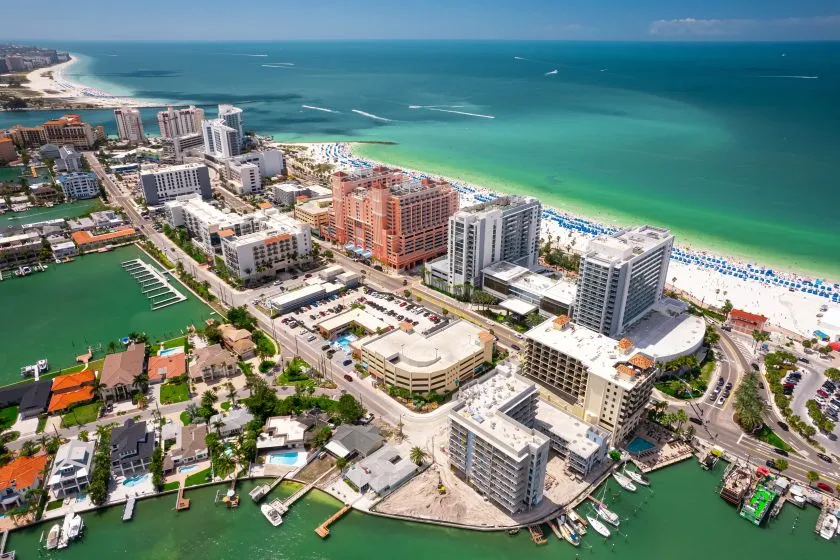
Clearwater makes a very persuasive case for beach lovers, with more than 20 miles of beaches in the area. Clearwater Beach and its broad white-sand shoreline are just minutes from downtown, with boating, fishing, waterfront restaurants and the nightly sunset scene at Pier 60 close at hand.
The average temperature from October to March sits at a more than comfortable 67 degrees, and nine golf courses are awaiting players. A significant share, 57%, of the vacant housing units in the city are classified as seasonal and recreational, giving options to snowbirds when it comes to housing.
Clearwater is also part of the much larger Tampa Bay area, so seasonal residents aren’t limited to resort-town amenities: St. Petersburg and Tampa bring museums, sports and air connections within easy reach.
10. Lake Wales, FL
Rounding up our top 10, Lake Wales is for snowbirds who prefer their Florida winter on the quieter side. Set among the rolling hills and lakes of Central Florida, it trades coastal crowds for a slower pace, plenty of outdoor space and generally more approachable living costs. Rents hover around $1,100 per month while the monthly grocery bill for a family of four is slightly over $800. About 43% of the vacant units in the area are for seasonal visitors.
Its standout attraction is Bok Tower Gardens, a 250-acre garden and nature preserve built around the landmark Singing Tower, while nearby lakes and the four golf courses add plenty of reasons to stay outdoors. Orlando and Tampa are still within reach for a day trip, making Lake Wales feel tucked away without being isolated.
Top 3 Arizona cities for snowbirds
Arizona offers the clearest alternative to the Florida-Texas snowbird axis, swapping humidity and beaches for dry air, abundant sunshine and dramatic desert scenery. Its strong seasonal communities, golf and outdoor lifestyle make it a natural winter haven.
Yuma, AZ
The average temperature in Yuma from October to March sits around 64 degrees, slightly lower compared to most of the Texan and Floridian cities, but the sunshine reaches the ground about 90% of daylight hours, making it the right destination for those who want to avoid the winter blues while also avoiding Florida’s humidity or the sub-tropical temperatures in many of the Texan cities.
A significant chunk, 58%, of Yuma’s vacant housing units here are for seasonal use, and, in terms of affordability, it sits right in the middle between Florida and Texas. The city has a deeply established seasonal and RV community, while the Colorado River, nearby desert trails and Imperial Sand Dunes open up plenty of outdoor options.
Lake Havasu City, AZ
Lake Havasu City puts a waterfront spin on the Arizona snowbird lifestyle. Set on the Colorado River, it pairs the state’s famously dry, sunny winters with a huge reservoir for boating, fishing and waterside recreation. The city’s best-known landmark, the original London Bridge, anchors a walkable waterfront area with restaurants, shops and trails, while golf and the surrounding desert provide plenty of options away from the water.
The air quality is amazing – 8th best among all the cities analyzed – and a whopping three-quarters of the local rentals are for seasonal use.
Tucson, AZ
Tucson offers desert winter living with the amenities and cultural life of a proper city. Surrounded by the Sonoran Desert and mountains, it enjoys mild, generally dry winters while putting hiking and outdoor recreation practically on the doorstep. Saguaro National Park flanks the city on both sides, providing one of the most distinctive landscapes of any destination in the ranking.
Naturally for a city its size, a lower share of vacant housing units are destined for seasonal use (19%). However, housing costs are significantly lower here than in Lake Havasu City.
There’s plenty happening indoors, too. Tucson has a strong arts and cultural scene, major healthcare facilities, golf and the University of Arizona, while its UNESCO-recognized food culture gives snowbirds an especially good reason to explore beyond the usual winter-resort routine.
Top 3 Georgia cities for snowbirds
Georgia brings a softer Southern take on snowbird living, combining relatively mild winters with affordability, historic cities and, in some areas, easy access to the Atlantic coast. It’s a good middle ground for those who want to head south without going all the way to Florida.
Savannah, GA
Savannah offers snowbirds a winter with history and character. Its famously walkable historic district is built around leafy public squares, elegant architecture and parks, with restaurants, galleries and the riverfront providing plenty to do without getting in the car.
There are plenty of opportunities for golfing as well, the city is extremely safe and about 20% of the vacant homes and apartments are for seasonal use, which, for a midsize city, translates into varied housing options for snowbirds.
Winters are generally mild enough to make walking and outdoor dining comfortable, while Tybee Island and its Atlantic beaches are roughly 20 miles away.
Albany, GA
Located in southwest Georgia, Albany is well removed from the state’s busier tourist destinations and offers mild winters alongside generally approachable housing and everyday costs. Rents hover around $1,000 per month while groceries for a family of four are around $760 per month.
The Flint River runs through the city, with the RiverFront Park and trails providing an easy outdoor focus, while the nearby Radium Springs area showcases one of Georgia’s largest natural springs.
Albany is better suited to snowbirds looking for an inexpensive, low-key winter base, with the services of a regional city but fewer crowds and less seasonal bustle than better-known destinations farther south.
Brunswick, GA
Brunswick puts snowbirds at the gateway to Georgia’s Golden Isles. The city has its own historic downtown and waterfront, while St. Simons Island and Jekyll Island are close enough to make beaches, cycling, golf and coastal nature part of everyday winter life.
For those who like the idea of island life without necessarily paying to live on an island, Brunswick makes a particularly practical winter base. Good access to services (retail, healthcare), as well as internet speed make it suitable for both retirees and remote workers.
Top 3 Louisiana cities for snowbirds
Louisiana’s mild winter weather also comes with exceptional food, music, festivals and distinctive local character, making it particularly appealing to snowbirds who want plenty to experience beyond the traditional golf-and-beach routine.
Lafayette, LA
Lafayette boasts one of Louisiana’s richest food and music scenes, where local restaurants, live music and festivals make it easy to find something to do beyond the usual warm-weather pursuits. Downtown and nearby neighborhoods provide plenty of local flavor, while the surrounding bayous and wetlands open up opportunities for paddling, fishing and exploring Acadiana.
Baton Rouge, LA
Baton Rouge offers museums, historic sites, parks and a lively restaurant scene, while Louisiana State University brings sports, cultural events and plenty of energy to the city throughout winter.
For longer-term visitors, the bigger advantage is practicality: major healthcare, shopping, dining and everyday services are readily available, without the tourism intensity of New Orleans.
New Orleans, LA
Few snowbird destinations can compete with New Orleans when it comes to keeping winter interesting. Instead of building the season around beaches and golf, snowbirds can fill it with live music, restaurants, historic neighborhoods, museums and festivals. About 20% of the vacant housing units are for seasonal use, which, in this large city, provides snowbirds with real choices when it comes to housing.
Winters are generally mild enough for long walks through the French Quarter, Garden District or City Park, and the city’s extraordinary dining and music scenes provide plenty of backup when the weather doesn’t cooperate.
Texas dominates the snowbirding affordability map
Put affordability ahead of everything else and the snowbird map changes considerably. We ranked our top 100 best cities for snowbirds based on rent, home prices and groceries costs, to find out where snowbirds get the best bang for their buck.
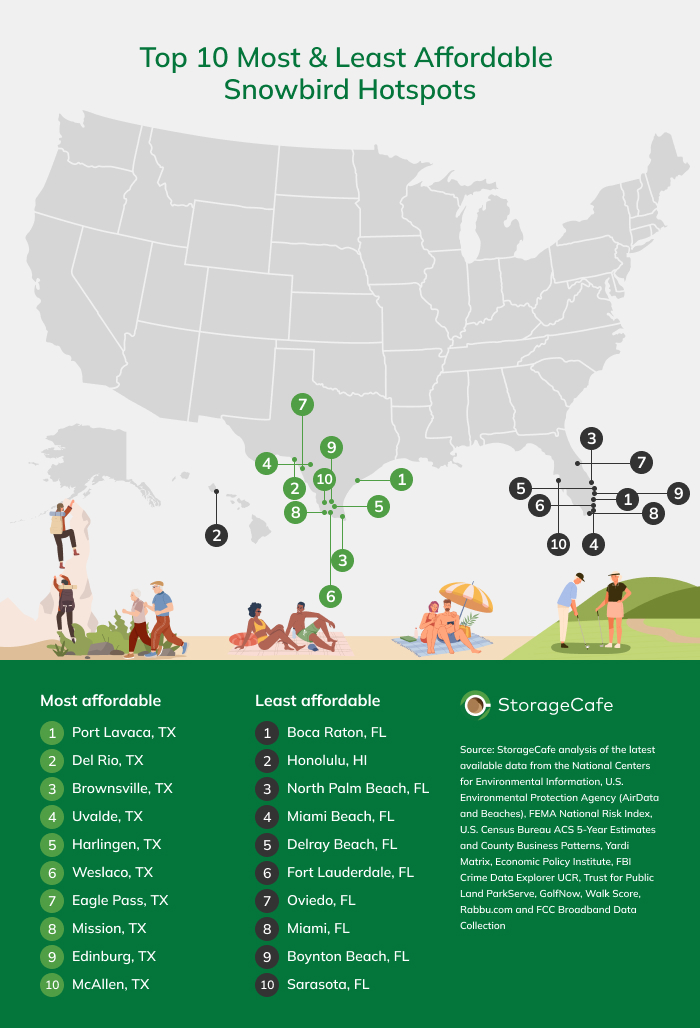
Texas dominates the ranking of the most affordable destinations. Port Lavaca, TX, is the most affordable of the 100 top snowbird destinations, followed by Del Rio and Brownsville. Texas cities take 14 of the first 15 spots, with Albany, GA, at No. 13, the only exception.
South Texas accounts for much of that advantage. Brownsville, Harlingen, Weslaco, Mission, Edinburg and McAllen all rank among the most affordable options, giving snowbirds several relatively inexpensive choices in a region where warm winters and seasonal living are already well established. Outside Texas, Yuma, AZ, ranks 16th for affordability, while Lake City, FL, at No. 18, is Florida’s most affordable destination among the top 100.
Florida becomes much more expensive as you move toward its best-known coastal snowbird markets. Six of the 10 least affordable destinations are in South Florida: Boca Raton, North Palm Beach, Miami Beach, Delray Beach, Fort Lauderdale and Miami.
Self storage can make the two-home lifestyle easier
Spending several months away from home comes with a recurring question: how much stuff should make the trip? For snowbirds returning to the same area year after year, self storage can effectively become an extension of their winter home. Instead of hauling seasonal clothing, household items, sports equipment and other belongings back and forth, they can leave most of their winter setup behind and travel lighter the next time around.
That kind of flexibility is hardly niche anymore. One in four Americans currently rents self storage, according to our latest survey, making extra space an increasingly common part of how households manage their belongings. For snowbirds, having affordable storage close to their seasonal home can simply take some of the logistics out of living in two places.
Many of the best destinations for snowbirds feature affordable self storage costs – only two of the cities in our top 10, Vero Beach(opens in new tab) and Hollywood(opens in new tab), in Florida, register street rates that are above the national average. Renting a self storage unit in Winter Haven, FL(opens in new tab), our top ranking city, on the other hand, hovers around $110, well below the $130 national average.
Below, you can check out self storage costs and availability in the country’s top 100 best cities for snowbirds:
Self Storage Rates and Supply in America's Top 100 Snowbird Destinations
*Rates reflect all unit sizes.Source: StorageCafe analysis of Yardi Matrix data (Data as of Jul. 2026 | Pub: Sep. 2026)
Ultimately, the best place to escape winter isn’t necessarily the one with the highest temperatures or the closest beach. Spending several months somewhere turns a getaway into everyday life, and that puts affordability, housing, healthcare, things to do and simple convenience on much more equal footing with sunshine. Whether that points to an inland Florida lake town, an affordable South Texas community or the Arizona desert, the best snowbird destination is one that still feels like a good choice long after the vacation feeling wears off.
See how each city in our analysis performs across the factors that matter to snowbirds:
Expert opinions
To go beyond the numbers, we reached out to experts for their perspective on what truly makes a great snowbird destination.
Kelly Bricker, Associate Dean, School Director, and Professor, School of Community Resources & Development (CRD)
What factors are shaping where snowbirds choose to spend the winter today?
I think we are moving beyond the traditional idea that snowbirds are simply chasing sunshine. Climate still matters, of course, but today’s winter residents are increasingly looking at the overall quality of life a destination provides.
Access to natural environments is an especially important part of that equation. Parks, hiking and walking trails, bike paths, open space, water, and opportunities to be outdoors can contribute substantially to physical activity, mental well-being, and social connection. For many older adults, being able to walk out the door and safely access a trail or natural area becomes part of a daily wellness routine rather than simply a recreational amenity. Destinations also need the infrastructure that enables an active lifestyle: accessible, well-maintained trails; healthcare; locally unique restaurants and services; cultural opportunities; transportation; safety; and places where people can develop a sense of community.
How important is affordability when choosing a snowbird destination?
Affordability is very important, but I would define it more broadly than the price of housing. Snowbirds are increasingly looking at the total cost of spending several months in a destination: housing or seasonal rental costs, utilities, insurance, transportation, food, recreation, healthcare access, and taxes, where applicable.
A destination can be very attractive, but if the cost of participating in that lifestyle becomes too high, people have alternatives. At the same time, I don’t think people necessarily choose the least expensive destination. They are looking for value. A place that costs somewhat more may still be attractive if it provides excellent outdoor recreation, a strong trail system, good healthcare, safety, social connections, cultural amenities, and an overall high quality of life.
How are snowbird trends changing, and what should we expect in the coming years?
I expect snowbird travel to become increasingly diverse and less defined by only a handful of traditional destinations. Arizona and Florida will certainly remain important because the climate remains a powerful attraction. But snowbirds have more information and more choices than ever before, and I think we will see people comparing destinations based on a much broader set of qualities, such as affordability, outdoor recreation, natural beauty, healthcare, walkability, community, cultural experiences, and climate comfort. We may also see greater flexibility in when and how long people stay. Climate variability, rising costs, and changing lifestyles may encourage people to experiment with different destinations rather than automatically returning to the same place for an entire winter.
For destinations, that creates both an opportunity and a responsibility. Communities that want to attract seasonal residents should think beyond simply marketing good weather. They should invest in the things that create healthy, livable places for residents and visitors alike: protected areas such as national, state, and local parks and conservancies; connected trails, water-based and land-based; accessible recreation; vibrant local businesses; strong community spaces; and sustainable management of growth within the destination.
Ultimately, I think the destinations that will be most successful are those that recognize that snowbirds aren’t simply looking for a place to escape winter. They are looking for a place where they can live well in winter and feel they belong.
SooCheong (Shawn) Jang, Ph.D., Professor, White Lodging-J.W. Marriott, Jr. School of Hospitality and Tourism Management, Purdue University, USA
What factors are shaping where snowbirds choose to spend the winter today?
While climate and warm winter temperatures remain important factors, contemporary snowbirds increasingly evaluate destinations based on the overall quality of life they can maintain during an extended stay. Today’s seasonal residents place greater weight on a combination of lifestyle amenities and essential infrastructure — particularly access to quality healthcare and medical services, convenient transportation, dining and recreation options and opportunities for social engagement. Beyond simply seeking a warm place to spend the winter, many snowbirds are looking for destinations that allow them to maintain their health, social connections, daily routines, and digital connectivity with minimal disruption.
How important is affordability when choosing a snowbird destination?
Affordability serves as an essential screening factor, but consumer decisions are ultimately based on the value they receive for the total cost of spending several months in a destination. Recent increases in housing costs, insurance premiums, HOA fees, and everyday living expenses have likely made seasonal residents more price-conscious.
Crucially, snowbirds weigh these costs against access to healthcare, recreation, dining, transportation, and other services that directly affect their quality of life. As some traditional snowbird destinations become more expensive, we may see greater interest in secondary or inland destinations that can offer a comparable lifestyle and strong service infrastructure at a more manageable cost.
How are snowbird trends changing, and what should we expect in the coming years?
The traditional model of spending several consecutive winter months in one retirement destination is likely to become more diverse. Greater flexibility in how and where people work, along with changing preferences among younger retirees and near-retirees, may encourage shorter stays, multiple destinations, and more flexible seasonal living arrangements.
Moving forward, destinations and hospitality businesses may need to accommodate residents who want something between a short vacation and a traditional long-term residence such as, for example, extended-stay accommodations, flexible leasing, convenient storage solutions, and wellness, healthcare, recreation, and community services designed for seasonal residents.
I also expect destination choice to become more geographically dispersed as travelers look beyond the most established Sunbelt markets for places that combine favorable weather, good healthcare access, quality of life, and reasonable costs.
Dr. Xiaoxiao Fu, Associate Professor and Ph.D. advisor at the Rosen College of Hospitality Management, University of Central Florida
What factors are shaping where snowbirds choose to spend the winter today?
Snowbirds are increasingly looking at a combination of economic, lifestyle, and practical factors when deciding where to spend the winter. Climate remains the foundation of the decision: warm temperatures, sunshine, and opportunities for outdoor activities are still major attractions. However, weather alone is no longer sufficient to explain destination choice.
Affordability has become increasingly important, particularly as housing, insurance, utilities, food, and transportation costs have risen in many traditional snowbird destinations. Seasonal residents are also paying greater attention to healthcare access, including the availability of hospitals, physicians, pharmacies, and other services that become particularly relevant as people spend longer periods away from their primary residences.
Lifestyle is another major consideration. Snowbirds may look for beaches, golf, boating, restaurants, shopping, cultural attractions, entertainment, and opportunities to socialize. Established snowbird communities can be particularly attractive because they provide social networks and a sense of familiarity.
Accessibility also matters. Convenient airports, direct flights, good roads, and proximity to a snowbird’s primary residence can reduce the cost and inconvenience of seasonal travel. Increasingly, snowbirds are also considering safety, climate-related risks, and the overall quality of life when comparing destinations.
How important is affordability when choosing a snowbird destination?
Affordability is one of the most important factors, but snowbirds are increasingly thinking about affordability in terms of overall value rather than simply looking for the cheapest destination.
A snowbird may compare not only the monthly rent or home price but also property taxes, insurance, utilities, groceries, transportation, healthcare, restaurants, and entertainment. For international snowbirds, exchange rates can add another important dimension to the calculation.
This creates an interesting distinction between low cost and perceived value. A destination may be relatively expensive but still attractive if it provides a high-quality lifestyle, excellent healthcare, convenient transportation, desirable amenities, or strong social opportunities. Conversely, a lower-cost destination may not be attractive if it lacks the services or lifestyle that seasonal residents want.
Rising costs in some traditional destinations may therefore encourage snowbirds to look beyond established markets and consider smaller communities or alternative states and countries. This could create new opportunities for destinations that can offer a combination of affordability, amenities, and quality of life.
How are snowbird trends changing, and what should we expect in the coming years?
The snowbird market is becoming more diverse, flexible, and segmented. The traditional image of a retiree spending several months every winter in one Florida or Arizona community still represents an important part of the market, but it does not capture the full range of today’s seasonal residents.
Some snowbirds are considering alternative U.S. destinations, while others are exploring Mexico, the Caribbean, and other international locations. Cost, exchange rates, climate, and lifestyle differences can all contribute to these decisions. Some seasonal residents are also becoming more flexible about the length and timing of their stays, including dividing the winter between multiple destinations.
Another important change is that snowbirds are not necessarily seeking the warmest possible destination. Increasingly, they may be balancing warmth with concerns about extreme heat, hurricanes, flooding, insurance costs, and other climate-related risks. Healthcare and accessibility may also become increasingly important as the snowbird population ages.
Looking ahead, I expect the market to become more segmented according to different needs and lifestyles. Some snowbirds will prioritize affordability, others healthcare, beaches, golf, culture, luxury, or social connections. As a result, there may be less emphasis on identifying one universally “best” snowbird destination and more emphasis on identifying the best destination for a particular type of seasonal resident.
Overall, the snowbird decision is evolving from “Where is warm?” to “Where can I enjoy the winter lifestyle I want, at a cost and level of convenience that work for me?” This shift creates opportunities for both traditional destinations and emerging markets to compete by offering a distinctive combination of value, lifestyle, accessibility, healthcare, and quality of life.
Methodology
This analysis was done by StorageCafe, an online platform that provides storage unit listings across the nation.
We analyzed 472 U.S. cities for which complete data was available to identify the best destinations for snowbirds.
Below, you can find the metrics included in the analysis, their sources and the weight assigned to each metric:
Fair use and distribution
This study serves as a resource for the general public on issues of common interest and should not be regarded as investment advice. The data is true to the best of our knowledge, but may change if amendments to it are made. We agree to the distribution of this content, but we do require a mention in return for attribution purposes.

America’s Top Snowbird Destinations for 2026–2027: Florida Leads in Numbers, Texas Wins on Value
For Americans living in colder states, the approach of winter is reason enough to start looking south. Cold weather carries costs that go beyond the heating bill and shoveling snow. Seasonal affective disorder(opens in new tab) is far more prevalent in northern states, so a temporary move south isn’t simply an escape from the cold, but a chance to spend the hardest stretch of winter outdoors and in the sun.
How much does Halloween really cost in 2026? Plan wisely to avoid the scare of hidden costs
Americans’ love for Halloween is almost frightening — this year alone, we are on our way to spending $13.5 billion, according to data from the National Retail Federation(opens in new tab). That breaks down to about $115 Halloween costs per person, a whopping 49% more than 10 years ago.

How to Store LEGOs: All the Fun, None of the Clutter
How to store LEGOs largely comes down to how your household uses them. If the bricks are part of everyday play, you need a setup that keeps them within easy reach and makes cleanup quick (for your feet’s sake, at least). Toy storage(opens in new tab) such as simple bins, playmats or containers that children can put away themselves may be enough. Larger or more serious collections usually need more organization, such as labelled drawers for loose pieces, trays for unfinished builds, shelves for completed models and separate storage for retired sets.

Cardboard Costume Guide: Tips and Ideas for a DIY Halloween
Whether for kids or adults, cardboard costume ideas often make the biggest splash once materialized, and that’s for a simple reason: doing a lot with a little is a universally impressive feat (especially in this economy). If you don’t have enough boxes you could temporarily repurpose, don’t worry! There are many places where you can find free moving boxes(opens in new tab), from stores and supermarkets to online groups and recycling drop-off spots. On the run? Try your luck at a self storage(opens in new tab) facility that sells moving supplies, often for cheap. This way, you can choose moving boxes of different shapes and sizes(opens in new tab), so you can make your costumes as complex as you want.

How to Celebrate Halloween: 9 Non-Spooky Ways To Enjoy It
As soon as October starts, it’s the official Halloween month. And while for many people it means it’s open season to get the scare of a lifetime, others, especially families with small children, might prefer to celebrate in a tamer way that’s both kid- and adult-friendly. While you’re likely to find more events where the spook factor is high, here’s how to celebrate Halloween in a not-so-scary way:

Motorcycle Storage Guide: How to Store Your Bike Safely
Motorcycles may be born to be wild, but eventually even the wild ones need somewhere to park. Whether riding season is winding down or your current living situation comes with plenty of square footage for you and less for your bike, motorcycle storage is one of those parts of ownership that doesn’t get as much airtime as the open road.

Halloween Decorating on a Budget (And Cheap Ideas for Everything Elsee)
Halloween has crept a long way from its eerie origins. While All Hallows’ Eve has transformed through the centuries, it wasn’t until the 1930s that trick-or-treating became a tradition in the U.S. and businesses began conjuring up mass-produced Halloween costumes. Now, Halloween is a monster-sized, billion-dollar industry, with a cauldron full of costumes and decorations ranging from the mainstream to the macabre. But is it all really worth your wallet? Maybe, but we’ll let you in on a little secret: You can keep your Halloween decorating on a budget and save on everything else, too. Take this plan and see it through!

Moving From a House to an Apartment: What to Expect, How to Downsize & How Self Storage Helps
For some, moving from a house to an apartment is a financial decision. For others, it’s about simplifying life. Maybe the kids have moved out and half the house sits empty, or you’re approaching retirement and no longer want to spend weekends on repairs. Or perhaps you’ve been weighing the cost of buying a home and wondering whether renting simply makes more sense right now.

Family Heirlooms Overload: How to Handle Family Inheritance Without Regret
Handling family heirlooms after a loss requires managing legal authority, emotional pressure and practical logistics at the same time, and the order you take them on matters more than most people expect.