

A mudroom gives you somewhere to set down bags, kick off muddy boots and keep the outdoors at the door. Classically, it is defined as a separate room, but it can also be a hallway, entryway closet, laundry-room corner, or stretch of wall by the door can work just as well.
The best mudroom storage makes everyday routines easier: coats and bags have a clear place to land, shoes stay near the door and wet gear can dry without creating a mess. Start with the items your household uses most, then choose storage that fits both your space and the way you come and go.
Here are 25 mudroom storage ideas to help you create an entry that feels organized, welcoming and easy to maintain.
Find the right place for your mudroom
You don’t necessarily need a dedicated room to make a mudroom work. Look for the door your household uses most, then build around the space you already have.
1. Create a one-wall drop zone
Choose a single free wall near the entrance and let it hold the essentials: a bench for sitting, hooks above it for coats and bags and shoe storage below. Add a narrow shelf or small upper cabinet if you also need space for gloves, keys, or other everyday items. Before buying anything, open the door fully and walk through the space. Also, make sure there’s still room for coats and backpacks to hang without blocking the path.
2. Turn an unused corner into storage
If one room has an L-shaped layout, that seemingly awkward corner can turn useful with a good mudroom. Place a bench along one wall, add hooks and shelves above it and use the adjoining wall for shoe storage, baskets, or a tall cabinet. As for the corner itself, keep it simple. Drawers and cabinet doors need room to open, so an open cubby or continuous bench can be easier than trying to fit storage into every inch.
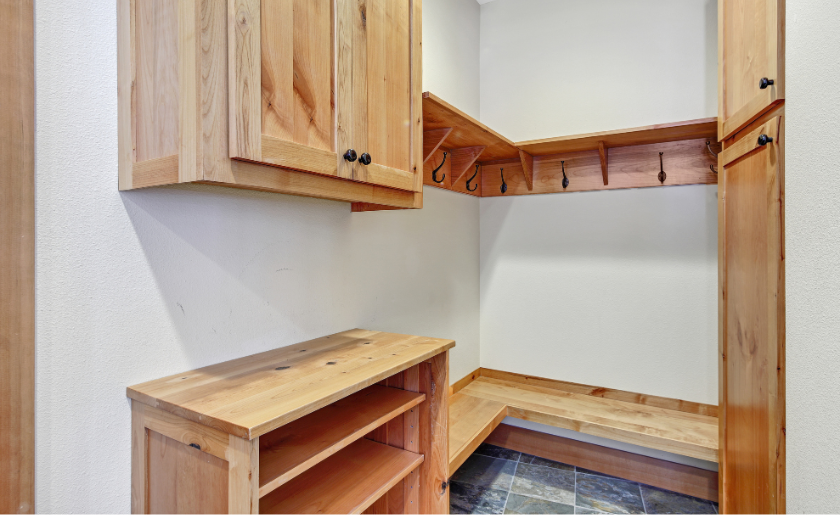
3. Use three walls in a larger mudroom
Should you have a full room at your disposal, this is your chance to plan a bespoke U-shaped mudroom that sets a nice tone to the home and may even increase its value. With a U-shaped layout, you give coats, shoes, bags and seasonal gear separate storage places. Add a bench along the back wall and you also get a natural place to sit, then zhuzh it up with some lockers or cabinets on the side walls, so each person gets their own zone. Still, try not to fill every wall. Leave enough space to sit down, pull on boots and move past someone who’s already using the bench.
4. Convert an entryway closet
A closet can become a compact mudroom with hooks, shoe shelves and a few baskets. If the depth allows, add a small bench inside so you can sit while putting on shoes. Keep the doors if you prefer to hide clutter, or remove them for easier access. Just check that you’ll still have room for long coats and that the layout feels comfortable to use.
5. Share space with the laundry room
If your laundry room sits near a frequently used entrance, borrow part of it for coats, shoes and bags. Put hooks and shoe storage close to the door, then add a hamper for dirty socks, sports clothes and other items headed for the wash. Keep clear access to the washer and dryer. For a larger renovation, ask a contractor whether a utility sink would make muddy cleanups easier.
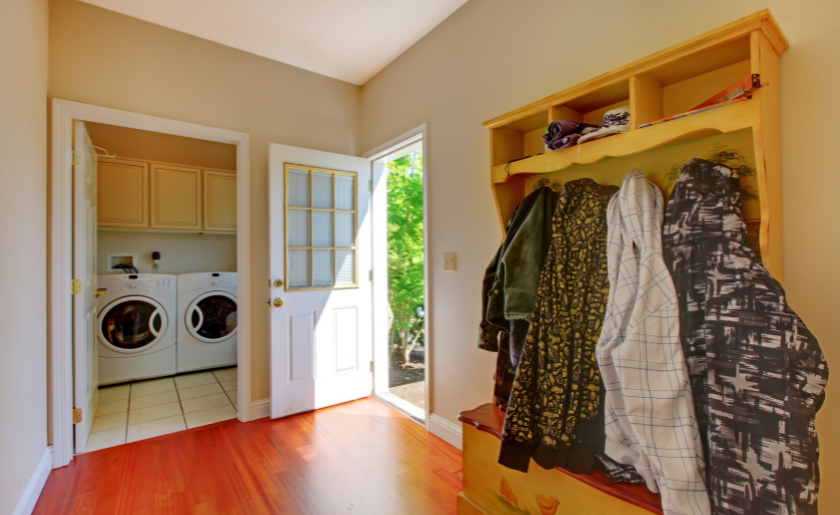
6. Make a drop zone by the garage door
When indoor space is tight, create a landing area on the garage side of the door into your home: a bench, hooks and a shoe shelf give outdoor gear somewhere to stay before it reaches the rest of the home. Keep the walkway, car doors and path through the garage clear. For delicate accessories or everyday coats, indoor storage may be kinder than exposing them to garage temperature swings.
7. Use the space beneath the stairs
The area under a staircase can hold low cubbies, pull-out drawers, baskets and taller sections for coats or bags. Keep frequently used items near the front, where you can reach them without crouching or digging. Avoid compartments so deep that everyday essentials disappear into the back. For more ideas, see our under-stairs storage ideas(opens in new tab).
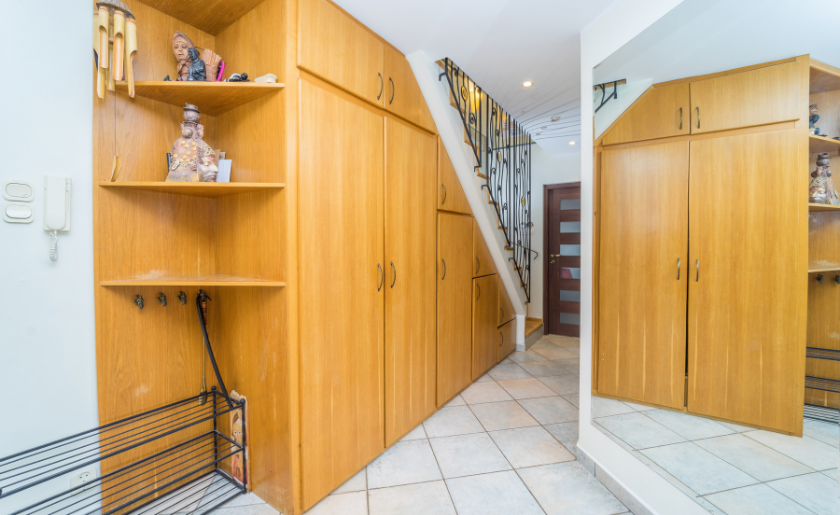
If your plan involves structural changes or custom construction, it’s worth getting professional help with the layout and installation.
Choose storage around your everyday items
Before choosing furniture, take stock of what regularly comes through the door. School bags, sports equipment, dog-walking gear and work laptops all need different kinds of space.
8. Add a bench that earns its space
There are many benefits to the storage bench: it gives you somewhere to sit while putting on shoes, plus room underneath for the pairs you wear most. Choose whatever seems right for you: a freestanding bench is easy to move or replace, while a built-in bench can make better use of a long wall or awkward nook.
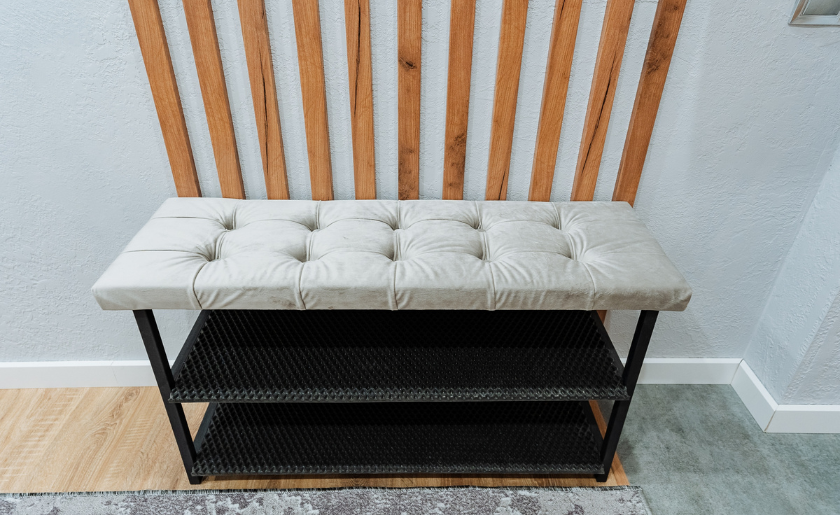
Try the seat before buying if you can. Your feet should rest comfortably on the floor and nearby storage should be easy to reach without stretching.
9. Make under-bench storage easy to use
Drawers work well for dry accessories, while open cubbies suit shoes, baskets and bags you grab often. A lift-up seat can store less-frequently used items, but it’s less convenient for daily essentials.
Measure your tallest boots and bulkiest bags before choosing compartments. For damp footwear, choose an open section with a removable tray rather than letting wet shoes sit directly against cabinetry.
10. Try a hall tree for an all-in-one solution
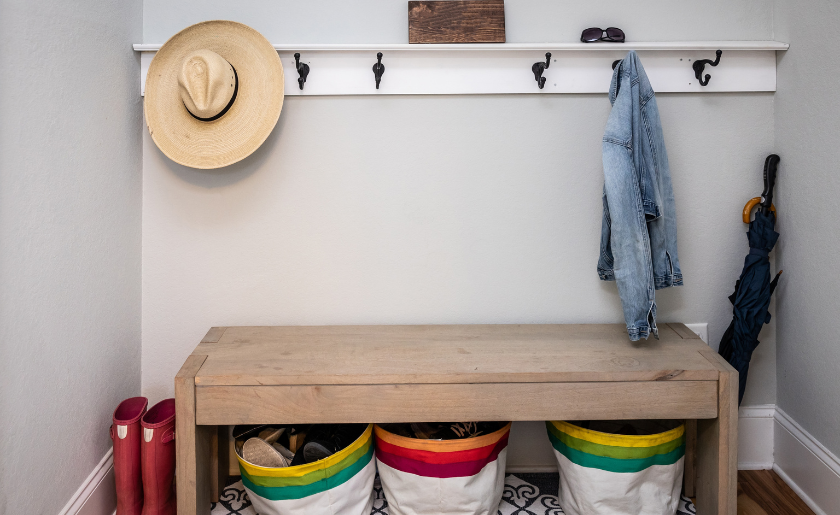
Stylish and elegant, a hall tree(opens in new tab) combines hooks, seating and storage in one freestanding piece — no custom build required. You can also move it with you more easily if you relocate. Still, look beyond the style and check the dimensions: some hall trees offer plenty of coat storage but limited room for shoes or larger bags, so compare the compartments with the gear your household carries.
11. Give everyone their own section
Individual hooks, baskets, cubbies, or lockers make it easy to see where each coat, bag and pair of shoes belongs. In a larger mudroom, full lockers can work well; in a smaller entry, a row of hooks and labeled baskets may be enough. 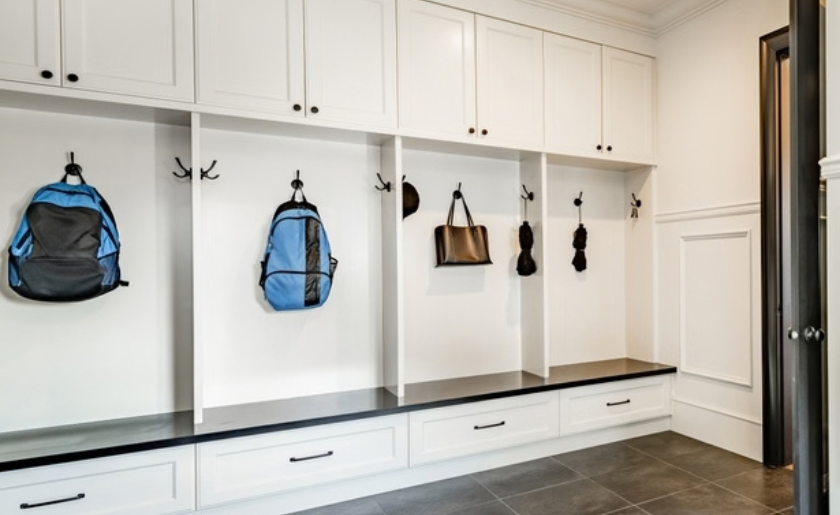
12. Hang hooks at more than one height
Lower hooks let children hang their own coats and backpacks, while higher hooks suit adult outerwear. Add a few small hooks near the door for keys, hats, leashes, or reusable bags. Leave enough space between hooks for coats and bags to hang without crowding. Secure mounting matters too, especially if the rail will hold heavy winter coats and full backpacks.
13. Balance open and closed storage
Keep everyday items on open hooks or in cubbies and use drawers or cabinets for the things you’d rather not see. This way, you keep the gear you use the most close at hand and also keep the space look tidier.
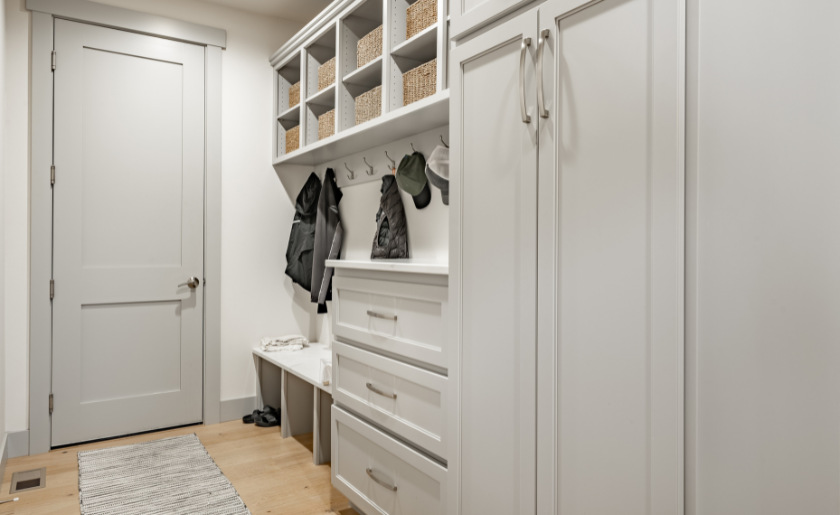
If the mudroom is visible from the kitchen or living room, closed storage can be especially useful for gloves, pet supplies and other small items. Still, leave an open area where wet coats and boots can dry.
14. Use shelves and baskets for small accessories
Some floating shelves above your hooks add storage without taking floor space (and they just look cooler). Baskets are also a great idea, since they keep gloves, scarves, hats and other small items together instead of letting them drift around the entry. Ideally, you should choose baskets you can pull out easily, even when they’re full, and label them by person or category (whichever system your household will maintain).
Give shoes, wet gear and essentials a clear home
A mudroom works best when everything has an obvious place to land. That includes the less glamorous items: wet boots, dripping umbrellas, dog towels and the keys you always misplace.
15. Match shoe storage to your footwear
Open cubbies or under-bench shelves let you store everyday shoes(opens in new tab) close to the door and out of your walking path. If you prefer a flip-down shoe cabinet, check the internal dimensions first, especially if you wear larger shoes or need room for boots.
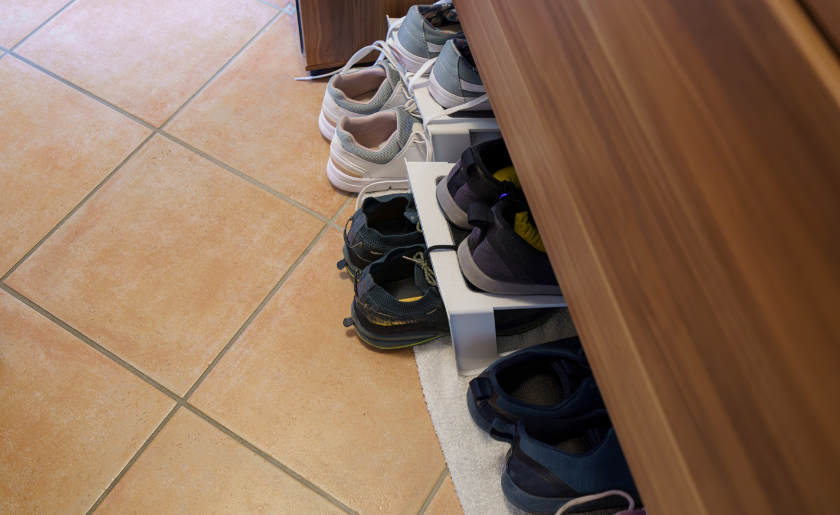
For the sake of everyone in the household, try to keep the everyday selection manageable: one or two frequently worn pairs per person is often enough; off-season or rarely worn footwear can go elsewhere.
16. Set up a boot tray and umbrella spot
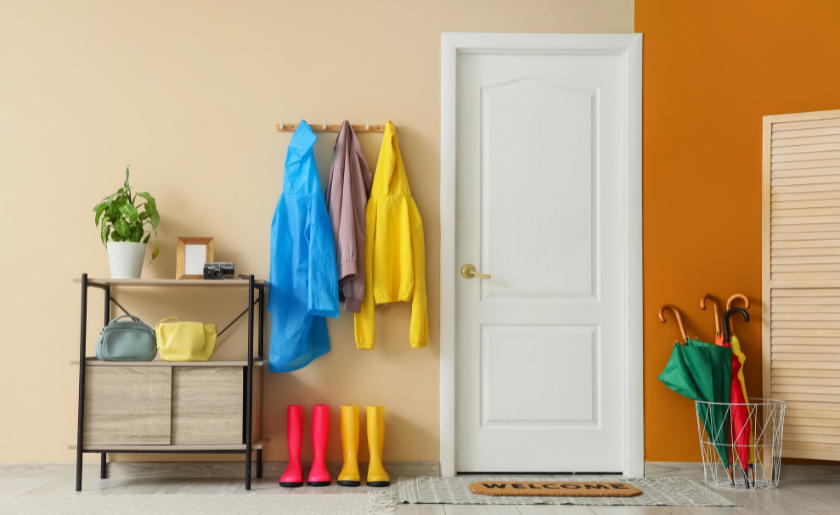
Add a boot tray with raised edges to give wet shoes somewhere to drip without soaking the floor or cabinetry. Keep a nearby spot for umbrellas to dry, too. Choose a tray you can lift, empty and clean easily and avoid wedging it into a tight compartment where trapped water and dirt become harder to reach.
17. Let damp gear dry properly
Give wet coats a little breathing room between hooks and keep damp shoes out of closed cabinets until they’re dry. Choose open or slatted storage to help air circulate. If coats regularly stay damp or the space feels humid, check the ventilation. You may need to figure out a way to add an exhaust fan, window, or improved airflow, especially if your mudroom handles wet gear often.
18. Create a small station for keys and mail
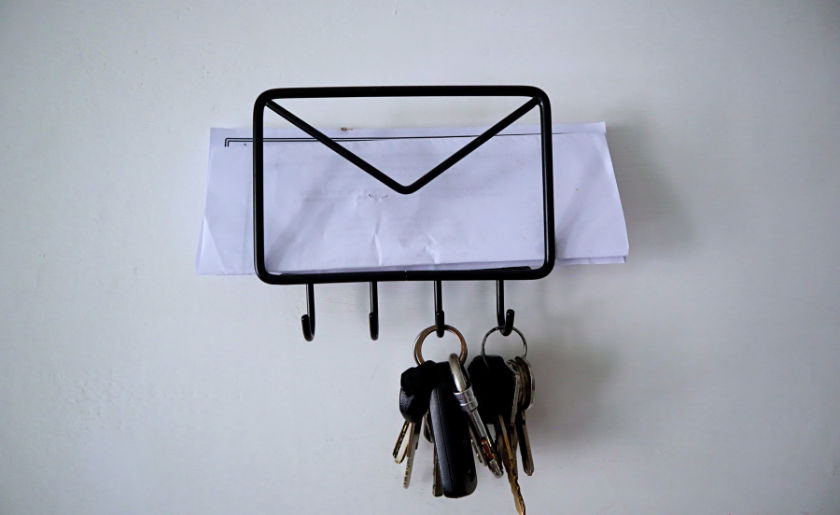
Give keys, wallets and other small essentials a consistent home near the door you use most: a drawer, tray, or wall-mounted organizer. The best spot is usually wherever you already tend to set them down.
For mail, keep it simple. A few slots for incoming papers and items to take out are enough — provided you clear them regularly. Even better, some organizers can hold keys and mail at once(opens in new tab).
19. Keep reminders where you’ll see them
A small calendar, dry-erase board, or chalkboard can hold tomorrow’s activities, school reminders, or items that need to leave the house. Keep it compact so it supports your routine rather than becoming visual clutter. Place reminders beside the items they refer to when possible. For example, a note about a library book will make more sense next to the bag where the book goes.
20. Make room for pet supplies
Keep leashes, waste bags and a towel for muddy paws near the door. Pet food can go here, too, provided the space stays cool and dry; see our guide to storing dog food(opens in new tab). Often, a hook and a small washable basket are all you need. If you have space for a pet bed or food bowls, keep them outside the main walking path. A dog-wash station can be useful, but it requires more than spare floor space: think about water supply, drainage and cleaning before committing.
Make it easier to maintain — and nicer to come home to
Mudrooms deal with rain, snow, mud, sand and everything else that comes in on shoes and coats. Durable, easy-care finishes help the space stay pleasant with less effort.
21. Choose flooring that can handle real life
Look for flooring that tolerates moisture and frequent cleaning. Porcelain or ceramic tile, suitable luxury vinyl plank and properly sealed stone are practical options to consider. For tile, check slip-resistance information rather than relying on appearance alone. Carpet and unsealed wood are less forgiving around wet boots and puddles. Mid-tone grout can help everyday dirt show less, though it still needs regular cleaning.
22. Use washable rugs and wipeable seats
A washable, low-pile or flat-weave rug near the door can catch dirt before it travels farther into the house. Make sure it lies flat, stays in place and doesn’t interfere with the door.
For benches, choose a wipeable finish or a cushion with a removable, washable cover. Think about muddy hands, damp coats and dirty bags — not just how the seat looks on a tidy day.
23. Protect the walls where bags and coats touch
Even with hooks, coats and bags will brush against the wall. Washable paint formulated for frequent cleaning is a practical choice; follow the manufacturer’s care instructions when removing marks.
In a busier entry, beadboard, wall tile, or suitable washable vinyl on the lower wall can add protection. Keep patterned wallpaper away from splash zones unless the product is specifically suitable for moisture.
24. Connect the mudroom to the rest of your home
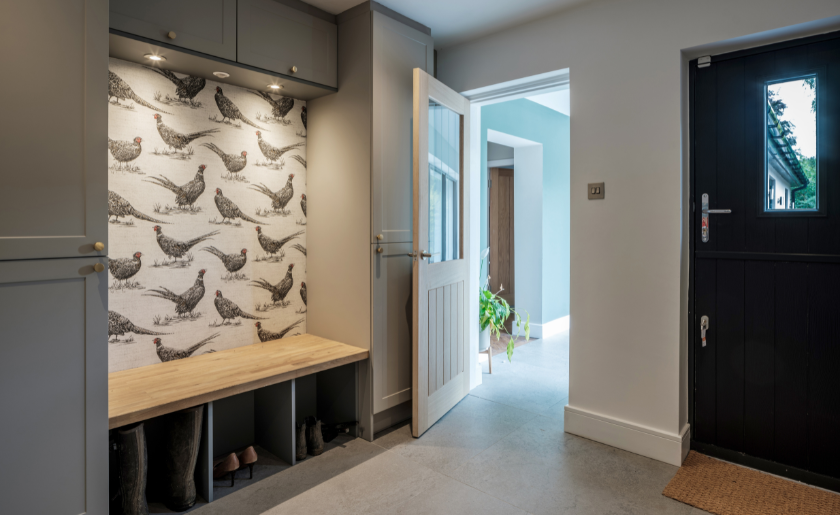
Repeat a nearby paint color, wood tone, or hardware finish so the mudroom feels like part of the home rather than a purely utilitarian afterthought. A painted bench, distinctive hooks, baskets, or a framed print can add personality without taking over the space. A mirror is useful for a final check before leaving and good lighting makes dark corners and deep cabinets easier to use. Keep fragile décor away from bags and coats and leave a little clear surface for whatever needs to be set down.
25. Give seasonal overflow a home elsewhere
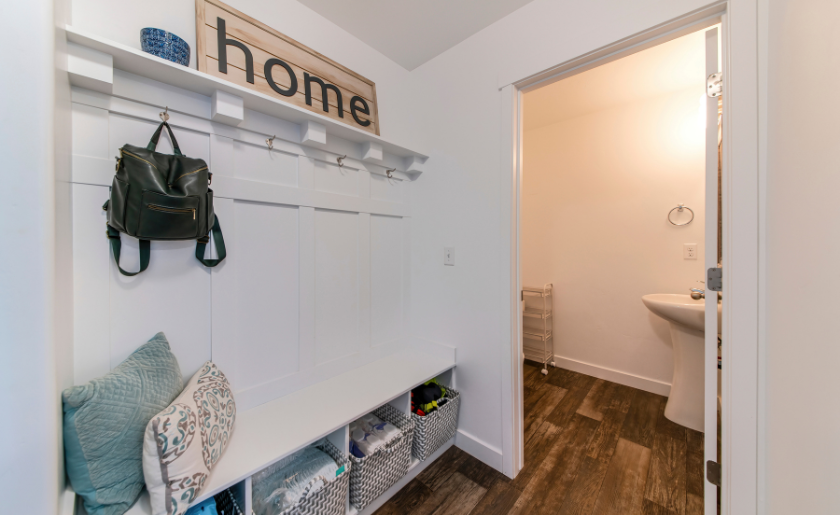
Keep the mudroom focused on what you’re using now. As seasons change, move off-season coats, extra shoes and bulky sports equipment to a closet, garage, attic, basement, or storage unit.
If you’re considering self storage for seasonal or bulky belongings, climate-controlled storage(opens in new tab) may help limit exposure to temperature changes and humidity. Check the facility’s specific conditions, pack items clean and dry and label containers clearly. You can also find storage units near you(opens in new tab) and compare size(opens in new tab) and amenities(opens in new tab).
Keep the items you reach for regularly at home so your mudroom stays functional — and your entry stays easy to walk through.
Avoid a few common mudroom mistakes
A mudroom doesn’t need to look perfect to work well. A little planning, though, can save you from the small frustrations that make an entry harder to use.
- Buying before measuring. Check wall space, door swing, walkways and the size of the bags, boots and coats you plan to store.
- Putting every hook at adult height. Lower hooks help children hang up their own things without help.
- Choosing finishes for looks alone. Flooring, walls and furniture should handle moisture, dirt and regular cleaning as well as suit your style.
- Using one catch-all bin for everyone. Individual hooks, baskets, or cubbies make it easier to find things and put them away.
- Overlooking lighting. Make sure you can see inside drawers, cabinets and corners — not just the middle of the room.
- Planning for a picture-perfect household. Build around the people, pets and gear you have, including the coats and bags that land by the door before anyone puts them away.


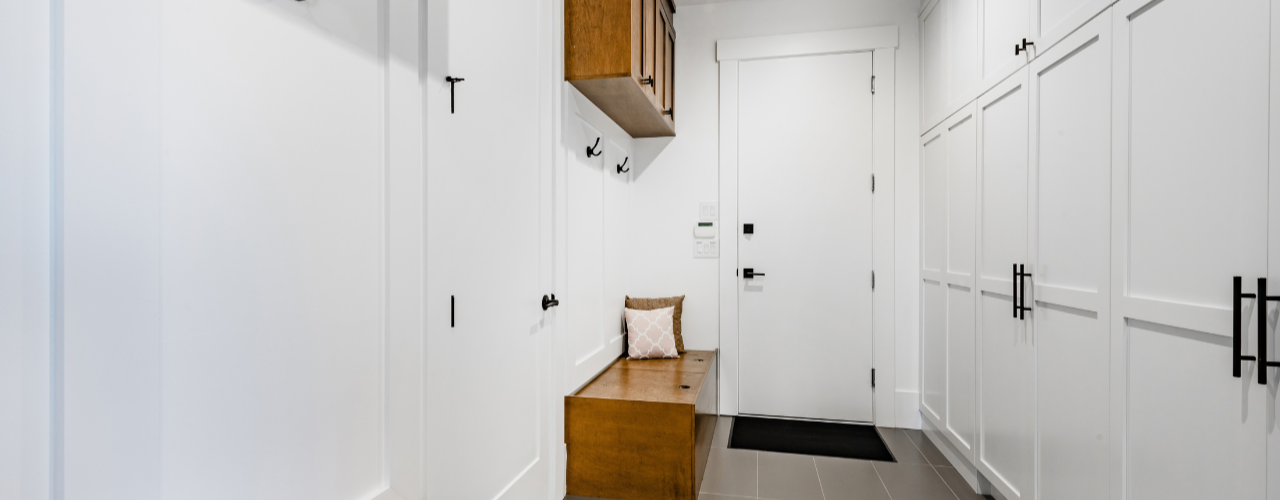
25 Mudroom Storage Ideas (And Mistakes to Avoid)
A mudroom gives you somewhere to set down bags, kick off muddy boots and keep the outdoors at the door. Classically, it is defined as a separate room, but it can also be a hallway, entryway closet, laundry-room corner, or stretch of wall by the door can work just as well.
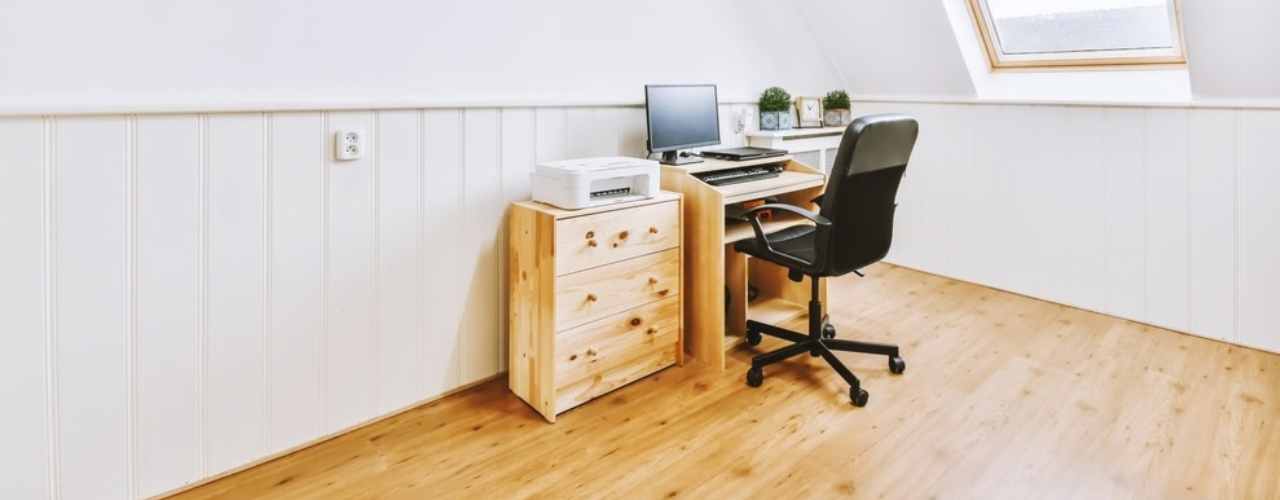
Is Your Home Office Worth the Rent? What Coworking and Self Storage Could Save You
Every square foot of your apartment comes with a price tag, and a home office claims more of them than most renters expect. It starts with a desk. Then come the second monitor, the printer, the filing cabinet and the overflow boxes. Before long, the corner you set aside for work has turned into a small room you are paying for every month.

America’s Top Snowbird Destinations for 2026–2027: Florida Leads in Numbers, Texas Wins on Value
For Americans living in colder states, the approach of winter is reason enough to start looking south. Cold weather carries costs that go beyond the heating bill and shoveling snow. Seasonal affective disorder(opens in new tab) is far more prevalent in northern states, so a temporary move south isn’t simply an escape from the cold, but a chance to spend the hardest stretch of winter outdoors and in the sun.
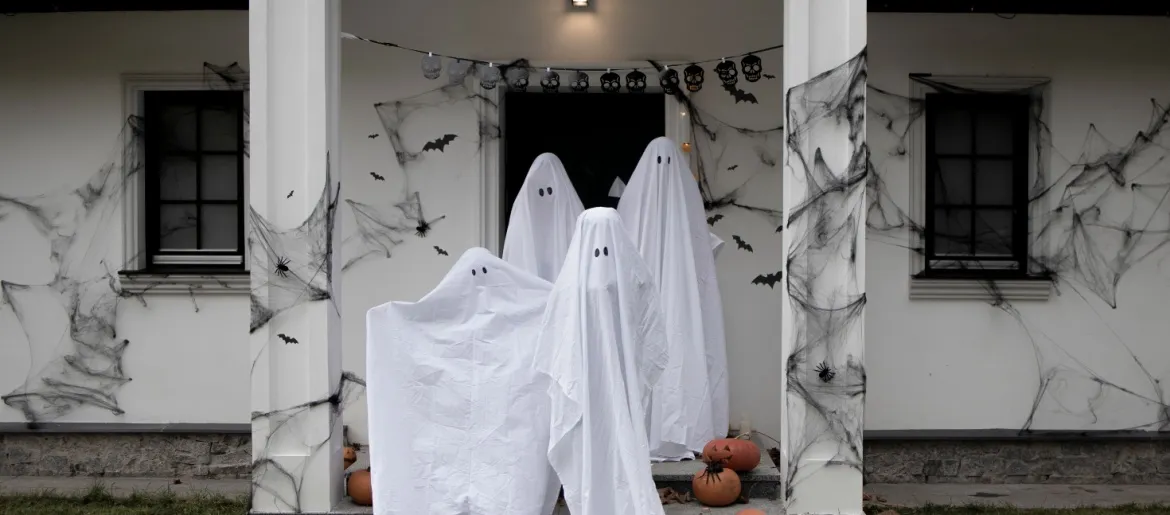
How Much Does Halloween Really Cost in 2026? Plan Wisely to Avoid the Scare of Hidden Costs
Americans’ love for Halloween is almost frightening — this year alone, we are on our way to spending $13.5 billion, according to data from the National Retail Federation(opens in new tab). That breaks down to about $115 Halloween costs per person, a whopping 49% more than 10 years ago.
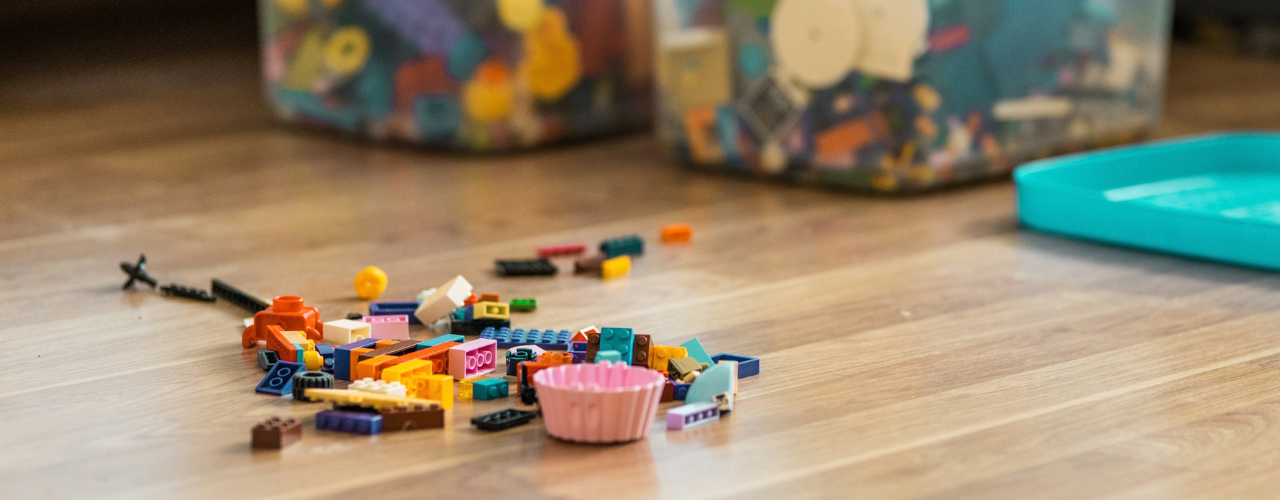
How to Store LEGOs: All the Fun, None of the Clutter
How to store LEGOs largely comes down to how your household uses them. If the bricks are part of everyday play, you need a setup that keeps them within easy reach and makes cleanup quick (for your feet’s sake, at least). Toy storage(opens in new tab) such as simple bins, playmats or containers that children can put away themselves may be enough. Larger or more serious collections usually need more organization, such as labelled drawers for loose pieces, trays for unfinished builds, shelves for completed models and separate storage for retired sets.

Cardboard Costume Guide: Tips and Ideas for a DIY Halloween
Whether for kids or adults, cardboard costume ideas often make the biggest splash once materialized, and that’s for a simple reason: doing a lot with a little is a universally impressive feat (especially in this economy). If you don’t have enough boxes you could temporarily repurpose, don’t worry! There are many places where you can find free moving boxes(opens in new tab), from stores and supermarkets to online groups and recycling drop-off spots. On the run? Try your luck at a self storage(opens in new tab) facility that sells moving supplies, often for cheap. This way, you can choose moving boxes of different shapes and sizes(opens in new tab), so you can make your costumes as complex as you want.

How to Celebrate Halloween: 9 Non-Spooky Ways To Enjoy It
As soon as October starts, it’s the official Halloween month. And while for many people it means it’s open season to get the scare of a lifetime, others, especially families with small children, might prefer to celebrate in a tamer way that’s both kid- and adult-friendly. While you’re likely to find more events where the spook factor is high, here’s how to celebrate Halloween in a not-so-scary way:

Motorcycle Storage Guide: How to Store Your Bike Safely
Motorcycles may be born to be wild, but eventually even the wild ones need somewhere to park. Whether riding season is winding down or your current living situation comes with plenty of square footage for you and less for your bike, motorcycle storage is one of those parts of ownership that doesn’t get as much airtime as the open road.

Halloween Decorating on a Budget (And Cheap Ideas for Everything Elsee)
Halloween has crept a long way from its eerie origins. While All Hallows’ Eve has transformed through the centuries, it wasn’t until the 1930s that trick-or-treating became a tradition in the U.S. and businesses began conjuring up mass-produced Halloween costumes. Now, Halloween is a monster-sized, billion-dollar industry, with a cauldron full of costumes and decorations ranging from the mainstream to the macabre. But is it all really worth your wallet? Maybe, but we’ll let you in on a little secret: You can keep your Halloween decorating on a budget and save on everything else, too. Take this plan and see it through!