

Key Takeaways
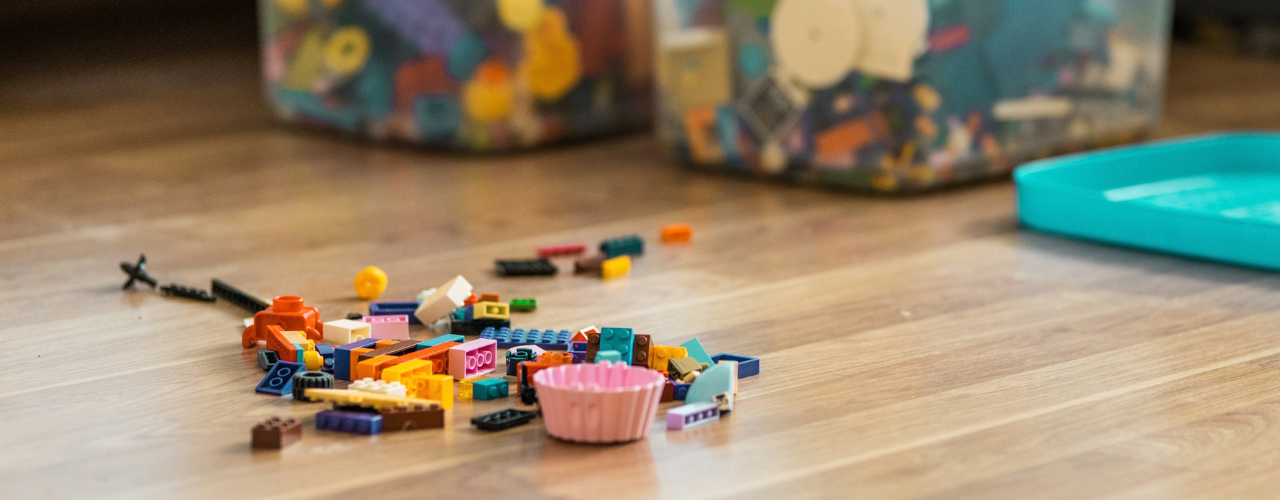
How to store LEGOs largely comes down to how your household uses them. If the bricks are part of everyday play, you need a setup that keeps them within easy reach and makes cleanup quick (for your feet’s sake, at least). Toy storage(opens in new tab) such as simple bins, playmats or containers that children can put away themselves may be enough. Larger or more serious collections usually need more organization, such as labelled drawers for loose pieces, trays for unfinished builds, shelves for completed models and separate storage for retired sets.
Whatever system you choose, keep LEGO bricks somewhere dry and away from direct sunlight or heat sources, as too much heat and sun can cause discoloration and make the plastic more brittle over time. This is also why self storage(opens in new tab) may be a good idea for larger collections, which also saves up space at home.
Here are some cool storage solutions for LEGO, before they take over your entire place.
Start by sorting your LEGO collection
Before buying bins, drawers, or shelving, take stock of what you own right now. The most efficient LEGO storage systems separate pieces according to how they are used, rather than forcing every brick into the same type of container.
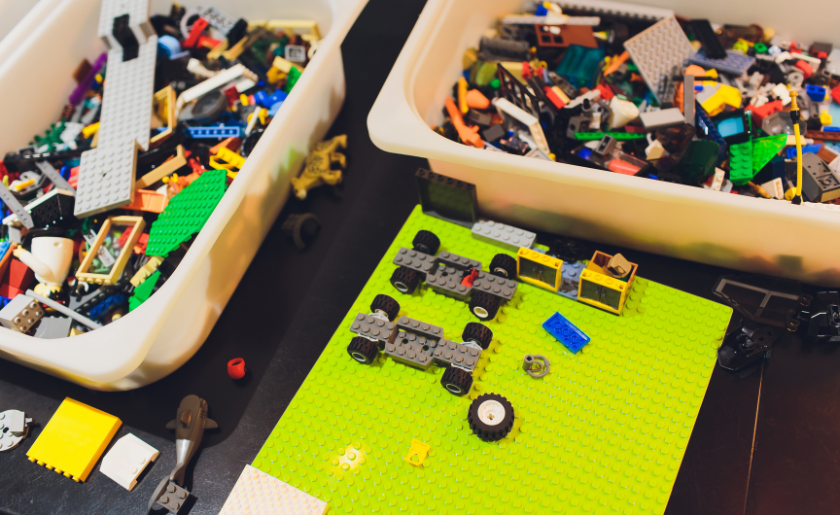
A simple first step is to divide your collection into three categories: everyday bricks, complete or in-progress sets, and items worth protecting separately, such as manuals, boxes, rare minifigures, or display models.
This prevents a common problem: dumping every brick, minifigure, and instruction booklet into one oversized bin. That may be fast in the moment, but it makes future building slower, increases the chance of losing parts, and can damage boxes or paper instructions.
Store loose LEGOs by size and use
Loose bricks are usually the most difficult part of a LEGO collection to manage. The right method depends on the size of the collection and how precisely you want to sort it.
For a smaller collection, clear lidded bins are often enough. Choose stackable containers that are easy to lift, open, and return to a shelf. Transparent storage is especially useful because you can see what is inside without pulling every box down.
Lightweight storage baskets with handles are another practical option for families who use LEGO in more than one room. A child can carry a basket from the bedroom to the living room or kitchen table, then return it to a shelf or closet once playtime is over. Choose baskets with a wide opening for easy access and, ideally, a lid or fabric cover to help keep loose pieces contained.
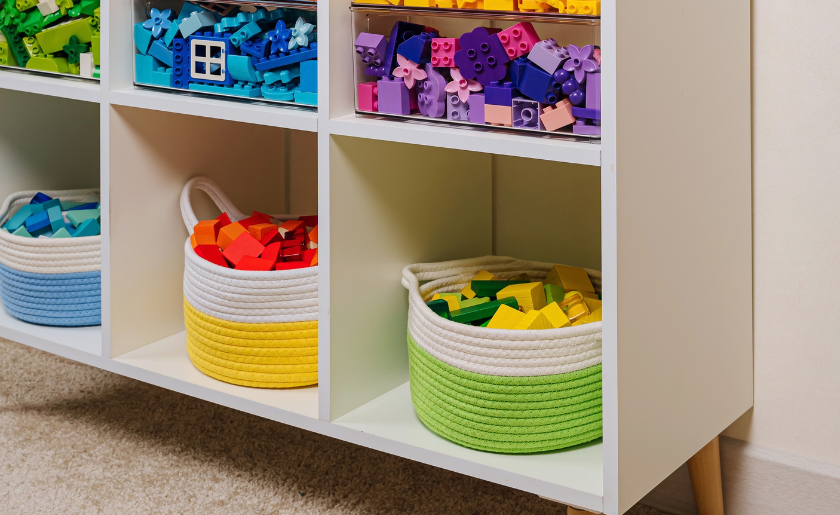
For larger collections, shallow drawers are more practical than deep tubs. Deep containers tend to turn into “brick soup”: all pieces settle together at the bottom, and finding one small connector or plate becomes frustrating.
Good options for loose bricks include:
- Clear plastic drawers for frequently used parts
- Small divided organizers for minifigure accessories, wheels, hinges, transparent pieces, and tiny elements
- Stackable bins for larger bricks or mixed building pieces
- Under-bed storage boxes for collections that need to stay accessible in a small apartment or bedroom
- Rolling carts for builders who use LEGO in different rooms
- Lidded storage tubs for overflow bricks that are not used every week
You do not need to sort every piece by exact color and shape from the beginning. In fact, overly detailed sorting can make the system harder to maintain. Start with broad categories, such as plates, bricks, tiles, wheels, transparent pieces, minifigures, and specialty elements. As the collection grows, you can create more specific categories.
A practical approach is to sort by part type first and color second. When building, it is often easier to look through a drawer of plates or slopes than through a container holding only blue pieces in many different shapes.
Keep complete sets together
Themed sets, licensed models, and complex builds should be treated differently from a general collection of loose bricks. If you take apart a large Star Wars, Architecture, Technic, Ideas, Icons, or modular building set, storing all its pieces together can save hours of searching if you decide to rebuild it later.
Use one labelled container per set whenever possible. Add the following to the same box:
- The set number and name on a label
- Loose spare pieces in a small resealable bag
- Minifigures in a separate compartment or bag
- The instruction manual, protected in a document sleeve
- A printed inventory list, if you have one
- A note stating whether the set is complete, incomplete, or missing specific parts
For especially large sets, divide the parts into numbered bags or smaller containers that correspond to building stages. This is useful for collectors who disassemble display models before a move, renovation, or long-term storage period.
Avoid placing assembled models directly into large boxes unless they are packed carefully. Delicate builds can snap apart under their own weight, and loose pieces can scratch printed elements or fragile decorative components. For moving a completed model, it is often safer to remove vulnerable sections, pack them separately, and photograph the original build before taking it apart.
Create a LEGO building station
A dedicated LEGO building station can make a major difference, particularly if building has become an ongoing hobby rather than an occasional activity. It does not need to be a custom-built room or expensive furniture setup. A small desk, a sturdy table, or one section of shelving can be enough.
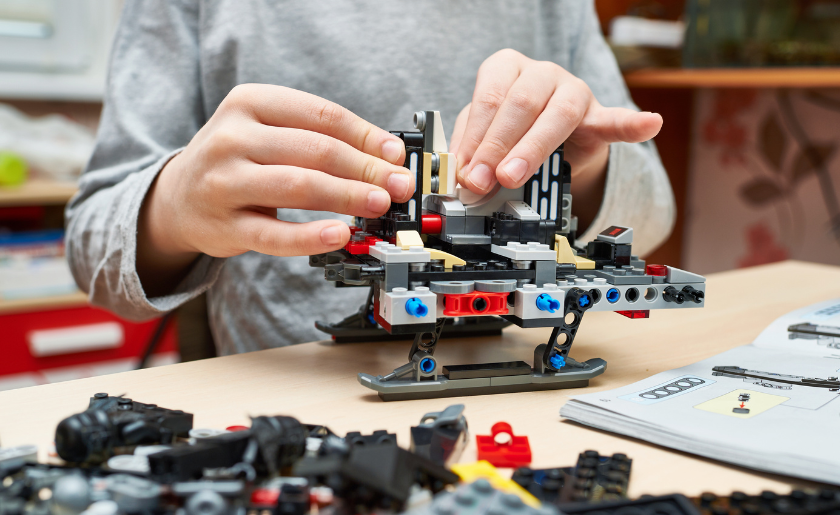
Project trays are particularly helpful. If you are working on a complicated model but need to reclaim the table for dinner, work, or guests, you can move the entire project without mixing its pieces back into the wider collection.
For households with multiple builders, assign each person a tray, drawer section, or labelled bin. This reduces arguments over missing pieces and makes it easier to pause one project without dismantling it.
Use shelves and display cases for built LEGO sets
Some LEGO creations are meant to be rebuilt and taken apart. Others deserve to stay assembled. You’ll have to find some space in your home(opens in new tab) to install the whole ensemble. On the upside, the LEGO will be contained in just one area of the house – hopefully! Display shelving works well for architecture models, vehicles, modular buildings, large fantasy or science-fiction sets, and custom creations that would be difficult to reconstruct.
When displaying LEGO, think about three risks: sunlight, dust, and accidental damage.
Keep models away from direct sunlight. LEGO advises storing bricks away from direct sun and heat, since excessive heat can contribute to brittleness or discoloration. A shelf near a bright south-facing window may look attractive, but it is not the best place for a collection you want to preserve.

For everyday displays, open shelves can be perfectly suitable. For valuable, intricate, or hard-to-clean models, a cabinet with doors offers better protection from dust and curious hands. Acrylic display cases can also work for one large centerpiece or a group of minifigures.
How to deal with large LEGO collections
However, in order to enjoy your LEGO for years to come or to sell it at some point, you need to store it properly. Fortunately, LEGO is a pretty resilient toy. Nonetheless, you need to take some precautions when storing it long term.
Avoid dumping your LEGO sets in the attic or in some boxes in your garage(opens in new tab). Summer heat will discolor the bricks and might affect the shape of some pieces, rendering them unusable. Dust and grime are notoriously hard to clean off LEGO pieces, so make sure that you keep building blocks in lidded boxes.
Keeping the themed sets in their original boxes makes sense if you’re planning to sell them later – the sets that still have their original packaging are much more valuable. The highest value is attributed, obviously, to “mint condition” sets, the ones that were never opened – but where’s the fun in that?
A small self-storage unit(opens in new tab) provides the ideal environment for keeping large and expensive collections in the long term. Climate-controlled units(opens in new tab) do a great job of protecting the LEGO blocks from excessive heat, but you need to deposit your sets in durable, well-sealed boxes.
The best LEGO storage system is one you will use
There is no single perfect answer to how to store LEGOs. An open bin may be ideal for a small casual collection, while a serious builder may need labelled drawers and project trays. A collector may prioritize display cabinets, archival storage for instructions, and climate-controlled space for boxed sets.
The most useful system combines three things:
- Easy access for bricks that are actively used
- Clear organization for pieces, projects, and complete sets
- Protective storage for items you want to keep in excellent condition
Whether your collection lives in a few bins, a dedicated hobby room, a display cabinet, or a self-storage unit, thoughtful storage protects more than the bricks themselves. It preserves the time, money, creativity, and memories invested in every build.


How to Store LEGOs: All the Fun, None of the Clutter
How to store LEGOs largely comes down to how your household uses them. If the bricks are part of everyday play, you need a setup that keeps them within easy reach and makes cleanup quick (for your feet’s sake, at least). Toy storage(opens in new tab) such as simple bins, playmats or containers that children can put away themselves may be enough. Larger or more serious collections usually need more organization, such as labelled drawers for loose pieces, trays for unfinished builds, shelves for completed models and separate storage for retired sets.

Cardboard Costume Guide: Tips and Ideas for a DIY Halloween
Whether for kids or adults, cardboard costume ideas often make the biggest splash once materialized, and that’s for a simple reason: doing a lot with a little is a universally impressive feat (especially in this economy). If you don’t have enough boxes you could temporarily repurpose, don’t worry! There are many places where you can find free moving boxes(opens in new tab), from stores and supermarkets to online groups and recycling drop-off spots. On the run? Try your luck at a self storage(opens in new tab) facility that sells moving supplies, often for cheap. This way, you can choose moving boxes of different shapes and sizes(opens in new tab), so you can make your costumes as complex as you want.

How to Celebrate Halloween: 9 Non-Spooky Ways To Enjoy It
As soon as October starts, it’s the official Halloween month. And while for many people it means it’s open season to get the scare of a lifetime, others, especially families with small children, might prefer to celebrate in a tamer way that’s both kid- and adult-friendly. While you’re likely to find more events where the spook factor is high, here’s how to celebrate Halloween in a not-so-scary way:

Motorcycle Storage Guide: How to Store Your Bike Safely
Motorcycles may be born to be wild, but eventually even the wild ones need somewhere to park. Whether riding season is winding down or your current living situation comes with plenty of square footage for you and less for your bike, motorcycle storage is one of those parts of ownership that doesn’t get as much airtime as the open road.

Halloween Decorating on a Budget (And Cheap Ideas for Everything Elsee)
Halloween has crept a long way from its eerie origins. While All Hallows’ Eve has transformed through the centuries, it wasn’t until the 1930s that trick-or-treating became a tradition in the U.S. and businesses began conjuring up mass-produced Halloween costumes. Now, Halloween is a monster-sized, billion-dollar industry, with a cauldron full of costumes and decorations ranging from the mainstream to the macabre. But is it all really worth your wallet? Maybe, but we’ll let you in on a little secret: You can keep your Halloween decorating on a budget and save on everything else, too. Take this plan and see it through!

Moving From a House to an Apartment: What to Expect, How to Downsize & How Self Storage Helps
For some, moving from a house to an apartment is a financial decision. For others, it’s about simplifying life. Maybe the kids have moved out and half the house sits empty, or you’re approaching retirement and no longer want to spend weekends on repairs. Or perhaps you’ve been weighing the cost of buying a home and wondering whether renting simply makes more sense right now.
Family Heirlooms Overload: How to Handle Family Inheritance Without Regret
Handling family heirlooms after a loss requires managing legal authority, emotional pressure and practical logistics at the same time, and the order you take them on matters more than most people expect.
Blanket Storage: The Right Method for Every Space and Season
Blankets make our lives cozier, and storing them well is what keeps them soft and comfortable in the long run. Knowing how to store a blanket properly means your favorites come out of storage smelling fresh, feeling the same as when they went in, and lasting years longer than they otherwise would.
Board Game Storage Ideas That Keep Your Collection in Fighting Shape
Nobody warns you that getting into board games usually unlocks a second hobby, the much dreaded one that includes figuring out where on earth to put them. One game becomes a few, expansions start spawning beside their base boxes and before long, board game storage requires as much strategy as whatever is waiting on the other side of those lids.