

Key Takeaways
- Your staircase type settles most of the question before style comes up: straight and U-shaped runs handle almost any storage, while floating and winder stairs usually can’t.
- Drawers make better use of the wedge shape, while bins are simpler and cheaper, so the right pick depends on your budget and how visible the space is.
- If you enclose the space with a door, local code may require fire-rated construction, so check with your building department before you frame anything in.
- Keep everyday items under the stairs and send the seasonal and rarely-touched stuff to a small storage unit, so the finished space stays finished.
Under-stairs storage works best when you treat it like a small project with a clear job. This guide shows how to turn that awkward wedge into drawers, cabinets, closets, or a mudroom drop zone that stays organized, and when a small storage unit(opens in new tab) works for overflow gear and seasonal decor. You’ll see which built-ins are worth building and what to avoid for code and safety, so you can finally use that the space for everyday necessities.
Start with your staircase
Before you fall for a photo of graduated drawers, know that your stair type decides most of what’s possible.
Straight run, closed on both sides is the dream and the most common setup in American homes. One clean triangular void with solid walls, so almost any storage works: drawers, cabinets, or a full closet.
Straight run, open on one side puts whatever you build on display, so lean into it. Open shelving, a bench with cubbies, or drawers with a finished face. If it’s something you’d rather hide, it needs doors.
L-shaped or quarter-turn stairs have a landing that splits the void into a big lower section and a shallow upper one. Build the real storage in the lower wedge; the upper part suits a narrow shelf or shallow cabinet.
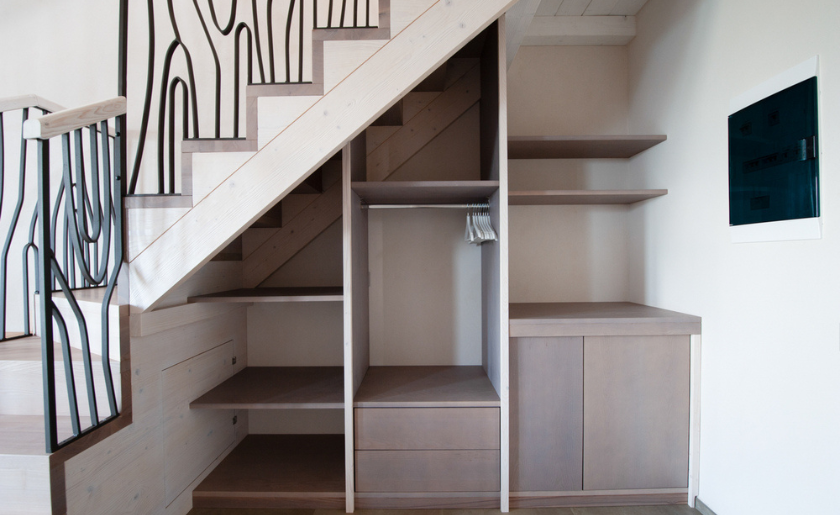
U-shaped or half-turn stairs are the jackpot, often giving you a tall, boxy space with real headroom throughout. This is where a walk-in closet holds the most, and the rare spot where a stacked washer and dryer can fit if there’s existing plumbing nearby.
Winder stairs, with pie-shaped treads, create awkward angles that need custom work. Off-the-shelf kits won’t fit.
Floating or open-riser stairs are usually best left open. There’s no enclosed void to work with, and boxing one in can defeat the airy look the design is going for.
That said, you can go for a low run of floating shelves tracing the underside of the treads, a single sculptural console, or a slim shelving unit can look striking without walling anything off.
If you do want the open, hovering effect, keeping the space clear and sending your extra belongings off-site is a clean way to get it.
The built-ins worth building
These work with the wedge shape instead of fighting it.
Graduated stair-profile drawers are the signature look. Each drawer is built to the height available at its spot on the slope, so the tall end swallows a duffel bag and the shallow end holds gloves. A custom system like this makes efficient use of the space and looks fantastic. It’s also the priciest route, since heavy-duty slides cost real money per pair and you need a lot of them.
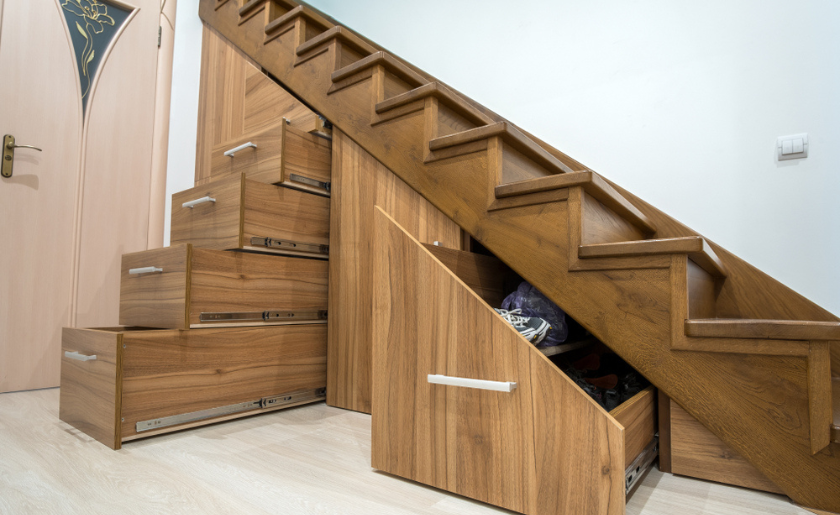
A row of side-access cabinets is the sensible middle path. Instead of one deep cave you can never reach the back of, build three or four separate cabinets, each with its own door. You lose a little space to dividers and gain the ability to find your stuff.
Toe-kick drawers at the shallow end rescue the last couple of feet that are too short for anything upright, holding wrapping paper, table linens, and the sleds nobody touches for eight months.
Open cubbies with matching baskets are cheaper, faster, and forgiving if your carpentry isn’t perfect. Use the same basket in every cubby, or it starts to look like a pile of junk with shelves.
A bike and gear bay fits under most straight runs, but hang the hooks off blocking between the studs, never into bare drywall.
What to store if you already have an under-stairs closet
If there’s already a door under your stairs, you have a closet, usually a bad one with a single high shelf and no light. Assign it a purpose:
- A coat closet is the obvious win near the front door. Hang the rod at the tall end where long coats clear the floor, and use the shallow end for shoes.
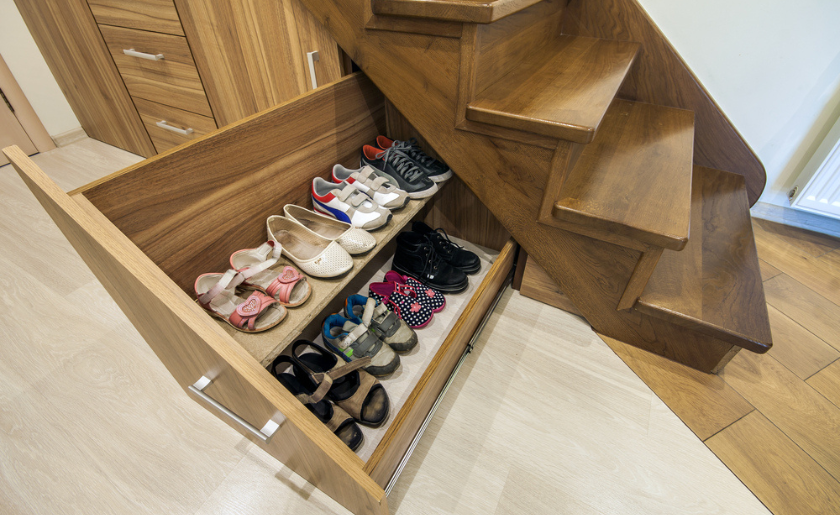
- A shoe drawer for an organized, easy-access place to keep your household’s footwear.
- A cleaning closet gives your full-size vacuum the vertical clearance it needs. Add an outlet inside and it charges the cordless one too.
- A laundry supply closet works when the stairs sit near your machines. Stash detergent, dryer sheets, stain remover, a drying rack, spare hangers, and the iron and board that never have a home otherwise.
- An overflow pantry works when the stairs back onto the kitchen. A pantry three rooms from the stove doesn’t get used.
- A sports and seasonal gear closet holds skis, cleats, camping equipment, and pool toys. Rotate the current season’s gear to the accessible front.
A word on code and safety
Shelves, bins, and freestanding furniture rarely need a permit; framing and electrical often do. That’s why, when it comes to structurally changing your stairs, your local building department has the final say. If you enclose the space and put a door on it, local code may require fire-rated construction, since an under-stair enclosure can be tied to the exit path from your upper floor. Check before you frame anything in, and never cut or notch stringers, posts, or any load-bearing wall without an engineer. A full laundry hookup means supply, drain, and venting, which is permitted work almost everywhere, so get a plumber to confirm feasibility before you frame around it.
It’s also smart to keep flammable liquids, propane, aerosols, and lithium-ion batteries out of the space, since it can feed straight into your stairway. Keep electrical panels clear, and don’t store anything moisture-sensitive, like photos or instruments, in a damp under-stair spot.
When the under stairs space isn’t enough
Many under-stair spaces give you a useful but limited footprint, and the sloped ceiling cuts usable height as you move inward. If holiday decorations(opens in new tab), camping gear(opens in new tab), off-season clothes(opens in new tab) and a spare mattress(opens in new tab) are all fighting for the same wedge, it won’t be close.
A small storage unit(opens in new tab) can fix this. Sort what’s piled around the space into three buckets: used monthly or more, used seasonally, and kept but rarely touched. The first bucket earns the accessible front of your build. That third bucket, the furniture between homes and the inherited pieces you can’t part with, is what clogs an under-stair closet permanently and pushes your everyday things back out into the hallway. A 5×5(opens in new tab) or 5×10 unit(opens in new tab) absorbs the seasonal and rarely-touched stuff for a modest monthly cost, freeing the space to do the one thing it does better than any facility: hold what you reach for daily, five steps from your front door.
A unit helps during the build, too. Once framing and paint start, everything in that space has to go somewhere, and “stacked in the dining room” is how a two-week project becomes a two-month one.
Bottom Line
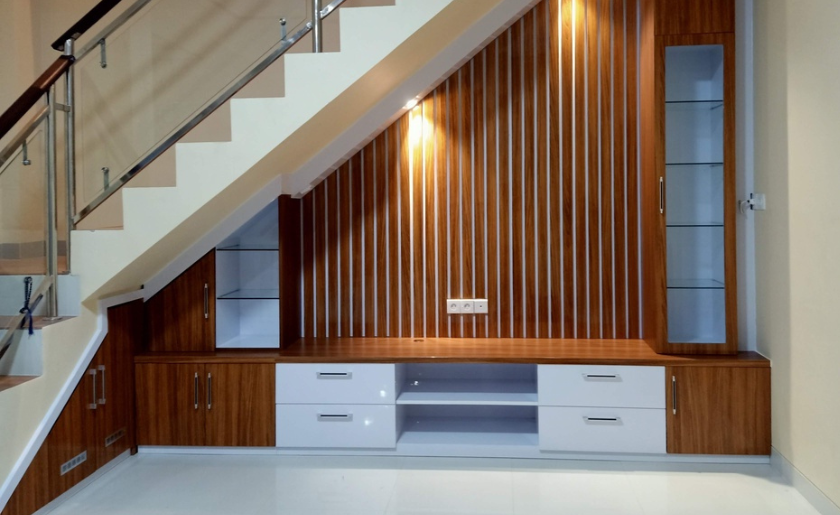
Done well, under-stairs storage is a genuine design feature. A wall of stepped bookshelves or a run of graduated drawers with good hardware reads as intentional and expensive, the kind of detail that makes a hallway look considered instead of leftover. It’s a rare spot where the storage itself becomes part of the room’s character.
Just maybe skip the tiny bedroom setup, unless you’re specifically in the market for a live-in wizard. A cupboard under the stairs works much better for coats than for cultivating the Boy Who Lived.
Frequently Asked Questions
How much does under-stairs storage cost?
It depends on what you build. Off-the-shelf bins and open shelving can run under $150, while a bank of custom graduated drawers with heavy-duty slides climbs into the thousands. Side-access cabinets and cubbies with baskets sit in the middle. The biggest cost drivers are custom carpentry and hardware, so if you can handle a simple shelving or basket setup yourself, you’ll save the most.
Do I need a permit to build storage under my stairs?
Shelves, bins, and freestanding furniture rarely need one. But if you enclose the space with a door, add framing and drywall, or run new electrical, many jurisdictions do require a permit, and local code may call for fire-rated construction since the space can connect to your exit path. A quick call to your building department settles it before you start.
What shouldn’t I store under the stairs?
Keep out flammable liquids, propane, aerosols, and lithium-ion batteries, since a fire there feeds straight into your stairway. Don’t block electrical panels or shutoffs, and avoid moisture-sensitive items like photos, documents, and instruments if the space runs damp. Save the deep, hard-to-reach back for things you touch twice a year at most.
When should I use a storage unit instead?
When the wedge can’t hold everything, or when you’d rather keep an open-riser staircase looking clean. Under-stairs space is best for what you reach for daily; a small 5×5 or 5×10 unit is the smarter home for holiday decorations, camping gear, off-season clothes, and furniture you’re keeping but not using. It also gives your belongings somewhere to live during the build itself.



How to Store LEGOs: All the Fun, None of the Clutter
How to store LEGOs largely comes down to how your household uses them. If the bricks are part of everyday play, you need a setup that keeps them within easy reach and makes cleanup quick (for your feet’s sake, at least). Toy storage(opens in new tab) such as simple bins, playmats or containers that children can put away themselves may be enough. Larger or more serious collections usually need more organization, such as labelled drawers for loose pieces, trays for unfinished builds, shelves for completed models and separate storage for retired sets.

Cardboard Costume Guide: Tips and Ideas for a DIY Halloween
Whether for kids or adults, cardboard costume ideas often make the biggest splash once materialized, and that’s for a simple reason: doing a lot with a little is a universally impressive feat (especially in this economy). If you don’t have enough boxes you could temporarily repurpose, don’t worry! There are many places where you can find free moving boxes(opens in new tab), from stores and supermarkets to online groups and recycling drop-off spots. On the run? Try your luck at a self storage(opens in new tab) facility that sells moving supplies, often for cheap. This way, you can choose moving boxes of different shapes and sizes(opens in new tab), so you can make your costumes as complex as you want.

How to Celebrate Halloween: 9 Non-Spooky Ways To Enjoy It
As soon as October starts, it’s the official Halloween month. And while for many people it means it’s open season to get the scare of a lifetime, others, especially families with small children, might prefer to celebrate in a tamer way that’s both kid- and adult-friendly. While you’re likely to find more events where the spook factor is high, here’s how to celebrate Halloween in a not-so-scary way:

Motorcycle Storage Guide: How to Store Your Bike Safely
Motorcycles may be born to be wild, but eventually even the wild ones need somewhere to park. Whether riding season is winding down or your current living situation comes with plenty of square footage for you and less for your bike, motorcycle storage is one of those parts of ownership that doesn’t get as much airtime as the open road.

Halloween Decorating on a Budget (And Cheap Ideas for Everything Elsee)
Halloween has crept a long way from its eerie origins. While All Hallows’ Eve has transformed through the centuries, it wasn’t until the 1930s that trick-or-treating became a tradition in the U.S. and businesses began conjuring up mass-produced Halloween costumes. Now, Halloween is a monster-sized, billion-dollar industry, with a cauldron full of costumes and decorations ranging from the mainstream to the macabre. But is it all really worth your wallet? Maybe, but we’ll let you in on a little secret: You can keep your Halloween decorating on a budget and save on everything else, too. Take this plan and see it through!

Moving From a House to an Apartment: What to Expect, How to Downsize & How Self Storage Helps
For some, moving from a house to an apartment is a financial decision. For others, it’s about simplifying life. Maybe the kids have moved out and half the house sits empty, or you’re approaching retirement and no longer want to spend weekends on repairs. Or perhaps you’ve been weighing the cost of buying a home and wondering whether renting simply makes more sense right now.
Family Heirlooms Overload: How to Handle Family Inheritance Without Regret
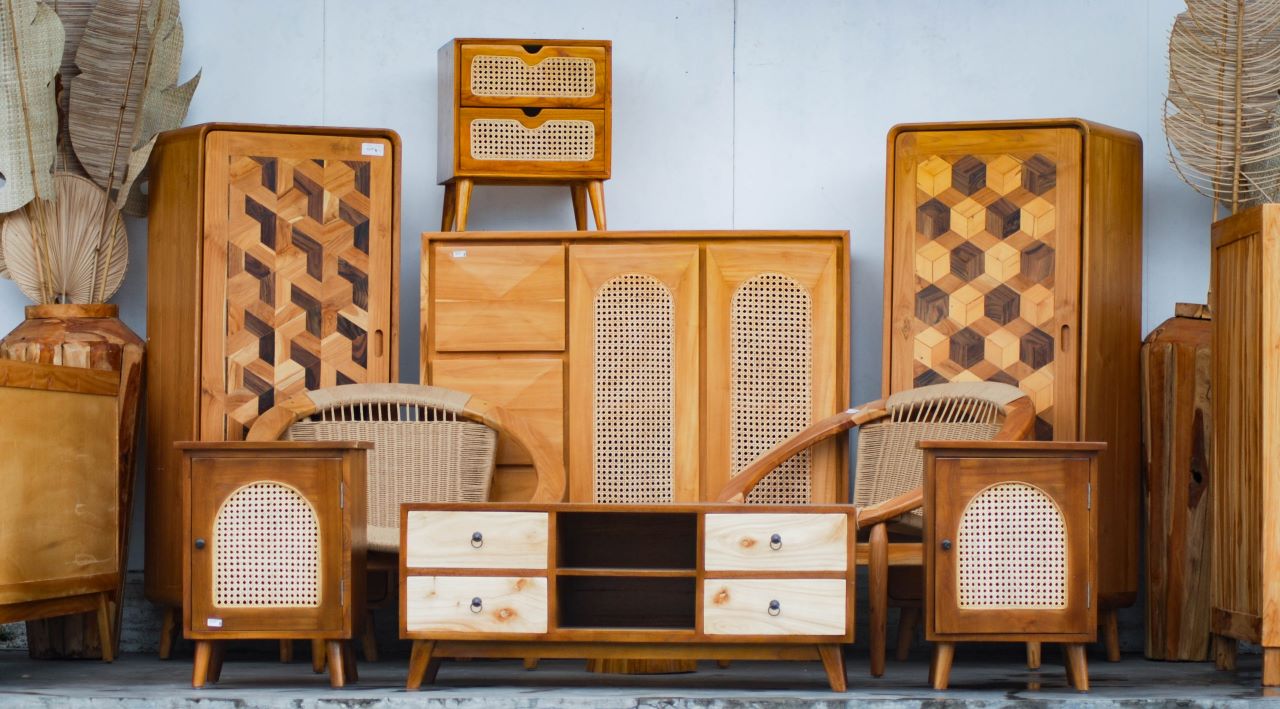
Handling family heirlooms after a loss requires managing legal authority, emotional pressure and practical logistics at the same time, and the order you take them on matters more than most people expect.
Blanket Storage: The Right Method for Every Space and Season
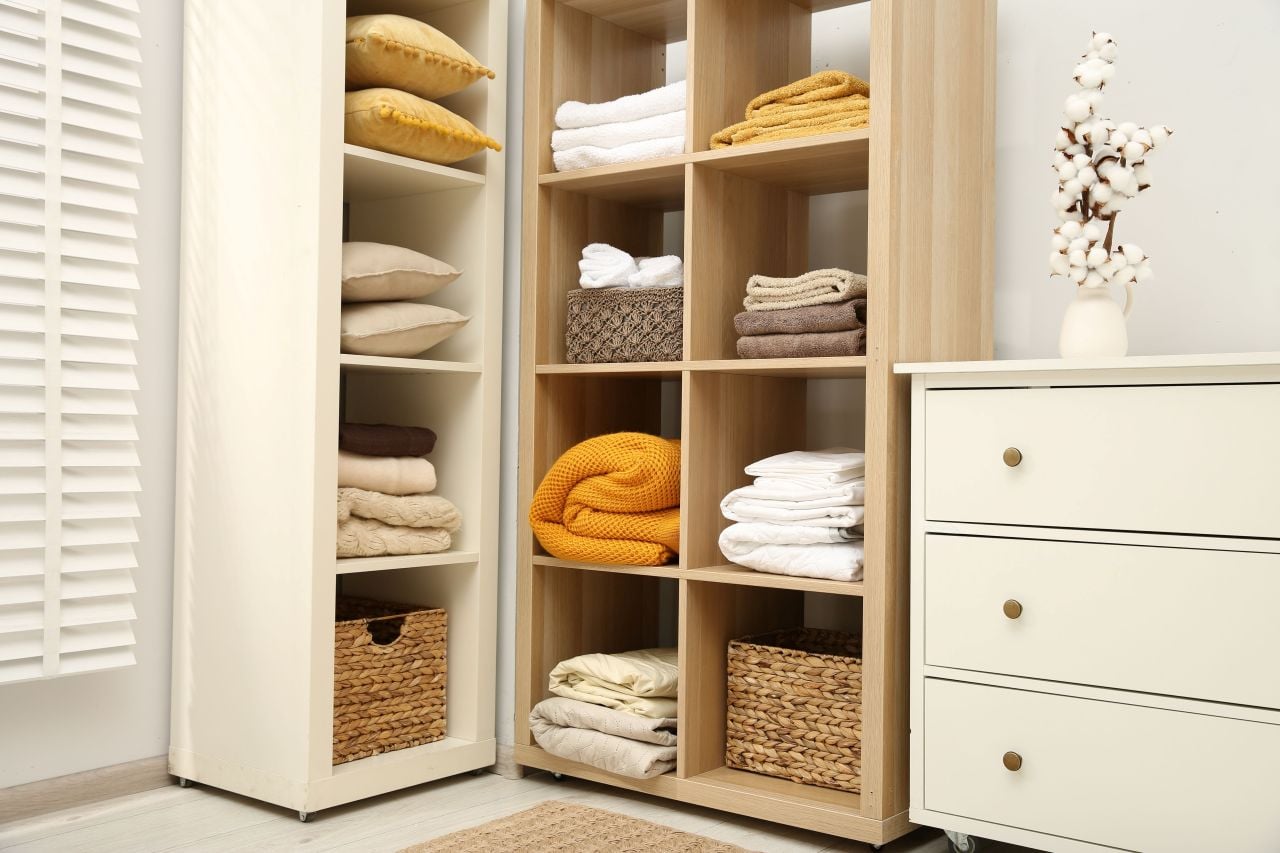
Blankets make our lives cozier, and storing them well is what keeps them soft and comfortable in the long run. Knowing how to store a blanket properly means your favorites come out of storage smelling fresh, feeling the same as when they went in, and lasting years longer than they otherwise would.

Board Game Storage Ideas That Keep Your Collection in Fighting Shape
Nobody warns you that getting into board games usually unlocks a second hobby, the much dreaded one that includes figuring out where on earth to put them. One game becomes a few, expansions start spawning beside their base boxes and before long, board game storage requires as much strategy as whatever is waiting on the other side of those lids.