

If you’re wondering how to start a self storage business, two questions come first: Does your area need more storage, and what would it take to run the business? Before you commit to a property, it helps to understand local demand, the costs involved and the day-to-day work of serving renters.
Those questions are connected. Local demand helps shape the unit sizes and features you offer, while achievable rents affect what the project can support financially. This guide explains those connections, drawing on industry research and insights from owners, developers and brokers.
Three things to know going into 2027
Strong national demand doesn’t guarantee local demand. Self storage is widely used and our surveys and search data show people’s interest in it isn’t fading. But national trends won’t fill your units. The question is whether enough people near your site need storage and will pay the rents your project needs to work. A market that looks healthy on paper may already have plenty of facilities.
New supply is slowing, but competition hasn’t gone away. About 55.4 million square feet of new storage is expected to have opened across the U.S. by the end of 2026, according to our 2026 supply report.(opens in new tab) That adds roughly 2.6% to the country’s existing storage space.
The pipeline is shrinking from there. Yardi Matrix(opens in new tab) forecasts that new supply in 2027 will total about 45 million net rentable square feet, with roughly 38.6 million coming in 2028. Construction starts in the first quarter of 2026 were 29% below the pace of a year earlier.
Fewer new facilities should ease pressure over time. A slower construction pipeline won’t help much if you open just down the road from another new facility that’s also trying to fill its units. Matt Davis, senior vice president with Colliers(opens in new tab) and partner in the Gustafson | Davis Self Storage Team, says several developers have found themselves in exactly that position: “competing with other properties in lease-up.” A lease-up is the period when a facility is building its tenant base and filling its units.
Large operators have made it tougher still. Many have cut rates sharply to fill units quickly, which affects new and established facilities alike. According to Davis, the industry is still working out how quickly those discounted rates can climb back to normal levels.
Renters want clear, fair pricing. In our latest self storage survey, affordable pricing was the top factor people considered when choosing a facility, followed by location. Being affordable isn’t only about having the lowest rate. Renters also want to understand what they’ll pay over time. “I think the number one thing here is pricing transparency,” says Doug Van Soest, owner of Storology Storage(opens in new tab), which operates seven self storage facilities in Texas and New Mexico. That means making the monthly rate, any introductory offer and additional fees easy for renters to understand.
1. What ownership involves
Before you think about where to open a facility, understand the work involved, even if you plan to run it remotely.
“It’s a lot of customer service, a lot of phone calls, dealing with issues, renting units, answering questions, move-ins and move-outs and ongoing maintenance at the facilities,” says Van Soest. “So it is a lot of moving parts that primarily just centers around customer service.”
On top of that come delinquent accounts, lien procedures, insurance, pricing and marketing. Owners generally handle this in one of three ways:
Run it yourself. You keep full control and avoid management fees, but the facility becomes your job.
Hire a manager. You oversee the business while an on-site or remote manager handles daily operations. In this case, your manager is your most important hire.
Use a third-party management company. Many small owners hand operations to a professional manager, including some of the large storage brands. Fees commonly run between 5% and 8% of gross rental income and some contracts combine a base fee with a percentage of revenue. In exchange, you get their pricing systems, marketing, call centers and staff. For owners who want a hands-off investment, this is often the central decision.
2. The main self storage business models
Self storage isn’t one business model. Here are the main options:
- Traditional self storage: customers rent units and access them on their own. This is the most common setup.
- Portable or container storage: you deliver containers to customers’ homes and pick them up when full. You need less land than a traditional facility, but you still need a yard or warehouse, trucks and drivers.
- Pick-up and store: you collect customers’ belongings, store them and bring them back on request. This requires a warehouse and trucks, so it suits people with moving experience.
- Vehicle, boat and RV storage: this can cost far less to build, since sites are often paved or graveled lots, sometimes with covered canopies, rather than enclosed buildings. That’s why it can work despite lower revenue per square foot. The downsides are higher theft risk and harder collections, since vehicles carry titles and liens. It can fill a real local gap where HOAs or city rules restrict driveway parking.
3. Researching local demand and supply
Local research helps answer two basic questions: What storage do people nearby need, and how well are existing facilities meeting that need? The answers help shape your rents and your unit mix, meaning the combination of unit sizes and storage types you offer.
Asked what new owners tend to overlook, Van Soest points straight to market demand. For years, he says, people who had spare land next to their home or business assumed a storage facility would fill up on its own. “If you build it, they will come,” is how he describes this flawed logic. Having land you can build on doesn’t mean people nearby need more storage and that gap is where many projects run into trouble.
Smaller towns can fall into the same trap. With cheap land and fewer zoning hurdles, it’s easy for supply to outpace demand. Alex Wright, a former Realtor in Montana and Wyoming, real estate investor and founder of BuildGrade(opens in new tab), has seen this firsthand in small markets in both states. There, almost anyone with an acre or two could put up metal buildings, add a sign and call it a storage business and the result is often more space than the local population can fill. “Just because a town is small doesn’t mean there’s an opportunity to build more storage,” says Wright.
Before assuming a town needs another facility, Wright would answer three questions:
- How many facilities are already operating?
- How full are they?
- What are they charging?
Read those answers together. A facility with empty units and falling rates tells a different story from one with few vacancies and steady pricing. Also check which units are available: a market can have plenty of storage overall but limited options in a particular size or type.
So what does an underserved market look like?
Van Soest’s rule of thumb is simple: if every facility in the area is running at high occupancy, there’s probably room for more. You can get a feel for this by checking market research from Yardi Matrix(opens in new tab). When most facilities have few vacancies, especially in popular sizes, local demand may support new space.
For a long time, self storage demand has also been tied to four life events: dislocation, death, divorce and downsizing. In recent years, decluttering and distribution (small businesses storing inventory) have joined them, forming what our research calls the 6 Ds of self storage demand(opens in new tab). A trade area with several of these drivers, such as high migration, a large senior population or many small businesses, tends to have a broader, steadier base of renters.
What to measure
Once you’ve found a promising area, the next step is defining your trade area: the zone your future customers will come from. People generally won’t drive far to reach their storage unit, so this area tends to be fairly small. “Generally, a trade-area for self storage is a 3-mile radius, but there are always exceptions,” says Tom de Jong, executive vice president of the De Jong Self Storage Team(opens in new tab) at Colliers. In dense cities, it may be smaller. In rural areas, customers may travel farther.
Within that radius, de Jong focuses on two things: who lives there and how much storage already serves them.
- Demand: population, how fast it’s growing, median household income and the share of residents who rent, since renters often have little room for belongings.
- Supply: the number of existing facilities, plus any that are planned or under construction.
Looking at both together tells you whether there’s room for new space.
One of the most useful supply measures is storage square feet per capita: the total rentable storage space in your trade area divided by its population. The national average is about 7.4 square feet per person, according to our 2026 supply report. For example, a trade area with 70,000 square feet of storage and 10,000 residents has 7 square feet per person. That tells you how much storage exists relative to the population, not how full it is or whether another facility would succeed. You still need to check occupancy, rents and the construction pipeline.
Markets vary widely: Supply-constrained New York has about 4 square feet per person. At the opposite end, many Sun Belt metros have more than 10 and Houston is above 11.
A low figure can point to unmet demand, while a high one suggests a crowded market. Compare your area with similar markets rather than relying on the national number alone. A college town or military community can support more storage per person than a typical suburb.
The table below lists the indicators to gather for your trade area and where to find each one. In short, collect census data on population, growth, income and renter share. Measure existing supply and the construction pipeline. Then check competitors’ occupancy, rates and rate trends and note any unit types the market lacks.
Know your likely customers
Our 2026 survey on self storage demands and trends offers national context:(opens in new tab)
- Usage: 26% of respondents currently rent a unit and 28% plan to in the future. Online searches for storage in the 150 largest U.S. cities rose 23% in 2025.
- Reasons: lack of space at home was the top reason for renting, followed by moving. High mortgage rates keeping people in place, smaller new homes and space taken by home offices all contribute.
- By generation: 35% of Gen X respondents currently rent, the most of any generation. Only 13% of Gen Z respondents rent today, but 32% plan to.
- Unit size: renters lean toward smaller units, while homeowners lean toward larger ones such as 10×20.
- Climate control: 54% of current storage users rent climate-controlled units.
Use the national findings to form questions about the local situation. If you expect to serve students, investigate the unit sizes and rental periods they need. If you expect small-business customers, ask what they plan to store and how often they need access. You essentially want to connect a likely customer with a specific storage need.
Evaluate the potential building site
Look for visibility, good traffic counts and easy access.
“Stay away from converting hard-to-get to properties or properties that are not surrounded by rooftops and housing,” says Davis. “Being near multifamily developments is always a good thing for self storage, tenants typically need self storage since they don’t have much room in their apartments.”
A cheap site that is hard to reach can cost you more in slow lease-up than you save on land.
4. Checking the zoning situation early
There are two questions to answer: Is self storage an allowed use on this property, and what approvals would your particular project need? Permission to use the land for storage doesn’t answer every question about building height, access, drainage or fire protection. Ask the planning office to explain the process for your proposed site, not just the zoning category.
Zoning varies dramatically by jurisdiction and it’s tightening in some places. A few examples:
In June 2026, Atlanta Mayor Andre Dickens issued an executive order pausing all new self storage permits. The City Council ratified a 180-day moratorium(opens in new tab) in July and proposed a 60-day extension to study permanent zoning changes that would end by-right approvals and require a special use permit citywide.
Even more recently, in September 2026, Yonkers, New York’s City Council unanimously adopted a 180-day moratorium (GO.9-2026)(opens in new tab) that pauses the intake, review or approval of new self storage applications citywide. Meanwhile, Chapel Hill requires storage to share a lot(opens in new tab) with other commercial or institutional uses.
At the other end of the spectrum, El Paso allows self storage facilities “by right”(opens in new tab) across all commercial, manufacturing and apartment zoning districts to directly accommodate the high-turnover needs of Fort Bliss military families.
All of this makes it worth understanding local politics before you commit. That is especially true for entitlements, which are the land-use approvals your project needs before development can proceed.
“The entitlement process is typically the most challenging and lengthy part of self storage development,” says Davis. “Municipalities are not in favor of self storage development in most markets, with some even imposing moratoriums on future self storage projects.”
Verify these items locally with your planning office, a land-use attorney or an engineer:
- Whether storage is permitted, conditional or prohibited
- Setbacks, height and site coverage
- Access, driveway and fire-lane requirements
- Parking
- Fire and building codes, including sprinklers
- Drainage and stormwater rules
- Design standards
- The approval process and its realistic timeline
5. Buying, building or converting: how the options differ
The main difference is what you can evaluate before committing. With an operating facility, you can review actual rental income, expenses and tenant records. With a new build, you’re relying more heavily on estimates of cost, demand and future rents. A conversion combines an existing building with a new storage operation, so you need to investigate both the building’s condition and the market for the units you plan to create.
Buying
For many first-time owners, the most straightforward path is buying a facility that’s already open. Instead of starting from an empty lot, you’re taking over a business with a track record. That record shows:
- How full the facility has been
- What tenants are paying
- What it costs to run
It can also reveal where the previous owner left room to improve, whether that’s outdated pricing, weak marketing or underused space.
That history helps with financing, too. Wright notes that lenders can evaluate an operating facility more easily than a project that only exists on paper, because the numbers are already there to review.
The tradeoff is that you inherit everything that comes with the property. The layout, the buildings and any problems the previous owner put off become yours. “The downside is you’re buying someone else’s layout, buildings and potentially their deferred problems,” says Wright. That’s why a thorough inspection and a close look at the books matter so much before you buy.
The price of an existing facility is usually based on its income and the market’s cap rate, which is the yearly return expected by investors, shown as a percentage of the price. Marcus & Millichap puts the sector’s average cap rate at 6.59% in 2026. Individual deals vary with location, quality and occupancy.
Building
Building new gives you the most control. You decide the layout, the unit sizes and the features from day one. In return, you take on the risks of construction and of filling a facility from scratch.
It’s also easy to underestimate the cost. “Building can make sense, but it can also cost a heck of a lot more than people expect,” says Wright. Beyond buying land and putting up units, he says you’ll need to budget for:
- Paving and drainage
- Utilities
- Fencing and security gates
- Zoning approvals and permits
Beyond that, construction costs vary widely by building type and region.
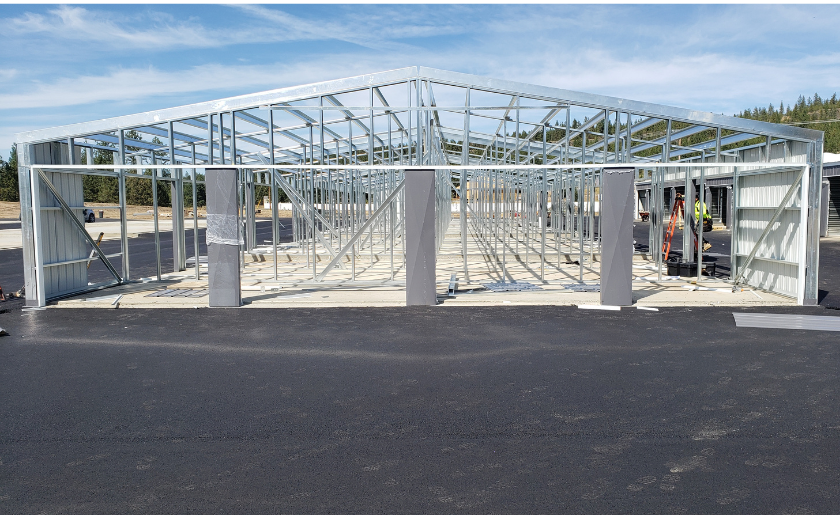
One expense caught Wright off guard when he first started evaluating properties: the space you need for driveways and access. Customers have to be able to drive between buildings and maneuver trucks and trailers and that space can’t be rented. The more land goes to access, the fewer units you can fit on the site. Factor that in before you estimate how much rent a property can bring in. You’ll also face design decisions that affect both cost and appeal.
Building has one advantage that buying doesn’t: you don’t have to do it all at once. Wright suggests building in phases. Start with enough units to open, see how quickly they rent, then add more as demand grows. That keeps your upfront spending lower and lets real rental activity, not projections, guide how big the facility gets.
Why might an owner consider building instead of buying?
Van Soest points to three situations that may lead owners to consider new construction.
The market is missing something. If local renters want a type of storage that no one offers, buying an existing facility won’t fill that gap. “I would say building makes more sense if a product doesn’t exist currently in that market,” says Van Soest. Covered boat and RV parking is one example. If there’s demand and no supply, building gives you the chance to be first.
There’s nothing to buy. In some markets, every facility is close to full, but none are for sale. Strong occupancy suggests room for more space and building may be the only way in.
Existing facilities cost too much. When sale prices climb high enough, building new can come out cheaper than buying, as long as demand is strong enough to fill the space.
Converting
A third option is turning an existing building, like a vacant big-box store, warehouse or office, into storage. It’s a growing part of the industry. According to our self storage conversion report(opens in new tab), conversions make up about 10% of completed U.S. storage space and about 7% of the space currently under construction.
The main appeal is that much of the groundwork is already done. An existing building typically comes with a foundation, utilities and parking in place, so you can skip some of the biggest early expenses of a new build and open sooner.
That doesn’t make conversions the cheaper choice by default. Renovating an older building often brings surprises that a new build doesn’t.
Those surprises are where many conversion budgets go wrong and why conversion costs are harder to estimate than new construction. Marc Goodin, president of Storage Authority(opens in new tab), says owners often focus on the relatively low cost of putting up unit walls and assume they’ve found a bargain. “Far too often, people underestimate the cost to convert a building to self storage,” says Goodin. Before committing, he recommends a full inspection of the building, since the bigger expenses tend to hide elsewhere:
- A new roof
- Replacement mechanical systems
- Elevators or staircases

- An office and restrooms
- Structural reinforcement
A roof alone can run more than $200,000, according to Goodin. He also considers an environmental study of the building and site a must, so you don’t inherit a costly cleanup.
The building’s shape matters as well. Single-story properties tend to convert more easily, since they don’t need elevators and every unit sits on the ground floor. According to Davis, that easy access typically means higher rents and happier tenants.
6. What goes into a startup budget
Your budget needs to answer two questions: What will it cost to acquire and prepare the facility, and how much cash will you need before rental income covers the bills? A project can look affordable on construction costs alone and still require more money than expected during lease-up.
Beyond that, costs depend on your market, the property and whether you buy, convert or build. What you can control is making sure nothing is missing from your budget.
Before you commit
Feasibility study. It’s essential if you’re converting or building. If you’re buying, it’s still recommended, though the facility’s track record does much of the work.
Zoning, entitlements and permits. Converting and building both require approvals and a conversion may need a variance or special permit because the building’s use is changing. If you’re buying, confirm the facility complies with current zoning. You’ll only need new permits if you plan to expand.
Due diligence. Every path needs an appraisal, legal review and title work. Beyond that:
Buying. Inspect the facility and review its books and tenant records.
Converting. Add a building inspection, a structural assessment and an environmental study.
Building. Add soil and environmental studies and a land survey.
Design and engineering. Needed for converting and building. For conversions, this includes checking that floors can carry storage loads. If you’re buying, you only need it to expand or reconfigure.
The property
This is the purchase itself: an operating facility, an existing building to convert (purchased or leased) or land to build on. What you’ll need to spend depends on the property:
Site work. If you’re building, budget for grading, paving, drainage and utilities. A conversion may let you reuse existing parking and utility connections. If you’re buying, check whether paving or drainage needs repairs.
Construction or renovation. Building means paying for the facility from the ground up. A conversion may involve new units and doors, roof repairs, HVAC, sprinklers, elevators and an office. An existing facility may need repairs or upgrades the previous owner put off.
Security, signage and equipment. Budget for any gates, fencing, cameras, lighting, signs and office equipment you need to install or replace.
Opening. To open a self storage facility, you have to put money into your software and website. New facilities need full setup, and even if you’re buying, you may switch to new systems. Then, you should also budget for launch marketing. New and converted facilities need preleasing and a grand opening campaign, while buying may only require rebranding.
Throughout the project
Along the way, your money will go into financing costs and insurance. Every path carries loan fees and closing costs, but converting and building also mean paying interest while the work is underway, before the facility earns income. As for insurance, buying a facility means that you’ll need property and liability coverage from day one. In contrast, converting and building require construction-period coverage first, then property and liability once you open.
Your safety net
Keep contingency funds and operating reserves separate. Contingency covers unexpected project costs, such as additional repair work. Operating reserves cover the gap between the facility’s income and its bills while units fill.
For example, if your projections show expenses and loan payments exceeding rental income by $8,000 in one month, your reserves need to cover that $8,000 gap. Estimate the shortfall month by month rather than assuming the facility will reach full occupancy immediately.
Funding the lease-up
Wright gets wary of plans that depend on near-perfect results. “If the numbers only work when you’re at 95% occupancy charging high rents, that would make me very nervous,” says Wright. Preleasing units before you open can give you a head start, but he says you should still expect to spend a good while running well below capacity.
To give a sense of scale, Van Soest shared how he thinks about occupancy:
- Stabilized: across the industry, a facility is generally considered stable at about 85% to 90% full.
- Break-even with a loan: he estimates it’s usually somewhere around 50% to 60% occupancy, depending on what it cost to build and what local rents look like.
- Break-even without a loan: for a facility owned free and clear, he puts it closer to 30% to 40%.
These are one operator’s rough estimates, not targets. Your own break-even depends on what you paid for the project, how much you borrowed, what you can charge and what it costs to run the facility. Work out your numbers, then see how they hold up if units fill more slowly or rents come in lower than you planned.
7. Running the numbers for the business plan
The budget and the operations come together in your business plan:
Know your operating expenses
Revenue is only half the picture. Once open, a facility carries ongoing costs:
- Property taxes, often one of the largest (can be appealed)
- Insurance
- Payroll or management fees
- Marketing and listing fees
- Software and payment processing
- Utilities
- Repairs and maintenance
These costs eat a meaningful share of revenue and smaller facilities tend to spend a higher share than large ones, since they can’t spread fixed costs as widely.
Understand how facilities are valued
Self storage facilities are usually priced based on how much money they make. Two terms come up constantly:
Net operating income (NOI) is the income a facility collects in a year, minus its operating costs. It doesn’t include loan payments. This is why your financial plan needs to show both NOI and cash flow after debt payments.
The cap rate is the yearly return buyers expect, shown as a percentage of the price.
To estimate a facility’s value, divide its NOI by the cap rate. A facility with $400,000 in NOI at a 6.5% cap rate would be priced at around $6.15 million ($400,000 ÷ 0.065). This is a simplified illustration, so do not take it as a valuation.
Here’s the takeaway. Small changes in income have a big effect on value. At a 6.5% cap rate, each extra $1,000 in yearly NOI adds about $15,000 to a facility’s value and each $1,000 lost removes about the same. That’s why slow lease-up and below-market rents are costly whether you keep the facility or sell it.
What a feasibility study examines
A feasibility study tests whether the proposed project could work, using assumptions about costs, rents and how quickly units fill. It should cover:
- Achievable rents
- Absorption, meaning how quickly you expect units to fill
- Stabilized occupancy, meaning the percentage of units you expect to stay occupied once the facility is established
- Total project cost
- Operating expenses and NOI
- Cash flow under several scenarios, including a pessimistic one
If the feasibility study exposes a problem, revise the project before building the business plan around it.
Write your business plan
Your business plan explains how you’ll run and fund the facility. It should include:
- Executive summary
- Company overview, including ownership, legal structure, location rationale, facility size and unit mix
- Market and competitive analysis
- Marketing and pricing strategy
- Management and operations
- Financial plan, covering budget, financing, multi-year projections, break-even and risk mitigation
8. Financing options and due diligence
Financing routes
Terms vary by lender, property and borrower, so treat these as options to discuss rather than rules:
- Bank loans cover acquisition, construction or renovation. Local and regional banks often lend on projects that are still filling up.
- Bridge loans provide short-term financing for properties not yet stabilized, usually refinanced once income stabilizes.
- Permanent loans offer long-term financing for stabilized properties. Larger loans may come from commercial mortgage (conduit) lenders.
- SBA-backed loans through the 7(a)(opens in new tab) and 504 programs(opens in new tab) are worth asking about, but eligibility isn’t automatic. The 504 program excludes passive businesses and qualification depends on how the facility is owned and operated. Confirm with an SBA lender(opens in new tab).
- Equity partners or private investors can cover the gap between the loan and the total project cost.
What lenders evaluate
Expect lenders to look at your equity contribution(opens in new tab), your experience or your management team’s and the feasibility study. For acquisitions, lenders will look at the property’s operating history.
Due diligence
Due diligence is the work of checking what you’re buying and identifying problems before you commit. The checks differ depending on whether you’re buying a facility, converting a building or developing land.
If you buy, verify the books against bank statements and the rent roll. Inspect roofs, paving, doors and security systems and confirm the property complies with zoning. Check how a sale will affect property taxes, too. In many places, a sale triggers a reassessment based on the new purchase price, so the seller’s tax bill may understate what you’ll pay. Underwrite using your expected post-sale taxes.
If you convert, get a full building inspection, a structural assessment and a Phase I environmental study and price out code upgrades.
For building new, confirm soil, drainage, environmental conditions, utility access and entitlements before closing on land.
9. Designing the facility
Whether you build, convert or renovate, unit mix and self storage amenities(opens in new tab) shape both your costs and your appeal to renters.
Unit mix. Base it on local research. The 10×10 is common nationally, but your market should decide the mix. Packing a facility with more units won’t automatically boost your profits. Smaller units can earn more per square foot, but every extra unit adds doors, partitions and installation work to your construction bill. That extra revenue only shows up if local renters actually want small units and will pay for them. “Doors cost more than walls,” says Wright.
Indoor or outdoor units. Drive-up units suit renters moving large items. Interior units can feel more secure and allow climate control.
Climate control.(opens in new tab) Offer it where your climate and customers call for it. More than half of current storage users rent climate-controlled units, according to our storage trends and demand survey(opens in new tab).
Security(opens in new tab). Keypad entry, cameras, gated access and lighting give tenants confidence and make extended access hours easier to offer.
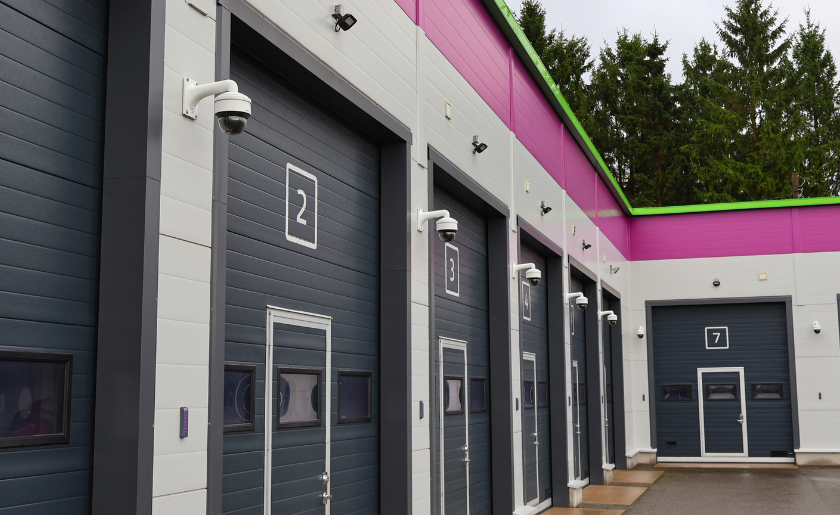
Access and layout. Plan drive aisles, unloading areas and walking distances so move-ins are easy.
10. Understanding self storage pricing
Self storage rates depend on unit size, amenities, location, local supply and season. Demand typically peaks from spring through late summer.
Rates have been under pressure nationally. In September 2026(opens in new tab), the national average street rate was $133 a month, off 0.7% from August and down 2.7% from a year earlier. About 35% of the 150 largest U.S. cities recorded year-over-year increases. Our 2026 supply report(opens in new tab) shows how much local supply shapes that picture:
- Well-supplied markets: in many Sun Belt metros, new supply is pushing rents down. Houston(opens in new tab) fell 3.3% year over year and Cape Coral(opens in new tab)–Fort Myers(opens in new tab) fell 5.8%.
- Supply-constrained markets: in places like New York City(opens in new tab), rents are flat or rising. NYC rose 0.6%, the only increase among the 10 metros adding the most space in 2026.
Check what facilities in your target area charge using our city-level street rate pages(opens in new tab) and keep tracking competitors’ rates after you open. Also, compare like with like. A ground-floor, climate-controlled unit isn’t the same product as an upstairs unit without climate control, even if both are the same size. Record the unit’s features alongside its advertised rate so you can see what customers are being offered for the price.
11. Operations and marketing
Operations
Walk through a rental from start to finish. Can a customer find an available unit, understand the price, sign the agreement, pay and access the property? Then consider what happens afterward: a payment fails, a customer loses their access code or someone reports a damaged door. Use those tasks to decide what your software, staff and procedures need to handle.
Storage management software(opens in new tab) handles rentals, payments and tenant communication. Our survey found that mobile booking and app-based gate access are increasingly expected. These are separate capabilities, so decide which ones your customers need. Management software such as Yardi Storage Manager(opens in new tab) suits large operators, while Yardi Breeze(opens in new tab) fits smaller operators getting started.
Talk to an insurance provider about the coverage your facility needs, including property, liability, business interruption and workers’ compensation. Tenant insurance or protection plans cover tenants’ stored belongings, which your own policy generally doesn’t and they can reduce disputes when items are damaged.
You also need to set some clear, official rules. Prohibit hazardous materials, food, plants, animals and wet items. Living in a unit is prohibited by virtually every rental agreement and illegal in many jurisdictions. Running a business from a unit is generally not allowed.
Next, you have to understand delinquency laws in your state. Follow your state’s lien laws exactly, including notices and timelines. Auctions are a last resort and rarely profitable.
Other potential income sources include truck rentals, packing supplies, parking and tenant protection plans.
Marketing
Most renters search online before they call or visit, so start with your digital presence as you go through the basics of self storage marketing.(opens in new tab).This starts by making your website fast and mobile-friendly, with online rentals and content that matches local searches. Next, you need to set up Google Business Profile in the right category, list accurate hours and ask satisfied tenants for reviews.
Listing your facility on sites like StorageCafe(opens in new tab) helps renters find your units while comparing options nearby. You can also build relationships with local real estate agents, movers and apartment communities. Prepare staff to answer questions by phone, in person and online, and follow up with people who inquire but aren’t ready to rent.
The bottom line
Starting a self storage business requires:
- A trade area that can absorb new space
- Zoning that allows your project
- A complete budget, including lease-up reserves
- A realistic view of operating costs and pricing
- A willingness to run a customer service business or to pay someone else to
To explore the market side, you can compare facilities, advertised rates and listed availability in your target city on StorageCafe(opens in new tab), alongside our self storage industry statistics pages.(opens in new tab)
This guide is for informational purposes and should not be considered investment, legal or financial advice.
Frequently asked questions
How much does it cost to start a self storage business?
It depends heavily on your market, the property and whether you buy, convert or build. Whichever path you choose, budget for:
- Due diligence and approvals
- The property itself
- Site work and construction or renovation
- Financing costs
- A contingency
- Operating reserves to cover expenses while units fill
Is self storage a passive business?
Not on its own. Even remotely managed facilities involve constant customer service: phone calls, rentals, move-ins and move-outs, maintenance and delinquent accounts. Owners who want a hands-off role often hire a third-party management company, which typically charges a percentage of revenue.
How do I know if my market needs another facility?
Start with your trade area, generally about a 3-mile radius. Look at:
- Population, growth, income and share of renters
- Storage square feet per capita (the national average is about 7.4)
- Facilities planned or under construction
- How full competitors are and what they charge
If most facilities are running at high occupancy, the market may be underserved.
Should I buy, build or convert?
It depends on your market. Buying gives you an operating history to evaluate, but you inherit the previous owner’s layout and any deferred problems. Meanwhile, building gives you control but adds construction and lease-up risk. It makes the most sense when your market lacks a product, has no facilities for sale or has facilities priced above what it would cost to build. If you convert an existing building into self storage, you can reuse existing infrastructure, but hidden costs are common and experts disagree on whether it’s cheaper.
How full does a facility need to be to break even?
It depends on your project cost, debt, rents and expenses. “That break-even number is going to depend largely on your cost to build and what kind of rents you’re getting in that market,” says Van Soest. “But I would say probably 50 to 60 percent occupied would be probably around a break-even number.” Treat that as one operator’s estimate and calculate your own.
How long does a new facility take to fill up?
It varies by market, but it can take years. Start preleasing before you open and budget reserves for a period well below full occupancy.
Can I use an SBA loan?
Possibly, but eligibility isn’t automatic. The SBA’s 504 program(opens in new tab) excludes passive businesses and whether a storage facility qualifies depends on how it’s owned and operated. Confirm with an SBA lender.
Will zoning allow self storage on my site?
Not necessarily. Rules vary widely by city and some, including Chicago and Rockford, Illinois, have recently restricted where storage can go. Check with your local planning office or a land-use attorney before you commit to a property.


What to Know Before Starting a Self Storage Business in 2027
If you’re wondering how to start a self storage business, two questions come first: Does your area need more storage, and what would it take to run the business? Before you commit to a property, it helps to understand local demand, the costs involved and the day-to-day work of serving renters.
How to Organize Your Garage: A Step-by-Step Guide
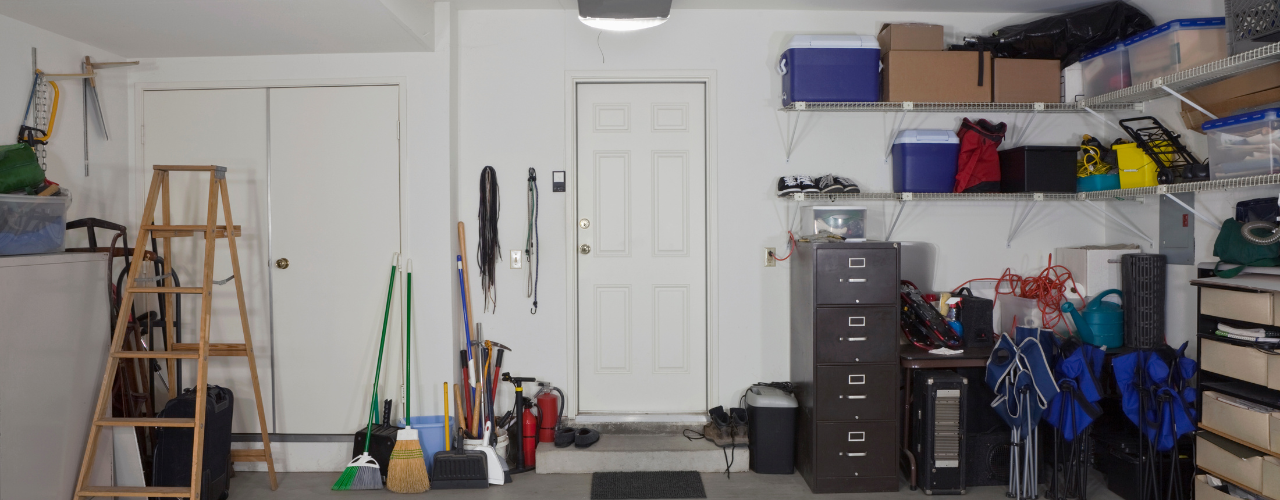
A messy garage is often the product of plain, human indecision. And no, buying more bins isn’t the end-all decision to fix a cluttered garage. Luckily, the steps you need to take are not that complicated. Decide what your garage is for, empty it, sort and measure and buy storage last. Here’s how to make informed decisions along the way, so your garage stays organized for the long term.

Should You Vacuum Seal Clothes? Everything You Actually Need to Know
Vacuum storage bags seem like the perfect solution when storage space is an issue: suck out the air, shrink that pile of winter sweaters into a fraction of the space and suddenly your closet is no longer overflowing. For the right types of clothes or other household linens, vacuum bags are actually quite handy and a great way to save closet space.

ATV Storage Guide: How To Store and Winterize Your ATV
The riding season is winding down, and that’s when most people start thinking about ATV storage. Keeping an ATV at home isn’t always easy. Garages fill up fast, sheds are rarely built for a four-wheeler and some apartment complexes and homeowners associations don’t allow one in the parking lot or driveway.
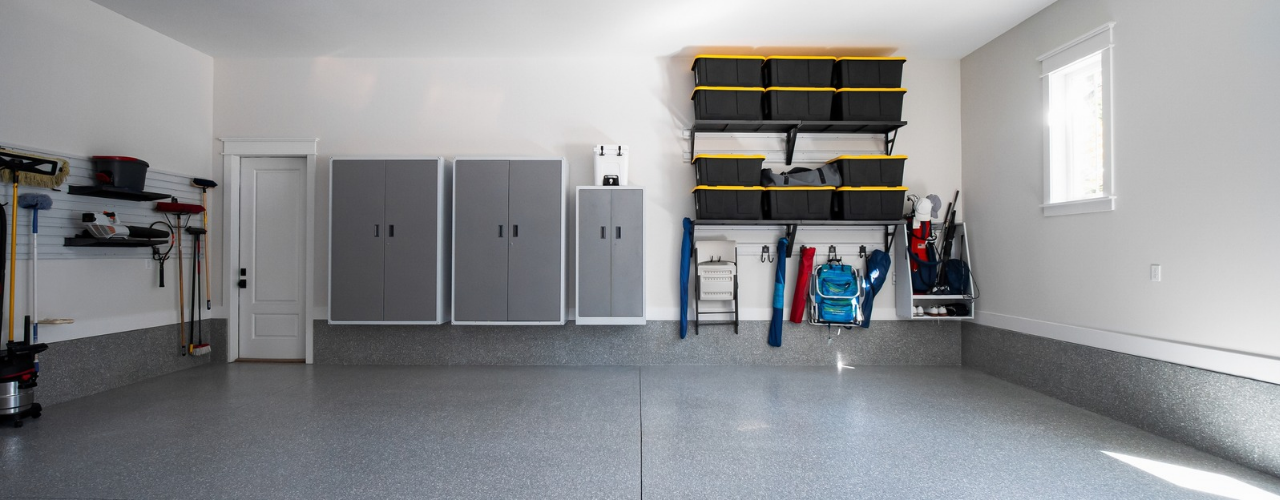
21 Garage Storage Ideas: Free Up Your Floor Space
Garage storage is more important than it sounds, because it helps you move things off the floor and onto walls, ceilings and rolling units. In time, this makes a big difference and saves you from awkwardly tiptoeing around stuff you’ve left on the ground. Use the garage storage ideas below and you’ll build a setup that fits what you own, how often you use it and how much space you have.

How to Move a Piano: Moving, Insurance & Storage Guide
Before we get into the nitty-gritty of the matter, let’s agree on the simple fact that, unlike other types of relocation conundrums, moving a piano is just a very cool thing to see, let alone accomplish. The labor that makes piano concerts possible and keeps legendary instruments alive, a piano relocation takes meticulous planning, special equipment and a crew that really knows their stuff. That is, unless you’re set on recreating the piano crash of a classic Looney Toons gag.

Hall Closet Organization: 30 Ideas for Simpler Storage
Be it built-in, freestanding, or wholly improvised, your hall closet works best when you can grab anything quickly and put it back just as fast. These 30 ideas for organizing your hall closet walk you through planning, deciding where things go, choosing the right containers and way more. By the end, you’ll even know what to do when your closet still runs out of room.

Holiday Decoration Storage: A Guide for Every Season
Taking down the holiday decorations is never as exciting as putting them up. One minute, your home is looking wonderfully festive, and the next, you’re trying to remember which box the Christmas ornaments came in while wrestling with a string of lights that managed to tie itself into a dozen knots. With every holiday bringing its own collection of decorations, a good holiday decoration storage system helps you keep a growing collection under control.

Where to Get Moving Boxes in Philadelphia
Philadelphia’s historic charm can put your patience to the test on moving day. Between cobblestone streets, narrow rowhouse entrances and the occasional pothole, you don’t want to worry about not having enough boxes on top of it all. Start gathering your moving boxes early and you’ll have one less box to check off on packing day. Luckily, you have plenty of places to get your boxes from.