

Key Takeaways
- For proper tie storage, hang neckties on a rack to keep them wrinkle-free and easily accessible.
- Roll ties loosely for space-saving storage, especially for delicate fabrics like silk or knit.
- Never store ties knotted to avoid permanent wrinkles and damage.
- Use dividers or boxes to organize neckties and bowties in drawers and protect them from dust and pests.
- For travel, roll ties and pack them in shoes or a travel case to prevent creases.
The best way to keep your ties wrinkle-free is to just learn how to properly store them. You can start by knowing to never store ties knotted, in tight rolls, or exposed to direct sunlight or heat (which causes discoloration). But there are a few extra steps you can take to ensure your ties stay in top form. Let’s go through all the places and ways you can store your ties, and you may never have to worry about a crumpled necktie again in your life.
How to store ties in a closet
A closet is the most obvious place to keep your ties. But is it the most practical? It can be. If you’ve got a small collection, they can go on the shoulder of the suit jacket they pair with for easy coordination. Just avoid placing ties on regular hangers or racks with smooth surfaces. This is because gravity makes things, including ties, slip and fall.
For larger collections, it’s worth looking at the latest breakthroughs in modern tie storage accessories.
Tie racks often make the best candidate. Just unknot the tie and drape it over a prong on a tie rack right after wearing. This prevents wrinkles and keeps ties crisp. You’ve got plenty of cool options to choose from:
- Wall-mounted racks, often the most budget-friendly version.
- Hanging racks, where you attach to closet rods, convenient for visibility and access.
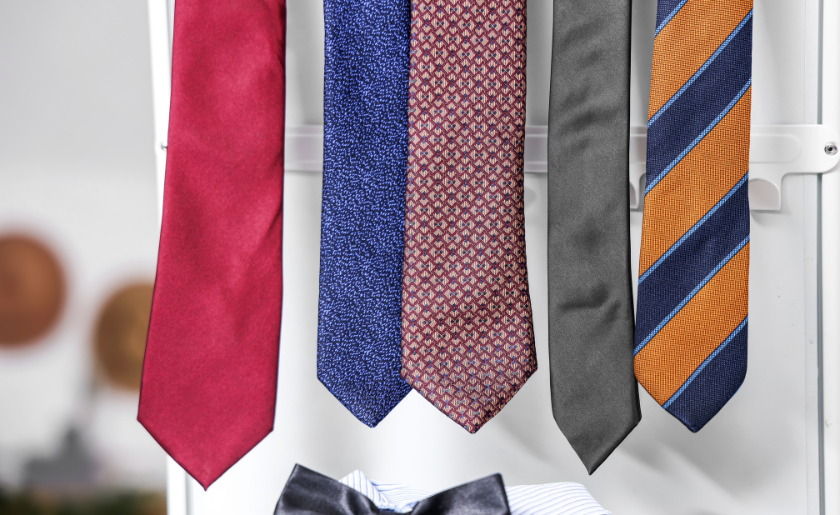
- Spinning racks, which are space-efficient and can even be motorized, if you want to give your home that Jetsons-vibe.
Cubbies are great way to display ties if you’ve got a walk-in closet and want to give it a glow-up. This requires more space and setup effort and you’re sacrificing practicality for aesthetics (don’t worry though, we get it).
Boxes can go on shelves and hold rolled or folded ties. They’re also ideal for long-term storage, as long as you use airtight, insect-proof boxes to protect from light, dust, and pests. You can also add cedar blocks or mothballs to deter moths.
Plastic drawers are affordable, stackable and can hold 15 to 20 ties each. These are practical for under-bed or closet storage.
How to store ties in a drawer
The drawer is the superior storage option for knit ties, which can become stretched out when hanged (gravity again), as well as large collections that may just be too much for a hanging rack.
If you’re worried about ties getting mixed up with other clothes in one unseemly mess, drawer dividers are the answer for you.
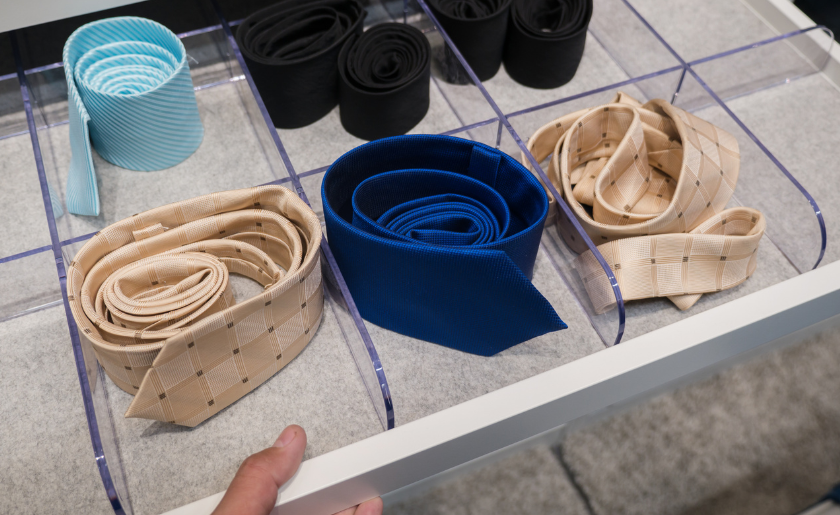
As for the risk of creasing, you can roll your ties carefully by following these simple steps:
- Ensure the tie is wrinkle-free (steam, iron, or dry-clean if needed).
- Lay the tie face down, fold in half without creasing.
- Lightly roll from the fold toward the ends, creating a loose, pillowy roll (not tight).
- Store rolls upright or lying flat in a shallow drawer.
For the more patient among us, there is also the folding method: Fold ties in half (or twice) as they are often shipped, ensuring the displayed front is never creased. Then, store flat in a single layer to avoid compression wrinkles.
Also, next time you buy furniture, you can look into options that have dividers built into the drawers, which is both more functional and just prettier.
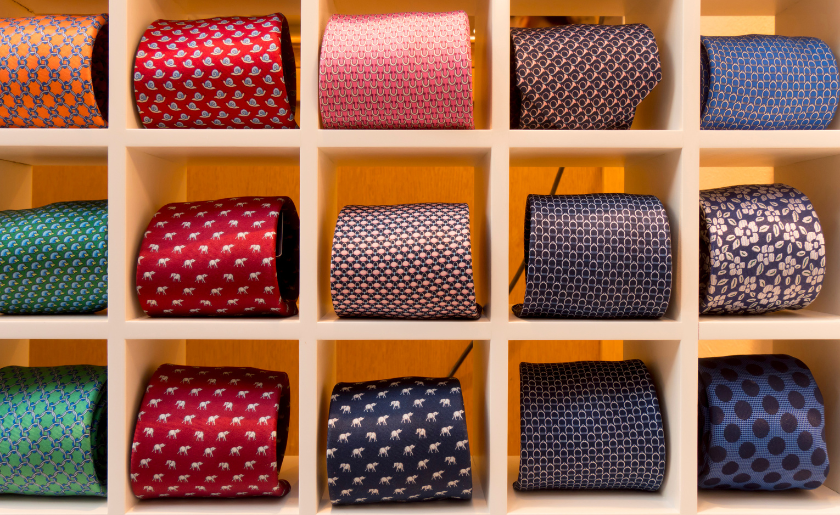
Make sure to never stack ties on top of each other, and try to keep them visible for easy selection.
How to pack ties when traveling
Say you’ve got an important business trip coming up where you have to look your best. You may not have enough time for ironing the wrinkles in your necktie.
No need to fret. If you’ve still got the box you’ve your ties came in, you can just use that.
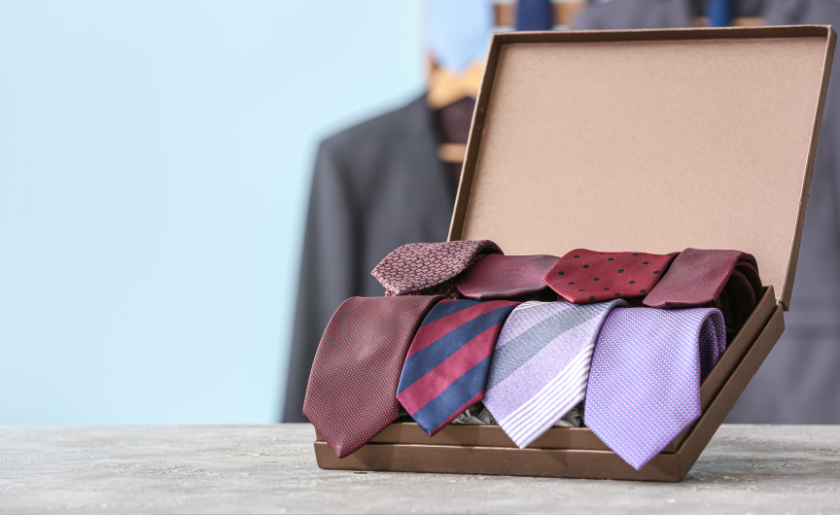
If you don’t have the original box anymore, there are tie travel roll cases you can get that also work for bowties and other accessories, and they will last you all through your future business travels, too.
The cheaper, on-the-run solution is just to roll your necktie carefully and just as carefully stuff it into your dress shoe (we won’t tell). Plus, this will keep the shoe from creasing too. If you have more ties than shoes, layer them between soft clothing, like sweaters, to avoid wrinkling.
How store ties long-term
Special-occasion clothes, like suits with elegant ties, can take up precious closet space despite their limited use. That is why many people are turning to self storage as long-term space away from home. Should you go this route, just make sure to get a climate-controlled unit if you live somewhere where the temperature and humidity swings big in either direction.
If you’re already storing clothes, including neckties, in one such environment without using climate control, do consider switching in order to avoid the excess moisture, heat and cold (and thus, issues like mold).
How to store bow ties
If bow ties are part of your wardrobe, you know how one creased look can put these classic accessories just why of the fashion statement finish line. Proper storage is key, as it almost always is.
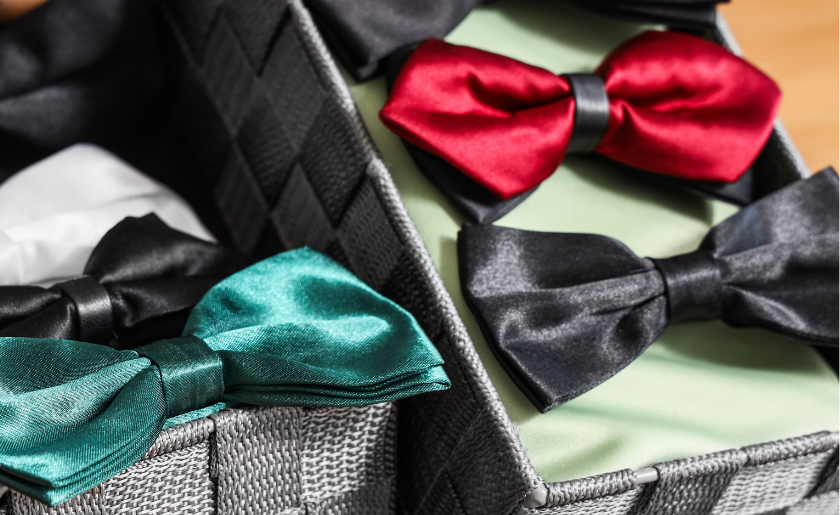
So: never store your bow ties knotted. Always unknot to prevent permanent wrinkles. Then, fold them before rolling to avoid curling one end too tightly. As for containers, use the same type of items as you do for long ties (racks, drawers, boxes), but keep them in a dedicated section.
Bottom line
Let’s recap a bit. Most of the times, hanging neckties on a rack is ideal for wrinkle-free storage and easy access. To save space, rolling and storing in drawers or boxes is practical, especially for large collections or delicate fabrics.
And if you’re travelling, use a tie travel roll case or pack rolled ties in dress shoes to prevent wrinkles.
At the end of the day, you’ll probably okay by just avoiding the biggest no-no’s: Storing ties knotted, in tight rolls, or exposed to direct sunlight/heat.
FAQ on tie storage
Is it better to roll or hang ties?
Both are effective. Hanging keeps ties crisp and visible; rolling saves space and reduces wrinkles for delicate fabrics (e.g., silk).
How to remove wrinkles?
Hang ties for 2–3 days to let wrinkles fade naturally, or use steam (e.g., from a shower or steamer).
Can I store ties in plastic sleeves?
Yes, for long-term storage, use plastic sleeves and boxes to mimic how retailers ship ties. Just use climate-control, too, if you live in a place with high temperature swings.
How to pack ties for travel?
Roll ties and store them in dress shoes or a travel tie case. For multiple ties, layer them between soft clothing (e.g., sweaters) to prevent creases.
What about pocket squares?
Fold and stack in a clean, non-airtight box with airflow to prevent mustiness. Use a cigar box or dedicated organizer.


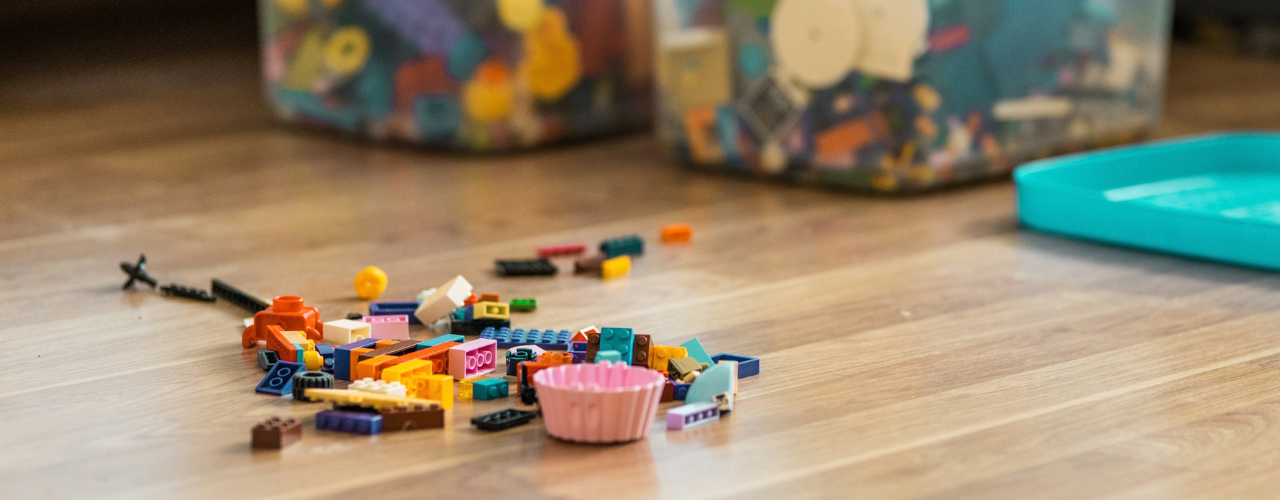
How to Store LEGOs: All the Fun, None of the Clutter
How to store LEGOs largely comes down to how your household uses them. If the bricks are part of everyday play, you need a setup that keeps them within easy reach and makes cleanup quick (for your feet’s sake, at least). Toy storage(opens in new tab) such as simple bins, playmats or containers that children can put away themselves may be enough. Larger or more serious collections usually need more organization, such as labelled drawers for loose pieces, trays for unfinished builds, shelves for completed models and separate storage for retired sets.

Cardboard Costume Guide: Tips and Ideas for a DIY Halloween
Whether for kids or adults, cardboard costume ideas often make the biggest splash once materialized, and that’s for a simple reason: doing a lot with a little is a universally impressive feat (especially in this economy). If you don’t have enough boxes you could temporarily repurpose, don’t worry! There are many places where you can find free moving boxes(opens in new tab), from stores and supermarkets to online groups and recycling drop-off spots. On the run? Try your luck at a self storage(opens in new tab) facility that sells moving supplies, often for cheap. This way, you can choose moving boxes of different shapes and sizes(opens in new tab), so you can make your costumes as complex as you want.

How to Celebrate Halloween: 9 Non-Spooky Ways To Enjoy It
As soon as October starts, it’s the official Halloween month. And while for many people it means it’s open season to get the scare of a lifetime, others, especially families with small children, might prefer to celebrate in a tamer way that’s both kid- and adult-friendly. While you’re likely to find more events where the spook factor is high, here’s how to celebrate Halloween in a not-so-scary way:

Motorcycle Storage Guide: How to Store Your Bike Safely
Motorcycles may be born to be wild, but eventually even the wild ones need somewhere to park. Whether riding season is winding down or your current living situation comes with plenty of square footage for you and less for your bike, motorcycle storage is one of those parts of ownership that doesn’t get as much airtime as the open road.

Halloween Decorating on a Budget (And Cheap Ideas for Everything Elsee)
Halloween has crept a long way from its eerie origins. While All Hallows’ Eve has transformed through the centuries, it wasn’t until the 1930s that trick-or-treating became a tradition in the U.S. and businesses began conjuring up mass-produced Halloween costumes. Now, Halloween is a monster-sized, billion-dollar industry, with a cauldron full of costumes and decorations ranging from the mainstream to the macabre. But is it all really worth your wallet? Maybe, but we’ll let you in on a little secret: You can keep your Halloween decorating on a budget and save on everything else, too. Take this plan and see it through!

Moving From a House to an Apartment: What to Expect, How to Downsize & How Self Storage Helps
For some, moving from a house to an apartment is a financial decision. For others, it’s about simplifying life. Maybe the kids have moved out and half the house sits empty, or you’re approaching retirement and no longer want to spend weekends on repairs. Or perhaps you’ve been weighing the cost of buying a home and wondering whether renting simply makes more sense right now.
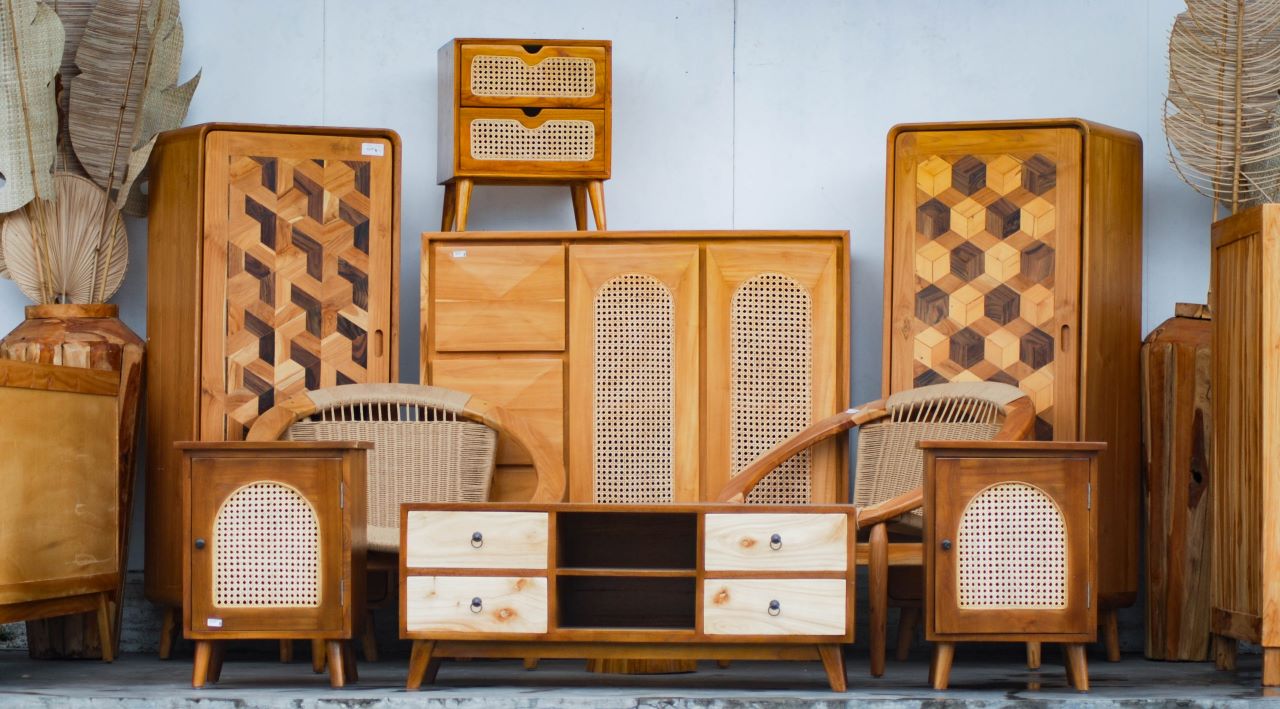
Family Heirlooms Overload: How to Handle Family Inheritance Without Regret
Handling family heirlooms after a loss requires managing legal authority, emotional pressure and practical logistics at the same time, and the order you take them on matters more than most people expect.
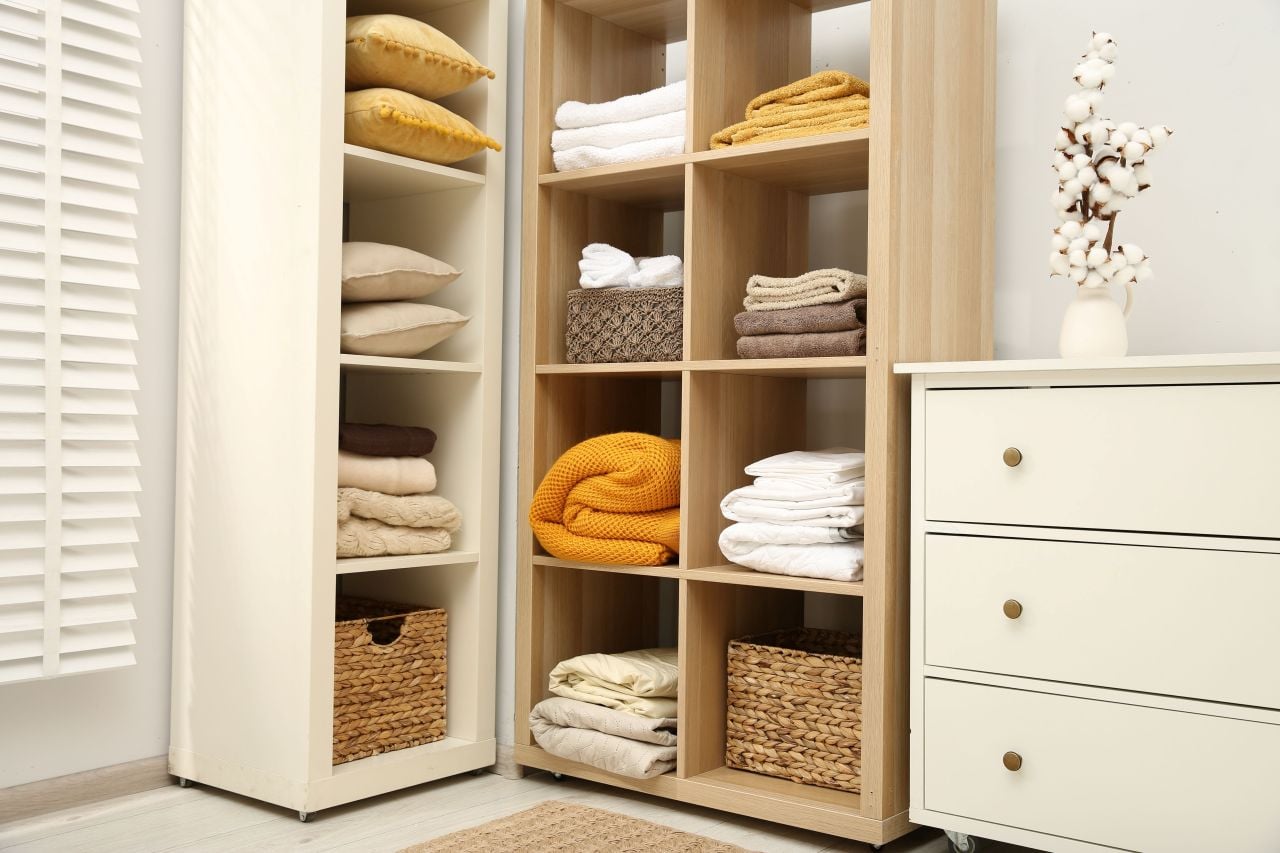
Blanket Storage: The Right Method for Every Space and Season
Blankets make our lives cozier, and storing them well is what keeps them soft and comfortable in the long run. Knowing how to store a blanket properly means your favorites come out of storage smelling fresh, feeling the same as when they went in, and lasting years longer than they otherwise would.

Board Game Storage Ideas That Keep Your Collection in Fighting Shape
Nobody warns you that getting into board games usually unlocks a second hobby, the much dreaded one that includes figuring out where on earth to put them. One game becomes a few, expansions start spawning beside their base boxes and before long, board game storage requires as much strategy as whatever is waiting on the other side of those lids.