

Motorcycles may be born to be wild, but eventually even the wild ones need somewhere to park. Whether riding season is winding down or your current living situation comes with plenty of square footage for you and less for your bike, motorcycle storage is one of those parts of ownership that doesn’t get as much airtime as the open road.
What happens to it between rides shows up the moment you twist the throttle again. Leaving it exposed to the elements can make that first ride back less exciting, while winter asks for more than throwing on a cover and putting the riding season in neutral.
Being garage-less doesn’t automatically promote your motorcycle to permanent driveway décor. Outdoor motorcycle storage can work with the right protection, while a shelter gives the bike a roof of its own. A storage unit(opens in new tab) can take weather out of the equation altogether.
So, before you put the kickstand down for more than a quick pit stop, here’s how to find the right home base for your motorcycle, prepare it for some well-earned downtime and make sure the next ride starts the way it should.
Where can you store a motorcycle?
With over 9 million registered motorcycles in the U.S.(opens in new tab), plenty of bikes need to rest between rides, and the person holding the keys has changed quite a bit throughout the decades. The median U.S. motorcycle owner is now 50(opens in new tab), up from just 32 in 1990, putting today’s rider at a stage of life where a beloved bike may come with more money invested in it and less willingness to leave it sitting uncovered in the rain.
Where all those motorcycles spend their downtime depends heavily on what you have waiting for you at home. A garage is the easiest answer, giving your bike a roof, along with access and protection from most of what the weather can throw at it. The catch is having one in the first place, as well as enough room inside once the car and everything else stored there have taken their share.

Without garage space, outdoor motorcycle storage may be the most immediate option. A quality motorcycle cover can provide a layer of protection, though parking outside still leaves the bike dealing with changing temperatures and moisture. Security deserves some extra thought here as well, particularly when the motorcycle is visible from the street or parked in a shared area.
A motorcycle shelter or dedicated shed moves the bike one step farther away from the elements. These can range from compact structures designed around a single motorcycle to more permanent motorcycle storage sheds, giving riders with the yard space a home base without surrendering part of the garage. There is an upfront cost and you’ll need somewhere to put the structure, so this motorcycle storage idea works better for some properties than others.
Self storage comes into play when home doesn’t have a convincing answer. A storage unit can put the motorcycle behind a locked door and out of the weather while leaving enough room for riding gear or other bike-related belongings, depending on the unit size. Facility rules for vehicle storage(opens in new tab) vary, however, so you’ll want to confirm that motorcycles are permitted and ask about any requirements before rolling yours through the gate.
Ultimately, your best parking spot comes down to how often you ride, how long the motorcycle will sit and how much protection you’re looking for. Daily riders may value having the bike steps from the front door, while a motorcycle that won’t move for a while has a different set of requirements for wherever it waits.
Can you store a motorcycle in a storage unit?
Provided the facility allows vehicle storage, you can store your motorcycle at a storage facility. For riders without a garage, an enclosed unit can give the bike four walls and a locked door of its own, keeping it away from the weather while leaving your driveway or apartment parking spot out of the equation.
Before you ride straight up to a roll-up door, check the facility’s rules. Motorcycle storage policies can vary by operator and location, and simply finding a unit with enough square footage doesn’t mean you’re clear to park there. Some facilities designate specific drive-up units for vehicles and may require the motorcycle to be operational rather than towed in.
Paperwork comes along for the ride, too. Facilities may ask for current registration and proof of insurance before accepting a motorcycle for storage, so it’s worth having both sorted before move-in day. Fuel rules can also apply, with some operators requiring the tank to contain as little gasoline as possible.
Think about access while you’re comparing facilities as well. A drive-up unit makes getting the motorcycle in and out easier if you’re planning to ride regularly rather than tucking it away until spring. Check the gate hours against your own riding schedule so your Saturday-morning escape doesn’t begin with you waiting for the facility to open.
Before you book a motorcycle storage unit:
- Confirm that the facility allows motorcycles inside storage units.
- Ask whether there are specific requirements for fuel.
- Check what registration and insurance documentation you’ll need.
- Make sure the motorcycle is in the condition required by the facility.
- Check access hours and whether a drive-up unit is available.
- Measure your motorcycle before choosing a unit size(opens in new tab).
Once the facility gives your bike the green light, the next question is how much room it needs.
What size storage unit do you need for a motorcycle?
Choosing a motorcycle storage unit by square footage alone can be deceptive. Your bike may technically fit inside the dimensions on paper, yet handlebars, mirrors and the space needed to maneuver it through the door can turn a perfect fit into a tight squeeze.
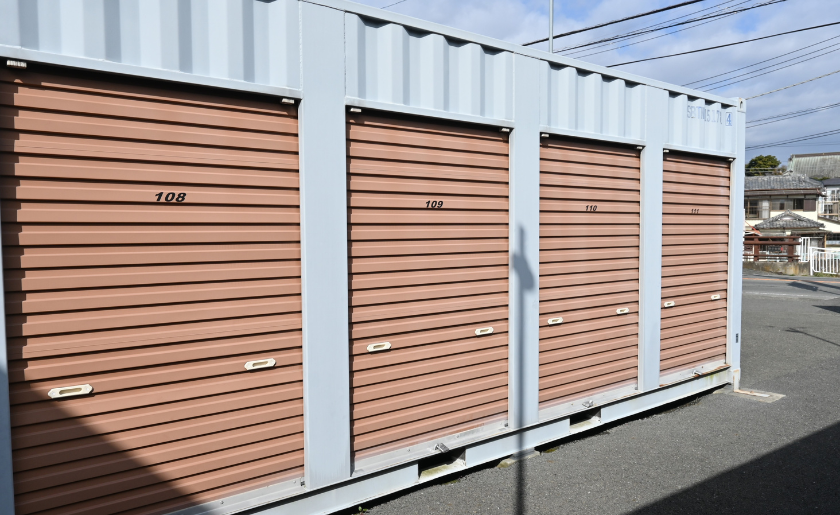
Start by measuring the motorcycle from its longest and widest points rather than relying on the manufacturer’s general dimensions. Add some extra space around those measurements, especially if you want to visit regularly or store your riding gear alongside the bike. Give yourself enough room around the bike so every visit doesn’t start with a three-point turn before you’ve even hit the road.
Can a motorcycle fit in a 5’x5′ storage unit?
For most motorcycles, a 5’x5′ unit(opens in new tab) is going to be too small. Motorcycles commonly stretch beyond five feet in length, leaving a 25-square-foot unit without enough usable room to accommodate the bike comfortably.
A compact motorcycle may fit diagonally depending on its exact dimensions and the unit’s doorway, but this is one of those occasions where measuring twice can save you from renting twice. Check the bike itself and ask the facility for the interior and door dimensions before considering a 5’x5′.
Does a 5’x10′ give your motorcycle more room to breathe?
For a single motorcycle, a 5’x10′ storage unit(opens in new tab) is a more practical starting point. With 50 square feet of floor space and 10 feet of depth, this size can accommodate most motorcycles while leaving some room for accessories.
That extra space becomes useful fast. Your helmet can stay with the bike, riding gear doesn’t have to move back into the house and smaller motorcycle accessories can have their own spot nearby. Keep frequently used belongings toward the front so grabbing your gear doesn’t require squeezing past the motorcycle first.
When does a larger storage unit make sense?
Sizing up becomes worth considering when the motorcycle isn’t arriving alone. A 10’x10′(opens in new tab) gives you twice the floor space of a 5’x10′, making it easier to create an aisle around the bike or store additional belongings without boxing yourself in. It’s also a more realistic option when you’re storing multiple motorcycles.
Think beyond whether everything fits on move-in day. If getting your motorcycle out means relocating half the unit first, those extra square feet will be worth it. Leave yourself enough clearance to reach the bike comfortably and roll it toward the door when the time comes.
How much does motorcycle storage cost?
Your motorcycle may be able to leave gas prices behind while it’s in storage, but parking it still comes with a monthly bill. Motorcycle storage cost depends largely on the amount of space you rent and where you live, with climate control and facility features potentially adding to the final rate.
For the 5’x10′ unit that works well as a starting point for a single motorcycle, the national average street rate sits at around $77 per month(opens in new tab). Location can send that number in different directions. The same size averages $45 per month in Memphis(opens in new tab), while in San Francisco it reaches roughly $182(opens in new tab).
Sizing up naturally gives your bike more company at a higher price. A standard 10’x10′ unit averages about $120 per month nationally, so paying for extra floor space makes the most sense when you’re storing more than the motorcycle or want some extra room.
Climate control can also bump up the bill. Across the U.S., a climate-controlled 10’x10′ averages about $136. Whether that premium makes sense for your motorcycle will depend on the local climate, how long you’re storing it and what else is sharing the unit.
Facility amenities can shift the price further. Extended access hours or additional security features may influence what you’ll pay, while local supply and demand play a substantial role in street rates from one market to another.
Before signing a lease, compare the smallest practical unit for your motorcycle across several nearby facilities and check what the advertised rate includes.
Outdoor motorcycle storage when you don’t have a garage
A garage is nice to have, but your motorcycle doesn’t get one because you ask nicely. Garage space isn’t a given — especially for apartment dwellers or anyone whose garage is already full. That can make outdoor motorcycle storage the most realistic option. In that case, a well-thought-out strategy can make the difference between parking your bike outside and giving it a safe haven to stay.
Start by claiming the most sheltered spot you have access to. Parking beside a building or beneath an existing roof can reduce how much rain and direct sunlight reaches the motorcycle. Trees may look like nature’s carport, though sap, falling branches and bird droppings make them less motorcycle-friendly than they first appear. You’ll also want a firm, well-drained surface beneath the bike rather than soil or grass that holds moisture after rainfall.
A good motorcycle cover becomes important when there’s no roof overhead. Look for one that’s waterproof or highly water-resistant while still allowing ventilation and make sure it fits securely enough that wind can’t turn it into a sail. The motorcycle should also be clean and dry before the cover goes on. Trapping moisture underneath defeats a bit of what the cover is there to accomplish.
Pay attention to what’s happening underneath the bike as well, as moisture doesn’t only fall from the sky. Damp ground can keep the area around a motorcycle humid long after the rain stops. Concrete or another solid, well-drained surface gives you a better base when the bike sits undisturbed for months.
Then there’s security. A motorcycle sitting outdoors is more visible than one behind a garage door, so choose a location that doesn’t put it unnecessarily on display.
A sturdy lock and an anchor point can add another obstacle, and keeping the motorcycle covered also makes it harder for passersby to immediately see what they’re looking at.
A motorcycle shelter can meet you halfway
When a garage isn’t available but you do have some outdoor space to work with, a motorcycle shelter offers a step up from a cover alone. Portable shelters and motorcycle storage sheds give the bike its own designated footprint while providing more substantial protection from precipitation and direct sun.
Think about ventilation as well as weatherproofing when choosing one. Sealing a motorcycle inside a damp, poorly ventilated enclosure trades one moisture problem for another. The structure also needs to be securely anchored and large enough to let you move the bike in and out without handlebars and mirrors becoming casualties.
Extended outdoor storage creates more risk as weeks turn into months. Harsh weather or major temperature swings only shorten that timeline.
How to prepare a motorcycle for storage
Your motorcycle deserves more ceremony before an extended stay than turning off the ignition and promising you’ll be back soon. How you prepare a motorcycle for storage depends largely on how long that reunion is going to take. A few weeks calls for some basic housekeeping, while an extended period gives fuel, batteries, fluids and moisture plenty of time to cause problems.
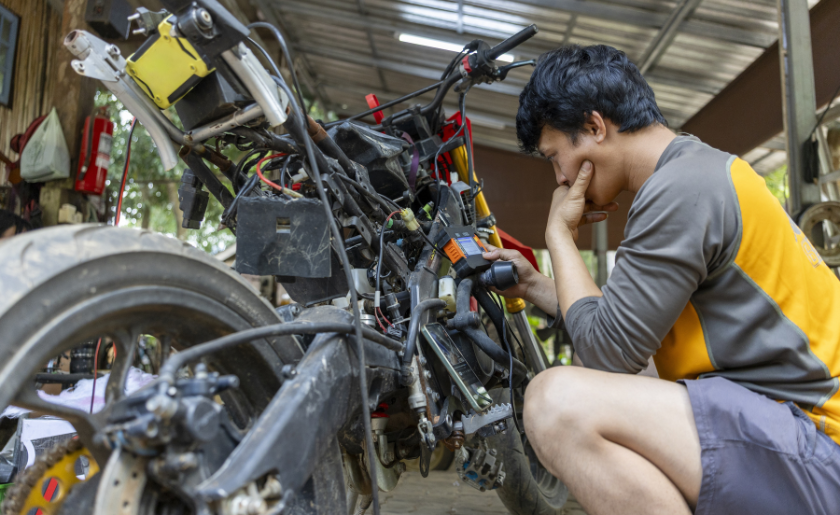
Whatever the storage window, start with your owner’s manual. Manufacturer recommendations should take priority over a universal checklist when it comes to fuel, fluids and battery care.
Before putting your motorcycle away
Start with a proper wash, as bugs and road grime don’t improve with age and leaving dirt sitting on painted or metal surfaces can encourage corrosion when dampness joins the party — a problem that costs American motorists$15.4 billion in rust repairs every five years(opens in new tab). Let the motorcycle dry completely before covering it, and clean and lubricate the chain if your bike has one. A breathable, properly fitted cover can then keep dust away without trapping humidity against the bike.
Give the motorcycle a once-over while you’re there and check the tires for damage and bring them to the recommended pressure. Anything already approaching its maintenance interval deserves attention now as well. Riding season is more fun when the first item on the agenda isn’t dealing with a problem you knowingly left for future you.
Preparing a motorcycle for a few weeks or months
The longer the bike sits, the more attention turns to the battery and fuel. A battery maintainer can keep a conventional motorcycle battery from losing its charge.
When there isn’t an outlet near your storage spot, removing the battery and maintaining it somewhere else is the way to go. Battery type matters here, so check the recommendations for yours before hooking anything up.
Gasoline doesn’t enjoy sitting around either. For many modern fuel-injected motorcycles going into storage for several months, a common approach is to fill the tank with fresh fuel, add the correct amount of fuel stabilizer and circulate the treated fuel through the system. Carbureted motorcycles can require a different routine, including draining the carburetor bowls.
As tempting as it may be, resist the urge to visit your motorcycle every couple of weeks for a quick ceremonial startup. Briefly idling a stored bike may introduce moisture without getting the engine and exhaust hot enough to drive it back out. Unless you’re taking the motorcycle for a proper ride and bringing everything fully up to operating temperature, leaving it prepared and parked is the better move.
Preparing for long-term motorcycle storage
When weeks turn into months, take a look at the maintenance calendar before the cover goes on. Oil or coolant that’s already nearing its scheduled change can be dealt with beforehand rather than spending another season inside the bike. Fresh fluids aren’t automatically necessary because you’re storing the motorcycle, though, so follow its maintenance schedule rather than replacing everything for the sake of it.
Keeping the tires properly inflated should be part of your storage routine, along with considering stands or occasionally repositioning the motorcycle to prevent flat spots, although modern tires are less susceptible to permanent flat spotting than their older counterparts. Using stands can still be convenient for a bike parked for a long stretch, provided they’re appropriate for your motorcycle and used correctly.
Finally, don’t accidentally turn your motorcycle into an Airbnb for mice. Air intakes and exhaust openings make appealing hiding places when a bike sits in sheds and other spaces where rodents can get inside. Protect vulnerable openings where needed and leave yourself an obvious reminder of anything you’ve plugged before storage. Riders regularly mention rodent prevention for good reason: discovering a nest is bad enough without discovering it after you’ve tried to start the bike.
Motorcycle winter storage: Putting your bike into hibernation
Riding season eventually has to hit the brakes, at least in the parts of the country where winter brings freezing temperatures, snow and enough road salt to make staying home look the smarter call. When your motorcycle is going to sit out the season, winter storage done right means it comes back road-ready rather than mechanic-ready.
Months without riding give fuel time to age and batteries plenty of opportunity to lose charge, while condensation can settle in and encourage rust. Winterizing your motorcycle takes care of those vulnerabilities, and most of the work comes down to a handful of areas worth giving some attention. The same principles apply if you’re storing other seasonal vehicles(opens in new tab).
Should you fill or drain the fuel tank?
This question can start quite the debate among riders, and the answer depends partly on what you’re riding. For many fuel-injected motorcycles, a full tank of fresh fuel treated with the right stabilizer is the usual starting point for winter storage. Less empty space inside the tank means less room for air to sit and cause problems, while the stabilizer helps keep the fuel from degrading as quickly during its long vacation.
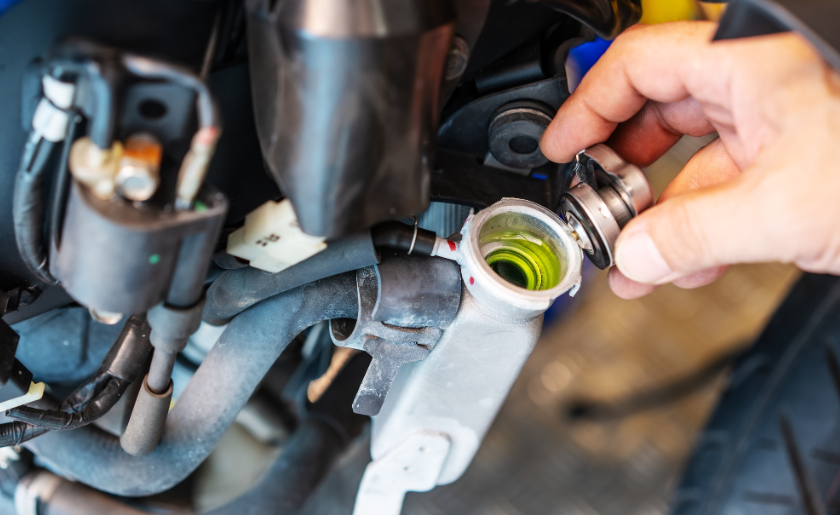
Once you’ve added the stabilizer, run the motorcycle long enough for the treated fuel to work its way through the system. Carbureted motorcycles may need a different routine, including draining the carburetor bowls, so this is one occasion where your owner’s manual gets to settle the argument.
Keep your battery charged through winter
One thing worth sorting before winter sets in is outlet access. A smart battery maintainer can keep the charge topped off without you having to do anything, but that requires somewhere to plug it in. If your storage spot doesn’t have electricity, removing the battery and storing it somewhere suitable is the more practical alternative. Either way, the battery situation is worth resolving before the first cold snap rather than after.
Give your tires an easier winter
Cold weather and tire pressure have an uncomfortable relationship — as temperatures drop, so does inflation, and a sitting motorcycle can lose more than you’d expect. Check the pressure periodically through winter rather than setting it once and assuming it holds. While you’re down there, it’s also a good opportunity to look at tread depth and check for cracking along the sidewalls. A motorcycle that’s been in storage since October shouldn’t have to wait until April to find out it needs new tires before it can safely go anywhere.
Should you cover a motorcycle indoors?
Your motorcycle doesn’t need to spend winter collecting enough dust to leave a silhouette behind when you finally move it. Even inside a garage or storage unit, a cover is worth using. The distinction that matters most indoors is fit, because a cover that bunches up or sits loose can trap pockets of air and debris rather than keeping them out.
Outdoors, weight and wind resistance become bigger factors, since a poorly secured cover can do more harm than good once the weather picks up. Whatever the setting, a cover designed for the environment it’s working in will do a better job than a general-purpose one pressed into service.
Does your motorcycle need climate-controlled winter storage?
A dry, enclosed space already gives your motorcycle an advantage over spending several months facing snow and rain. Climate control(opens in new tab) takes that protection further by keeping the storage environment more stable, something worth considering in places where temperature and humidity swing dramatically over the season.
Searching for motorcycle winter storage near you should therefore involve more than finding the closest pin on the map. Check whether the facility accepts motorcycles and whether its fuel rules work with your winterization plan, then look at access hours and insurance requirements.
Once those details are sorted, your motorcycle can officially clock out for the season. Winter may keep the kickstand down for a few months, but a well-prepared bike should have fewer reasons to stall your plans once the roads start calling again.
FAQ
How long can a motorcycle sit in storage?
With proper preparation, a motorcycle can sit in storage for months at a time without issue — most riders storing through winter are looking at three to five months depending on location. The key variables are fuel stability, battery charge and moisture control. A bike that goes in properly winterized, with treated fuel, a maintained battery and vulnerable openings protected, is in a different position than one that was parked and covered. Beyond a full season, it’s worth revisiting the maintenance calendar before riding rather than assuming everything is still in order.
Do you need special insurance to store a motorcycle in a storage unit?
Most storage facilities require proof of existing motorcycle insurance before they’ll accept the bike, so the coverage you already carry typically satisfies that requirement. What’s worth checking is whether your current policy covers the motorcycle while it’s in storage rather than being actively ridden. Some riders downgrade to storage-only or comprehensive-only coverage during winter to reduce costs, since collision coverage has less relevance when the bike isn’t on the road. Talk to your insurer before making any changes to make sure you’re not leaving a gap.
Can you store two motorcycles in a storage unit?
Yes, though the unit size needs to reflect both bikes rather than just one. A 5’x10′ that works well for a single motorcycle becomes tight with two and maneuvering either bike in or out can become an exercise in frustration. A 10’x10′ is a more realistic starting point for two motorcycles, giving you enough floor space to create a workable aisle between them. Measure both bikes and factor in the room you’ll need to move them independently before settling on a unit size.
When should you put your motorcycle in storage for winter?
The practical answer is before conditions make riding unpleasant or unsafe — typically when overnight temperatures start dropping consistently below freezing or when road salt becomes a regular feature of your commute. Waiting until the last possible ride means rushing the prep work, which tends to be where corners get cut. Getting the bike ready while the weather is still tolerable makes the whole process less of a chore.
Park it right, ride it right
Your motorcycle wasn’t made to spend its life parked, even if a few months off the road are sometimes unavoidable. Where it waits can be a garage, a storage unit or a sheltered spot closer to home, as long as it’s protected.
A little effort before the kickstand goes down for good can save you from spending that first riding day charging a dead battery or wondering what happened over winter. Give the bike enough room, keep an eye on the things that don’t enjoy sitting still and choose a storage setup you trust.
Then, when the cover finally comes off, all that’s left is getting back to what you bought the motorcycle for in the first place. Storage keeps the bike waiting. You get to keep the wheels turning.



Motorcycle Storage Guide: How to Store Your Bike Safely
Motorcycles may be born to be wild, but eventually even the wild ones need somewhere to park. Whether riding season is winding down or your current living situation comes with plenty of square footage for you and less for your bike, motorcycle storage is one of those parts of ownership that doesn’t get as much airtime as the open road.

Halloween on a Budget: Save on Costumes, Candy & Décor
Halloween has crept a long way from its eerie origins. While All Hallows’ Eve has transformed through the centuries, it wasn’t until the 1930s that trick-or-treating became a tradition in the U.S. and businesses began conjuring up mass-produced Halloween costumes. Now, Halloween is a monster-sized, billion-dollar industry, with a cauldron full of costumes and decorations ranging from the mainstream to the macabre. If you want to keep this Halloween on a budget, we have some tips and tricks for you to do just that below.

Moving From a House to an Apartment: What to Expect, How to Downsize & How Self Storage Helps
For some, moving from a house to an apartment is a financial decision. For others, it’s about simplifying life. Maybe the kids have moved out and half the house sits empty, or you’re approaching retirement and no longer want to spend weekends on repairs. Or perhaps you’ve been weighing the cost of buying a home and wondering whether renting simply makes more sense right now.

Family Heirlooms Overload: How to Handle Family Inheritance Without Regret
Handling family heirlooms after a loss requires managing legal authority, emotional pressure and practical logistics at the same time, and the order you take them on matters more than most people expect.
Blanket Storage: The Right Method for Every Space and Season
Blankets make our lives cozier, and storing them well is what keeps them soft and comfortable in the long run. Knowing how to store a blanket properly means your favorites come out of storage smelling fresh, feeling the same as when they went in, and lasting years longer than they otherwise would.

Board Game Storage Ideas That Keep Your Collection in Fighting Shape
Nobody warns you that getting into board games usually unlocks a second hobby, the much dreaded one that includes figuring out where on earth to put them. One game becomes a few, expansions start spawning beside their base boxes and before long, board game storage requires as much strategy as whatever is waiting on the other side of those lids.

Storage Locker vs. Storage Unit: What’s the Difference?
A locker and a unit may sound like two names for the same four walls and a lock, and depending on the storage facility, you may even see the terms used that way. However, once you start comparing available spaces, storage lockers tend to occupy the smaller end of the spectrum, while storage units(opens in new tab) give you considerably more room to work with.

Storage Ideas for Small Spaces: 9 Ways to Max Out Your Home
A messy home contains the seeds of its organization. Those seeds are everywhere: the space above doors, under beds, behind sofas and inside furniture can all become storage. Here are the best storage ideas for small spaces, so you can make the most of your cozy home.

Best U.S. Cities to Live Uncluttered: Plano, TX, Offers the Most Room to Breathe
Clutter is in our homes as much as in our heads. Both are shaped by where we live.