

All businesses must keep some records on paper for certain periods mandated by state or local laws. Businesses like accounting or legal firms deal with a huge volume of paper documents due to the nature of their work.
These businesses must keep their documents in a safe place. Cluttering an office with filing cabinets is uncomfortable for employees, and renting a larger office is expensive. Fortunately, there’s a simple, more affordable solution to this problem. Businesses can use self storage units to store their documents and files.

Here are some useful tips for businesses that are considering self storage:
1. Get a climate-controlled self storage unit
Paper documents are fragile. Environmental factors like humidity and extreme temperatures will damage or render them unreadable. It’s important to pick a climate-controlled storage unit that moderates humidity and temperature throughout the year. This way, documents are safe for long periods. If you’re interested, you can see below the costs and the availability of climate-controlled self storage unit in some major cities across the country:
[vc_column width=”1/3″][vc_column_text]
[/vc_column_text][/vc_column]
[vc_column width=”1/3″][vc_column_text]
[/vc_column_text][/vc_column]
[vc_column width=”1/3″][vc_column_text]
[/vc_column_text][/vc_column]
2. Ask about the storage facility’s security features
Storage facilities are usually very safe places. Most of them have security cameras, limited access and electronic gates or barriers. However, it’s wise to make sure that the facility has reliable security policies in place before storing important documents. You should also ask the facility’s manager about other amenities you might need. Do they accept deliveries by courier? Are trolleys available for customers transporting boxes?
3. Organize your documents properly for storage
Your main goals are to keep your documents safe and to have easy access to them when needed. You can achieve both goals by organizing your documents properly. Use paper envelopes or plastic holders to separate your documents by category, date and so on. Then, put the documents in sturdy, lidded and transparent plastic boxes. Attach a label to each box with information about the documents inside. Use shelves to arrange the boxes in your storage unit.

You could also purchase filing cabinets for the storage unit, but they’re more expensive than simple shelves and boxes, and they take up more space.
4. Designate which employees have access to the documents
Provide an employee ‑ or several employees, depending on the size of your business ‑ with access to the storage unit. Giving all employees free access to the unit could create unwanted situations. Documents can get lost or disorganized. Designating the person(s) tasked with retrieving and replacing documents helps avoid these issues.
5. Create a log for document entries and exits
A document log serves two purposes. First, you have clear records of accessed documents. Second, the log informs you when older documents are no longer necessary. States impose different time limits for keeping certain paper documents, so it’s useful to note in your log how long you need to keep each one. This way, when time’s up, you can recycle them and avoid clutter from papers that are no longer needed.
Self storage offers multiple advantages to businesses looking for a place to keep documents and files. The service is straightforward, easy to use and costs are lower than renting more office space. Businesses can rent self storage units for as long (or as short) as needed.



Scary Good DIY Halloween Decorations That Won’t Haunt Your Wallet
A few floating candles in the hallway, a family of ghosts by the front door and a suspicious number of bats climbing up the bedroom wall can make October feel a whole lot spookier. While Halloween stores are full of tempting finds, some of the best DIY Halloween decorations can come from things you already have tucked away in drawers, closets or the recycling bin.

Suburban Giants and Urban Risers: Where America’s 100 Largest Metros Fall on the Self Storage Map
Self storage has long been a suburban story. Across America largest 100 metros, 59% of the inventory built over the past decade sits outside city cores, largely preserving the ratio of the total existing inventory.

Sweatshirt Storage Ideas Worth Keeping Up Your Sleeve
Sweatshirts are great until you realize how much room they take up. A few thick hoodies can fill a drawer fast, with lighter crewnecks getting squashed underneath or pushed somewhere you forget about. Good sweatshirt storage can make that pile much easier to manage without requiring a bigger closet.

Living Room Storage Ideas: 28 Ways to Reclaim Your Hosting Space
If a living room is where most of a household’s living happens, good storage should be the top priority for setting up or revamping the place. After all, think of how easier it would be to have people over when tidying up the place is just a matter of putting things in their right place (in a time when fewer and fewer people are entertaining friends at home(opens in new tab)). The trick is making room for all those wayward clothes, blankets, chargers and other small things that end up on (or, inexplicably, in) the sofa. Here are 28 living room storage ideas to get you started and make tidying up a quick affair.
25 Mudroom Storage Ideas (And Mistakes to Avoid)
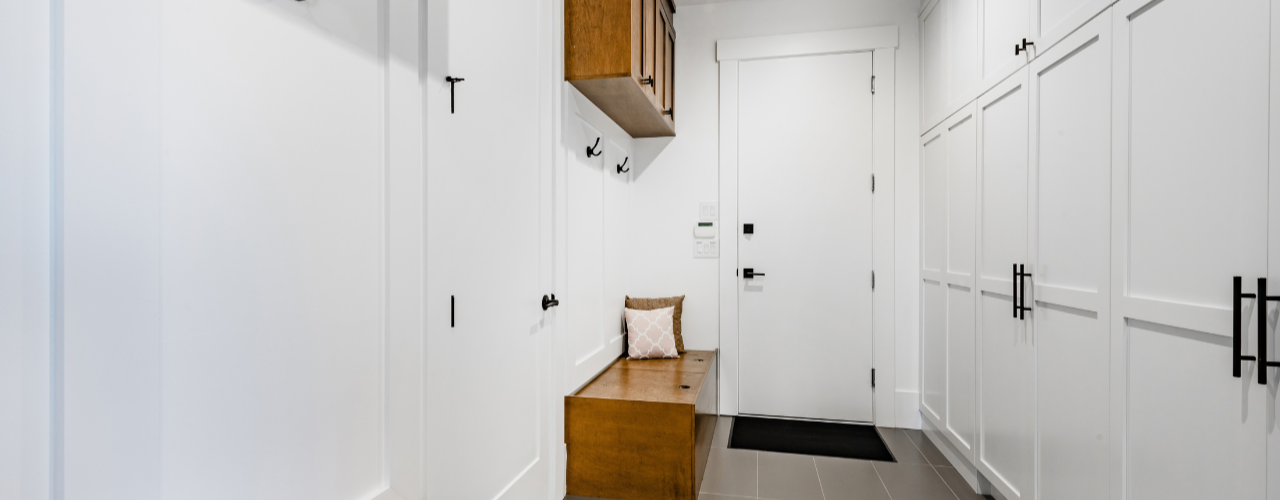
When you come home with muddy boots, an armful of bags and a coat you can’t wait to take off, it’s nice to have somewhere to put it all. With a mudroom, you can leave the outdoor mess at the door instead of carrying it through the house. Traditionally, you’d set aside a separate room, but you can just as easily use a hallway, an entryway closet, a laundry-room corner or a stretch of wall near the entrance.

Is Your Home Office Worth the Rent? What Coworking and Self Storage Could Save You
Every square foot of your apartment comes with a price tag, and a home office claims more of them than most renters expect. It starts with a desk. Then come the second monitor, the printer, the filing cabinet and the overflow boxes. Before long, the corner you set aside for work has turned into a small room you are paying for every month.

Best U.S. Cities to Live Uncluttered: Plano, TX, Offers the Most Room to Breathe
Clutter is in our homes as much as in our heads. Both are shaped by where we live.

America’s Top Snowbird Destinations for 2026–2027: Florida Leads in Numbers, Texas Wins on Value
For Americans living in colder states, the approach of winter is reason enough to start looking south. Cold weather carries costs that go beyond the heating bill and shoveling snow. Seasonal affective disorder(opens in new tab) is far more prevalent in northern states, so a temporary move south isn’t simply an escape from the cold, but a chance to spend the hardest stretch of winter outdoors and in the sun.

How Much Does Halloween Really Cost in 2026? Plan Wisely to Avoid the Scare of Hidden Costs
Americans’ love for Halloween is almost frightening — this year alone, we are on our way to spending $13.5 billion, according to data from the National Retail Federation(opens in new tab). That breaks down to about $115 Halloween costs per person, a whopping 49% more than 10 years ago.