

Tipping etiquette can be confusing in almost any industry, but figuring out how much to tip your movers can somehow leave you feeling even more stumped. Unlike a quick restaurant meal or salon visit, moving involves hours of heavy lifting and, most important of all, trust. After all, these professionals are handling your most valued belongings — moving not just furniture and boxes, but the familiar pieces of your life that make a house feel like home again. And while people often say you can’t put a price on that kind of care, when it comes to tipping, it turns out you actually can.
While there’s no strict formula that applies to tipping your professional movers, many homeowners use the classic 15% rule as a starting point, then adjust based on the quality of service and how difficult the entire process was.
It’s true that moving services already come with certain expenses, but a thoughtful tip goes a long way in recognizing the physical effort and professionalism movers bring to the job. If you’ve ever hesitated at the end of a move, wondering whether to tip or how much, we’re here to help you skip that awkward moment and feel confident rewarding great service the right way.
How much to tip your movers
Ah, the golden question — the million-dollar one (well, not literally, don’t panic just yet). How do you figure out the right amount to tip your movers? The answer depends on a few factors, including the size of the crew, how long the move takes, and just how challenging the process turns out to be.
Per person
For shorter moves lasting about half a day, $20 per mover is a solid baseline.
Daniel Osminin, VP of MyProMovers in Chantilly, VA, echoed this sentiment, noting that tipping often scales with the job’s complexity. “At MyProMovers, we typically see customers tip anywhere from $20–$40 per mover for smaller or quicker jobs, and $50–$100+ per mover for full-day or more demanding moves,” he said. “Most of the time, the tip reflects the effort and attitude of the crew.”
Ross Sapir, CEO and Founder of Roadway Moving, also agreed with the numbers. “For long-distance moves, 5% to 10% per crew at both pickup and delivery is standard,” he emphasized. “Factors like distance, weather conditions, and the complexity of the job often influence how much customers choose to tip,” he added.
If the job involved narrow staircases, tricky furniture, or bad weather, it’s worth adding a little extra. On the other hand, if it was a quick, easy load-in, a smaller amount is perfectly fine.
For full-day moves (8 hours or more), tipping around $40 or more per mover is considered standard.
Per crew
When tipping as a group, consider the total effort and divide fairly among the team. For example, a four-person crew might receive around $160 total, or roughly $120 for a three-person team. Be clear that the tip should be split evenly to avoid any mix-ups. Remember, every move is different, so keep your approach flexible rather than sticking to a rigid number before the work even begins.
Other common approaches
Some people prefer to calculate the tip by the hour, giving about $5–$10 per hour per mover, which works especially well for short local jobs.
For long-distance or multi-day moves, where the same crew handles everything from loading to unloading, a 15%–20% tip based on the total moving cost is a generous and fair way to show appreciation for their consistency and care.
What to consider before tipping your movers
Tipping movers can feel like a gray area, landing somewhere between a nice gesture and an unspoken expectation. The truth is, you’re never obligated to tip, but when a crew shows up and shows out, it’s a thoughtful way to acknowledge their hard work. Before deciding how much to give, here are a few things worth considering.
1. The complexity of the move
Not all moves are created equal, and that will be your main starting point when tipping your movers. A quick one-bedroom relocation will naturally require less effort than hauling furniture up three flights of stairs.
Moves that take all day, involve heavy lifting, multiple stops, or fragile items usually justify a higher tip.
2. Your overall budget and moving costs
Most people treat tipping movers similarly to other service industries — around 10–20% of the total cost for full-day moves, or $20–$50 per mover for standard jobs. For shorter local moves or smaller loads, a smaller amount per mover still goes a long way. What matters most is that your tip feels proportionate and manageable for your budget.
3. The quality of the service
Ask yourself how the crew handled the process, and if they checked off every box of great work, then you know you have great grounds for a generous tip.

Moving companies also emphasize that tipping should reflect the quality of the service provided. “While our crews never expect tips, they are always very much appreciated,” says Ian Imlach from the moving company Imlach Group. “As far as amounts, there is no one right answer. When friends ask me, I usually compare it to tipping in a restaurant — was the service exceptional? Did the crew go above and beyond, or just the bare minimum? How large and/or challenging was the job?” he added.
In the case of items being damaged, the team being careless, or communication lacking in any way, you have every right to adjust accordingly.
4. How to distribute the tip
It’s best to hand each mover their portion directly rather than giving one person the entire amount to divide. This ensures fairness and lets you personally thank each worker. For digital payments or tips added to your invoice, it’s always best to double-check that the full amount reaches the moving crew. They’re the ones who put in the hard work and deserve to feel your appreciation directly.
Pro tip: Moves that happen in tough weather call for a little extra generosity. Be it too humid or pouring rain, it’s worth keeping that in mind when tipping. Getting the job done perfectly in those conditions takes real effort. And at the end of the day, we’re all human.
When should you tip?
Think of tipping like the credits at the end of a movie. It makes sense only after the full performance and not so much when the previews are still rolling. Hold off on tipping until the last box is set down. That way, you’re rewarding the full job, not just the opening act. It’s a gesture, not a down payment.
If the movers went above and beyond — carefully maneuvering your grandmother’s mirror through a stairwell that looks straight out of Alice in Wonderland — a little extra is well earned.
A short walk-through before tipping helps confirm everything’s intact and provides a moment to say thanks personally.
How to hand it over without awkwardness
Cash remains the MVP of tipping. It’s quick, easy, and always appreciated. The best way to handle it is to thank each mover personally and hand them their share directly. It’s a small gesture that feels genuine and ensures everyone gets exactly what they’ve earned. Many movers say that simple acknowledgment means as much as the money itself.
For longer or more complex jobs, some customers like to split the tip — giving part midway through a multi-day move as encouragement and the rest once everything’s finished. It’s a nice way to show appreciation throughout the process if you feel like your movers did a good job so far.
When cash isn’t convenient, plenty of companies now accept digital payments or let you add gratuity to the invoice. Just make sure the payment method is transparent so that the entire crew receives their portion.
Good intentions, better execution: other things you can do to help your movers
Tipping might be the headline gesture, but a few small courtesies can make an equally lasting impression. And best of all, they don’t even increase your fee at the end of the day.
- Keep comfort in mind: Moving days can be physically demanding. Offering water, coffee, or even a shaded spot to rest between loads shows thoughtfulness that money can’t always buy.

- Stay prepared: When everything is boxed and ready to go, you’re simultaneously giving your movers a head start while making the process smoother for yourself as well. A little preparation on your end tells them their time and work are valued.
- Give feedback: For crews that went above and beyond, leaving a detailed positive review is a nice gesture that can go a long way. Many moving companies share customer praise internally, and individual mentions can help team members earn recognition or promotions.
- Gratitude goes a long way: A quick text or email after the move adds a personal touch that goes beyond formality. It takes seconds but says a lot about your appreciation.
When the boxes are unpacked but space runs out
Once the last box is unpacked and the dust finally settles, you might realize there’s still more stuff than space. Self storage can be your post-move lifesaver here, acting as a natural extension of your home until everything is in its rightful place — or until the day you finally need to grab that one thing you couldn’t part with.
After all, moving day might end when the truck drives away, but settling in takes a little longer. Having some extra space gives you room to make your new place feel like home without the added clutter that inevitably manages to appear.
Here’s a little insider tip: plenty of storage facilities now offer handy perks like free use of moving trucks or even in-house moving services. It’s an easy way to handle both moving and storing in one smooth process.
Moving day is a team effort, and knowing how much to tip your movers is just one small part of wrapping it up right. A fair tip, a thank-you, and maybe a little extra space through self storage all work together to make the transition feel complete.
Whether you’re starting fresh in a new city or just across town, showing appreciation for the people who handled your belongings turns a long move into an exciting new chapter.



Scary Good DIY Halloween Decorations That Won’t Haunt Your Wallet
A few floating candles in the hallway, a family of ghosts by the front door and a suspicious number of bats climbing up the bedroom wall can make October feel a whole lot spookier. While Halloween stores are full of tempting finds, some of the best DIY Halloween decorations can come from things you already have tucked away in drawers, closets or the recycling bin.

Suburban Giants and Urban Risers: Where America’s 100 Largest Metros Fall on the Self Storage Map
Self storage has long been a suburban story. Across America largest 100 metros, 59% of the inventory built over the past decade sits outside city cores, largely preserving the ratio of the total existing inventory.

Sweatshirt Storage Ideas Worth Keeping Up Your Sleeve
Sweatshirts are great until you realize how much room they take up. A few thick hoodies can fill a drawer fast, with lighter crewnecks getting squashed underneath or pushed somewhere you forget about. Good sweatshirt storage can make that pile much easier to manage without requiring a bigger closet.

Living Room Storage Ideas: 28 Ways to Reclaim Your Hosting Space
If a living room is where most of a household’s living happens, good storage should be the top priority for setting up or revamping the place. After all, think of how easier it would be to have people over when tidying up the place is just a matter of putting things in their right place (in a time when fewer and fewer people are entertaining friends at home(opens in new tab)). The trick is making room for all those wayward clothes, blankets, chargers and other small things that end up on (or, inexplicably, in) the sofa. Here are 28 living room storage ideas to get you started and make tidying up a quick affair.
25 Mudroom Storage Ideas (And Mistakes to Avoid)
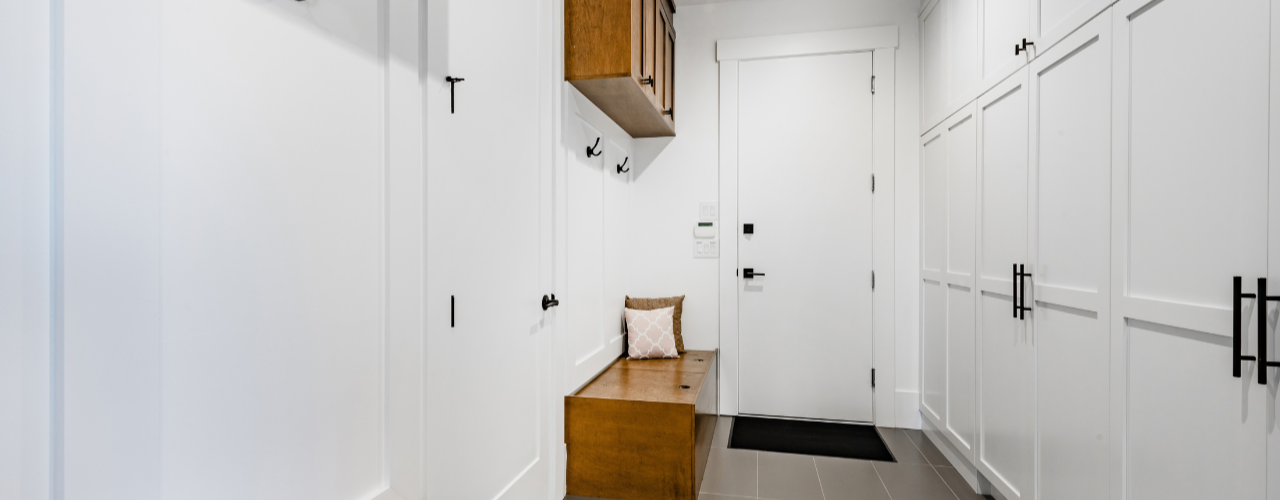
When you come home with muddy boots, an armful of bags and a coat you can’t wait to take off, it’s nice to have somewhere to put it all. With a mudroom, you can leave the outdoor mess at the door instead of carrying it through the house. Traditionally, you’d set aside a separate room, but you can just as easily use a hallway, an entryway closet, a laundry-room corner or a stretch of wall near the entrance.

Is Your Home Office Worth the Rent? What Coworking and Self Storage Could Save You
Every square foot of your apartment comes with a price tag, and a home office claims more of them than most renters expect. It starts with a desk. Then come the second monitor, the printer, the filing cabinet and the overflow boxes. Before long, the corner you set aside for work has turned into a small room you are paying for every month.

Best U.S. Cities to Live Uncluttered: Plano, TX, Offers the Most Room to Breathe
Clutter is in our homes as much as in our heads. Both are shaped by where we live.

America’s Top Snowbird Destinations for 2026–2027: Florida Leads in Numbers, Texas Wins on Value
For Americans living in colder states, the approach of winter is reason enough to start looking south. Cold weather carries costs that go beyond the heating bill and shoveling snow. Seasonal affective disorder(opens in new tab) is far more prevalent in northern states, so a temporary move south isn’t simply an escape from the cold, but a chance to spend the hardest stretch of winter outdoors and in the sun.

How Much Does Halloween Really Cost in 2026? Plan Wisely to Avoid the Scare of Hidden Costs
Americans’ love for Halloween is almost frightening — this year alone, we are on our way to spending $13.5 billion, according to data from the National Retail Federation(opens in new tab). That breaks down to about $115 Halloween costs per person, a whopping 49% more than 10 years ago.