
Second Acts With Roll-Up Doors: The Most Unexpected Self Storage Conversions In The U.S.


You probably don’t expect to stash your holiday decorations in a former armory. Or tuck away old photo albums where moviegoers once lined up for popcorn. But across the country, some of the most unexpected buildings are getting a second act — as self storage facilities.
Adaptive reuse has become one of real estate’s unexpected success stories, with roughly 179 million square feet — about 10% of the nation’s storage inventory coming from converted spaces(opens in new tab). In cities where land is tight and zoning can stall new construction, developers are turning to what’s already standing. Industrial and office spaces are the usual suspects. But every now and then, a building with a far more colorful past trades its original purpose for rows of roll-up doors.
At StorageCafe, we asked our team to rank the most eye-catching self storage conversions based on their previous lives. From institutions built to hold movie screenings to venues once filled with cheers, these buildings prove that reinvention can be both practical and a little surreal.
Let’s take a look at the most interesting former uses behind today’s storage spaces.
1. County jail (Indianapolis, IN)
Built: 1975 | Converted: 2023
Now
Then
Once home to inmates, this former county jail found a new, quieter purpose as its institutional days faded. Built in 1975, the building was converted into a self storage facility in 2023. The facility is located in Indianapolis, IN.
Overall, the facility encompasses 66,000 square feet of rentable space, offering plenty of room for locals who need extra storage outside their homes. The building’s architecture, defined by narrow corridors and cells, easily transitioned into storage units meant to hold personal belongings. For locals, the transformation can feel surreal: a place once associated with authority and punishment now serves everyday storage needs.
2. Brewery (Newark, NJ)
Built: Early 1900s | Converted: Recent
Now
Then
This early 1900s brewery filled one of Newark, NJ’s neighborhoods with the sound of machinery. Fast forward to 1924, its industrial bones remain, now home to a storage facility. Its initial structure, consisting of high ceilings, wide-open floors and brick walls? Turned into an ideal candidate for adaptive reuse – the oldest conversion in our list, going back 126 years.
Today, the building stores furniture, seasonal items, and other personal or business belongings as it serves the local community in its new role, embracing its new self storage role in Newark. Covering about 67,500 square feet of rentable space, the facility can now serve the locals by offering a little extra space where their homes can’t expand.
3. Armory (Elizabeth, NJ)
Built: Early 1900s | Converted: 2020
Now

Built in the early years of the 20th century, this armory in Elizabeth, NJ, served as a hub for military equipment storage. Its original purpose, that of protecting personnel and weapons, came with a fortress-like design. Now, after conversion, the building’s sturdy architecture offers a different kind of protection, meant to address the current needs of the locals.
The converted facility now offers close to 74,000 square feet of rentable space. This spacious building is a prime example of history meeting practicality, showing how civic structures can be adapted to meet changing needs.
4. Movie theater (Marietta, GA)
Built: 1993 | Converted: 2023
Now

Then
While it initially drew movie enthusiasts in droves to movie nights and weekend matinees, this theater in Marietta, GA, struggled to maintain its original purpose as streaming brought serious competition. While its big screens went dark, the building opened its gates back to the public.
In 2023, the spotlight moved to a more practical endeavor as its reconfigured as a self storage facility. The large auditoriums and general lobbies lent themselves to an adaptation into a self storage facility. The recently converted facility covers close to 59,000 square feet of rented space. This is a great reminder that defunct places of shared experience can once again serve the community by offering practical spaces that support modern living.
5. School (Corpus Christi, TX)
Built: 1994 | Converted: 2024
Now
Then
Another eye-catching conversion hails from Corpus Christi and points to a former school turned into a storage facility. Initially built in 1994, the building was retrofitted two decades later for storage.
Over 90,000 square feet of space can now be home to furniture, appliances, clothing and any other items locals need to keep away from home. That comes down to over 12B pencil tips, a quantity hard to imagine for former and current students alike! Adaptive reuse enabled this former school to repurpose its educational spaces when its original role ended, in a way that still supports the community.
6. Former newspaper building (Boise, ID)
Built: 1972 | Converted: 2024
Now

Then
Boise, ID, is also staking its claim to fame with interesting conversions, seeing that a former newspaper building transitioned to self storage. With print journalism downsizing, the space became vacant. Interestingly, this conversion is a classic example of office-to-storage adaptive reuse, in line with Boise’s self storage conversions, coming exclusively from office buildings.
The building boasts close to 108,000 rentable square feet, enough to house plenty of books and other paper products – the last reminder of the bygone hectic days of the press room and offices it previously housed. The transformation shows that new opportunities lie just around the corner when old chapters close.
7. Skating rink (Henderson, NC)
Built: 1980s | Converted: 2021 |
Now
Originally built for lively gatherings with locals lacing up their skates to hit the ice, this previous skating rink took on a quieter role as a storage facility. After almost four decades of serving the local community in an entertainment capacity, the building took on a new role as a storage facility in 2021.
The repurposed space offers close to 18,000 rentable square feet to serve its local customers. We can’t say for sure whether the building can accommodate as many people as it did over those four decades, but its repurposing is still serving the community in another form now.
8. Bingo venue (Schenectady, NY)
Built: 1972 | Converted: 2021|
Now

Still in the entertainment lane, a bingo venue in Schenectady, NY, also underwent an interesting transformation into a self storage facility. Built in 1972, the building once housed Palace Bingo and Bowling, hosting lively evenings filled with games.
As attendance declined, the building gained a new identity as a self storage facility in 2021 and offers over 30,000 square feet of rentable space.
9. Indoor Karting Track (Phoenix, AZ)
Built: 1973 | Converted: 2019 |
Now
Then
Another unexpected adaptive reuse project is the transformation of an indoor karting track into a storage facility in Phoenix, AZ. While engines and cheering crowds once filled the space with energy, it’s now taken on a quieter role, with its open layout proving to be an advantage for the 2019 self storage conversion.
The building offers over 74,000 square feet of rentable space — enough to hold nearly 114,000 sheets of paper. With storage units often used for paperwork, some of these units might actually play host to plenty of paper, among other stored items!
10. Trolley Barn (Philadelphia, PA)
Built: 1912 | Converted: 2023
Now
Then
Built over a century ago, this Philadelphia trolley barn was once home to streetcars that helped bring the city to life. Once the trolley system faded, the building no longer served its original purpose. That’s why in 2023, it was turned into a storage facility, continuing to serve the community as a repository of personal belongings.
The recently repurposed building spans over 120,000 square feet of rentable space. For customers renting here, visiting your storage unit will also feel like a unique experience, as you step into a building full of historical character!
Why conversions make sense in urban markets
The buildings above have something in common beyond their colorful pasts: many of them sit in places where building new is hard. Across the country’s 100 largest metros, 59% of the space built over the past decade sits outside city cores, while 41% was delivered in urban areas(opens in new tab). In many cities, land is scarce and expensive, zoning is tightening and construction costs have climbed.
That’s where adaptive reuse comes in. Conversions like the Indianapolis county jail, the Elizabeth armory or the Philadelphia trolley barn let developers work with buildings that already exist, avoiding the search for developable land and easing some of the hurdles of ground-up projects.
Unusual buildings that get turned into self storage facilities show that the industry is not all about square footage, but also about second chances. As cities evolve and needs shift, adaptive reuse offers a pragmatic solution: preserve what’s already there, rethink its purpose and keep serving the community.
In the end, these conversions show that buildings, much like the cities around them, don’t have to be defined by their first chapter. Sometimes, all it takes is a roll-up door and a fresh coat of paint to turn history into something useful again.


Packing Services: Costs, Pros, Cons & Alternatives
Professional packers save time and reduce breakage, but they add a real cost to your move. Whether they’re worth it depends on how much you own, how much protection it needs and how much time you have. This guide covers what packing services cost, when they pay off, when they don’t and the cheaper alternatives worth considering.

Classic Car Storage: A Guide to Protecting Your Collector Car
Any classic car you see is still there and looking great because people throughout the years knew how to store it well. Those smart decisions kept it from being damaged by moisture, frost and other issues that lead other cars to the auto-graveyard. Now, it’s up to you to carry on the legacy by choosing the right kind of classic car storage(opens in new tab). This guide compares indoor and outdoor options, explains why climate control storage(opens in new tab) is important and shows you how to prepare your car before you store it.(opens in new tab)

Second Acts With Roll-Up Doors: The Most Unexpected Self Storage Conversions In The U.S.
You probably don’t expect to stash your holiday decorations in a former armory. Or tuck away old photo albums where moviegoers once lined up for popcorn. But across the country, some of the most unexpected buildings are getting a second act — as self storage facilities.

Storage Unit Insurance: Your Coverage Options Compared
Your homeowners or renters policy may already cover your stored belongings, but likely not for their full value or against every risk. This guide explains where coverage comes from, what each option leaves out and how to decide whether you need more from your storage unit insurance.

I’m Gen Z: What’s in My Storage Unit?
Trading Facebook posts for TikTok dances and Beanie Babies for Labubus, Gen Z has given growing up online a whole new meaning. Defined by everything concerning reusing, recycling and cycling through trends that previous generations would rather forget (looking at you, Millennials and capri jeans), it’s no wonder this is also a generation that can spot an authentic vintage find from a fast-fashion knockoff in under three seconds. And when your wardrobe can go from Depop find to next season’s comeback without warning, a little extra space starts making sense.
I’m a Millennial: What’s in My Storage Unit?
So, you’re a Millennial. You probably know all the lyrics to Phoebe Buffay’s Smelly Cat. Hannah Montana’s The Best of Both Worlds has become more like a life philosophy rather than a fun tune. And if you rent a self storage unit, you’re in good company. You’ve officially joined the 31% of Millennials who rent storage space, most often because there simply isn’t enough room at home, according to StorageCafe’s 2026 Self Storage Demand and Trends survey(opens in new tab).

Attic Storage Done Right: What’s Worth Keeping Up Top?
The attic is one of those places where holiday decorations end up next to a forgotten suitcase, a broken lamp and boxes nobody’s opened since moving day. Out of sight, out of mind works well enough until you need something from the back or realize you’ve been adding weight to a floor you know little about.
What to Know Before Starting a Self Storage Business in 2027
If you’re wondering how to start a self storage business, two questions come first: Does your area need more storage, and what would it take to run the business? Before you commit to a property, it helps to understand local demand, the costs involved and the day-to-day work of serving renters.
How to Organize Your Garage: A Step-by-Step Guide
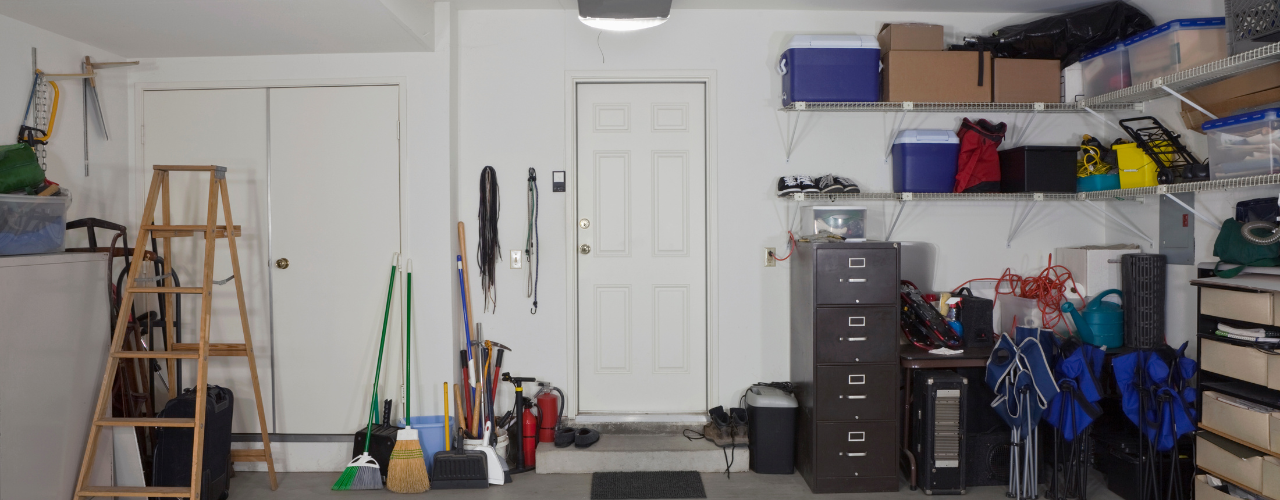
A messy garage is often the product of plain, human indecision. And no, buying more bins isn’t the end-all decision to fix a cluttered garage. Luckily, the steps you need to take are not that complicated. Decide what your garage is for, empty it, sort and measure and buy storage last. Here’s how to make informed decisions along the way, so your garage stays organized for the long term.