
Owning vs. Renting: Ranking the Top 100 U.S. Cities by Homeowner and Renter Prevalence

Renters vs. owners, when it comes to housing, is a complex debate. Renting a home and owning one both have advantages and disadvantages that depend on personal circumstances, financial situation and lifestyle. Homeownership builds equity, but it often implies a long-term financial commitment, and ties you down to a location. Renting is also costly, but it allows for more flexibility, which can be an advantage for younger generations who need to move more frequently for work or other reasons.
How many Americans own their homes?
About 65.6% of the housing units in the U.S. are occupied by homeowners, which translates into approximately 84.6 million homes, according to the latest available US Census data. The homeownership rate has been increasing slowly over the past few years, from around 63% between 2013 and 2016, which was the past decade’s lowest period for homeownership.
How many people rent their homes in the U.S.?
Around 45 million of the housing units in our country, or under 35%, are occupied by renters. Younger Americans rely on renting as a means of meeting their housing needs in an ever-evolving real estate landscape, with about 35% of the renters in the US under 35 years, and another 20% of them between 35 and 44 years.
Naturally, the share of homeowners vs renters varies across the country, depending on economic and demographic factors, as well as lifestyle choices. In some cities, the cost of homeownership is high and existing home inventories are limited, making it difficult for many people to get a home. Other places are hot in-migration destinations and renting generally provides easier access to the housing market for newcomers. In some areas, particularly around large urban centers, a dynamic population of young professionals prefer to remain renters to be able to relocate as their careers advance and shift.
Interestingly enough, most of the top renter-dominated cities are located in coastal areas and are characterized by a vibrant urban lifestyle with good public transportation and many amenities. These cities are generally popular with young people who might not be ready to purchase a home and prefer the flexibility of renting.
Homeowner-dominated cities, on the other hand, tend to be cities that saw major growth over the past few decades, both in terms of population and economy (for example, Gilbert or Scottsdale in Arizona). Also, homeowner-dense cities don’t lack available land for new construction, which favors the development of single family homes, as opposed to apartment communities.
Here's a closer look at which cities cater best to homeowners and which have the highest proportion of renters among the country’s 100 largest cities by number of households.
Homeownership Leaders: Florida and Arizona Cities Showcase Record Homeowner Numbers
Port St. Lucie, FL, is the country's top major city by share of homeowners. About 85% of the residents own their homes in a city that blends relative affordability with a solid local economy and job market, a great quality of life, a strong sense of community and the laid-back coastal lifestyle. The city provides a diverse range of housing options, from cozy suburban homes to expansive properties with plenty of space. Florida's absence of state income tax further sweetens the deal, providing homeowners with financial relief and an added incentive to invest in property within this picturesque locale.
Gilbert, Arizona, ranks second, with about 74% of the housing units in the city occupied by people who own them. Part of the Phoenix metro area, the same as Scottsdale, AZ, Mesa, AZ, and Chandler, AZ, that also ranked in top 10 in terms of homeowners share, Gilbert saw major growth over the past few decades. Its population literally exploded, from around 30K people in 1990 to over 273K today.
The entire Phoenix metro area has been a magnet for people from all over the country due to its dynamic local economy, with strong sectors in high-tech industries, healthcare and education. This has attracted businesses and employees looking for job opportunities and career growth, and, obviously, stimulated housing construction. As Phoenix is one of the metros with the most vacant land for construction available among the country’s top largest urban centers, single family home construction thrived in the area, ensuring easier access to homebuying for residents. Another factor that promotes homeowning in the area is the relatively low property tax across Maricopa County. As already mentioned, it’s not just Gilbert that has a very high homeownership rate: about 66% of the housing units in Scottsdale, AZ, and 65% of those in Chandler, AZ, are also occupied by homeowners.
Chesapeake, VA, also registers very high homeownership rates at 73%. The city has a strong local economy, low unemployment rate, and a median household income north of $80K, which encourage homebuying as opposed to renting. Also, Chesapeake is favored by families with children, due to safety, access to good quality education, and an outdoorsy lifestyle. Of course, families are more interested in owning their homes than young professionals, who rent primarily for work (as is the case with many of the renter-dense cities).
Renter Hotspots: Newark, NJ Leads the Top 10 Cities in Rental Occupancy
Newark, Jersey City and Miami are the country's top renter-dominated cities, with around 70% of the housing units in each being renter-dominated. As Newark, NJ, is trying to accommodate an influx of new residents, the housing market keeps adding new rental apartments. Currently, more than three-quarters of the housing inventory in the city comprises multifamily units. Overall, the median age in Newark is a little over 35 — to compare, the median age in New Jersey is over 40. So, Newark has a young population, with many of its residents not yet able or perhaps not interested in purchasing a home.
Although the median household income in Jersey City, NJ, at $82K per year, is almost double compared to Newark, it does not translate into a significantly higher homeownership rate. As commuting to Manhattan comes easy from Jersey City, the former attracts a population of young professionals not ready yet to put down roots.
Miami, FL, has a 70% share of renter households as well, which, in its case, can be attributed to factors such as high mobility – according to the U.S. Census, 18% of residents moved since the previous year in 2021. High mobility is often associated with a preference toward renting instead of homeowning.
Miami is a popular destination for seasonal residents and has a large immigrant population, which increases the proportion of renters in the city and further stimulates the construction of rental properties. Also, Miami is a hub for many industries, including tourism, healthcare, and finance. Many people move to Miami for job opportunities, and renting provides them with a more flexible living situation than buying a home.
The fact that huge urban hotspots like NYC, Los Angeles or Boston have overwhelmingly more renters than homeowners is hardly surprising – a steady influx of newcomers, a local housing stock that caters primarily to renters, plus sky-high homebuying costs converge and lead to it. However, it’s interesting that a city like Irving, TX, makes it among the country’s top 10 cities for renter-occupied households as well. About 61% of the families in Irving are renters, and the main reasons are its proximity to Dallas, affordable rents, and great employment opportunities.
Below, you can check out the share of renters vs. owners in the country's largest 100 cities, based on 2022 US Census data:
Self storage can be a great resource for renters and homeowners alike
Renters often have limited space in their apartments or houses, making it difficult to store all their belongings, or they may need to move frequently due to work and other reasons. That’s why self storage is an important service for renters, one that helps them live comfortably in their homes, even when said home is a small apartment, or when they’re sharing it with roommates.
Rent a self storage unit located close to your apartment to safely store your out of season clothing, collectibles, and extra furniture. You can even use a storage unit for your bike – many storage facilities are open 24/7, which means you can drop it off and pick it up when you need it. You can keep your other sports and camping gear in the same unit as well. If you are a small business owner and you work out of your home or out of a small office, you should consider self storage as an alternative for your storage needs. Whether it’s papers and documents, supplies, or tools, self storage is a versatile and affordable solution to your business’s space-related challenges.
Although homeowners benefit of more storage space at home compared to renters, they also often have more complex storage needs. Homeowners usually have larger families and more belongings, including outdoor furniture, tools and equipment they need around the house but don't use on daily basis, holiday decoration, and so on. Thus, self storage comes in handy for many homeowners, helping them enjoy a neat and tidy home.
Self storage costs and availability can vary significantly across the country and are generally determined by local demand and the availability of self storage in each city. For example, renting a 10’x10’ self storage unit in Jersey City hovers around $220 per month, while the same type of storage unit in Irving, Texas, rents for around $100 per month.
Check out self storage prices and availability in the country’s largest 100 cities:
Self Storage Costs and Availability in 100 Major US Cities
| City | No. of Households | Self Storage Rent* | Self Storage per Capita (sq. ft.) |
|---|---|---|---|
| New York City, NY | 3,373,039 | $248 | 2.3 |
| Los Angeles, CA | 1,439,805 | $246 | 1.8 |
| Chicago, IL | 1,159,424 | $127 | 3.3 |
| Houston, TX | 947,632 | $93 | 6.7 |
| Philadelphia, PA | 695,320 | $135 | 2.9 |
| Phoenix, AZ | 613,918 | $117 | 5.1 |
| San Antonio, TX | 557,118 | $108 | 8.8 |
| Dallas, TX | 539,718 | $110 | 5.2 |
| San Diego, CA | 528,530 | $176 | 3.9 |
| Austin, TX | 458,505 | $113 | 7.8 |
| Jacksonville, FL | 395,223 | $104 | 9.3 |
| Columbus, OH | 392,041 | $91 | 4.4 |
| Charlotte, NC | 378,089 | $99 | 7.1 |
| Seattle, WA | 367,119 | $190 | 3.8 |
| Indianapolis, IN | 367,073 | $84 | 6.7 |
| San Francisco, CA | 361,912 | $264 | 2.1 |
| Fort Worth, TX | 345,018 | $94 | 6.1 |
| Denver, CO | 334,942 | $130 | 3.4 |
| San Jose, CA | 328,759 | $168 | 3.8 |
| Washington, DC | 326,970 | $158 | 2.1 |
| Nashville, TN | 317,817 | $120 | 6.6 |
| Portland, OR | 284,533 | $135 | 4.3 |
| Boston, MA | 284,061 | $171 | 0.7 |
| Oklahoma City, OK | 277,216 | $77 | 8.3 |
| Louisville, KY | 269,210 | $89 | 7.5 |
| Baltimore City, MD | 254,707 | $116 | 3.6 |
| Memphis, TN | 254,379 | $85 | 8.0 |
| El Paso, TX | 246,839 | $95 | 6.0 |
| Albuquerque, NM | 243,680 | $101 | 7.6 |
| Detroit, MI | 243,243 | $170 | 1.1 |
| Las Vegas, NV | 243,223 | $118 | 7.2 |
| Atlanta, GA | 236,202 | $138 | 4.5 |
| Milwaukee, WI | 233,854 | $96 | 3.6 |
| Tucson, AZ | 228,268 | $109 | 8.2 |
| Kansas City, MO | 227,027 | $103 | 4.0 |
| Colorado Springs, CO | 206,648 | $107 | 10.8 |
| Omaha, NE | 203,273 | $84 | 6.9 |
| Sacramento, CA | 200,189 | $140 | 4.9 |
| Miami, FL | 199,578 | $158 | 3.6 |
| Raleigh, NC | 195,414 | $91 | 7.2 |
| Mesa, AZ | 193,838 | $105 | 5.8 |
| Minneapolis, MN | 193,694 | $109 | 2.0 |
| Fresno, CA | 183,659 | $116 | 7.0 |
| Virginia Beach, VA | 179,752 | $107 | 10.5 |
| Oakland, CA | 178,778 | $193 | 2.4 |
| Tulsa, OK | 175,943 | $85 | 9.0 |
| Long Beach, CA | 170,965 | $187 | 2.1 |
| Cleveland, OH | 169,427 | $106 | 2.3 |
| Tampa, FL | 166,243 | $112 | 6.9 |
| Wichita, KS | 157,146 | $88 | 6.7 |
| New Orleans, LA | 150,880 | $119 | 5.6 |
| Saint Louis, MO | 148,348 | $102 | 4.8 |
| Cincinnati, OH | 145,749 | $96 | 3.8 |
| Aurora, CO | 145,493 | $109 | 4.2 |
| Lexington, KY | 140,837 | $111 | 8.0 |
| Arlington, TX | 140,525 | $94 | 5.8 |
| Pittsburgh, PA | 136,444 | $113 | 3.5 |
| Orlando, FL | 136,364 | $104 | 6.7 |
| Honolulu, HI | 136,116 | $283 | 2.7 |
| Henderson, NV | 133,443 | $120 | 6.2 |
| Jersey City, NJ | 130,213 | $218 | 1.3 |
| Madison, WI | 129,568 | $109 | 4.2 |
| Bakersfield, CA | 128,651 | $92 | 8.8 |
| St Paul, MN | 126,654 | $117 | 3.3 |
| Durham, NC | 124,536 | $99 | 9.0 |
| Greensboro, NC | 122,726 | $90 | 10.3 |
| Buffalo, NY | 122,578 | $124 | 1.8 |
| Lincoln, NE | 121,921 | $100 | 6.4 |
| Toledo, OH | 121,261 | $96 | 4.3 |
| Corpus Christi, TX | 120,383 | $99 | 11.7 |
| Scottsdale, AZ | 119,896 | $159 | 7.9 |
| Saint Petersburg, FL | 117,276 | $136 | 5.9 |
| Reno, NV | 114,106 | $118 | 14.5 |
| Newark, NJ | 112,713 | $148 | 0.8 |
| Irvine, CA | 112,545 | $153 | 5.3 |
| Arlington, VA | 112,504 | $229 | 1.2 |
| Plano, TX | 110,466 | $98 | 5.5 |
| Lubbock, TX | 110,156 | $85 | 15.9 |
| Fort Wayne, IN | 109,974 | $95 | 6.6 |
| Anchorage, AK | 109,856 | $195 | 6.2 |
| Chandler, AZ | 106,712 | $121 | 4.4 |
| Richmond, VA | 106,252 | $106 | 5.5 |
| Anaheim, CA | 105,885 | $184 | 1.4 |
| Spokane, WA | 101,130 | $116 | 7.3 |
| Winston Salem, NC | 100,769 | $98 | 7.0 |
| Stockton, CA | 99,937 | $119 | 6.0 |
| Riverside, CA | 99,245 | $135 | 5.7 |
| Boise City, ID | 98,992 | $113 | 11.0 |
| Gilbert, AZ | 95,488 | $110 | 3.8 |
| Chesapeake, VA | 95,073 | $96 | 6.4 |
| Norfolk, VA | 94,532 | $103 | 5.1 |
| Irving, TX | 93,837 | $94 | 6.9 |
| North Las Vegas, NV | 89,660 | $111 | 4.2 |
| Glendale, AZ | 87,555 | $106 | 2.8 |
| Chula Vista, CA | 85,487 | $179 | 3.6 |
| Enterprise, NV | 83,441 | $156 | 4.2 |
| Port St. Lucie, FL | 82,788 | $109 | 2.4 |
| Garland, TX | 82,044 | $93 | 3.8 |
| Santa Ana, CA | 78,435 | $174 | 1.6 |
| Fremont, CA | 76,119 | $168 | 3.5 |
Source: StorageCafe analysis of Yardi Matrix data



Moving From a House to an Apartment: What to Expect, How to Downsize & How Self Storage Helps
For some, moving from a house to an apartment is a financial decision. For others, it’s about simplifying life. Maybe the kids have moved out and half the house sits empty, or you’re approaching retirement and no longer want to spend weekends on repairs. Or perhaps you’ve been weighing the cost of buying a home and wondering whether renting simply makes more sense right now.
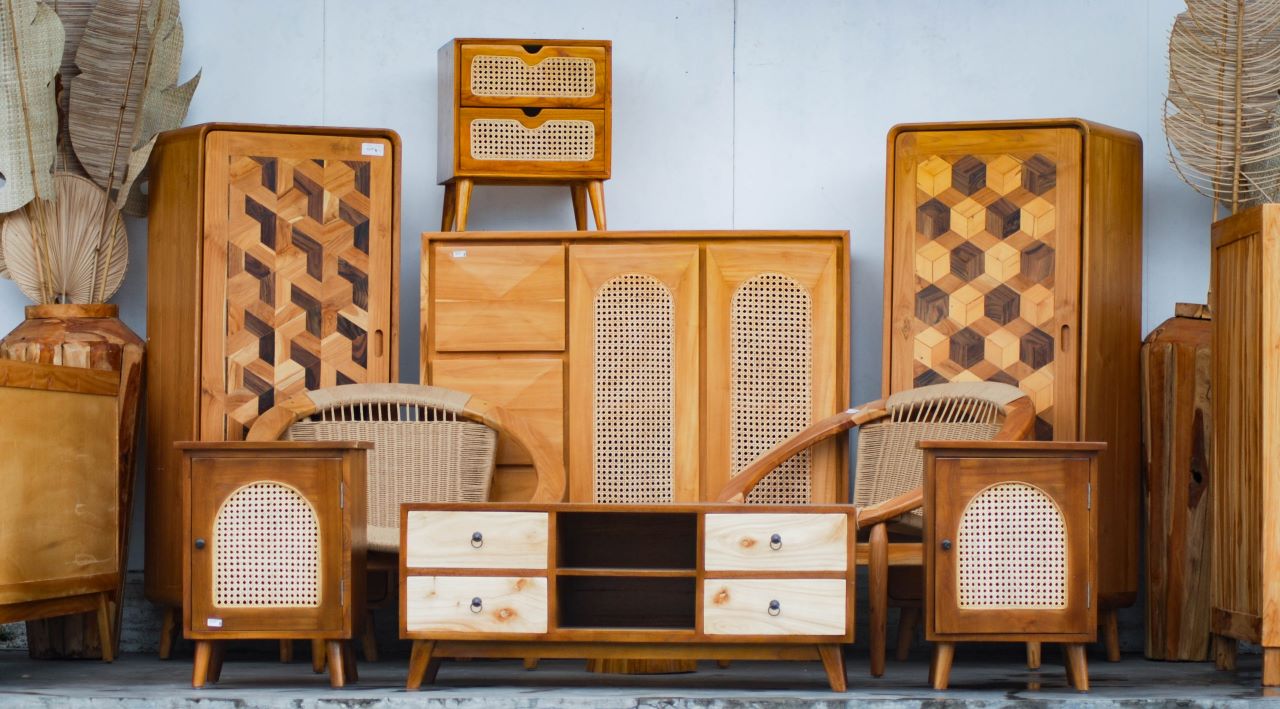
Family Heirlooms Overload: How to Handle Family Inheritance Without Regret
Handling family heirlooms after a loss requires managing legal authority, emotional pressure and practical logistics at the same time, and the order you take them on matters more than most people expect.
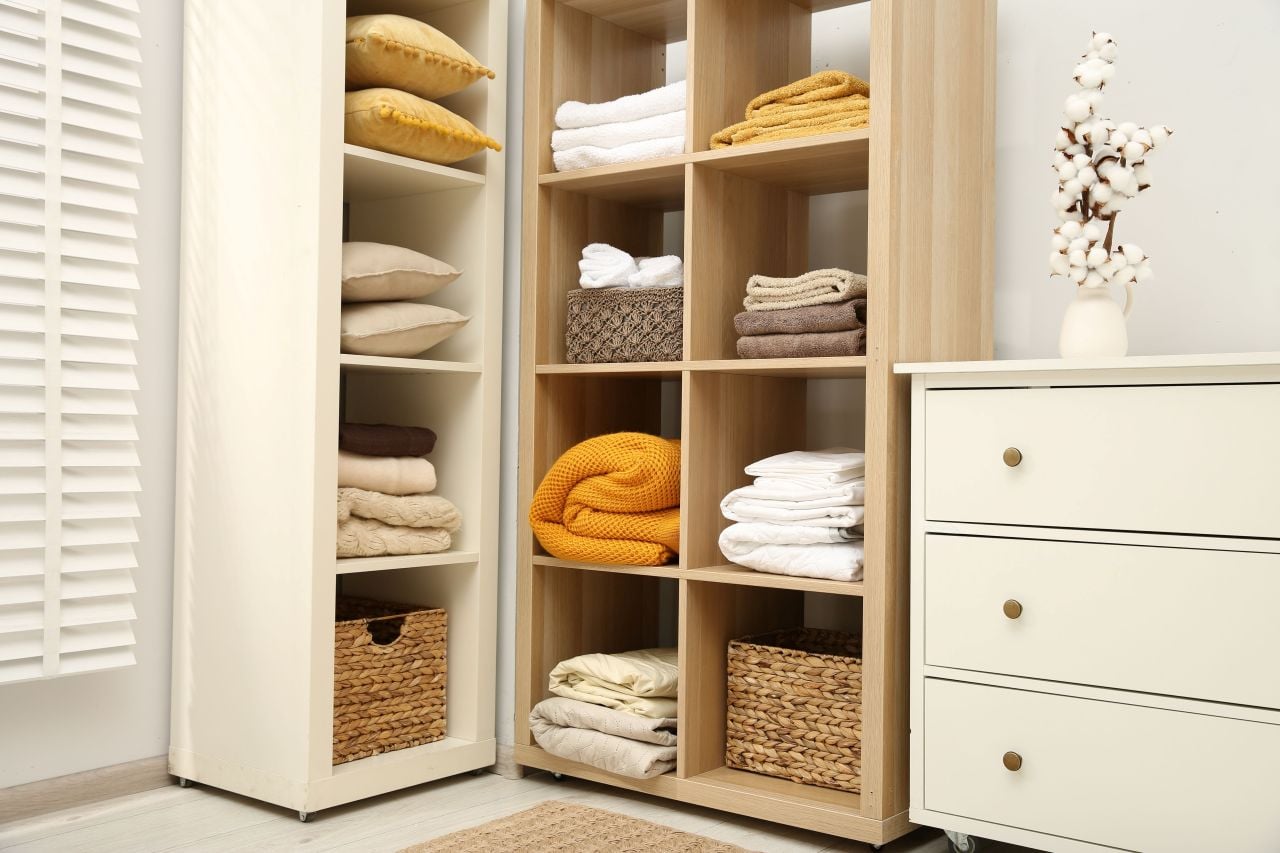
Blanket Storage: The Right Method for Every Space and Season
Blankets make our lives cozier, and storing them well is what keeps them soft and comfortable in the long run. Knowing how to store a blanket properly means your favorites come out of storage smelling fresh, feeling the same as when they went in, and lasting years longer than they otherwise would.

Board Game Storage Ideas That Keep Your Collection in Fighting Shape
Nobody warns you that getting into board games usually unlocks a second hobby, the much dreaded one that includes figuring out where on earth to put them. One game becomes a few, expansions start spawning beside their base boxes and before long, board game storage requires as much strategy as whatever is waiting on the other side of those lids.

Storage Locker vs. Storage Unit: What’s the Difference?
A locker and a unit may sound like two names for the same four walls and a lock, and depending on the storage facility, you may even see the terms used that way. However, once you start comparing available spaces, storage lockers tend to occupy the smaller end of the spectrum, while storage units(opens in new tab) give you considerably more room to work with.
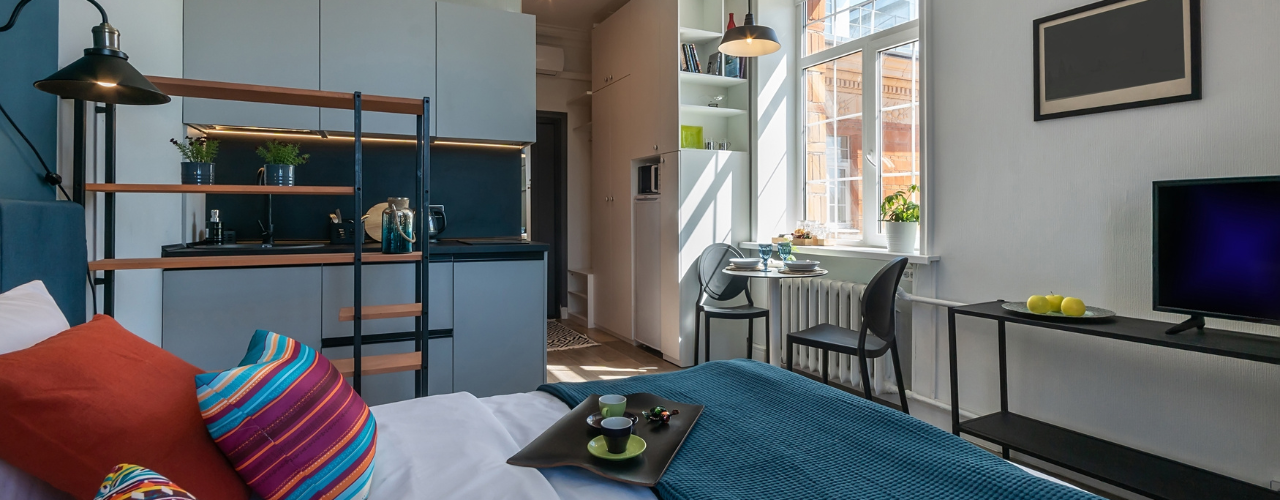
Storage Ideas for Small Spaces: 9 Ways to Max Out Your Home
A messy home contains the seeds of its organization. Those seeds are everywhere: the space above doors, under beds, behind sofas and inside furniture can all become storage. Here are the best storage ideas for small spaces, so you can make the most of your cozy home.

Best U.S. Cities to Live Uncluttered: Plano, TX, Offers the Most Room to Breathe
Clutter is in our homes as much as in our heads. Both are shaped by where we live.
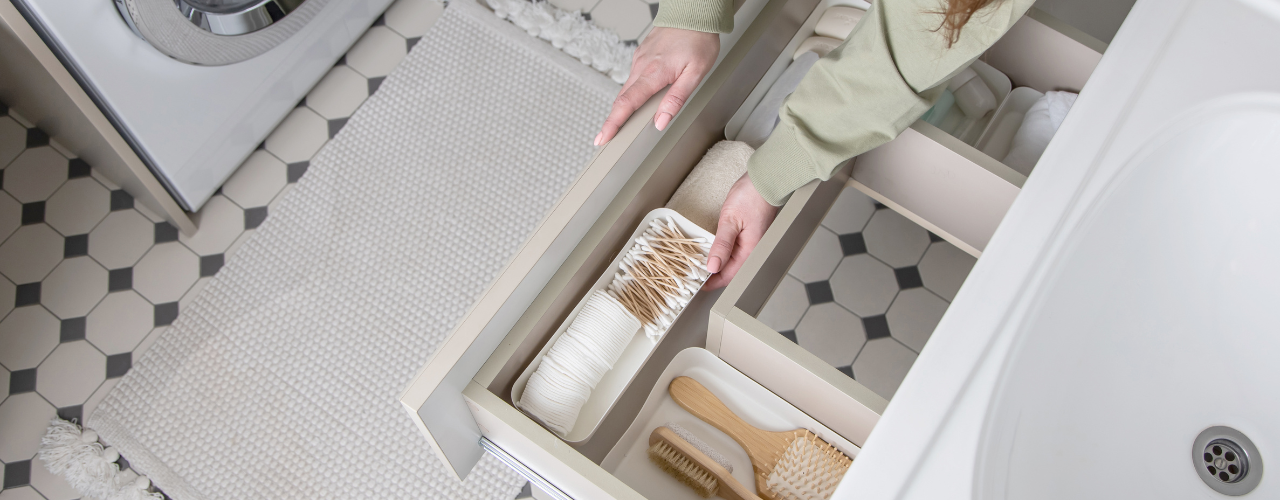
How to Organize Your Bathroom: 8 Ways to Stay Tidy
You already know why an organized bathroom is worth the effort, but let us remind you: it makes rushed mornings easier, keeps counters cleaner and just helps get you in the mood to go through your skincare routine like you should. Plus, in bigger households, it helps everyone find what they need. And you know how much a tidy bathroom counts for your self-esteem when a guest or a partner shows up. Luckily, you don’t need a degree to know how to organize your bathroom. The secret is keeping less, giving every item a home and making that home simple to use. Let’s go through some practical steps can help you create a bathroom that stays functional and nice to look at.

How to Use Silica Gel Packets for Storage
Moisture can cause significant damage to items in storage, leading to rust on tools, mold on clothing and warping in documents. Silica gel uses science to fix that. Often found in small packets inside product packaging, silica gel is a desiccant that absorbs moisture from the air, keeping your stored items dry and protected. This guide explains what silica gel is, how it works and how you can use it to preserve your belongings in self storage.