

Tiny home storage is one of those challenges that sounds straightforward until you’re standing in 200 square feet wondering where the winter coats are supposed to go. You didn’t downsize for the storage anxiety — you did it for the coziest place you’ve ever called home, a wallet that finally feels lighter, and a minimalist lifestyle that suits you just fine.
That pull is clearly not unique to you, as the tiny home industry is expected to generate an additional $4.67 billion in revenue by 2030, with North America projected to account for nearly 52% of that growth. Micro-housing is gaining ground across major U.S. cities too, from San Francisco to Minneapolis.
With that choice comes a real need for tiny home storage ideas that actually work. A smaller footprint means rethinking old habits, getting creative and asking the question that always circles back: how do you store everything without the space to store it in?
The good news is that while square footage may be limited, storage possibilities are not. Some solutions live inside the home — under beds, behind doors, above toilets. Others live just outside it.
A nearby self storage unit can handle the belongings you’re not ready to part with but can’t fit inside four compact walls — an extension of your home, not a last resort.
Before diving in, though, it’s worth addressing the biggest factor competing for that space: everything you’ve already accumulated.
Step zero: declutter, donate and store
How much space you’ll actually have in your tiny home depends largely on how much comes along for the ride. A home packed to the brim leaves little room to enjoy the very lifestyle that drew you to tiny living in the first place.
Start by taking inventory of what you own and what you need to part ways with.
Declutter
While you don’t need to embrace extreme minimalism, you will quickly learn that tiny homes reward intentional ownership. Now is the perfect moment to make sure that you have no duplicates.
Think about everyday essentials such as bowls, plates, forks, spoons and mugs, and keep only one of each. If you’re sharing your home with a partner or family member, adjust accordingly.
The same principle applies to clothing, gadgets, hobby supplies and decorative items. Remember, less is more should be your daily mantra.
Other items that often take up more space than you might realize and are usually safe to declutter include:
- Product boxes for items long past their return period
- Excess packaging and packing materials
- Spare hangers that outnumber your clothing
- Appliance manuals, many of which can now be found online
- Reusable shopping bags you’ve accumulated over the years
- Mismatched food storage containers and orphaned lids
Donate
Not every item needs to be thrown away; some might simply be ready for their moment in the spotlight elsewhere. Belongings that no longer fit your lifestyle could still be useful to someone else, making donation a beneficial solution both for you and for whoever receives them.
Perhaps you’ve moved on from a hobby that never quite took off in the end. Knitting needles, crochet hooks, yarn and other crafting supplies are often welcomed by local charities, schools and senior communities, so it’s worth checking what’s available in your area before parting with them.

Old books you don’t see yourself reaching for again are another great candidate for donation, as are clothes and shoes that are still in good condition but no longer suit your style. Pet owners can do the same with unused supplies such as leashes, bowls, beds or toys, many of which are regularly needed by shelters and rescue organizations.
Store away
The middle ground bridging these two worlds lies in finding space beyond the boundaries of what your home can offer.
Seasonal decorations, winter gear, sentimental keepsakes, hobby equipment or important family heirlooms can consume square footage faster than you can say “minimalism.” Often, these are the items that are difficult to part with, yet don’t necessarily need to live inside your home year-round. In situations like these, turning your gaze toward a self storage unit might be the relief you need.
Whether you’re ready to cut deep into the clutter and purge as many belongings as possible or you’re still weighing your options, storage units are adaptable by nature. You can even use a size calculator, allowing you to plan everything down to the last inch before committing.
A 5’x5′ unit is comparable to your average closet and works well for boxes, seasonal décor and smaller items. Meanwhile, a 10’x10′ unit offers considerably more breathing room, making it a good fit for furniture pieces that no longer fit your tiny home but may still have a purpose somewhere down the line.
Once you’ve crossed these steps off your checklist, the real hunt for storage solutions can begin.
Tiny home storage ideas to help your space work smarter
If tiny home dwellers share one superpower, it’s the ability to spot storage opportunities where nobody else would think to look. Walls become organizers, awkward gaps become useful nooks and furniture rarely sticks to just one job description. The following ideas can help you squeeze a little more function out of every inch without sacrificing comfort or character.
1. Let magnets do some of the lifting
Magnetic knife holders are one of those deceptively simple storage solutions that can be more useful and versatile than you would expect, as they don’t have to be reserved for knives alone. You can use them throughout the home to hold scissors, tools, measuring spoons, keys, metal kitchen utensils and even spice containers. If it sticks, it’s stored.
To get even more out of them, place magnetic strips in overlooked spots such as the side of your refrigerator, inside cabinet doors or where small items tend to accumulate in general.
Another option is to use magnetic hooks attached to the refrigerator or other metal surfaces. These can hold oven mitts, kitchen towels, reusable shopping bags, aprons or other loose items that would otherwise end up draped over chairs and countertops.
2. Use tension rods – both vertically and horizontally
When thinking of tension rods, you might only think of their classic horizontal use. In reality, they’re one of the most versatile tools in a tiny homeowner’s arsenal. With a little ingenuity, they can become shelves, dividers, hanging racks and storage zones all on their own.
Horizontal uses
- Beneath the kitchen sink: Hang spray bottles by their nozzles. Drape cleaning cloths and rags over the rod as well.
- Above the kitchen sink: Pair with S-hooks to hold mugs, measuring cups, kitchen utensils, oven mitts, reusable shopping bags and other lightweight items.
- Inside a closet: Place it near the bottom to serve as a simple shoe rack. Drape shoes over the rod by their heels to keep footwear off the floor. If your closet has the height for it, add multiple rows to significantly increase storage capacity.
- In the bathroom: Place several tension rods parallel to one another a few inches apart to create a makeshift shelf above the toilet or bathroom door. This works particularly well for toilet paper, paper towels, spare towels and other lightweight but bulky essentials.
Vertical uses
- Inside kitchen cabinets: Install tension rods vertically to create dividers for cutting boards, baking sheets, serving trays and pan lids. It keeps everything upright and easy to grab instead of triggering an avalanche every time you open the cabinet door.
- In an unused corner: Place two tension rods vertically from floor to ceiling and use baskets, lightweight shelves or hanging organizers between them to create a freestanding storage tower without the need for drilling, while making use of a corner that might otherwise sit empty.
- Inside the refrigerator: Installed strategically, rods can act as barriers that prevent bottles and tall containers from shifting around or tipping over every time the door is opened.
3. Set up a smarter pantry
Group similar items together, keeping grains, canned goods, snacks and baking supplies in designated baskets or bins so you always know where to find them. Clear containers also make you see what needs restocking while making shelves look less cluttered.
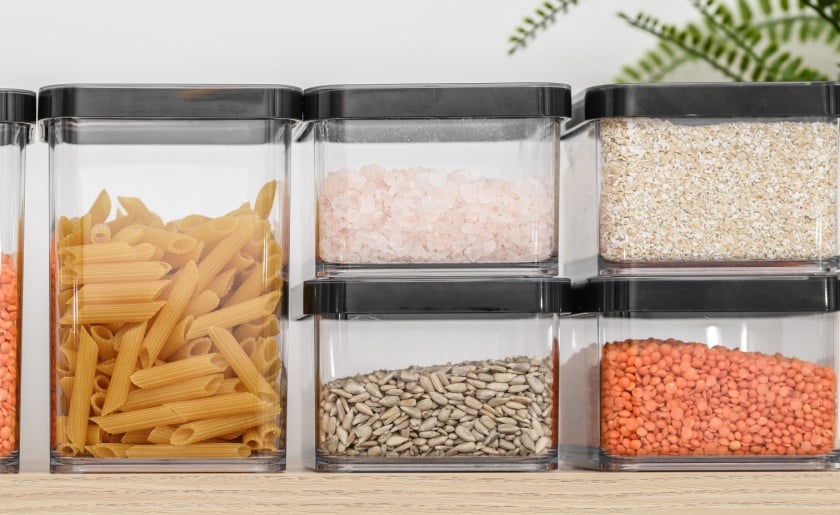
For harder-to-reach corners, a lazy Susan is worth the space it takes up. Placed in a pantry cabinet or on an open shelf, it keeps oils, spices, condiments and sauces accessible with a simple spin.
4. Rethink your cabinet doors
Seasoning packets from takeout, instant soup mixes, hot chocolate sachets, gravy packets, snack bags and other small pouches often end up shoved into a drawer or piled at the back of a shelf, only to resurface months later when they’ve long passed their prime.
A simple fix is to make use of the inside of your cabinet doors by attaching a few removable Command hooks and using binder clips to hang lightweight packets and pouches in neat rows.
5. Don’t leave your walls bare
Got a wall to spare? Then you’ve got a whole new playground for your belongings. You can put them to good use with:
- Coat hooks: They’re not just for jackets. Use them to hang hats, tote bags, scarves, dog leashes, reusable shopping bags or even your favorite mugs in the kitchen. A few well-placed hooks by the entrance can create a mini mudroom without taking up floor space.
- Wall-mounted picture frames: Opt for hanging frames instead of leaning them on shelves or nightstands. You’ll still get to display your favorite memories and artwork while keeping surfaces free for everyday essentials.
- Pegboards: One of the most versatile wall storage solutions out there, pegboards can be customized to suit almost any room. Add baskets, hooks and small shelves to organize kitchen utensils, craft supplies, office essentials, accessories or tools, and rearrange them whenever your needs change.
6. Let your ottoman pull double duty
One piece, five jobs. That’s the beauty of an ottoman, making it the ideal companion for a home where multifunctional pieces have top priority. The best part is that you don’t have to sacrifice style for practicality. Ottomans come in all shapes, sizes and designs, making it easy to mix and match them with your existing décor.
Need a footrest? Done. Extra seating when guests come over? Covered. Add a tray on top, and it instantly transforms into a coffee table.
And, of course, there’s the hidden storage factor. Lift the lid and you’ve got a roomy spot to tuck away blankets, pillows, books, magazines, board games or any everyday items. Hiding in plain sight and without looking like it doesn’t belong in the picture.
7. Use under bed storage
Another great hiding spot that fits right into your tiny home storage solutions search, so to speak, lies right under your bed. Get a taller bed frame to give yourself even more storage potential, then slide clear bins underneath for clothing you’re currently rotating through, extra shoes, hobby supplies or seasonal décor waiting for its turn in the spotlight.
One particularly handy trick is to use under-bed shoe organizers for much more than shoes. Their divided compartments are perfect for keeping gift wrap supplies, charging cables, craft materials, accessories or pet toys. Choose containers with wheels or handles to make pulling them out easy, and labels if you really want to save yourself from future digging sessions.
8. Go narrow
In a tiny home, the spaces that usually go unnoticed can become useful with a new perspective. A narrower and more vertical one, to be more precise. Those awkward gaps between the toilet and vanity, the few inches beside the fridge, or the slim space between a dresser and the wall all have hidden potential.
Slim rolling carts designed to slide into tight gaps are purpose-built for these spots. Collapsible clothes hampers can tuck into tight corners and fold away when not needed. Switching to a slim, tall trash bin is another small change that frees up space.
9. Vacuum seal clothes
Smaller is better in a tiny home, and vacuum-sealing clothes is one of those tried-and-true tricks that simply gets the job done. A few minutes and a vacuum cleaner will turn bulky winter coats, spare bedding, guest pillows and off-season clothes into flat packages that take up a fraction of the space they used to.
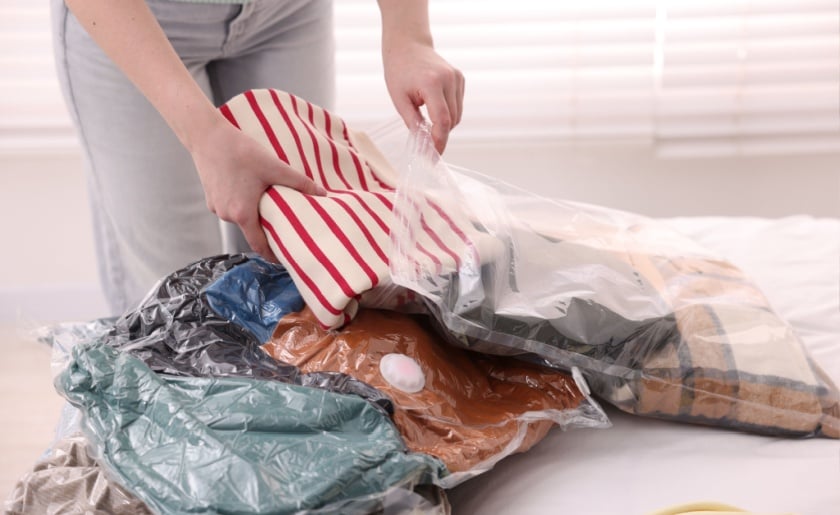
Combine vacuum-sealed bags with under-bed storage and the impact compounds. Those winter jackets sitting unused through the summer can wait their turn beneath the bed until colder days return, leaving you with more room.
10. Buy stackable food containers
Nothing exposes cabinet chaos faster than a jumble of mismatched food containers. Swapping them out for a uniform set of nesting containers makes a huge difference.
To make things even easier, keep the entire collection in a bin on the shelf. Pull it out when you need to unload the dishwasher or pack leftovers, move things around without digging, then slide it back into place when you’re done.
It’s storage within storage — like a Russian doll.
11. Digitize everything
Modern times call for modern solutions, so use them to your advantage. A few minutes spent scanning and organizing important documents can clear out drawers and filing boxes that can be better used for something else.
This works especially well for:
- Bills and receipts, particularly for warranties, returns and tax purposes
- Children’s artwork and school papers
- Old photographs
- Greeting cards and letters
- Recipes
12. Get a sofa with a pullout
A pullout sofa is one of those things people don’t fully appreciate until they’re living in a small space and someone texts, “Hey, mind if I crash at your place tonight?”
It can easily transform and adapt, making it a go-to choice for many who have joined the minimalism train. Its uses are more practical than meets the eye too, making it ideal for a sick partner who needs their own sleeping space or those evenings when the couch feels cozier than the bedroom.
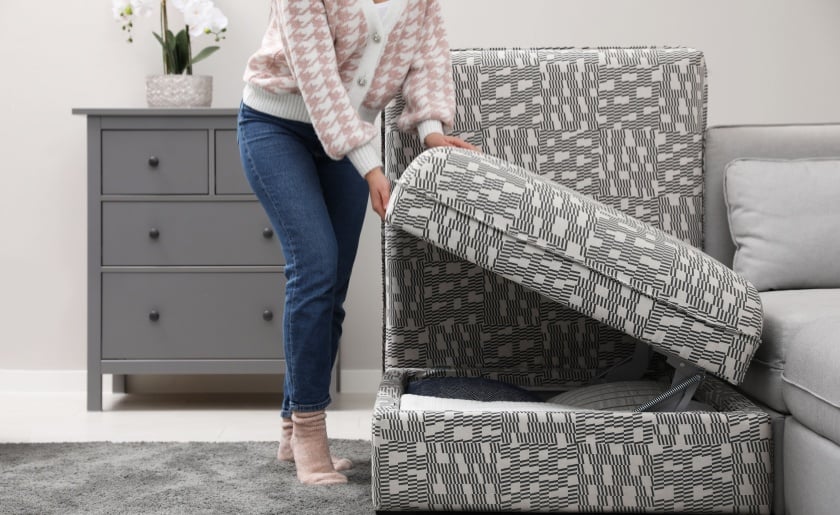
If you can, opt for a model with built-in storage to tuck away extra bedding.
13. Hide cords with cable management boxes
Cables have a sneaky way of slithering across every available surface, making a space look more cluttered than it actually is.
One simple fix is to use an under-desk cable management box or tray that can be mounted beneath your desk. These boxes hide power strips, extension cords and the jungle of chargers that comes with a computer setup.
The same trick works just as well in the living room. A cable box placed behind the TV stand can conceal everything from gaming console cords to streaming device plugs, keeping the focus on your movie marathon rather than the knot of wires underneath it.
Another tip worth keeping in mind is to tackle the problem at its source whenever possible. Pick wireless alternatives, such as Bluetooth headsets, keyboards and mice, to reduce the number of cables competing for space in the first place.
14. Choose the right furniture
When shopping for a tiny home, look beyond aesthetics and think about how a piece moves and functions. Furniture on wheels is a great place to start. A coffee table with hidden storage and casters can hold anything, and it can roll out of the way when you need space. The same goes for a kitchen island on wheels. Some even come with fold-out wings, giving you extra prep space when cooking and a smaller footprint when you’re done.
For the dining areas, consider a round table with a central pedestal base instead of four bulky corner legs. It’s easier to move around and allows people to squeeze in more comfortably.
As a rule of thumb, avoid overly chunky, angular furniture that dominates a room. Pieces that can multitask or adapt to different situations will almost always earn their place.
15. Add shelves above the toilet
The wall space above the toilet is one of the most consistently overlooked storage opportunities in a tiny home. A few well-placed floating shelves can change that. Use them to store extra towels, toilet paper, skincare products and other toiletries. Decorative baskets can help wrangle smaller items such as hair accessories, cotton pads or first-aid supplies.
Putting those empty walls to work makes the space feel more functional without making it feel any smaller.
The bigger picture of living small
Living small is a big deal, and it deserves to be treated that way. So go ahead, think outside the (storage) box. Your tiny home has more to offer than meets the eye, and the same goes for you. A little ingenuity, a willingness to rethink what you thought you knew about space and a few smart habits can transform the way your home functions.
Whether that means going digital, making the most of vertical real estate with shelves and hooks, taming cord clutter, rotating seasonal items under the bed or letting multitasking furniture pull double duty, the smallest changes often have the biggest impact.


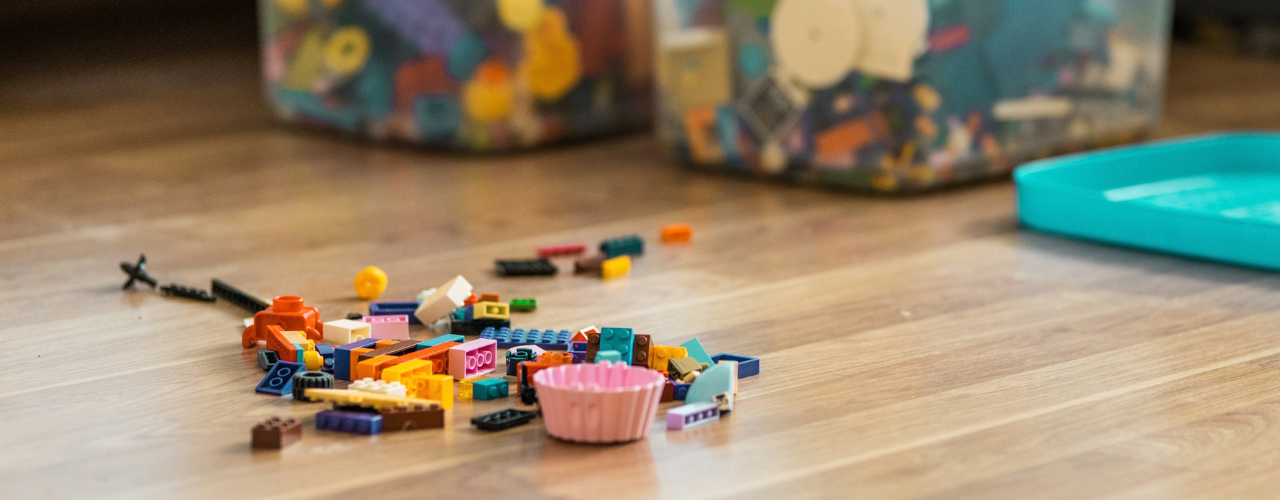
How to Store LEGOs: All the Fun, None of the Clutter
How to store LEGOs largely comes down to how your household uses them. If the bricks are part of everyday play, you need a setup that keeps them within easy reach and makes cleanup quick (for your feet’s sake, at least). Toy storage(opens in new tab) such as simple bins, playmats or containers that children can put away themselves may be enough. Larger or more serious collections usually need more organization, such as labelled drawers for loose pieces, trays for unfinished builds, shelves for completed models and separate storage for retired sets.

Cardboard Costume Guide: Tips and Ideas for a DIY Halloween
Whether for kids or adults, cardboard costume ideas often make the biggest splash once materialized, and that’s for a simple reason: doing a lot with a little is a universally impressive feat (especially in this economy). If you don’t have enough boxes you could temporarily repurpose, don’t worry! There are many places where you can find free moving boxes(opens in new tab), from stores and supermarkets to online groups and recycling drop-off spots. On the run? Try your luck at a self storage(opens in new tab) facility that sells moving supplies, often for cheap. This way, you can choose moving boxes of different shapes and sizes(opens in new tab), so you can make your costumes as complex as you want.

How to Celebrate Halloween: 9 Non-Spooky Ways To Enjoy It
As soon as October starts, it’s the official Halloween month. And while for many people it means it’s open season to get the scare of a lifetime, others, especially families with small children, might prefer to celebrate in a tamer way that’s both kid- and adult-friendly. While you’re likely to find more events where the spook factor is high, here’s how to celebrate Halloween in a not-so-scary way:

Motorcycle Storage Guide: How to Store Your Bike Safely
Motorcycles may be born to be wild, but eventually even the wild ones need somewhere to park. Whether riding season is winding down or your current living situation comes with plenty of square footage for you and less for your bike, motorcycle storage is one of those parts of ownership that doesn’t get as much airtime as the open road.

Halloween Decorating on a Budget (And Cheap Ideas for Everything Elsee)
Halloween has crept a long way from its eerie origins. While All Hallows’ Eve has transformed through the centuries, it wasn’t until the 1930s that trick-or-treating became a tradition in the U.S. and businesses began conjuring up mass-produced Halloween costumes. Now, Halloween is a monster-sized, billion-dollar industry, with a cauldron full of costumes and decorations ranging from the mainstream to the macabre. But is it all really worth your wallet? Maybe, but we’ll let you in on a little secret: You can keep your Halloween decorating on a budget and save on everything else, too. Take this plan and see it through!

Moving From a House to an Apartment: What to Expect, How to Downsize & How Self Storage Helps
For some, moving from a house to an apartment is a financial decision. For others, it’s about simplifying life. Maybe the kids have moved out and half the house sits empty, or you’re approaching retirement and no longer want to spend weekends on repairs. Or perhaps you’ve been weighing the cost of buying a home and wondering whether renting simply makes more sense right now.
Family Heirlooms Overload: How to Handle Family Inheritance Without Regret
Handling family heirlooms after a loss requires managing legal authority, emotional pressure and practical logistics at the same time, and the order you take them on matters more than most people expect.
Blanket Storage: The Right Method for Every Space and Season
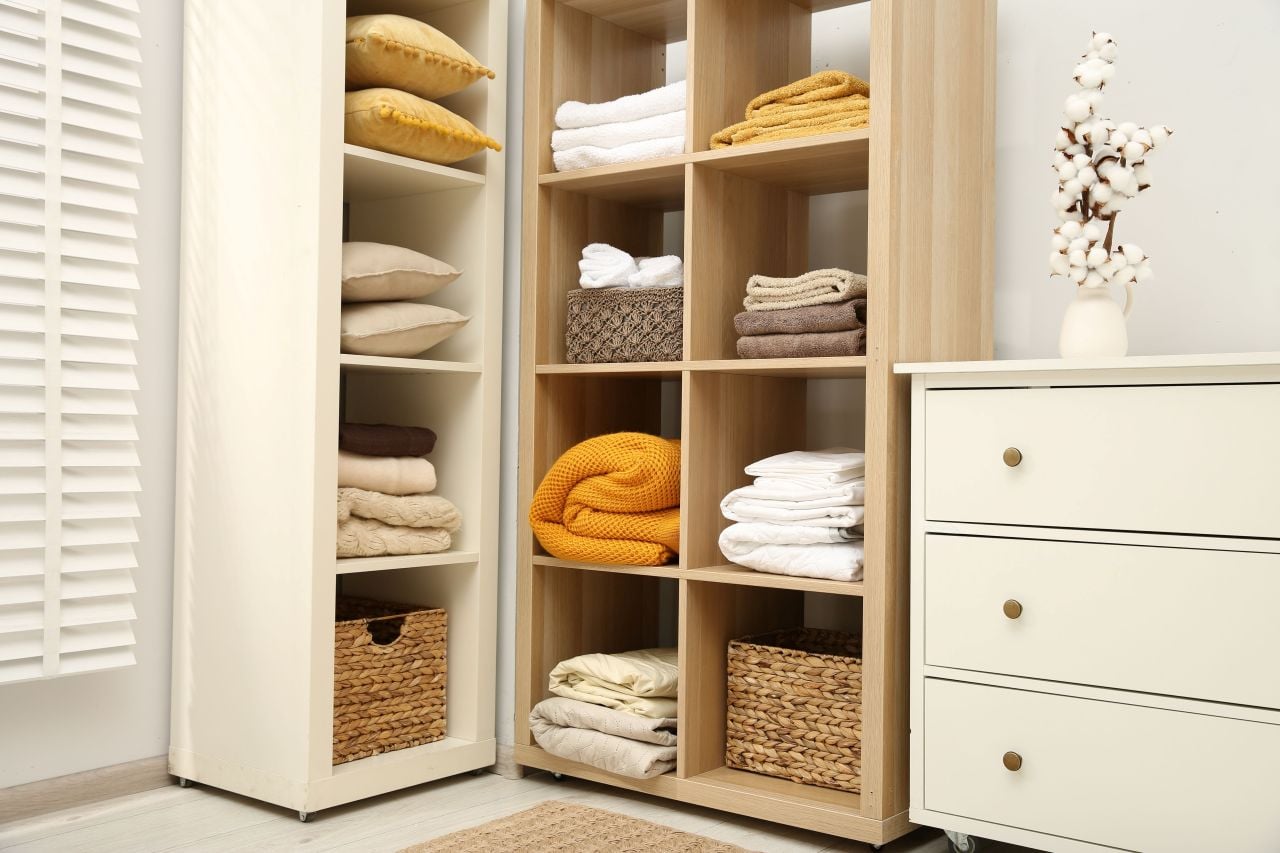
Blankets make our lives cozier, and storing them well is what keeps them soft and comfortable in the long run. Knowing how to store a blanket properly means your favorites come out of storage smelling fresh, feeling the same as when they went in, and lasting years longer than they otherwise would.

Board Game Storage Ideas That Keep Your Collection in Fighting Shape
Nobody warns you that getting into board games usually unlocks a second hobby, the much dreaded one that includes figuring out where on earth to put them. One game becomes a few, expansions start spawning beside their base boxes and before long, board game storage requires as much strategy as whatever is waiting on the other side of those lids.