

It’s winter, and your phone hasn’t rung all day. Two more tenants gave notice yesterday, and you’re staring at a spreadsheet showing December move-ins down 35% from last year. Welcome to winter in self storage.
Every operator knows this rhythm. Summer is pure hustle — college students, family relocations, home renovations, keeping your rental office busy from morning to night. Then winter comes around, move-in activity slows, holiday spending rolls around, and suddenly you’re competing with gift budgets instead of other storage facilities.
But here’s what separates thriving operators from surviving ones: They don’t treat winter like something to endure. Here’s exactly how to turn your facility’s quiet season into preparation season.
What happens in the cold season for the self storage industry?
Before diving into how to deal with the challenges of the cold season, it’s important to know what trends shape the self storage businesses. Unlike the summer boom, when heightened moving activity, college students, and vacationers keep demand up, by the time fall is over, this activity wanes. In fact, by November and December, fewer people were moving, which contributed to lower demand and had a direct impact on occupancy and revenue for those months.
In colder markets, weather compounds the issue. Steven David, Co-Founder & CEO of EZ Movers and Storage, recalls one December in Chicago when “the inquiries dropped 60 percent from fall.”
Regional differences can also come into play, with the South experiencing milder winters where the cold doesn’t factor into how self storage is used. Robby Piper, Principal of The Storage Center, is also weighing in on how the cold season is impacting their business in Baton Rouge, LA. “Our portfolio is concentrated in the South, so we typically experience mild temperatures and pleasant weather in the winter. As a result, we don’t experience a significant drop off in customer demand seen in colder regions,” he told us. He identified another source of weaker demand.
“The biggest challenge we see is price sensitivity around the holidays. We are competing with discretionary spending starting in Q4 through January,” he also added.
Meet your customers where they are
While most of your customers could be people moving, you should also consider what categories could benefit from the service during the cold and how you could reach them.
- Target apartment dwellers
Apartments typically offer smaller living spaces compared to single-family homes, making things feel even more cramped in winter. Renters may need extra space to store bikes and outdoor gear. Plus, after Christmas, gifts can become a source of clutter—so your storage facility could be the ideal temporary home for these items.
- Consider snowbirds
Make sure you know your market well – are there snowbirds? – people leaving colder climates for warmer places until summer returns. If yes, you might have an additional niche of customers. They’re typically seniors, so reach them through more traditional channels like mailers and newspapers. Reach out to them in the fall before they leave so that they can consider self storage to put some of their belongings away until they return.
- Go for niche businesses
Seasonal businesses that don’t operate in the winter could also benefit from your services. Local restaurants might need room to put away their patio furniture during winters. Similarly, landscapers typically need space to store their lawn mowers and equipment until spring. Factor in proximity to these businesses; the closer they are to your facility, the higher the likelihood they will become your customers.

Keep your customer service active
Even though business is slower, this isn’t the time to drop the ball on customer service. Being there to assist customers when they’re facing difficulties can make all the difference for satisfaction and retention.
“Most operators keep everyone on customer service even when they slow down to calls. I learned that the hard way, back in the day in 2008, when empty units sat dirty from a bad snowstorm,” Steven David told us.
Optimize your pricing strategy
When demand drops, operators face a critical choice: lower prices, raise them, or hold steady. The most successful take a strategic approach. Clark Elieson, Head of Marketing & Sales at Temple Star Storage, argues for a price correction in line with weaker demand. “When demand is low, and supply is high, dropping prices in the winter low-season is a great way to gather more rentals than your competitors.”
To implement this strategy more effectively, start pricing reviews in October, before winter settles in. Furthermore, be strategic about your pricing adjustments. Use your occupancy rates by unit type to see where a price increase might help. For instance, if 10×15 units have the lowest occupancy, they’re the best candidates for a seasonal price drop.
Offer specials and pair them with holidays or special days that catch your customers’ eyes. For instance, Temple Star Storage put this into practice with a targeted Black Friday promotion: “We had 5 move-ins that weekend from our Black Friday special of 50% off your second month. It applied only for Black Friday. Nobody else in our market had a special, so we dominated.”
Consider offering seasonal packages that appeal to winter customers: holiday storage bundles with discounts on the first month plus free climate control upgrades. Many facilities run winter promotions tied to New Year’s organization goals or post-holiday decluttering needs.
Review your business performance
Winter’s slower pace creates the perfect opportunity to dive deep into your facility’s performance data. Rather than just surviving the seasonal dip, use this time to understand what’s driving your numbers and identify opportunities for improvement.
Focus your winter analysis on key metrics that will inform your spring strategy:
- Unit-type performance: Which sizes are struggling with occupancy? These become candidates for seasonal pricing adjustments or targeted marketing.
- Customer acquisition costs: Review which marketing channels delivered the best tenants over the past year to inform your spring budget allocation.
- Tenant lifecycle patterns: Identify your best long-term customers to understand what attracts and retains high-value renters.
- Operational efficiency: Track how long units sit vacant between tenants and identify bottlenecks in your turnover process.
Most property management systems can generate these reports with minimal effort. Whether you’re using comprehensive platforms like Storage Manager for larger portfolios or streamlined solutions like Yardi Breeze Premier for smaller operations, the key is setting aside dedicated time to review the data and translate insights into actionable strategies.
Operations mode: clean, fix and tighten processes
Smart operators use winter’s slower pace for operational improvements that pay dividends when the busy season returns.
David Hurless, Director of Operations at Stor-It, focuses on upkeep and systems: “In recent years, I have started concentrating on upkeep and administration during the winter months. We also use this time to review our internal processes and make sure there is nothing we could be doing smarter.”

Steven David shifts staff responsibilities during the slowdown: “Our teams inspect inventory and sort stock. That prep pays off big time when spring demand hits, and units rent faster. From my years at EZ Movers and Storage, this approach found that we cut our vacancy time by 22 percent last season.”
In warmer regions, Piper uses the slower period for capital improvements: “We use the slower seasonal periods to invest in physical upgrades across our locations, painting and door replacements during this time, when reduced foot traffic allows for efficient execution.”
Address winter maintenance
Winter maintenance should go beyond basic cleaning to prevent slip-and-slide accidents and other damage to your facility, employees, and tenants.
“Winter is one of the highest-risk seasons for self storage facilities, with freeze losses, slip-and-falls, and storm damage driving some of the most expensive insurance claims,” Jessica Lamoureux, Practice Leader at World Insurance Associates and President of the Northeast Storage Association, noted.
Create a systematic winter maintenance schedule that covers:
- Insulating exposed plumbing and installing heat tracing tape on outdoor pipes
- Ensuring all staff know the location of main water shutoffs
- Implementing prompt snow and ice removal plans (consider outsourcing for safety and liability reduction)
- Checking and maintaining security cameras, lighting, and gate systems
This protects both your facility and tenant assets while reinforcing your brand as a reliable, secure provider.
“Taking proactive steps before can significantly reduce risk — and positively influence insurance premiums and coverage terms”, Lamoureux also reported. “Freeze losses are often viewed as preventable. Facilities with documented winterization practices are seen as lower risk by underwriters,” she also added.
This is also a good time to check your self storage insurance policy and whether you offer one to your customers – some businesses treat it as an add-on to the rent that protects the tenant. For instance, GoodShield protects customers against loss of stored belongings in the event of natural disasters such as wind, water, and fire.
Marketing reset: Build the engine before March
The most successful operators treat winter as a strategic marketing season, not a time to go dark. While competitors cut marketing budgets and coast until spring, smart operators use the slower pace to build systems that create explosive growth when demand returns.
Whether you’re implementing advanced digital strategies or focusing on fundamental marketing basics, winter provides the perfect opportunity to strengthen your promotional foundation. The key is treating this season as preparation time rather than hibernation—building the marketing engine that will capture maximum demand when spring arrives.
Improve your website performance foundation first: website and digital presence
With slower business, you can address your website performance and how it correlates with your customer acquisition goals. David Hurless from Stor-It emphasizes the basics:
“From a marketing standpoint, this is also a great time to make sure that all of our online information is accurate and up to date,” according to David Hurless. “Especially as we have begun to add more locations around Idaho, making sure that address, phone number and unit information is correct is a big deal for us,” Hurless also added.
Beyond making sure that contact information and listings are accurate, it’s also essential to dig a little deeper into site performance. Christine King, owner of Gunter Self Storage, recognizes the importance of this foundational work. “Updating website content, improving SEO, cleaning up listings, and making sure our messaging matches what customers are actually searching for.” This helps business readiness as spring rolls in. “Doing that work ahead of time means we are not scrambling in the spring. When demand picks up, everything is already in place and running more smoothly,” King mentioned.

Community engagement and content strategy
The cold season is a time to think about engaging the community in a different way that makes your service relevant.
Winter marketing opportunities include:
- Holiday campaigns: Position yourself as the “Holiday Storage Headquarters” for storing presents, decorations, or seasonal gear
- Community events: Host holiday decor swaps, charity drives, or drive-through light displays to build local visibility
- Email and social series: Share winter storage tips and seasonal checklists to keep your brand in front of customers throughout the slow months
Building social proof and expanding reach
Use the quieter period to collect testimonials from satisfied customers and plan longer-term initiatives. Steven David found this strategy particularly effective: “Customers start looking for storage the minute snow melts, and we add in testimonials of happy movers as well as clear calls to reserve now. That works filled 35% more units in March than competing businesses that waited around,” he told us.
With more time on your hands, you can diversify your promotional channels. “In parallel, we begin planning longer-lead initiatives early in the year to ensure thoughtful execution”, according to Robby Piper.
“These include evaluating sponsorship opportunities, refreshing digital assets such as video and photography for advertising use, and assessing potential investment in new channels, including social media, brand ambassadors, and industry partnerships,” Piper added.
These tactics keep audiences engaged and can turn seasonal renters into year-round referrals.
The bottom line: a season of strategy, not slowdown
Industry observers note that top performers treat seasonality as a competitive edge, not just a calendar quirk. They plan pricing months ahead, align marketing with seasonal rhythms, and use winter to retool operations, systems, and outreach. Across operators, agencies, and insurance experts, the theme is consistent:
- Don’t retreat — recalibrate
- Don’t wait — build
- Don’t cut blindly — optimize strategically
As Steven David puts it: “My years of experience at EZ Movers and Storage proved that prep beats panic every single time.”
Start your winter prep now. Your spring numbers will thank you.


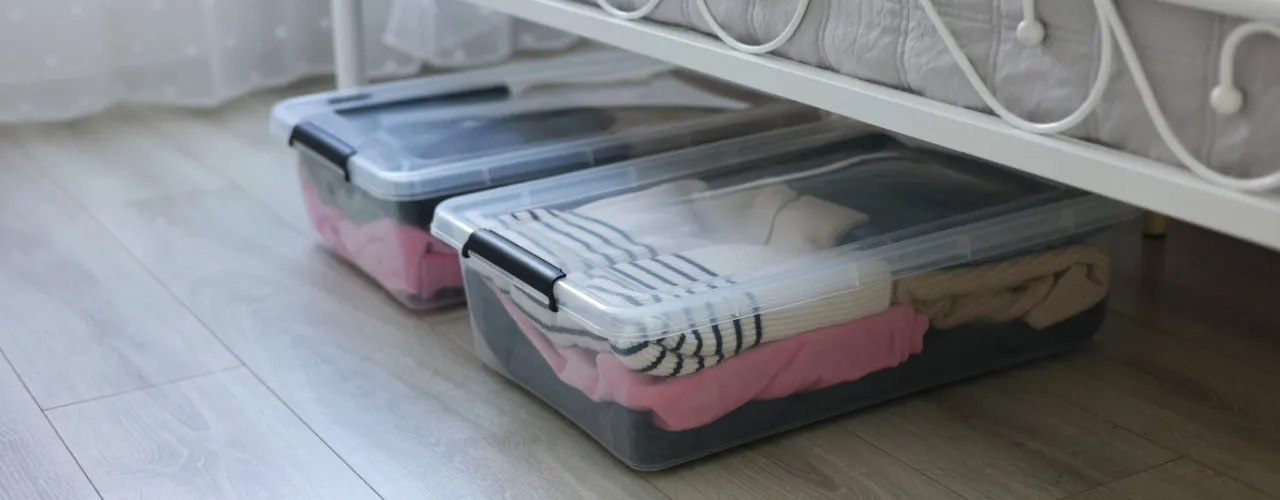
Under-Bed Storage Ideas: From Options to Precautions
The space under your bed is some of the most valuable (and most overlooked) square footage in your home. For anyone needing more storage in a small apartment, tiny home, a student dorm or just a space shared with roommates, that low, hidden zone can absorb off-season clothes, spare bedding and luggage without cluttering a single visible surface. But under-bed storage rewards a little strategy. Used well, it clears your floors and frees your closets. Used carelessly, it can trap moisture against your mattress and, in time, damage the very things you were trying to protect. Here are some under-bed storage ideas to help you get the upside without the downside.

RV Storage Ideas: Smart Solutions for Every Space
The best RV storage ideas work by finding space you already have but aren’t using — under beds, inside cabinet doors, on walls, above entry steps and in the overhead bunk. Most RV owners run out of obvious places quickly, but the real storage capacity in a typical trailer or motorhome comes from vertical surfaces, divided compartments and rethinking what each space was designed for.

Kitchen Cabinet Organization Ideas for Less Chaos
The best way to organize kitchen cabinets is to store items where you actually use them: mugs near the coffee maker, plates close to the dishwasher, spices next to the stove. Small placement decisions like these turn crowded cabinets into functional ones, and they cost nothing to implement.

Where to Donate Clothes in NYC: From Pickup to Mutual Aid
Every year, 200,000 tons of clothing end up in NYC landfills — but yours doesn’t have to. Your unwanted clothes have a real second life waiting. Whether it’s a low-income family needing affordable basics, a woman reentering the workforce looking for interview wear, or an undocumented resident accessing free community support, the donation method you choose matters. Plus, there are plenty of convenient ways to go about it. Local mutual aid groups, free pickup services, mail-in programs, workforce nonprofits, and textile recycling — each one routes your clothes to neighbors and causes that need them most. Here’s where to donate clothes in NYC, according to your plans.

The Best U.S. Metros To Own A Boat
Boating is one of America’s favorite pastimes. According to the National Marine Manufacturers Association, nearly 100 million Americans go boating each year, and recreational boating contributes over $230 billion annually to the U.S. economy. It’s a lifestyle deeply shaped by geography, climate, and local culture.

Packing Tips for Moving in a Hurry: 5 Ways to Speed Things Up
Sometimes a move sneaks up on you and you wind up having to move in a hurry. A job starts sooner than expected, a lease ends abruptly, a sale closes fast, or life simply throws a curveball and suddenly you’re staring at a full house with only days or weeks to empty it. That short timeline can feel overwhelming, but it doesn’t have to mean chaos. With a focused plan and a few smart shortcuts, you can pack up quickly, protect your belongings, and land in your new home without losing your mind.

How to Store Tools Properly: Keep Equipment Rust-Free and Tidy
Good tool storage saves you time, money and the very specific rage of finding a rusted drill you paid good money for. Cleaning, drying and organizing your tools properly keeps them rust-free and findable — and it takes less effort than most people assume. True, nobody wakes up thrilled to organize their tools; it ranks somewhere between cleaning the gutters and reading the terms of service. But here’s how to do it right without the hassle.

Drive-Up Storage Units: Pros, Cons and When They’re Worth It
A drive-up storage unit is a ground-level space with an exterior roll-up door, a lot like a detached garage. Units are usually arranged in rows with wide, paved aisles between them, so you can pull a car, van, or moving truck directly up to your door during access hours. The key feature is the access, and it comes in a few forms:

2026’s Best Cities for Roommates: Irvine, CA, and Atlanta, GA, Lead in Shared Living Gains
Americans sharing a two-bedroom apartment instead of renting a one-bedroom alone can save, on average, about $6,700 per year. In some of the country’s most expensive cities, including Irvine, California, or Jersey City, New Jersey, the savings gap widens to around $13,000. For a growing share of renters, living with roommates is less of a lifestyle arrangement and more a conscious financial strategy.