

Key Takeaways
- Large storage units vary from 10’x20’ to 20’x30’ and can hold contents upwards of a three-bedroom home.
- When choosing a large storage unit, keep in mind height as well as floor space, since vertical room can make a big difference.
- To know what unit size to rent, take stock of your inventory, declutter, shop for options by calling facilities and leave walking room when choosing a unit.
Large storage units start at the 10’x20’ and climb from there. The 10’x20’ is the most common — the familiar lock-up garage you see at nearly every facility. Above it sit the 10’x30’, 20’x20’, and 20’x30’ plus specialist spaces for storing boats, RVs and commercial equipment.
One detail that’s easy to overlook: height. Most standard units are 8 feet tall, while larger and contractor-focused ones often run 10 feet or higher. It matters more than you’d think, because capacity is about volume, not just floor space. When you’re stacking boxes or storing tall items, that vertical room is where much of your value hides — so always ask about ceiling height before you sign anything.
Let’s go size by size so you can find what you need.
The 10’x20’ storage unit
The 10’x20’ is the entry point into large storage and one of the most versatile sizes available. At 200 square feet, it matches the footprint of a classic one-car garage and offers roughly 1,600 cubic feet of total volume.
What it holds: A 10’x20’ comfortably stores the contents of a three-bedroom home, making it a go-to choice for families in the middle of a move. You can fit bulky items like wardrobes, couches, double beds, and kitchen appliances, with room left over for boxes of clothing, books, and household goods. Packed smartly, it holds several rooms’ worth of furniture — three or four bedrooms plus a large living room set.
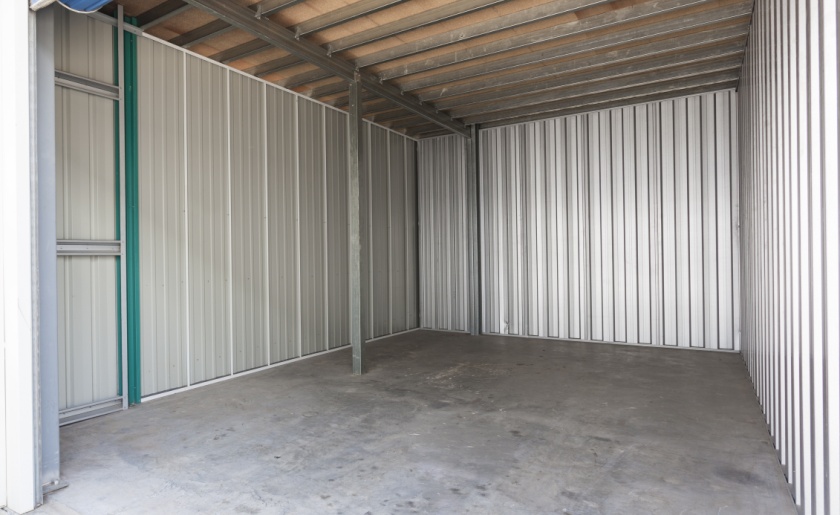
Vehicles: Almost any car fits in a 10’x20’, usually with space to spare for additional belongings. Most minivans work too, and so do small boats — though if you’re planning to bring a boat, you might find yourself needing a bigger unit. Two cars, however, won’t fit here under any circumstances. The average car in the US is about 6 feet wide and nearly 15 feet long, so two of them simply won’t park together. You can pair a car with a motorcycle or ATV, but for two full vehicles you’ll need to size up.
Business use: Contractors, landscapers, and construction companies often rent these units to keep tools and equipment safe and close to their worksites. The month-to-month flexibility and the sheer number of facilities in most cities make this an affordable alternative to leasing dedicated commercial space.
The 10’x30’ storage unit
The 10’x30’ is the largest standard size most facilities carry. It offers 300 square feet of floor space and 2,400 cubic feet of volume at standard height — roughly the footprint of a two-car garage, though deeper and narrower. Because these units are frequently used for specialist purposes, some come with taller ceilings, and a few even include electrical outlets or plumbing, turning them into more than just a place to park your things (with the facility’s permission, of course).
What it holds: This unit accommodates the contents of a loaded semi-truck — essentially all the furniture and belongings from a four-plus-bedroom house. It’s the right call for anyone moving out of a large family home or storing an entire household long-term, such as during a move abroad.
Vehicles: A 10’x30’ easily holds two cars with room left for couches, wardrobes, large beds, appliances, and boxes. Two pickup trucks fit as well, alongside tools and equipment. Boats and RVs are commonly stored in units this size, but RV owners need to watch the height. Smaller Class B motorhomes usually fit under a standard 8-foot ceiling with space to spare, while Class A motorhomes can stand 13 or 14 feet tall and need extra-tall units or open, high-roof parking spaces. Some RVs run longer than 30 feet, so oversized vehicle storage may be the only fit — yet another situation where a phone call beats a guess.
The 20’x20’ storage unit
When the standard 10-foot-wide units don’t cut it, the 20’x20’ steps in with 400 square feet — about the size of a double-wide garage. The extra width changes how you use the space, giving you genuine elbow room instead of a long, narrow corridor you have to dig through.
What it holds: A 20’x20’ comfortably absorbs the furniture and appliances from a four-to-five-bedroom house, including multiple couches, beds, dining sets, and entertainment centers. It’s equally at home with garage contents, workshop benches, home office or retail inventory, large filing cabinets, pallets, equipment racks, and dozens of boxes and bins.
Vehicles: This size handles motorcycles, ATVs, trailers, small boats, and compact cars. It’s a practical choice for protecting a vehicle year-round — though drive-up access and clearance vary by facility, so confirm the dimensions before you commit. Bringing a trailer? Double-check the turning space too; there’s nothing worse than discovering the unit fits but the approach doesn’t.
Business use: Contractors, realtors, and retailers all lean on 20’x20’ units for inventory, supplies, and job-site tools. The square layout makes organizing shelving and equipment far easier than wrestling with a deep, narrow unit.
The 20’x30’ storage unit
At 600 square feet, the 20’x30’ is among the largest units you’ll find — roughly the size of a four-car garage and twelve times the space of a 5’x10’. Some facilities build these specifically for contractors, adding loading ramps and oversized access doors. With ceilings often around 10 feet, total capacity can reach about 6,000 cubic feet.
What it holds: A 20’x30’ swallows the entire contents of a five-to-seven-bedroom house: multiple beds with frames and headboards, sectional sofas, recliners, full appliance sets, and dozens of boxes. It also takes on outdoor equipment like lawn mowers and snow blowers, recreational gear such as kayaks and bicycles, and substantial business inventory.
Vehicles: Cars, SUVs, trucks, small boats, trailers, and ATVs all fit, often with room to spare. Smaller pop-up campers and tent trailers usually work, while mid-sized RVs call for checking your vehicle’s dimensions against the unit’s clearance first.
One caveat on climate control: Larger contractor-style units frequently don’t offer climate control. If you’re storing temperature-sensitive items, you may need to choose a smaller climate-controlled unit or split your belongings across a couple of units. This is precisely the trade-off where calling ahead pays off — the facility can tell you on the spot what’s available and whether a different size solves the problem.
How to know what size to rent: Research, then call
Every storage rental starts with the same dilemma: risk overpaying for a large unit you can’t fill, or risk squeezing into one that’s too small and ending up with boxes stacked on the sidewalk. Get it wrong in one direction and you’re burning money every month on empty air. Get it wrong in the other and you’re playing a frustrating game of furniture Tetris that never quite works out.
Here’s where the overpay-versus-too-small question gets settled.
Take honest inventory of what you’re storing
Boxes of papers stack neatly and reward you with usable vertical space, while fragile and bulky furniture can’t be piled high. A bed can stand on end to save floor space; a refrigerator can’t.
Declutter before you decide
Getting rid of things you’ll never use again can drop you into a smaller, cheaper unit — and that’s money saved every single month. Disassembling furniture, like taking apart bed frames and tables, frees up real room and might let you size down without sacrificing anything.
Match the unit to the job
For a three-bedroom move, the 10’x20’ is usually enough. For a large family home or two vehicles, step up to the 10’x30’. When you need width for furniture sets or commercial inventory, the 20’x20’ makes organizing easier. For the biggest household or contractor needs, the 20’x30’ is the ceiling of standard storage.
Call the storage facilities
But you don’t have to commit blind. After you’ve done the research with a size guide, call the facility (or facilities) directly. Ask whether they’ll let you switch to a bigger or smaller unit on-site if your first pick turns out wrong. Many will, and a five-minute conversation about ceiling height, drive-up access, clearance, climate control, and current specials can save you from both traps — the empty unit you overpaid for and the cramped one that can’t hold everything.
Leave walking room.
In larger units especially, pack so you can reach items at the back without unloading everything in front. A little planning at move-in saves hours later.
Bottom line
Large storage units range from the garage-sized 10’x20’ up to the warehouse-like 20’x30’, and the right choice hinges on your inventory, your vehicles, and how much vertical space you can use.
The dilemma is always the same: overpay for room you don’t need, or undershoot and run out of space.
Luckily, that dilemma is an easy one to solve. Take measurements, declutter, factor in ceiling height, and then call around to ask about sizing flexibility, access, and pricing. Get it right and you’ll have exactly the room you need. And remember: if you bring a boat, you’re going to need a bigger unit.


How to Organize a Guest Room: From Decluttering to Storage
A guest room often becomes a holding zone for spare furniture, seasonal bins and unfinished decisions. To reclaim it, start with three basics: a comfortable place to sleep, room for a guest to unpack and the everyday essentials that make the space easy to use.

Where to Donate Furniture in Phoenix (And Some Back-Up Plans)
Whether you’re downsizing, moving, redecorating, or clearing out an estate, giving your gently used furniture a second life is one of the most rewarding ways to declutter. Phoenix has a deep bench of nonprofits that will happily take your couch, dresser, or dining set, and many of them offering free pickup right from your driveway. This guide covers where to donate furniture in Phoenix, what each organization accepts, how pickups work, and when a storage unit(opens in new tab) can help with the items you would still like to keep.

Where to Get Moving Boxes in San Francisco
Maybe you just found that perfect apartment in the neighborhood you’ve always wanted, and you’re planning a local move. Or, on the contrary, you decided to leave San Francisco for good. Regardless of your moving plans, you’ll need the right amount of moving boxes and other moving supplies.

Where to Get Moving Boxes in Newark, NJ
Whether you’re planning a change of address in Newark(opens in new tab), or you just scored the perfect job and apartment in New York City and heading to the Big Apple for good, one thing is for sure: you are going to need moving boxes. A lot of them. Plus other moving supplies.

The Art of Maximalist Decor: More of What You Love, None of the Chaos
Maximalism decor is the design philosophy that more is more — and then some. What is maximalism, exactly? It’s the belief that every object earns its place not because it fits a neutral palette, but because it means something to the person who brought it home. Your shelves might hold dog-eared fantasy novels from high school, a ceramic frog rescued from a flea market and the postcard your best friend mailed from the other side of the world. None of those objects belong to the same collection. And yet, somehow, they still belong together.

Moving Checklist: A Tested Step-By-Step Guide For A Smooth Move
Starting fresh is always exciting, but before you really get to enjoy your new home, there are a few things to take care of. Less appealing, maybe, but critical for a happy new beginning.

Fall Cleaning Checklist: Your Guide To A Cozy, Organized Home This Season
Many of us feel the urge to prepare our homes for the season ahead as soon as the first yellow leaves hit the ground. With days growing shorter, families spending more time indoors, and holiday gatherings appearing on the horizon, it’s only natural that we want our homes to be neat, tidy and comfy.

How to Move a TV: The Right Way to Pack, Transport and Store Any Television
TVs rank among the most stressful items to move. They’re large, awkward to carry and one wrong move can leave you with a cracked screen or dead pixels. Modern LED, OLED, and QLED panels are significantly more fragile than the heavy TVs of the past. Their screens are thin, their internal components are delicate, and they’re designed to sit still on a stand, not ride in the back of a moving truck.

How to Store Bedding the Right Way (Without Smells or Flattened Fills)
If you’ve ever pulled a comforter out of storage and immediately caught a whiff of something musty, you know how frustrating it can be. Good quality bedding can be quite expensive, so you definitely want to keep what you own in pristine conditions.