

Key Takeaways
The space under your bed is some of the most valuable (and most overlooked) square footage in your home. For anyone needing more storage in a small apartment, tiny home, a student dorm or just a space shared with roommates, that low, hidden zone can absorb off-season clothes, spare bedding and luggage without cluttering a single visible surface. But under-bed storage rewards a little strategy. Used well, it clears your floors and frees your closets. Used carelessly, it can trap moisture against your mattress and, in time, damage the very things you were trying to protect.
Here are some under-bed storage ideas to help you get the upside without the downside.
Before you look for containers
The most common mistake is buying bins first and thinking later. Here’s how to avoid that.
Start measuring
Before you spend a dollar, measure from the floor to the underside of the bed’s side rail (not the base of the mattress) since the rail is what your containers slide beneath.
Standard beds offer anywhere from three to fifteen inches of clearance, and that single number dictates everything: a platform bed with a foot of clearance welcomes almost any tote, while a low frame may only take slim fabric bags. Measure length and width too, then confirm your chosen containers fit the footprint. Measure twice, buy once.
Decide what you’ll store
Next, decide what belongs down there. Under-bed space suits things you don’t need daily, since getting on the floor to reach them is inherently a little inconvenient (think off-season clothing, spare linens, luggage and rarely worn shoes).
Storage that’s meant for specific items beats one giant bulky bin: if you’re extending your wardrobe, group by type rather than dumping everything into a single container. This is also the moment to purge. Start decluttering and take it step by step: lay everything out, group like with like, and donate or recycle what you no longer use before it goes under the bed, otherwise you’re just relocating clutter.
Prep the space
Keep in mind some ground rules for specific items. To start with, you should launder off-season clothing before packing it away and tuck in a cedar block, since unwashed fabric spreads odors and attracts moths. Choose wheeled containers for heavy bedding and add a scented sachet to keep it fresh.
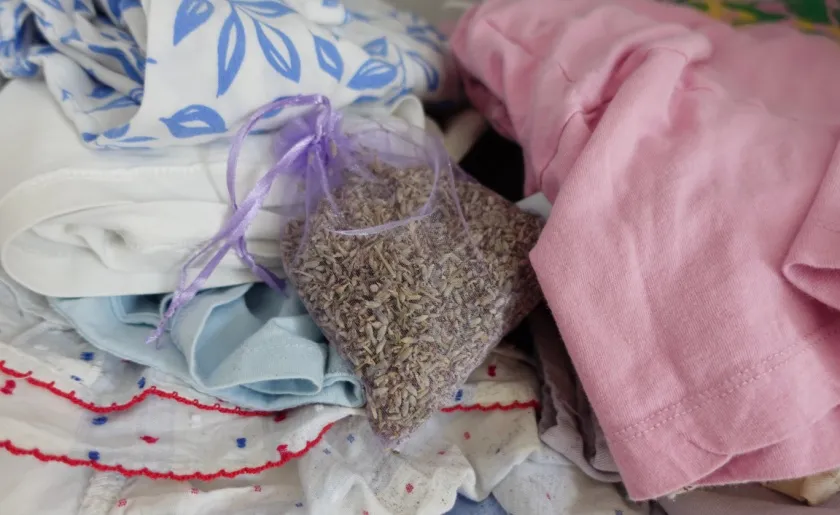
For shoes, enclose them to contain dust or odors, and think about stuffing leather shoes with paper so as to avoid crumpling. For things like cables, batteries and spare bulbs, reserve a shallow, divided bin so you can see everything right away. And if you’re thinking of heavier bins or lower frames, bed risers or a platform bed with generous clearance instantly expand your capacity.
Which containers work under-bed?
What you store should dictate what container you choose. Here are your options.
1. Long rolling bins with a hinged lid
A long, low bin with a hinged or split lid gives you that same easy access while keeping contents protected. Wheels or gliders save both your floors and your back, and the split lid means you can open one end without pulling the whole container out from under the bed.
2. Lidded plastic totes
For less-frequent items, lidded plastic totes are a great all-purpose option. Even in a spotless home it gets dusty under the bed, so covered containers are non-negotiable for bedding, linens and clothing. Clear versions let you see what’s inside at a glance, while solid ones look tidier if the bins are visible from the doorway.
3. Soft fabric storage baskets
For a softer, more decorative look than plastic, reach for fabric storage baskets, such as the canvas or felt open-top bins with sturdy leather or rope handles. Because they have no lid, you can see and grab the contents at a glance, which makes them handy for things you dip into often, like kids’ toys, blankets, or accessories.
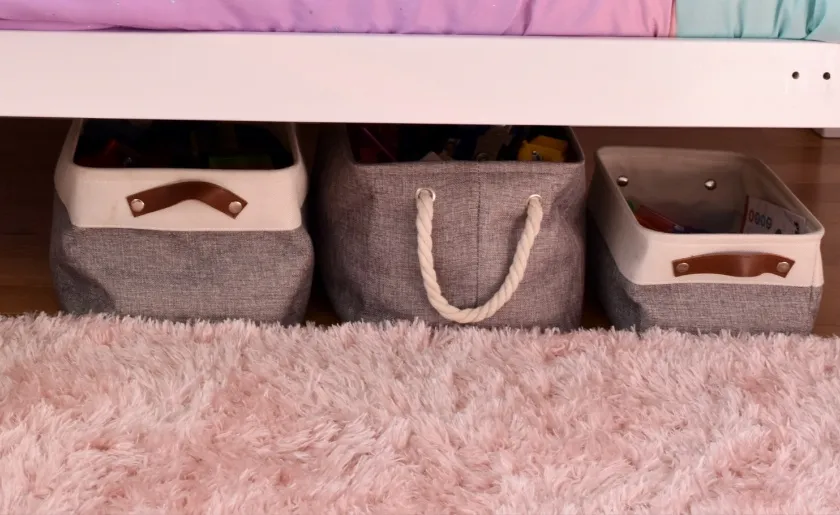
The trade-off is that an open top invites dust, so keep baskets to items you rotate through regularly rather than long-term storage, and choose a firm-sided style that holds its shape rather than slumping under the bed.
4. Vacuum-seal bags for bulky soft goods
Vacuum-seal bags dramatically shrink winter coats, sweaters, comforters and blankets — fill a bag, draw the air out with a vacuum, and a bulky armful compresses into a flat bundle that slides under almost any bed.
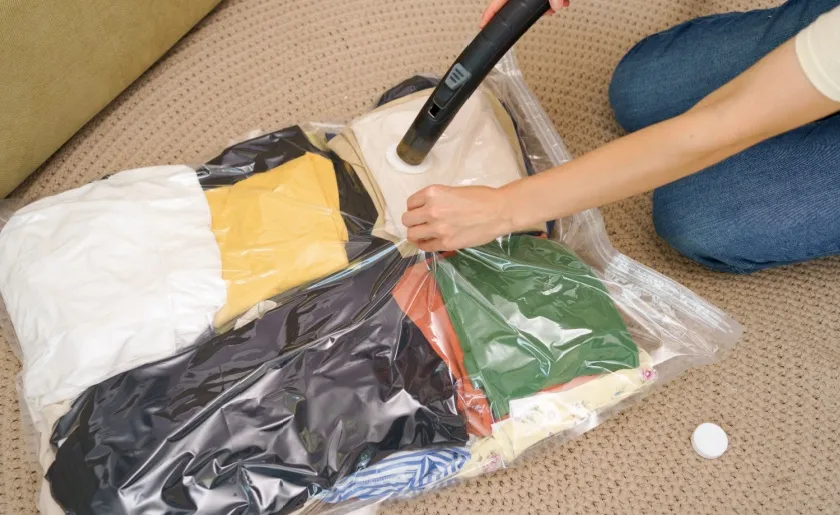
One caution: don’t leave natural fibers sealed for months at a time, since they need to breathe. For long stretches, layer them into cotton bags inside a tote instead.
5. A lockable trunk for valuables
A wheeled trunk with a padlock loop keeps valuables out of sight in a dorm or shared home. Slide it under the bed, run a padlock through the latch, and add a cable lock to the frame if you’re worried about it being carried off.
Clever ways to fill the space
If you’re still not sure what you want to store, here are some good candidates.
1. Stash your luggage (and pack it while you’re at it)
Suitcases and duffel bags devour closet space and sit empty most of the year, so if you have the clearance, slide them under the bed. Better yet, use them as containers: tuck packing cubes, travel accessories, or off-season items inside the luggage so the hollow space isn’t wasted.
2. Gather your shoe collection
The spot beneath the bed is ideal for an overflowing shoe collection. Under-bed shoe organizers come with adjustable dividers that keep pairs separated and unscuffed, plus a clear cover that lets you spot the pair you want without opening everything. Keep your everyday shoes in the closet and reserve the under-bed organizer for out-of-season or special-occasion pairs.
3. Rotate your seasonal wardrobe
Under-bed storage is tailor-made for the twice-a-year clothing swap. Launder off-season clothing before packing it away and tuck in a cedar block, since unwashed fabric spreads odors and attracts moths. When the seasons turn, the in-season clothes come out and the off-season ones go back; a lifesaver in homes with tiny closets.
4. Store spare linens and bedding
If you don’t have a linen closet, the area under the bed is the next best thing for spare sheets, blankets and pillows. Bedding is heavy, so choose a wheeled container for easy pull-out and add a scented sachet or a couple of dryer sheets to keep everything smelling fresh.
5. Make a gift-wrap and craft station
Wrapping paper, ribbons, gift bags, tape and scissors are awkward to store anywhere else. A long, shallow clear bin keeps it all flat, visible and in one place under the bed, then slides out whenever a birthday sneaks up on you.
6. Contain your holiday decorations
Seasonal décor only earns its keep a few weeks a year, so it’s a natural fit for under-bed storage. Label a bin for each holiday, use a dedicated string-light box to prevent tangles, and reach for a zippered tree bag if you have the clearance for an artificial tree.
Under-bed storage in an RV
If you live or travel in an RV, the space beneath the bed is even more precious and it comes with its own quirks. Most RV beds lift up on a gas strut or hinge so you can access the storage compartment from the top, which works but forces you to clear the mattress and any bedding every single time you need something. Full-timers often find that clumsy for daily-use items like clothing.
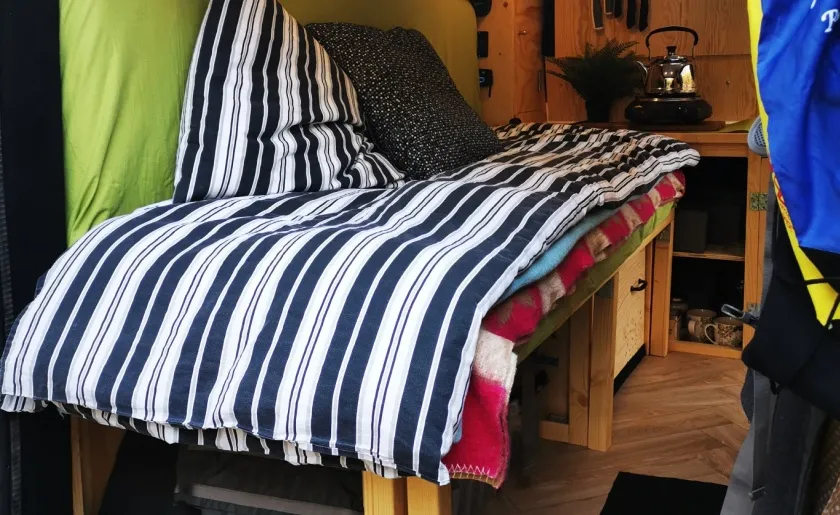
A popular workaround is to open up the bed frame from the side. On many rigs, the vertical side panels of the platform aren’t load-bearing, so owners sometimes cut an access opening along the frame, add drawer tracks, and build simple birch-plywood doors or drawers. That lets you slide clothing totes straight in from the side without lifting the mattress at all.
Before you cut anything, though, examine the structure carefully: those panels sometimes stiffen the whole frame, and removing a brace that’s doing a job can leave the platform flexing under weight. When in doubt, reinforce the bed platform with stronger struts (which also makes a top-lift bed far easier to raise) rather than removing structure outright.
What you should never store under the bed
As tempting as it is to store things under your bed, this is not the best idea for any item. The space beneath your mattress is one of the worst microclimates in your home: dark, poorly ventilated, and warmed by your own body heat every night. That combination is fine for a sealed tote of winter coats, but genuinely damaging for other things.
Keep the following out from under the bed:
- Anything moisture-sensitive or irreplaceable. Photographs, important documents, artwork and paper keepsakes warp, yellow, and grow mildew in humid, unventilated conditions. Leather goods and natural-fiber items are prone to the same fate.
- Food or anything scented that attracts pests. Snacks and open pet food invite exactly the critters you don’t want near where you sleep.
- Valuables and collectibles. Trading cards, fine textiles and antiques need stable temperature and humidity (roughly 65–72°F and 40–50% relative humidity) which the floor under a bed simply can’t provide.
The underlying problem is airflow and moisture. Your body releases humidity as you sleep, and when the space beneath the mattress is packed solid, that moisture can’t wick away — many people discover mildew, or even mold, on the underside of the mattress when they finally flip it. If you do store under the bed, raise the frame a few inches so air can circulate, avoid packing wall-to-wall, keep the bedroom ventilated, and leave a gap between your bins and the mattress. Never seal leather or natural fibers in airtight plastic, and let anything slightly damp dry completely before it goes into a lidded container.
When under-bed isn’t enough: Climate-controlled storage
Under-bed storage can be risky in a demanding climate. In humid regions like the Southeast, the Gulf Coast, anywhere near water, the trapped humidity under a bed can turn into condensation and active mold growth surprisingly fast, even in an air-conditioned bedroom. In hot, dry climates, wide temperature swings crack leather, dry out wood and fade fabrics; in cold northern homes, unheated corners near the floor invite dampness and mustiness.
When the climate isn’t right (or you simply have too much stuff at home), self storage is worth considering.
Climate-controlled units hold a steady temperature (generally between 55 and 80°F) and manage humidity regardless of the weather outside, which protects the belongings a bedroom floor can’t: photos and documents, electronics, leather and natural-fiber clothing, wood furniture, artwork, musical instruments and collectibles. As a rule, climate control is worth it when you’re storing something valuable or sensitive, when you’re storing for the long term, or when you live somewhere with extreme heat, cold, or humidity — which is exactly the situation that makes under-bed storage risky.

Move your everyday off-season rotation under the bed, in other words, and give a proper home to those items that truly require climate-controlled storage. Think of it as an extension of your closet: the safe place for what your home, and the space under your bed, was never designed to protect.
Bottom line
Great under-bed storage comes down to a few honest fundamentals:
- Measure your clearance first;
- Store only sturdy and replaceable items in covered containers sized to fit;
- Respect the airflow so you don’t quietly damage your mattress or your belongings.
Aside from that, keep anything valuable, sensitive, or irreplaceable out entirely, especially in a humid, hot, or cold climate, and give those things the stable conditions of climate-controlled storage instead. Do that, and the space under your bed becomes one of the hardest-working spots in your home, without costing you the things you’d hate to lose.
Frequently asked questions
Is it bad to store things under your bed?
Not if you do it right. The space under your bed is fine for sealed, sturdy, replaceable items like off-season clothes, spare bedding and luggage in covered containers. The problems start when you pack it wall-to-wall, which blocks airflow and traps the moisture your body releases overnight. That can lead to mildew or mold on the underside of the mattress. Raise the frame a few inches, leave a gap between your bins and the mattress, and keep the bedroom ventilated to avoid it.
How much clearance do I need for under-bed storage?
Measure from the floor to the underside of the bed’s side rail, not the base of the mattress. Standard beds offer anywhere from three to fifteen inches. Slim fabric zip bags fit in just a few inches, standard rolling bins want six or more and drawer towers or dressers need a raised or platform bed with a foot or more of clearance. Bed risers are an easy way to add the height you’re missing.
What should you never store under a bed?
Keep out anything moisture-sensitive or irreplaceable: photographs, documents, artwork, leather goods and natural fibers all warp or grow mildew in the dark, poorly ventilated space. Electronics suffer from trapped heat and humidity, food and scented items attract pests, and valuables or collectibles need the stable temperature and humidity that a bedroom floor can’t provide.
How do I keep clothes from getting musty or moth-eaten under the bed?
Launder everything before you store it, since unwashed fabric spreads odors and attracts moths. Use covered containers, tuck in a cedar block or a scented sachet, and make sure items are fully dry before you seal a lid. Avoid leaving natural fibers vacuum-sealed or wrapped in plastic for months, as they need to breathe, so layer them into cotton bags inside a tote.
Is under-bed storage a good idea in a humid or extreme climate?
It’s risky. In humid regions the trapped moisture under a bed can turn into condensation and active mold surprisingly fast, even with air conditioning, while hot-dry swings crack leather and fade fabrics and cold northern homes invite dampness near the floor. Limit under-bed storage to sealed, replaceable items in those conditions, and move anything valuable or sensitive to climate-controlled storage, which holds a steady temperature and humidity year-round.



Moving From a House to an Apartment: What to Expect, How to Downsize & How Self Storage Helps
For some, moving from a house to an apartment is a financial decision. For others, it’s about simplifying life. Maybe the kids have moved out and half the house sits empty, or you’re approaching retirement and no longer want to spend weekends on repairs. Or perhaps you’ve been weighing the cost of buying a home and wondering whether renting simply makes more sense right now.
Family Heirlooms Overload: How to Handle Family Inheritance Without Regret
Handling family heirlooms after a loss requires managing legal authority, emotional pressure and practical logistics at the same time, and the order you take them on matters more than most people expect.
Blanket Storage: The Right Method for Every Space and Season
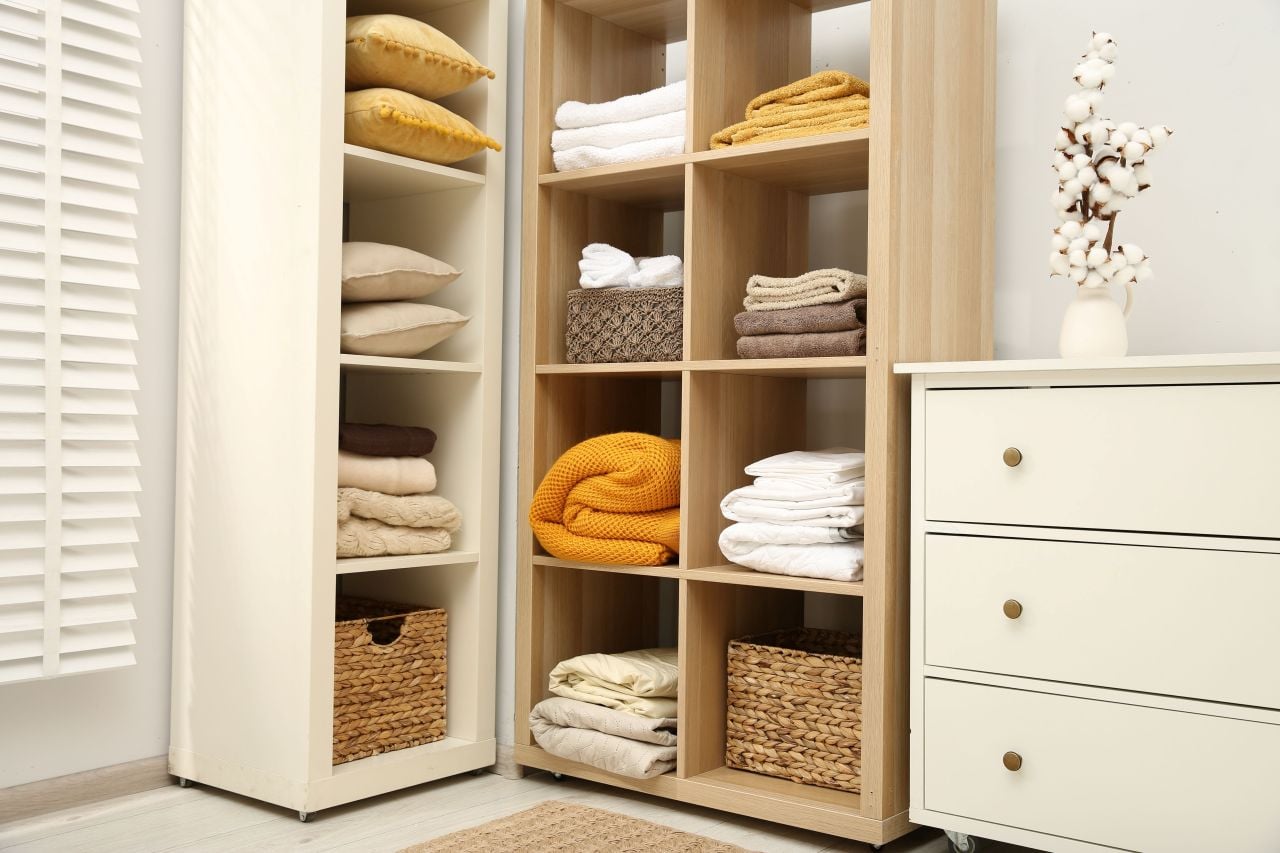
Blankets make our lives cozier, and storing them well is what keeps them soft and comfortable in the long run. Knowing how to store a blanket properly means your favorites come out of storage smelling fresh, feeling the same as when they went in, and lasting years longer than they otherwise would.

Board Game Storage Ideas That Keep Your Collection in Fighting Shape
Nobody warns you that getting into board games usually unlocks a second hobby, the much dreaded one that includes figuring out where on earth to put them. One game becomes a few, expansions start spawning beside their base boxes and before long, board game storage requires as much strategy as whatever is waiting on the other side of those lids.

Storage Locker vs. Storage Unit: What’s the Difference?
A locker and a unit may sound like two names for the same four walls and a lock, and depending on the storage facility, you may even see the terms used that way. However, once you start comparing available spaces, storage lockers tend to occupy the smaller end of the spectrum, while storage units(opens in new tab) give you considerably more room to work with.

Storage Ideas for Small Spaces: 9 Ways to Max Out Your Home
A messy home contains the seeds of its organization. Those seeds are everywhere: the space above doors, under beds, behind sofas and inside furniture can all become storage. Here are the best storage ideas for small spaces, so you can make the most of your cozy home.

Best U.S. Cities to Live Uncluttered: Plano, TX, Offers the Most Room to Breathe
Clutter is in our homes as much as in our heads. Both are shaped by where we live.
How to Organize Your Bathroom: 8 Ways to Stay Tidy
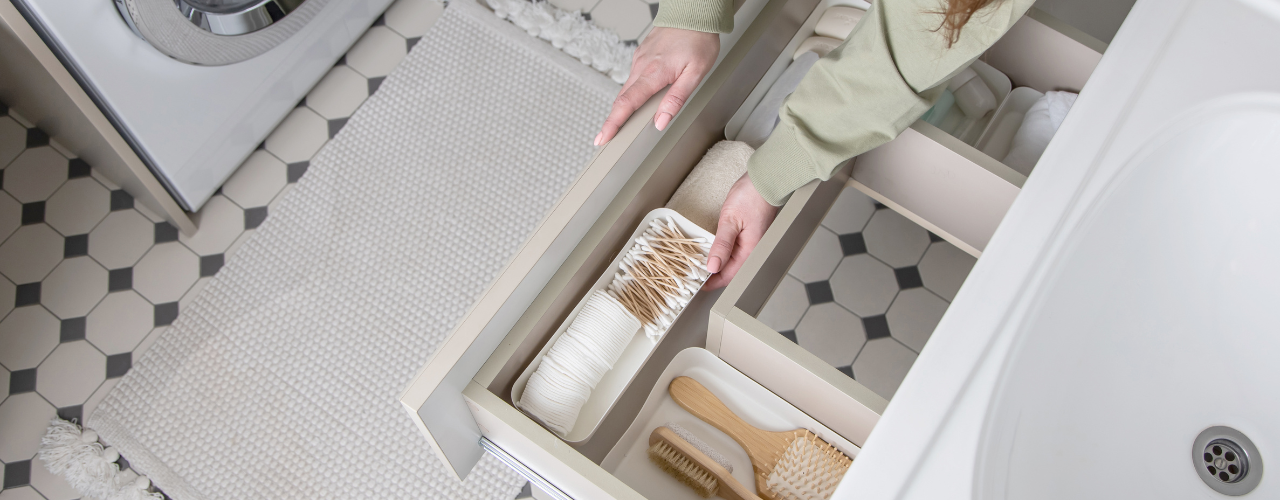
You already know why an organized bathroom is worth the effort, but let us remind you: it makes rushed mornings easier, keeps counters cleaner and just helps get you in the mood to go through your skincare routine like you should. Plus, in bigger households, it helps everyone find what they need. And you know how much a tidy bathroom counts for your self-esteem when a guest or a partner shows up. Luckily, you don’t need a degree to know how to organize your bathroom. The secret is keeping less, giving every item a home and making that home simple to use. Let’s go through some practical steps can help you create a bathroom that stays functional and nice to look at.

How to Use Silica Gel Packets for Storage
Moisture can cause significant damage to items in storage, leading to rust on tools, mold on clothing and warping in documents. Silica gel uses science to fix that. Often found in small packets inside product packaging, silica gel is a desiccant that absorbs moisture from the air, keeping your stored items dry and protected. This guide explains what silica gel is, how it works and how you can use it to preserve your belongings in self storage.