

Vacuum storage bags seem like the perfect solution when storage space is an issue: suck out the air, shrink that pile of winter sweaters into a fraction of the space and suddenly your closet is no longer overflowing. For the right types of clothes or other household linens, vacuum bags are actually quite handy and a great way to save closet space.
However, vacuum sealing everything in sight is a fast track to wrecked cashmere and permanently squished blazers. Before you go full storage-overhaul mode, find out what to seal, what to protect and how to do it without regrets.
When does vacuum sealing clothes actually make sense?
The strongest use case, by a mile, is seasonal wardrobe rotation. Packing summer clothes away for winter, and vice versa, is what vacuum bags were made for. The timeline is predictable, the clothes are everyday sturdies like T-shirts, jeans and base layers, and you’re not storing them forever.
If you’re short on space more generally, vacuum bags can be genuinely useful for spare towels and guest bedding(opens in new tab), and kids’ clothes they’ve outgrown but you’re holding onto. One honest caveat though: don’t vacuum-pack things just to avoid getting rid of them. Declutter first(opens in new tab), then compress what’s worth keeping.
Moving to a new home is another situation where vacuum sealing clothes makes things easier. They cut down the volume of soft goods, keep clothes cleaner during the move and let you group and label bags by person or room. Just remember that compression reduces volume, not weight. Twenty pounds of clothes still weigh twenty pounds, and a tightly packed moving box can still wreck your back.
More recently, a lot of travel influencers are showing us how to vacuum seal clothes when traveling so that you can pack more in one suitcase. However, if you’re planning to do that, make sure you have access to a clothes iron and, again, don’t forget that vacuum-sealing clothes doesn’t make them any lighter, so you probably still can’t pack a lot in one suitcase as it’s going to be too heavy.
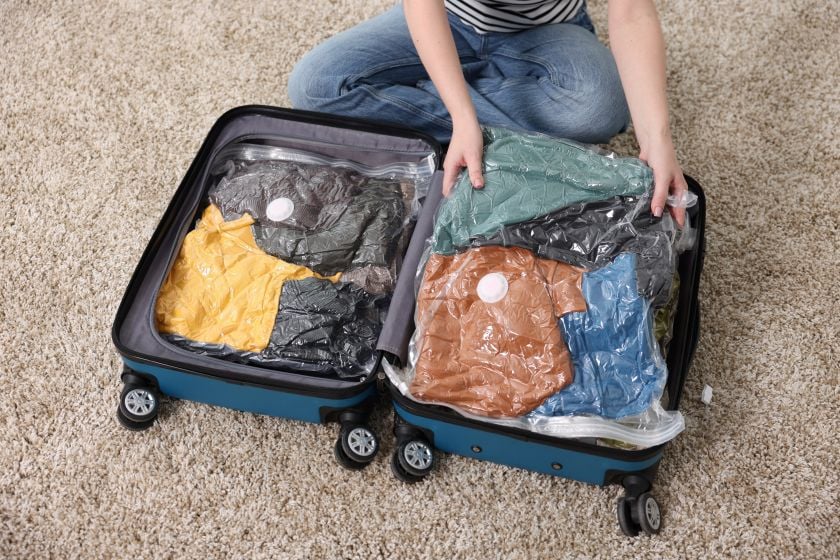
It’s also worth knowing, for travel, the difference between the products out there. Traditional vacuum bags need a pump or vacuum cleaner to seal, which isn’t exactly practical mid-trip. Roll-up compression bags — the kind you just roll and squeeze shut — are much more suitcase-friendly.
Compression packing cubes are another option, offering lighter compression with easier access. All of them save space for bulky casual clothes, but airlines also weigh up your baggage, so reducing volume alone is not necessarily saving you the extra costs.
Which clothes can you vacuum seal, and which ones should you absolutely not?
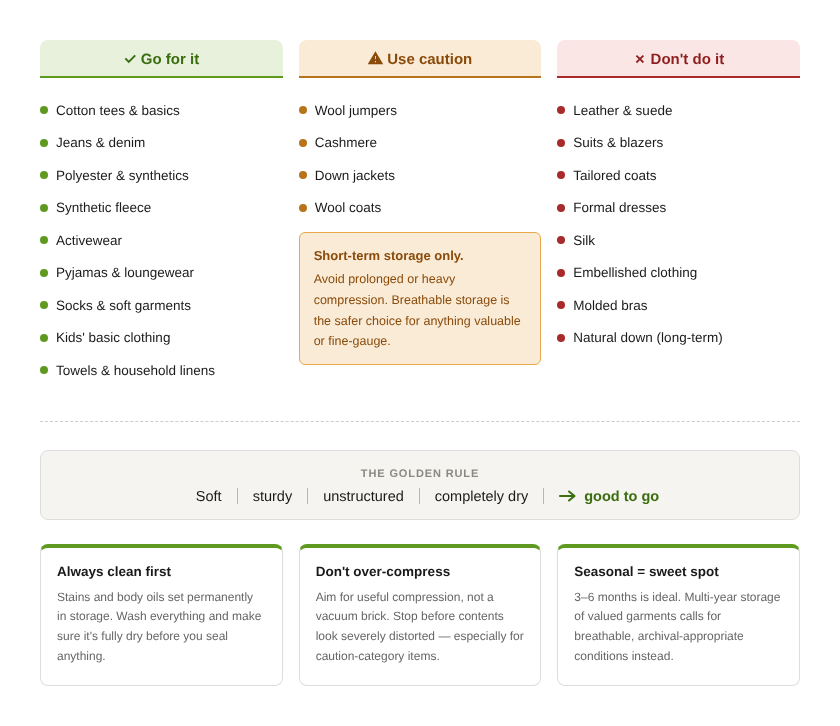
The golden rule of thumb here is: soft, sturdy, unstructured and completely dry. If a garment checks all four boxes, it’s probably a good candidate.
Cotton basics, jeans, denim, polyester, synthetic fleece, activewear, pajamas and socks handle compression without complaint. Household linens and towels are also great candidates, especially since they’re bulky and don’t need to look pristine after compression.
Wool and cashmere, on the other hand, need a lot more attention. They’re not an automatic no, in the sense that you can vacuum seal them for short periods of time – for example, while moving. However, it’s not the right method to store them for months on end. Everyday wool sweaters in short-term storage carry lower risk. Cashmere, fine-gauge knitwear or anything valuable? Store it in something breathable instead. The loft and structure of quality knitwear can be affected by prolonged heavy compression, and it’s not worth the gamble.
Down jackets are similar — but with an important distinction. Synthetic insulation tolerates short-term compression pretty well and bounces back. Natural down is trickier. Down works by lofting, trapping air to insulate. Prolonged heavy compression can interfere with that, and while many down garments recover, the safest long-term approach is to store them loose in a large breathable bag rather than vacuum-flattened.
Then there are the categories that are just a hard no. Leather and suede can crease permanently under pressure and, unlike fabric wrinkles, those creases don’t steam out. Suits, blazers, tailored coats and anything with shoulder construction, interfacing or padding can have their structure distorted by compression in ways that are difficult or impossible to reverse.
Silk compresses into stubborn, hard-to-remove creases. Embellished clothing — anything with sequins, beads or hardware — is risky both because the embellishments can press into surrounding fabric and because they can puncture the bag itself. These all need garment bags, breathable boxes or hangers and not vacuum bags.
How long can you leave clothes vacuum sealed?
There’s no single expiry date. The real answer depends on the fabric type, garment construction, how much compression you used, how humid conditions were when you packed, the temperature during storage and how long it stays sealed. All of those factors interact.
For moving or travel, the risk is low for suitable garments because the timeline is short. Seasonal storage over three to six months is a practical sweet spot — robust, compatible clothing handles a predictable rotation well. For long-term or multi-year storage, vacuum compression becomes a less attractive option. For anything valuable, made of natural fibers, structured or dependent on loft, breathable storage is the smarter call.
How to vacuum seal clothes without ruining them
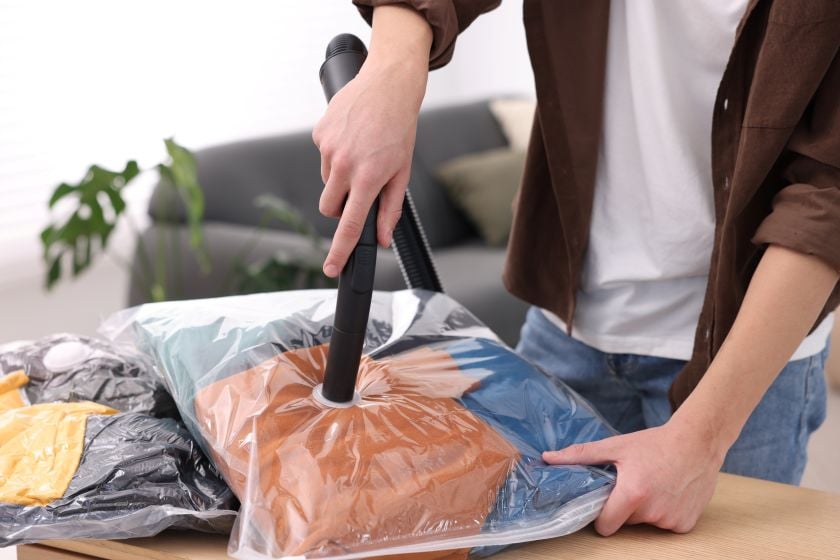
Before you reach for the bags, do a quick sort: seal, store normally or donate. Don’t spend storage space preserving things you won’t wear again. Once you’ve narrowed it down, wash everything. Stains, body oils and food residue can set permanently during storage – nothing goes into a vacuum bag dirty.
After washing, make sure everything is completely dry. Check cuffs, pockets, hoods, padded areas and thick seams. Don’t pack clothes fresh from steaming if residual moisture is still in there.
When you’re ready to pack, fold rather than stuff. Broad, relatively loose folds reduce the severity of crease lines; stuffing creates sharper compression points. Turn any hard or sharp components (zippers, buttons, hardware) inward where possible so they don’t puncture the bag or press into neighboring fabric. Don’t overfill; follow the manufacturer’s guidance around the zipper and valve, or the bag won’t seal properly.
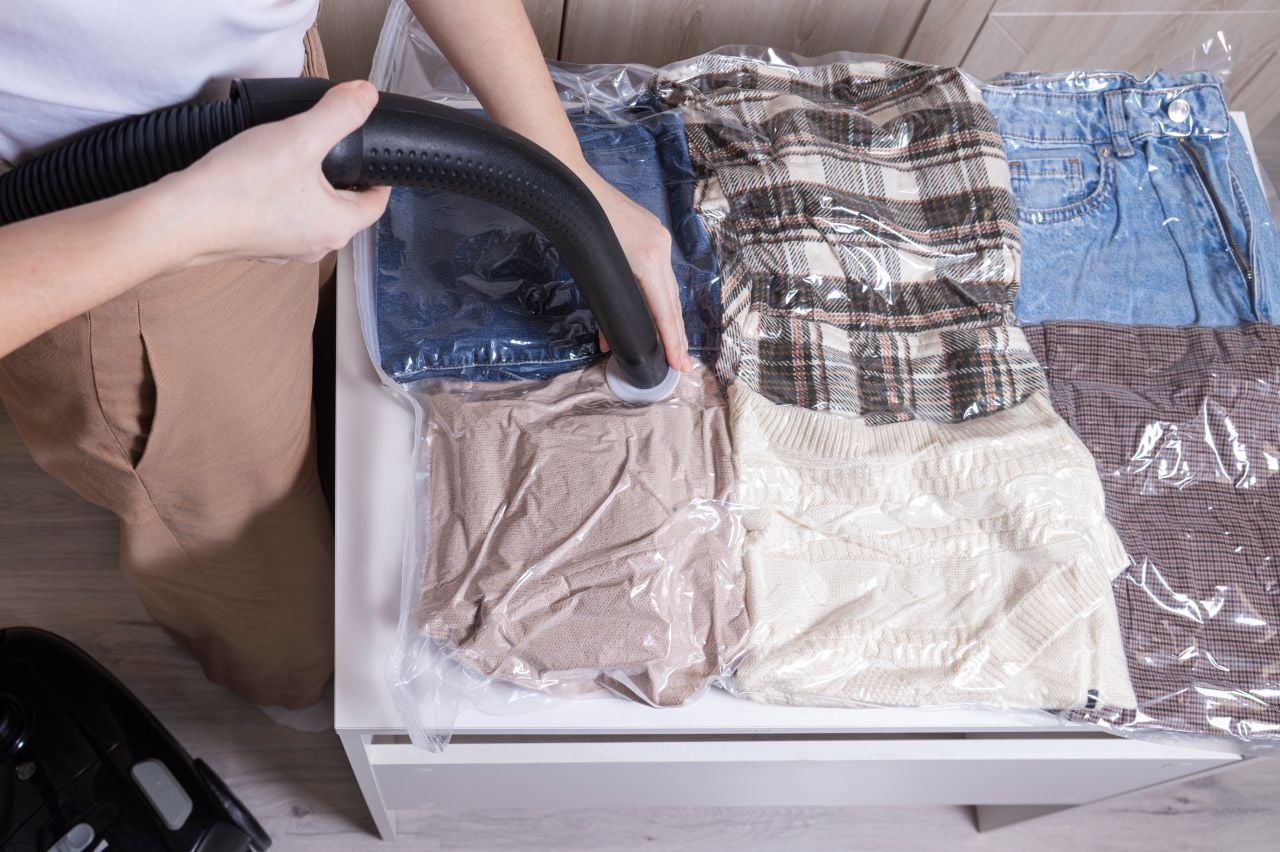
When you remove the air, go gradually. The goal is useful compression, not a vacuum-hard brick. Stop before contents look severely distorted, and for anything in the caution category, use light rather than maximum compression. Once sealed, check that the bag stays flat. If it reinflates after a few minutes, there’s a leak somewhere (zipper, valve, or a puncture).
Label everything before you put it away: contents, season, date packed. Then store in a cool, dry spot away from heat, sunlight, damp floors and sharp surfaces. Check on the bags periodically, especially if they’re somewhere prone to temperature swings.
Can clothes get moldy in vacuum bags?
Yes. The waterproof exterior of the bag doesn’t mean damp clothing is safe inside it. Once moisture is trapped in there, it has nowhere to escape. The warm, confined environment can absolutely encourage mold and mildew growth.
Risk factors include clothes that weren’t fully dry at packing, humid conditions when you sealed the bag, existing mildew or musty odors, storing bags in warm or damp locations and temperature fluctuations that cause condensation inside the bag. Prevention is simple: pack only clean, completely dry clothes, store in a cool dry spot and check on bags periodically.
Do vacuum bags keep moths out?
The physical seal does create a barrier that helps but it’s not a guarantee, especially if garments are already carrying moth eggs when you seal them. That just concentrates the problem inside the bag. Always inspect and clean everything before packing. Check seams and folded areas carefully — those are where eggs tend to hide.
Using vacuum bags in a self storage unit
Vacuum bags and self storage(opens in new tab) can work really well together. For seasonal wardrobes, household linens, spare bedding and outgrown kids’ clothing, they’re a strong fit. Compression can meaningfully reduce the unit size you need(opens in new tab), which has a direct effect on monthly cost.
The how matters though. Place sealed bags inside sturdy plastic bins rather than leaving them loose on the floor. This protects against accidental punctures and any moisture that might collect at floor level. Stack those bins on shelving or pallets and keep them away from tools and furniture corners.
Moisture sealed inside bags becomes a much bigger problem in a hot, humid unit. If you’re storing sealed bags for more than a season, or if the contents are things you’d genuinely miss, a climate-controlled unit(opens in new tab) is worth the extra cost.
How to take clothes out of vacuum storage
Open bags fully and remove everything. Inspect for damp, mildew or pest activity, shake items out to loosen compression fold, and let garments relax and air naturally before you assess them. For anything that needs it, steam or iron following care labels.
For down and insulated items specifically, give them real time to regain their loft — they often need a few hours to fully recover. And if anything smells musty or damp, don’t reseal it until you’ve figured out why.
FAQs
Does vacuum sealing clothes ruin them?
For suitable garments stored temporarily, no. For leather, suits, silk, down or anything delicate, compression can cause permanent creasing, distortion, or loss of loft, so the fabric type really does matter.
How long can you vacuum seal clothes?
There’s no universal limit — it depends on the fabric, compression level, storage conditions and length of time. Seasonal storage of a few months is the practical sweet spot. For valuable garments, multi-year storage is better done in breathable bags.
Can you vacuum seal winter clothes?
Generally yes, for sturdy synthetic and cotton winter clothing. Avoid heavy compression for natural down or structured wool coats.
Can you vacuum seal wool or cashmere?
Wool with caution — everyday wool is lower risk for short periods. Cashmere and fine knitwear are genuinely better off in breathable containers.
Can you vacuum seal down jackets?
Synthetic insulation tolerates short-term compression reasonably well. Natural down can also tolerate vacuuming a few weeks or so, but is better stored loosely in a large breathable bag, since prolonged compression can affect its loft.
Can clothes get moldy in vacuum bags?
Yes, if they weren’t completely dry when packed, or if the storage environment is damp and warm. Pack only clean, dry clothes and store in a cool dry location.
Should you wash clothes before vacuum sealing?
Always. Stains, body oils, food residue and other stains can set permanently during storage and even attract pests.
Can you put vacuum-sealed clothes in a storage unit?
Yes, absolutely. Store bags inside sturdy bins, keep them off the floor and away from sharp objects. A climate-controlled unit significantly reduces moisture and temperature-related risk.


Should You Vacuum Seal Clothes? Everything You Actually Need to Know
Vacuum storage bags seem like the perfect solution when storage space is an issue: suck out the air, shrink that pile of winter sweaters into a fraction of the space and suddenly your closet is no longer overflowing. For the right types of clothes or other household linens, vacuum bags are actually quite handy and a great way to save closet space.

ATV Storage Guide: How To Store and Winterize Your ATV
The riding season is winding down, and that’s when most people start thinking about ATV storage. Keeping an ATV at home isn’t always easy. Garages fill up fast, sheds are rarely built for a four-wheeler and some apartment complexes and homeowners associations don’t allow one in the parking lot or driveway.

21 Garage Storage Ideas: Free Up Your Floor Space
Garage storage is more important than it sounds, because it helps you move things off the floor and onto walls, ceilings and rolling units. In time, this makes a big difference and saves you from awkwardly tiptoeing around stuff you’ve left on the ground. Use the garage storage ideas below and you’ll build a setup that fits what you own, how often you use it and how much space you have.
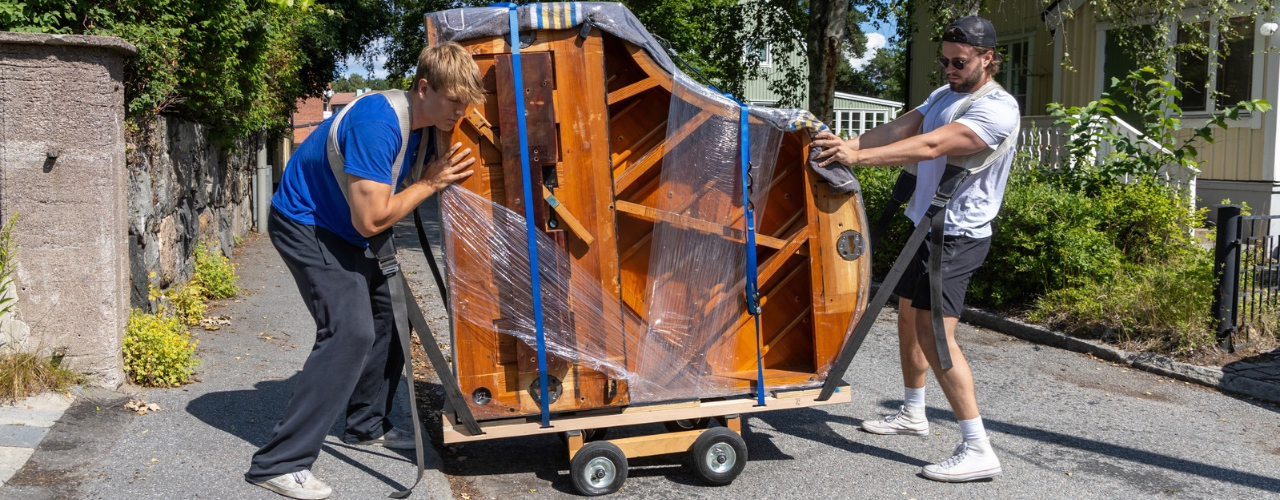
How to Move a Piano: Moving, Insurance & Storage Guide
Before we get into the nitty-gritty of the matter, let’s agree on the simple fact that, unlike other types of relocation conundrums, moving a piano is just a very cool thing to see, let alone accomplish. The labor that makes piano concerts possible and keeps legendary instruments alive, a piano relocation takes meticulous planning, special equipment and a crew that really knows their stuff. That is, unless you’re set on recreating the piano crash of a classic Looney Toons gag.
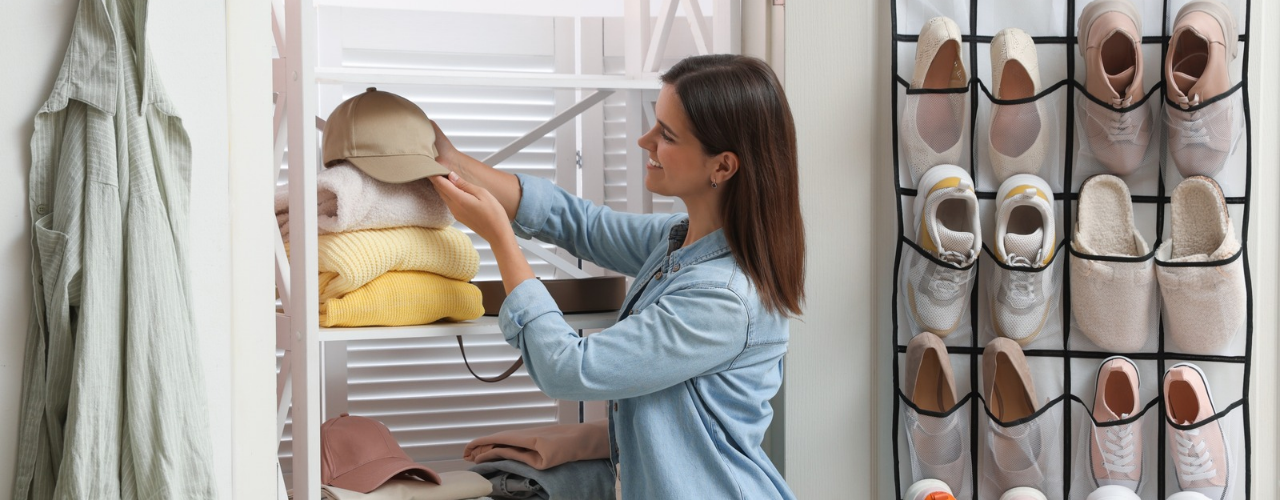
Hall Closet Organization: 30 Ideas for Simpler Storage
Be it built-in, freestanding, or wholly improvised, your hall closet works best when you can grab anything quickly and put it back just as fast. These 30 ideas for organizing your hall closet walk you through planning, deciding where things go, choosing the right containers and way more. By the end, you’ll even know what to do when your closet still runs out of room.

Holiday Decoration Storage: A Guide for Every Season
Taking down the holiday decorations is never as exciting as putting them up. One minute, your home is looking wonderfully festive, and the next, you’re trying to remember which box the Christmas ornaments came in while wrestling with a string of lights that managed to tie itself into a dozen knots. With every holiday bringing its own collection of decorations, a good holiday decoration storage system helps you keep a growing collection under control.

Where to Get Moving Boxes in Philadelphia
Philadelphia’s historic charm can put your patience to the test on moving day. Between cobblestone streets, narrow rowhouse entrances and the occasional pothole, you don’t want to worry about not having enough boxes on top of it all. Start gathering your moving boxes early and you’ll have one less box to check off on packing day. Luckily, you have plenty of places to get your boxes from.

Art Supply Storage from A to Easel
Paint tubes, brushes, sketchbooks, scraps of paper, beads, half-used rolls of tape and that one very specific pen you swear you just had in your hand. Building up an art supply collection is rarely a neat process, and each new material brings its own storage needs.
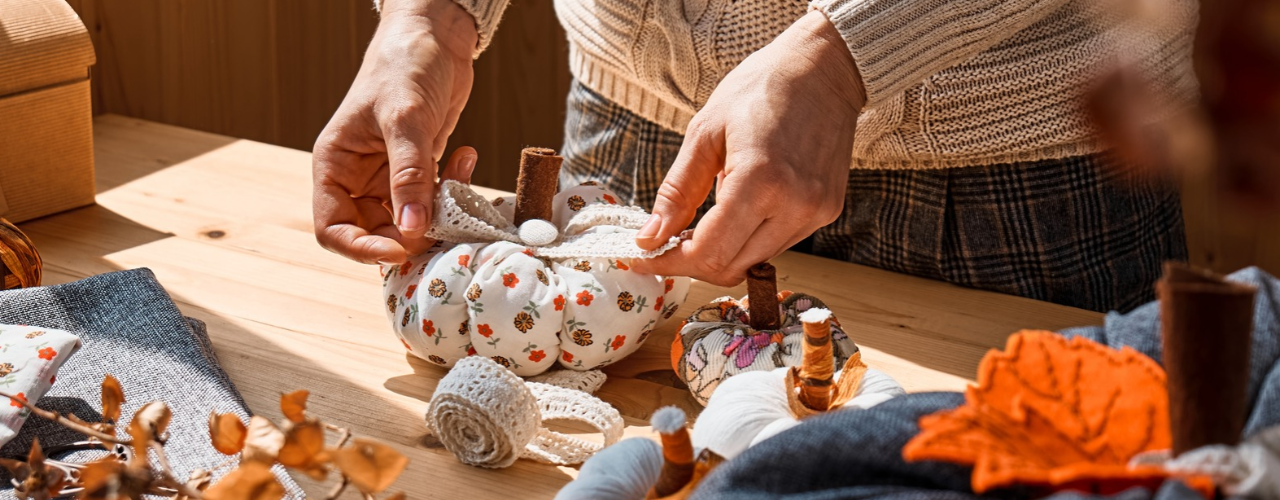
Scary Good DIY Halloween Decorations That Won’t Haunt Your Wallet
A few floating candles in the hallway, a family of ghosts by the front door and a suspicious number of bats climbing up the bedroom wall can make October feel a whole lot spookier. While Halloween stores are full of tempting finds, some of the best DIY Halloween decorations can come from things you already have tucked away in drawers, closets or the recycling bin.