


Key Takeaways
- In Q2 2025, self storage sales totaled $755 million nationwide.
- Roughly 9.2 million square feet of self storage space changed hands.
- The average sale price clocked in at $123 per square foot, up 19% compared to the same period last year.
- New York City posted the quarter’s largest transaction — $50 million for a 92,000 square-foot facility — and the highest price per square foot at $545.
- South San Francisco — one of the most undersupplied markets in the US — followed with a hefty $349 per square foot.
- REIT buying activity is concentrated in the southern markets — particularly Texas and Florida — as well as in Pennsylvania. Secondary and tertiary markets also captured investor interest, including NYC suburbs/White Plains; Bay Area — South Bay and Chicago suburbs.
- REITs paid a premium, averaging $157 per square foot – well above non-REITs’ $112.
The self storage sector held its ground in Q2 2025, even as deal pipelines narrowed. Despite higher borrowing costs and tighter credit conditions, self storage continues to prove resilient as an “all-weather” asset class. The market’s trajectory is less about rapid expansion and more about precision — capital is flowing into dense urban infill locations with high replacement barriers and into fast-growing suburbs where household formation consistently outpaces new supply. These dynamics are helping sustain occupancy, reinforce pricing power, and support disciplined cap rates.
Nationwide transaction volume totaled $755 million, underscoring that capital remains active in the space — though deployed more selectively than in prior years. Roughly 9 million square feet of rentable space changed hands during the quarter, slightly below last year’s level. Meanwhile, the average price per square foot rose to $123, up 19% from Q2 2024, as investors concentrated bets on fewer, targeted acquisitions.
Against this backdrop of selective activity, several cities stood out in Q2 not only for transaction size but also for record-setting valuations. According to the latest StorageCafe Quarterly Sales Report, powered by Yardi Matrix data, markets such as Houston, TX, and New York City, NY continue to draw capital on the back of strong demand, solid occupancies, and active residential markets.
By examining sales activity, inventory levels, and per-square-foot pricing, we’ve identified which markets captured the most attention in Q2 — and where investor confidence in storage remains strongest.
In Q2, 70% of REIT acquisitions landed in the Sun Belt
While non-REITs lead on sheer transaction numbers in Q2 2025 — with self storage companies and smaller operators holding approximately 85% of the acquisitions market – REITs show resilience and targeted focus. That deal discipline came with a premium: REITs paid an average of $157 per square foot, well above the $112 paid by non-REIT buyers, reflecting a tilt toward infill locations and portfolio assets along migration corridors.
REIT buying in Q2 clustered in a handful of proven markets — especially the Sun Belt — where strong consumer interest meets economic opportunity and a historically favorable development backdrop. Texas set the pace with eight deals (916,000 square feet), heavily concentrated in Houston and New Braunfels. Florida was the second engine: Public Storage acquired a three-asset portfolio in Orlando (Kissimmee), plus Tallahassee and Panama City Beach, underscoring conviction in migration-driven demand.

Texas appeals to both REIT and non-REIT investors, with non-REITs closing 38 transactions with a combined value of $45 million. California, by comparison, recorded fewer deals — 13 involving non-REITs and one by a REIT — but together these transactions generated $149 million in sales volume.
Where self storage is trading strongest in Q2 2025: Urban scarcity meets suburban certainty
The standout cities of Q2 reveal two very different — yet equally powerful — forces driving valuations. In dense urban and coastal markets, where land is irreplaceable and approvals are notoriously slow, storage properties are trading at prices comparable to prime multifamily. New York City ($545 per square foot) and South San Francisco ($349 per square foot) are clear examples of this scarcity premium.
Meanwhile, in fast-growing suburbs and select Midwest nodes, demographic momentum is more than enough to absorb elevated supply. Places like Canyon, TX ($279 per square foot) and Oregon, WI ($271 per square foot) illustrate how population growth, household formation, and constant mobility can sustain pricing on par with the nation’s most constrained metros.
These are the ten cities with the largest self-storage sales volumes in Q2.
1. New York City, NY — $50M in self storage sales
Scale traded: 91,700 square feet
Price: $545 per square foot (highest of the quarter)
Self storage supply: 2.4 square feet per capita
New York City recorded both the quarter’s largest transaction and the highest valuation per square foot. Here, Carlyle Group paid $50 million for a CubeSmart facility in Brooklyn’s East Flatbush, acquired from Cayre Equities. At more than $545 per square foot, the deal underscores how dense, space-constrained markets continue to command luxury-level prices.
Brooklyn is a textbook example of investors working with existing stock. The borough has just 1.65 square feet of self storage per resident and ranks second nationwide for adaptive reuse, trailing only Chicago in facilities converted from other building types. It also helps that the New York-Newark-Jersey City is America’s hottest self storage market in 2025.
From an underwriting perspective, buyers are paying for the certainty of a facility in a tight market — and there are a few factors making demand steady, including stable employment, constant moves, and chronic housing constraints. Add in a population growth of about 2% since 2014, and storage demand is bound to stay resilient.
2. Walnut Creek, CA — $47M in self storage sales
Scale traded: 220,240 square feet (43% of city inventory)
Price: $213 per square foot
Self storage supply: 2.5 square feet per capita
Walnut Creek, an affluent East Bay suburb, saw nearly half of its storage inventory change hands in a single quarter. The trade behind that figure: Ancora Group Holdings acquired a facility branded by Extra Space Storage at 1925 Oak Grove Rd. for $47 million. At about $213 per square foot, the pricing reflects investor confidence in a market that has grown its population by about 6% over the past decade, and has recently been named as one of the richest retirement towns in the U.S.
Plus, while California keeps up self storage construction in 2025, Walnut Creek stands out for its tight entitlement process. New storage development faces lengthy approvals, so investors underwrite higher entry prices for existing stock here because they can count on stability: wealthy households, limited new supply, and consistent regional mobility.
3. Houston, TX — $39.4M in self storage sales
Scale traded: 410,390 square feet
Price: $265 per square foot
Self storage supply: 6.9 square feet per capita
Houston logged over 410,000 square feet of trades across multiple facilities, including two former Amazing Spaces assets bought by SmartStop Self Storage REIT — one at 3130 Southwest Fwy, the other at West Holcombe Blvd. With deals clearing around $265 per square foot, Houston demonstrates how a large, diversified market can support high valuations even with nearly 7 square feet of storage per capita. The city’s population has grown about 6% since 2014, feeding into sustained demand.
Here, the underwriting logic rests on scale and churn. Houston is one of the most dynamic labor markets in the country, with constant job creation in energy, health, and professional services. That employment base translates into population mobility — people moving in, moving out, or switching apartments — all of which create storage demand. Even with an above-average supply, investors are confident that steady turnover will keep units full.
4. Spring, TX — $35.3M in self storage sales
Scale traded: 236,740 square feet
Price: $149 per square foot
Self storage supply: 7.5 square feet per capita
Spring, a fast-growing suburb north of Houston, accounted for $35.3 million in trades, including two major facilities on Louetta Rd. and Holzwarth Rd. acquired by SmartStop REIT. With per-square-foot pricing of $149, these transactions show investor appetite even in markets with 7.5 square feet per capita, higher than the national average.
Population growth here has been exceptional — about 22% since 2014 — making storage essential infrastructure for new households. Spring sits along The Woodlands/Exxon employment corridor, which continues to attract higher-income residents. Investors underwrite deals knowing that household formation and mobility will outpace new construction.
5. South San Francisco, CA — $30.3M in self storage sales
Scale traded: 86,610 square feet
Price: $349 per square foot
Self storage supply: 1 square foot per capita
South San Francisco is one of the most undersupplied cities in the U.S. at just 1 square foot per capita. It also had one of the priciest acquisitions of Q2. In June 2025, $30.3 million sale of the Extra Space-branded facility at 345 Shaw Rd. cleared at $349 per square foot, making it one of Q2’s most expensive trades.
The economic logic comes from land use entitlement friction. As a biotech hub with over 250 life-science companies and 12 million square feet of labs, land competition is fierce. Investors underwrite at high entry prices here because they are paying for scarcity, not growth. With so little supply, even a flat or declining population can support premium storage values if turnover and affluence remain.
6. Pensacola, FL — $27.1M in self storage sales
Scale traded: 299,660 square feet
Price: $91 per square foot
Self storage supply: 11.6 square feet per capita
Pensacola saw two MyPlace Self Storage assets change hands for a combined $27.1 million, covering nearly 300,000 square feet. That’s $11 million for a facility at 6155 North Palafox Street and $16 million for a property on 2285 West Navy Blvd. On a per-square-foot basis, pricing reached $91, solid for a market with 11.6 square feet per capita — far above the national average. Still, the city’s population has grown by about 3% since 2014, and seasonal flows keep facilities busy year-round.
This is where underwriting looks beyond supply numbers. Pensacola’s coastal lifestyle and heavy military presence (Naval Air Station Pensacola anchors the local economy) create constant household turnover. Add RV and boat storage needs, and even a “high-supply” market sustains strong rent rolls. Here, investors are paying for cash-flow resilience. Labor and military mobility, more than population growth alone, explain why storage assets remain attractive at premium pricing.
7. Sonoma, CA — $21.9M in self storage sales
Scale traded: 72,070 square feet
Price: $304 per square foot
Self storage supply: 10.9 square feet per capita
Sonoma’s $21.9 million sale of an Extra Space facility at 155 Fremont Drive reflected a $304 per square foot valuation. With 10.9 square feet per capita, Sonoma is well above the national supply average, yet pricing soared. The city’s affluent households, second-home owners, and downsizers create a sticky demand base that tolerates higher storage rents.
The driver here also comes from policy-driven scarcity, as Sonoma’s Urban Growth Boundary, extended by Measure W through 2040, sharply limits outward expansion. That means entitlements for new storage are heavily constricted. Investors are effectively paying for barriers: wealthy residents plus guaranteed scarcity equals premium valuations, even without growth.
8. Cypress, TX — $21.5M in self storage sales
Scale traded: 259,100 square feet
Price: $95 per square foot
Self storage supply: 7.6 square feet per capita
Cypress logged $21.5 million in trades, including Blackhorse Storage on House Hahl Rd. and a smaller Curio Storage facility on Spring Cypress Road. At $95 per square foot, pricing looks modest compared to coastal markets, but still robust for a suburban node with 7.6 square feet per capita. Population growth has been strong — Harris and Montgomery counties remain among the fastest-growing in the country — fueling steady absorption.
Therefore, Cypress banks on growth certainty, as constant household formation and smaller average apartment sizes ensure demand. Investors underwrite here knowing they can compete on visibility and operational execution. Plus, household incomes are above average, which stabilizes rent rolls. And even with a higher supply, mobility and demographics ensure that storage utilization stays high.
9. The Woodlands, TX — $20.5M in self storage sales
Scale traded: 106,850 square feet
Price: $192 per square foot
Self storage supply: 2.9 square feet per capita
The Woodlands saw SmartStop REIT acquire a premium facility at 18250 I-45 South, formerly under Amazing Spaces, for $20.5 million. At $192 per square foot and 2.9 square feet per capita, the deal reflects investor confidence in a wealthy, master-planned community that has grown its population by about 14% over the past decade.
Here, storage demand stems from affluence as much as necessity. Median household income is about $140K, and residents likely use storage for lifestyle reasons — recreation gear, seasonal furniture, and transitional housing needs. From an underwriting view, the attraction is rate integrity: even if the wider Houston metro is oversupplied, The Woodlands’ demographics and income depth keep facilities full and rents resilient.
10. Kissimmee, FL — $20.2M in self storage sales
Scale traded: 170,450 square feet
Price: $119 per square foot
Self storage supply: 5.8 square feet per capita
Kissimmee, near Orlando, posted $20.2 million in trades across 170,000 square feet, including an Extra Space facility at 1150 Brand Lane. With $119 per square foot pricing and 5.8 square feet per capita, the market shows that investors see long-term upside in Central Florida’s exponential demographic growth. Kissimmee’s population has surged by about 25% in the past decade, which is likely to drive up self storage demand.
After all, Osceola County is one of Florida’s fastest-growing counties, with consistent in-migration and suburban expansion. Add Orlando’s tourism engine, which brings constant mobility, and storage demand looks durable. Unlike undersupplied cities, Kissimmee is less about scarcity and more about growth certainty. Investors accept higher supply levels because they believe continued population gains will absorb it.
Smaller markets that command big prices
Not all of Q2’s standout valuations came from big cities. In fact, several smaller markets posted eye-catching numbers that rivaled coastal trophy trades. Naples, Florida, saw just a single $3.7 million deal, but the property cleared at more than $303 per square foot. With a wealthy retiree base, constrained coastal land, and high seasonal turnover, Naples exemplifies how even modestly sized assets in affluent, supply-tight regions can trade at luxury-level pricing.
In Texas, Canyon clocked in at nearly $279 per square foot on an $18 million sale — a striking figure for a Panhandle market. While Canyon lacks the scale of Houston or Dallas, it benefits from steady population growth, university demand anchored by West Texas A&M, and limited new storage deliveries. For buyers, that combination of reliable absorption and low competition justifies paying up.
Perhaps most surprising were Oregon, Wisconsin, ($271 per square foot), where one acquisition on 4645 WI-138 made up 58% of the total inventory, and Pawling, New York, ($197 per square foot) on 133 NY-22. Both towns are small, but each has a profile that investors covet: affluent households, limited developable land, and proximity to larger metros (Madison for Oregon; New York City suburbs for Pawling). These cases underscore a broader Q2 theme — scale of the market mattered less than certainty of demand. Investors proved willing to bid aggressively when demographics, barriers, and stability aligned, even far outside the nation’s headline cities.
For added perspective on staying competitive in today’s self-storage market, we turned to Doug Ressler, Manager of Business Intelligence at our sister company, Yardi Matrix.
Doug Ressler, Business Intelligence Manager at Yardi Matrix

Doug Ressler, Business Intelligence Manager at Yardi Matrix
Where should investors be looking for the strongest growth opportunities in self storage?
Investors should focus on underserved markets with limited storage space per capita, such as Plantation, Florida, because unmet demand in these areas can translate into stronger performance and more attractive returns.
How can operators stay competitive in a crowded self storage market?
To remain competitive, operators need to prioritize operational efficiency and adopt technologies that streamline management processes, improve the customer experience, and help control costs.
What should investors be mindful of when it comes to future debt obligations?
It is important for investors to monitor interest rate trends carefully and prepare for refinancing challenges, especially as a large wave of loans is set to mature in the late 2020s.
What’s an effective way to gain exposure to self storage without taking on all the operational work?
One option is to consider REITs or joint-venture partnerships, which allow investors to gain diversified exposure to the sector while reducing the day-to-day operational burden.
Conclusion
Q2 2025 proved that self storage can thrive even in a thinner market. Capital concentrated in fewer, higher-conviction deals, rewarding infill cities where replacement is impossible and growth corridors where population gains overwhelm supply metrics. From Brooklyn at $545 per square foot to Canyon, Texas, at $279, the common thread was certainty of demand.
Methodology
This analysis was done by StorageCafe, an online platform that provides storage unit listings across the nation. The data on property sales, self storage prices and self storage inventory was taken from Yardi Matrix, StorageCafe’s sister division and a business development and asset management tool for brokers, sponsors, banks and equity sources underwriting investments in the multifamily, office, industrial and self storage sectors.
To identify the top cities by total sales volume and square footage, as well as the highest-value sales transactions, we analyzed all U.S. cities for which sales data was available.
Notes on data timeliness:
- Reporting Period: All figures and trends discussed in this report pertain specifically to Q2 2025 (April–June 2025).
- Extraction Date: Data was retrieved and analyzed in September 2025, ensuring inclusion of the most up-to-date and complete records for the quarter.
- Publication Date: The findings and interpretations are presented as of September 2025.
Due to the nature of real estate transactions, not all property sales have disclosed prices. For transactions where pricing information was available, we calculated the sale price per square foot by dividing the total reported sales price of those properties by their total square footage.
All figures related to facility size refer to total square footage rather than rentable square footage. While we have made every effort to ensure the accuracy of the data, figures are based on available records and may be subject to revisions or updates.
Fair use and distribution
This study serves as a resource for the general public on issues of common interest and should not be regarded as investment advice. The data is true to the best of our knowledge, but may change if amendments to it are made. We agree to the distribution of this content, but we do require a mention in return for attribution purposes.
Want to explore how this trend has developed over time? Check out our previous reports on self-storage sales.
- Q1 2025 Self Storage Sales Hit $855 Million Amid Positive Investor Sentiment
- $3 Billion In Self Storage Sales In 2024 Pave The Way For A Strong 2025
- Houston Tops The Nation In Self Storage Sales Activity
- Self Storage Transactions Top $10B In Yearly Sales Volume: NYC The Biggest Spender In 2022 While Sun Belt Cities Traded The Most Space
- Self Storage Transactions Top $10B In Yearly Sales Volume: NYC The Biggest Spender In 2022 While Sun Belt Cities Traded The Most Space
- 2021 Self Storage Facility Sales: Florida And Arizona Very Active But NYC Is King With Biggest Sales Volumes
- 2020 Self Storage Facility Sales Activity: Sales Slightly Down But Prices Still Rising

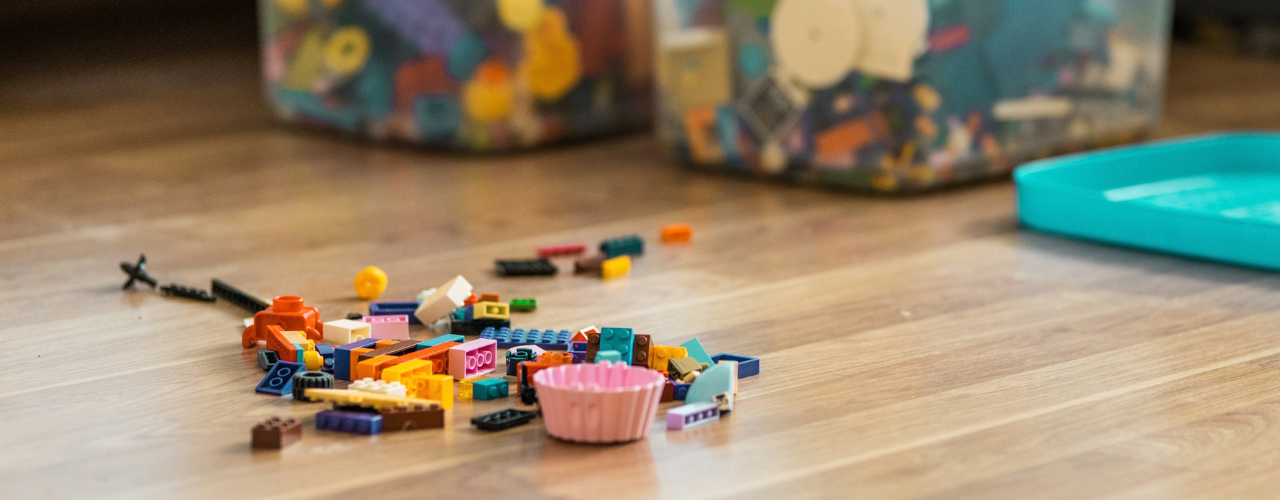
How to Store LEGOs: All the Fun, None of the Clutter
How to store LEGOs largely comes down to how your household uses them. If the bricks are part of everyday play, you need a setup that keeps them within easy reach and makes cleanup quick (for your feet’s sake, at least). Toy storage(opens in new tab) such as simple bins, playmats or containers that children can put away themselves may be enough. Larger or more serious collections usually need more organization, such as labelled drawers for loose pieces, trays for unfinished builds, shelves for completed models and separate storage for retired sets.

Cardboard Costume Guide: Tips and Ideas for a DIY Halloween
Whether for kids or adults, cardboard costume ideas often make the biggest splash once materialized, and that’s for a simple reason: doing a lot with a little is a universally impressive feat (especially in this economy). If you don’t have enough boxes you could temporarily repurpose, don’t worry! There are many places where you can find free moving boxes(opens in new tab), from stores and supermarkets to online groups and recycling drop-off spots. On the run? Try your luck at a self storage(opens in new tab) facility that sells moving supplies, often for cheap. This way, you can choose moving boxes of different shapes and sizes(opens in new tab), so you can make your costumes as complex as you want.

How to Celebrate Halloween: 9 Non-Spooky Ways To Enjoy It
As soon as October starts, it’s the official Halloween month. And while for many people it means it’s open season to get the scare of a lifetime, others, especially families with small children, might prefer to celebrate in a tamer way that’s both kid- and adult-friendly. While you’re likely to find more events where the spook factor is high, here’s how to celebrate Halloween in a not-so-scary way:

Motorcycle Storage Guide: How to Store Your Bike Safely
Motorcycles may be born to be wild, but eventually even the wild ones need somewhere to park. Whether riding season is winding down or your current living situation comes with plenty of square footage for you and less for your bike, motorcycle storage is one of those parts of ownership that doesn’t get as much airtime as the open road.

Halloween Decorating on a Budget (And Cheap Ideas for Everything Elsee)
Halloween has crept a long way from its eerie origins. While All Hallows’ Eve has transformed through the centuries, it wasn’t until the 1930s that trick-or-treating became a tradition in the U.S. and businesses began conjuring up mass-produced Halloween costumes. Now, Halloween is a monster-sized, billion-dollar industry, with a cauldron full of costumes and decorations ranging from the mainstream to the macabre. But is it all really worth your wallet? Maybe, but we’ll let you in on a little secret: You can keep your Halloween decorating on a budget and save on everything else, too. Take this plan and see it through!

Moving From a House to an Apartment: What to Expect, How to Downsize & How Self Storage Helps
For some, moving from a house to an apartment is a financial decision. For others, it’s about simplifying life. Maybe the kids have moved out and half the house sits empty, or you’re approaching retirement and no longer want to spend weekends on repairs. Or perhaps you’ve been weighing the cost of buying a home and wondering whether renting simply makes more sense right now.

Family Heirlooms Overload: How to Handle Family Inheritance Without Regret
Handling family heirlooms after a loss requires managing legal authority, emotional pressure and practical logistics at the same time, and the order you take them on matters more than most people expect.
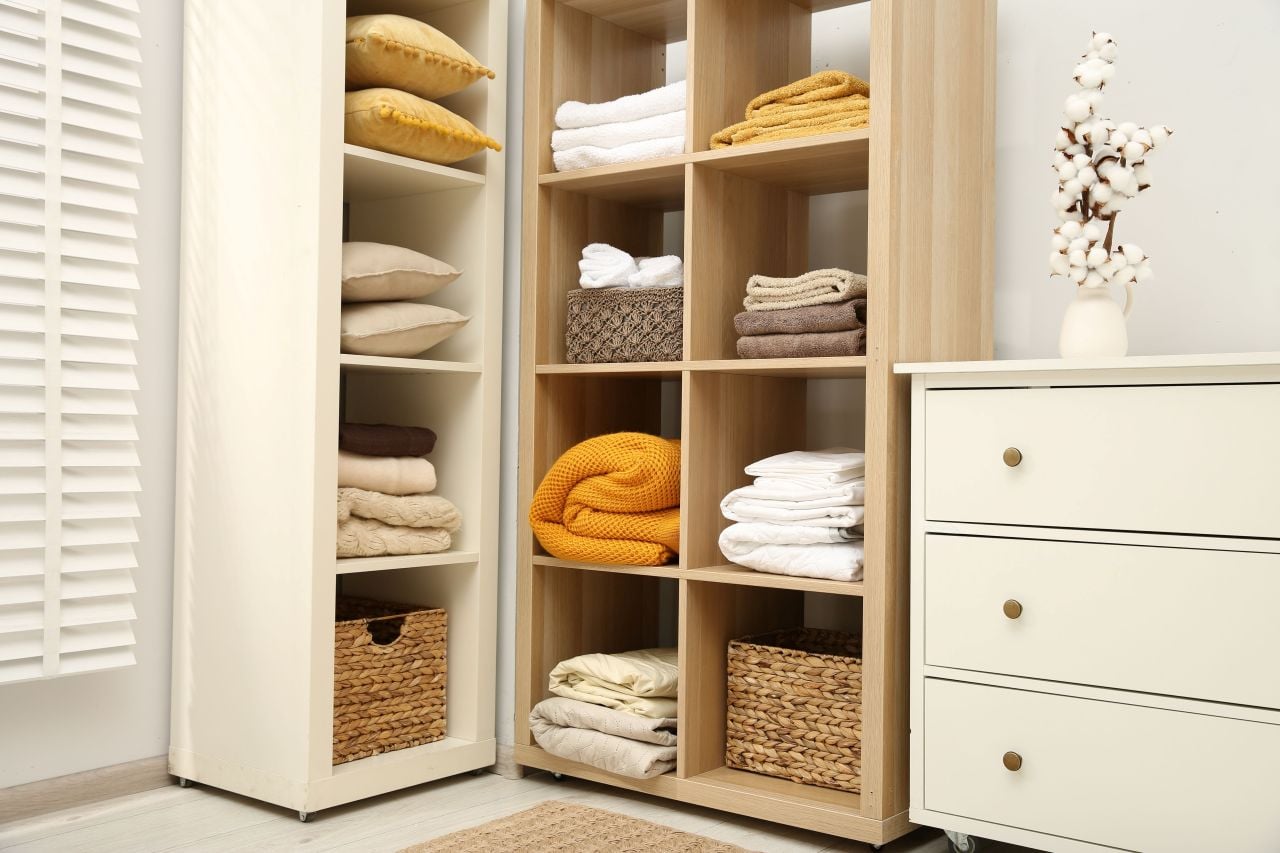
Blanket Storage: The Right Method for Every Space and Season
Blankets make our lives cozier, and storing them well is what keeps them soft and comfortable in the long run. Knowing how to store a blanket properly means your favorites come out of storage smelling fresh, feeling the same as when they went in, and lasting years longer than they otherwise would.

Board Game Storage Ideas That Keep Your Collection in Fighting Shape
Nobody warns you that getting into board games usually unlocks a second hobby, the much dreaded one that includes figuring out where on earth to put them. One game becomes a few, expansions start spawning beside their base boxes and before long, board game storage requires as much strategy as whatever is waiting on the other side of those lids.