

Key Takeaways
- Silica gel is a desiccant that absorbs moisture to prevent mold, rust and degradation in stored items.
- It is effective in sealed containers for protecting electronics, documents, clothing, tools and dry goods.
- The right size of silica gel depends on the space, with 1 gram suitable for small boxes and 500 grams for larger areas like sheds.
- Silica gel is safe and non-toxic but should be kept away from children and pets due to choking hazards.
Moisture can cause significant damage to items in storage, leading to rust on tools, mold on clothing and warping in documents. Silica gel uses science to fix that. Often found in small packets inside product packaging, silica gel is a desiccant that absorbs moisture from the air, keeping your stored items dry and protected. This guide explains what silica gel is, how it works and how you can use it to preserve your belongings in self storage.
What is silica gel?
Silica gel is a granular, porous form of silicon dioxide, a compound commonly found in sand. Its structure contains millions of tiny pores, which give it an enormous surface area relative to its size. This allows silica gel to adsorb water vapor from the surrounding environment, effectively reducing humidity.
Silica gel is available in two main types:
- Non-indicating silica gel: This is the most common type. It remains white or clear and does not change color as it absorbs moisture.
- Indicating silica gel: This type changes color when it becomes saturated with moisture. For example, orange indicating silica gel turns green, while blue indicating silica gel turns pink. This color change provides a visual cue that the gel needs to be replaced.
Silica gel is not edible and the packets can pose a choking hazard for children and pets.
Silica gel beads: What makes them special
Silica gel is often used in bead form, which offers several advantages:
- High surface area: The beads have a porous structure that maximizes their ability to adsorb moisture.
- Reusability: Silica gel beads can be reused multiple times, making them a cost-effective solution.
- Versatility: They can be used in various applications, from small packets for electronics to larger quantities for industrial storage.
- Stability: Silica gel beads are chemically inert and do not react with most substances, making them safe for use with a wide range of items.

Silica gel beads are particularly useful for long-term storage, as they can maintain low humidity levels for extended periods. This makes them ideal for preserving items that are sensitive to moisture, such as photographs, important documents and collectibles.
Why use silica gel to store things?
Any container is subject to simple physics: trapped air gets warm and warm air becomes vapor, which then creates moisture. Thus, even storage units(opens in new tab) can be prone to fluctuations in temperature and humidity, especially if they are not climate controlled(opens in new tab).
These temperature swings create an environment where moisture can accumulate, leading to damage such as:
- Rust on metal items like tools(opens in new tab), bicycles(opens in new tab), or furniture.
- Mold and mildew on clothing(opens in new tab), leather goods(opens in new tab), or paper products.
- Condensation on electronics(opens in new tab), which can cause corrosion or short circuits.
- Staleness or clumping in dry goods like spices, pet food, or other pantry items.
Silica gel helps mitigate these risks by absorbing excess moisture from the air. It is a cost-effective, reusable and easy-to-use solution that can extend the life of your stored items.
How to use silica gel in storage
What to protect
Silica gel is highly effective for protecting a wide range of items from moisture damage. For electronics, it prevents corrosion and short circuits by placing the items in a sealed bag with silica gel packets for 24 to 48 hours to remove moisture. When it comes to tools, adding silica gel packets to toolboxes or drawers keeps them dry and rust-free.
For clothing and shoes, placing silica gel packets in boxes, pockets, or between layers of clothing helps absorb moisture, preventing mold and odors. Leather and jewelry can also be protected from tarnish and mildew by storing them in airtight containers with silica gel packets.
Documents and photos benefit from silica gel as well: interleave packets in files, albums, or document storage boxes and this will prevent warping or sticking. Even for seasonal items such as holiday decorations or camping gear, adding silica gel packets to storage containers helps prevent musty smells and keeps them in good condition.
Where to place silica gel
To maximize its effectiveness, place silica gel in strategic locations within your storage unit:
- Inside containers: Tape packets to the lid or place them between layers of items.
- Under items: For larger objects like furniture, place packets underneath to absorb moisture from the air.
- In pockets: Slip packets into shoes, handbags, or jacket pockets to keep them dry.
Near vents or entry points: If your storage unit has airflow, cluster packets near these areas to absorb incoming moisture.
How much silica gel to use
The amount of silica gel you need depends on the size of the space you are protecting. Here is a general guideline:
For a small box, such as a shoebox, 1 to 2 grams of silica gel is sufficient to keep items like jewelry, small documents, or electronics dry.
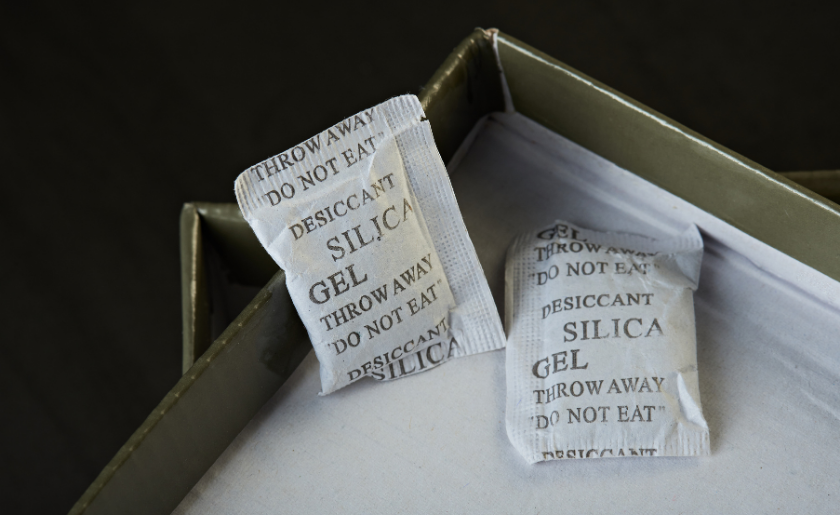
If you’re using a medium bin with about one cubic foot of space, five grams of silica gel will adequately protect clothing, tools, or small appliances.
For larger storage needs, such as a large suitcase, 10 to 25 grams of silica gel is recommended to safeguard winter coats, bedding, or larger electronics.
If you’re protecting items in a small shed (around 100 cubic feet), 500 grams of silica gel will help keep lawn equipment, bikes, or outdoor furniture free from moisture damage.
Where to get silica gel
Silica gel is widely available and you can get it in several ways:
- Save packets: Collect silica gel packets from new products such as shoes, electronics, or food items like beef jerky or vitamins.
- Buy in bulk: Silica gel can be purchased online from retailers like Amazon or Uline. For food-related uses, look for food-grade silica gel to ensure safety.
- Local stores: Craft stores, hardware stores and packaging suppliers often carry silica gel packets or beads.
- Industrial suppliers: For larger quantities, industrial suppliers offer bulk options suitable for commercial or extensive storage needs.
Safety tips for using silica gel
While silica gel is non-toxic, there are a few safety considerations to keep in mind:
- Choking hazard: Silica gel packets can pose a choking risk for young children and pets. Always keep them out of reach.
- Avoid ingestion: Although silica gel is not edible. If accidentally ingested, it will typically pass through the body without causing harm, but it is best to avoid consumption.
- Skin and eye irritation: Direct contact with silica gel beads may cause mild irritation. If silica gel comes into contact with your skin or eyes, rinse thoroughly with water.
Silica gel is a highly effective tool for protecting your belongings in self storage. By absorbing moisture from the air, it prevents damage such as rust, mold and degradation, ensuring that your items remain in good condition. Whether you are storing electronics, clothing, documents, or dry goods, silica gel offers a simple and reusable solution.
To get the most out of silica gel, remember to use the right amount for your space, place it strategically within your storage containers and replace it when necessary. With proper use, silica gel can help you preserve your stored items for years to come.
FAQ
Is silica gel toxic?
Silica gel is non-toxic and chemically inert. While it is not edible, accidentally swallowing a small amount is generally harmless. However, silica gel packets can pose a choking hazard, so they should be kept away from children and pets.
Can I use silica gel for long-term storage?
Yes, silica gel is excellent for long-term storage. It helps maintain low humidity levels, which is ideal for preserving items like documents, photographs and collectibles. For best results, recharge or replace the silica gel every 6 to 12 months.
Should I use silica gel in a non-climate-controlled storage unit?
Yes, silica gel is particularly useful in non-climate-controlled units. In these environments, it is advisable to use more silica gel and check or replace it every 3 to 6 months to ensure continued effectiveness.
How can I tell if silica gel is still working?
For indicating silica gel, a color change signals that it has absorbed moisture and needs replacing. For non-indicating silica gel, you can weigh the packets before and after use. If the weight increases, replace it.
What is the difference between silica gel and other desiccants like clay?
Silica gel has a higher moisture absorption capacity and works well in moderate temperatures. Clay is a less expensive option but is generally less effective. Molecular sieves are another type of desiccant that performs well in extreme conditions, such as high heat or very low humidity.



Suburban Giants and Urban Risers: Where America’s 100 Largest Metros Fall on the Self Storage Map
Self storage has long been a suburban story. Across America, 54% of existing inventory sits outside city cores, a ratio that new construction over the past decade has largely preserved.
Sweatshirt Storage Ideas Worth Keeping Up Your Sleeve
Sweatshirts are great until you realize how much room they take up. A few thick hoodies can fill a drawer fast, with lighter crewnecks getting squashed underneath or pushed somewhere you forget about. Good sweatshirt storage can make that pile much easier to manage without requiring a bigger closet.

Living Room Storage Ideas: 28 Ways to Reclaim Your Hosting Space
If a living room is where most of a household’s living happens, good storage should be the top priority for setting up or revamping the place. After all, think of how easier it would be to have people over when tidying up the place is just a matter of putting things in their right place (in a time when fewer and fewer people are entertaining friends at home(opens in new tab)). The trick is making room for all those wayward clothes, blankets, chargers and other small things that end up on (or, inexplicably, in) the sofa. Here are 28 living room storage ideas to get you started and make tidying up a quick affair.
25 Mudroom Storage Ideas (And Mistakes to Avoid)
When you come home with muddy boots, an armful of bags and a coat you can’t wait to take off, it’s nice to have somewhere to put it all. With a mudroom, you can leave the outdoor mess at the door instead of carrying it through the house. Traditionally, you’d set aside a separate room, but you can just as easily use a hallway, an entryway closet, a laundry-room corner or a stretch of wall near the entrance.

Is Your Home Office Worth the Rent? What Coworking and Self Storage Could Save You
Every square foot of your apartment comes with a price tag, and a home office claims more of them than most renters expect. It starts with a desk. Then come the second monitor, the printer, the filing cabinet and the overflow boxes. Before long, the corner you set aside for work has turned into a small room you are paying for every month.

Best U.S. Cities to Live Uncluttered: Plano, TX, Offers the Most Room to Breathe
Clutter is in our homes as much as in our heads. Both are shaped by where we live.

America’s Top Snowbird Destinations for 2026–2027: Florida Leads in Numbers, Texas Wins on Value
For Americans living in colder states, the approach of winter is reason enough to start looking south. Cold weather carries costs that go beyond the heating bill and shoveling snow. Seasonal affective disorder(opens in new tab) is far more prevalent in northern states, so a temporary move south isn’t simply an escape from the cold, but a chance to spend the hardest stretch of winter outdoors and in the sun.

How Much Does Halloween Really Cost in 2026? Plan Wisely to Avoid the Scare of Hidden Costs
Americans’ love for Halloween is almost frightening — this year alone, we are on our way to spending $13.5 billion, according to data from the National Retail Federation(opens in new tab). That breaks down to about $115 Halloween costs per person, a whopping 49% more than 10 years ago.
How to Store LEGOs: All the Fun, None of the Clutter
How to store LEGOs largely comes down to how your household uses them. If the bricks are part of everyday play, you need a setup that keeps them within easy reach and makes cleanup quick (for your feet’s sake, at least). Toy storage(opens in new tab) such as simple bins, playmats or containers that children can put away themselves may be enough. Larger or more serious collections usually need more organization, such as labelled drawers for loose pieces, trays for unfinished builds, shelves for completed models and separate storage for retired sets.