

The riding season is winding down, and that’s when most people start thinking about ATV storage. Keeping an ATV at home isn’t always easy. Garages fill up fast, sheds are rarely built for a four-wheeler and some apartment complexes and homeowners associations don’t allow one in the parking lot or driveway.
On top of that, your vehicle needs winterizing and a safe, dry place to sit until spring. A self storage unit solves most of these problems at once, but ATV storage takes a little more planning than parking it and locking the door, so here’s what to know before you rent.
Can you store an ATV in a self storage unit?
Yes, as long as the facility allows motor vehicles, and most self storage operators do. A drive-up unit is one of the best garage substitutes out there: dry, access-controlled and off your property. A good way to start is browsing nearby facilities on StorageCafe(opens in new tab), where you can compare unit sizes and prices before you pick up the phone.
There are some important things you should know prior to renting a self storage unit for your ATV. Most facilities ask for valid registration and proof of insurance. Many also ban major repairs inside the unit, while access hours can vary too, since not every facility offers 24/7 entry.
Indoor vs. covered vs. outdoor ATV storage
Outdoor parking is an open space inside a self storage facility. It’s the cheapest option and gives you the facility’s gate and cameras, but nothing shields your ATV from the weather. Of course, you can use a fitted cover, which can work in a milder climate, but it’s definitely not your best option when storing an ATV. Covered parking adds a roof with open sides, which blocks rain and sun from above, though wind, humidity and driven rain still get in.
An enclosed drive-up unit is a private roll-up-door space and the closest thing to having your own garage. It’s a common choice for an ATV. Climate-controlled storage goes a step further with temperature and humidity regulation. It’s handy in very humid regions or for long-term storage, but most off-road ATVs don’t need it.
What size storage unit does an ATV need?
The honest answer is to measure first, then choose a unit. A typical sport or utility ATV runs about 40 to 50 inches wide and 70 to 90 inches long, so it can fit in a 5×10 self storage unit(opens in new tab) with some careful maneuvering. Before you commit, though, check the door width. Roll-up doors on a 5×10 are usually about five feet wide, which is snug for wider ATVs or ones with mirrors and fender guards. Think about turning room, too, and whether you can actually angle the ATV in. A rear rack, plow blade or wide tires can also add more footprint than the spec sheet suggests.
A 10×10 unit(opens in new tab), on the other hand, allows you to comfortably store the ATV plus a few boxes of extra belongings. It gives you space to walk around the vehicle, stash your helmet and gear, check tire pressure and reach the battery without playing shuffle with the ATV. If yours is on the bigger side, or you just want some elbow room, the 10×10 is the safer bet.
How much does ATV storage cost?
Prices swing a lot depending on location, size and enclosure level, so treat these as ballpark figures rather than quotes. Expect roughly $75 a month for a 5×10 and around $120 for a 10×10 indoor unit. If you choose outdoor or covered storage, rates are significantly lower. If you want to get a climate-controlled unit, the rates are a good 10% higher.
However, your city has the biggest effect on price. A unit in a dense metro costs noticeably more than the same size in a rural area. After that, it comes down to unit size(opens in new tab), enclosure type, climate control, access hours and current promotions(opens in new tab).
How to prepare your ATV for storage
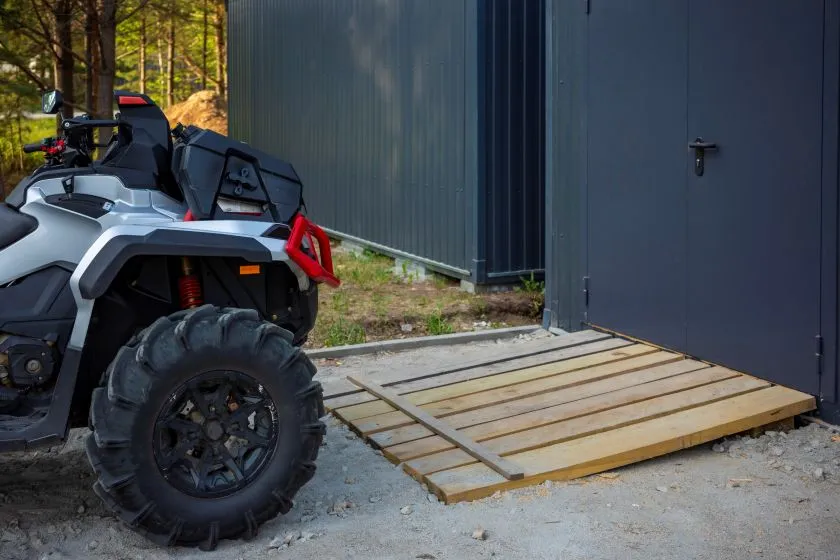
Start by washing the ATV and letting it dry completely, undercarriage included. Mud, salt and debris hold moisture against metal and speed up corrosion, and even a dry unit holds whatever moisture you bring in. While the ATV is clean, look for cracked plastics or loose bolts. They’re much easier to fix now than after months of sitting.
Next comes fuel, and this is where storage can differ from a home garage. Winterizing guides generally say to fill the tank and add stabilizer, which works well in your own garage. Many storage facilities, though, have fire-safety rules that limit fuel in stored vehicles. Some ask you to drain the tank, others set a maximum level and a few only care that nothing leaks. Ask about the facility’s fuel policy before move-in, then choose the method your owner’s manual approves (stabilizer, full drain, or partial drain) that meets the facility’s rules. If the rules are strict, outdoor or covered vehicle parking often skips the fuel restriction.
Batteries(opens in new tab) need attention too. A conventional 12-volt ATV battery slowly discharges while stored, and in cold climates it can freeze and die for good. Manufacturers generally recommend pulling it for winter and keeping it somewhere cool, dry and above freezing, with a battery tender (a trickle charger) if the battery type calls for one. If you plan to use a tender in your unit, confirm that the facility allows powered charging devices.
Electric ATV and UTV owners should skip the generic advice and read their manual. Some electric models, for example, need to stay plugged in during storage longer than 30 days to keep the battery at its designed storage charge. There’s no universal electric ATV storage procedure, so your manufacturer’s manual is the final word.
Inflate the tires to the recommended pressure. If it sits for months, consider stands or blocks to prevent flat spots. Lubricate chains, cables and suspension parts as your manual directs and add a light protectant to exposed metal to ward off surface rust.
How to keep a stored ATV secure
Self storage facilities are generally very safe places to keep an ATV, and a lot safer than a driveway or an unlocked shed. Most use some combination of electronic gate access, security cameras, good lighting and fenced perimeters, and many have an on-site manager during business hours. Drive-up units add another layer, since your vehicle sits behind a roll-up door with your own lock.
A few extra steps give you added peace of mind. A good quality lock on the unit door is the best place to start. A disc lock is a quick, visible deterrent, and GPS tracker adds protection that follows the ATV. Some insurers even offer discounts for tracked vehicles, so it’s worth asking your agent.
It’s also smart to document your ATV before move-in. Photograph it from every angle, note any marks or aftermarket mods and save the vehicle identification number (VIN) in two places, like your phone and a cloud document. If anything ever goes wrong, that record makes insurance claims and police reports much easier.
Does insurance cover an ATV in storage?
Your ATV’s comprehensive coverage may handle theft and certain damage wherever the vehicle is stored, but check for storage exclusions, deductibles and whether coverage applies when the ATV isn’t in use. The facility’s protection plan is a separate product that covers loss or damage to items in the unit. Limits and exclusions vary widely, and it doesn’t replace your ATV policy.
Some facilities require both a protection plan and proof of vehicle insurance, and many require stored vehicles to stay registered and insured under your own policy. Talk to your insurance agent before you move in, and expect to show a government ID, current registration and proof of insurance when you sign.
Seasonal and regional ATV storage tips
Where you live changes what your ATV needs most, so it helps to prep for your local weather instead of following a one-size-fits-all checklist.
Cold and snowy climates. Winter is hardest on the battery. A conventional 12-volt battery can lose charge quickly in the cold and may freeze, which can damage it for good. Pulling it and keeping it somewhere cool, dry and above freezing is the top priority.
Road salt is the other big concern. If you rode on salted roads or trails, give the undercarriage a thorough wash and let it dry completely before storing, because salt left on metal keeps eating away at it all winter.
Hot and sunny climates. Heat and UV break down plastics, seats and rubber over time, which can mean faded body panels, cracked seats and brittle tires. An enclosed unit or covered parking keeps direct sun off the vehicle, and a breathable ATV cover adds more protection against dust and heat. Skip open outdoor parking for long stretches if you can, since constant sun exposure is the hardest on your ATV’s finish.
Humid and coastal climates. Moisture is the main enemy here, and it can cause rust and corrosion even inside a closed unit. Make sure the ATV is completely dry before it goes in, and use a breathable cover, not plastic, so air can still circulate. If your area gets both heat and heavy humidity, climate-controlled storage may be worth the extra cost, especially for several months of storage.
ATV storage checklist
When you’re shopping around for a storage unit, confirm the facility allows ATVs, then ask about its fuel rule, about access to power outlets for the battery and about access hours. Measure your ATV’s width (with mirrors or racks), length and height and compare those numbers to both the unit size and the door opening.
At move-in, bring your ID, registration, proof of insurance and your own padlock. Confirm any protection plan or insurance requirements when you sign.
Before you lock up, make sure the ATV is clean and fully dry. Check that the tires are inflated, moving parts are lubricated and a breathable cover is on. Then lock the unit and save your VIN and photos somewhere handy.
ATV storage FAQ
Can you leave gas in an ATV in a storage unit?
It depends on the facility’s lease and fire-safety rules. Some require a drained tank, and others cap the amount, so call and ask before move-in.
Is a 5×10 unit big enough for an ATV?
For many standard sport or utility ATVs, yes, once you’ve confirmed the door width, turning room and your ATV’s real dimensions with accessories.
Is climate-controlled ATV storage worth it?
For most gas-powered ATVs over a normal winter, a clean enclosed drive-up unit does the job. Climate control makes more sense for long-term storage in humid areas, expensive ATVs with sensitive electronics or electric ATVs with temperature requirements.
Can you work on an ATV in a storage unit?
Many operators ban major repairs. Small jobs like checking tire pressure or hooking up a battery tender are usually fine.
Should you cover an ATV in storage?
Yes, with a breathable fitted cover. Skip plastic or coated covers that trap condensation.
How long can an ATV sit in storage?
There’s no single answer. It depends on prep, environment and your manufacturer’s service intervals. Battery and fuel are the most time-sensitive, so check your owner’s manual and plan around them.


Should You Vacuum Seal Clothes? Everything You Actually Need to Know
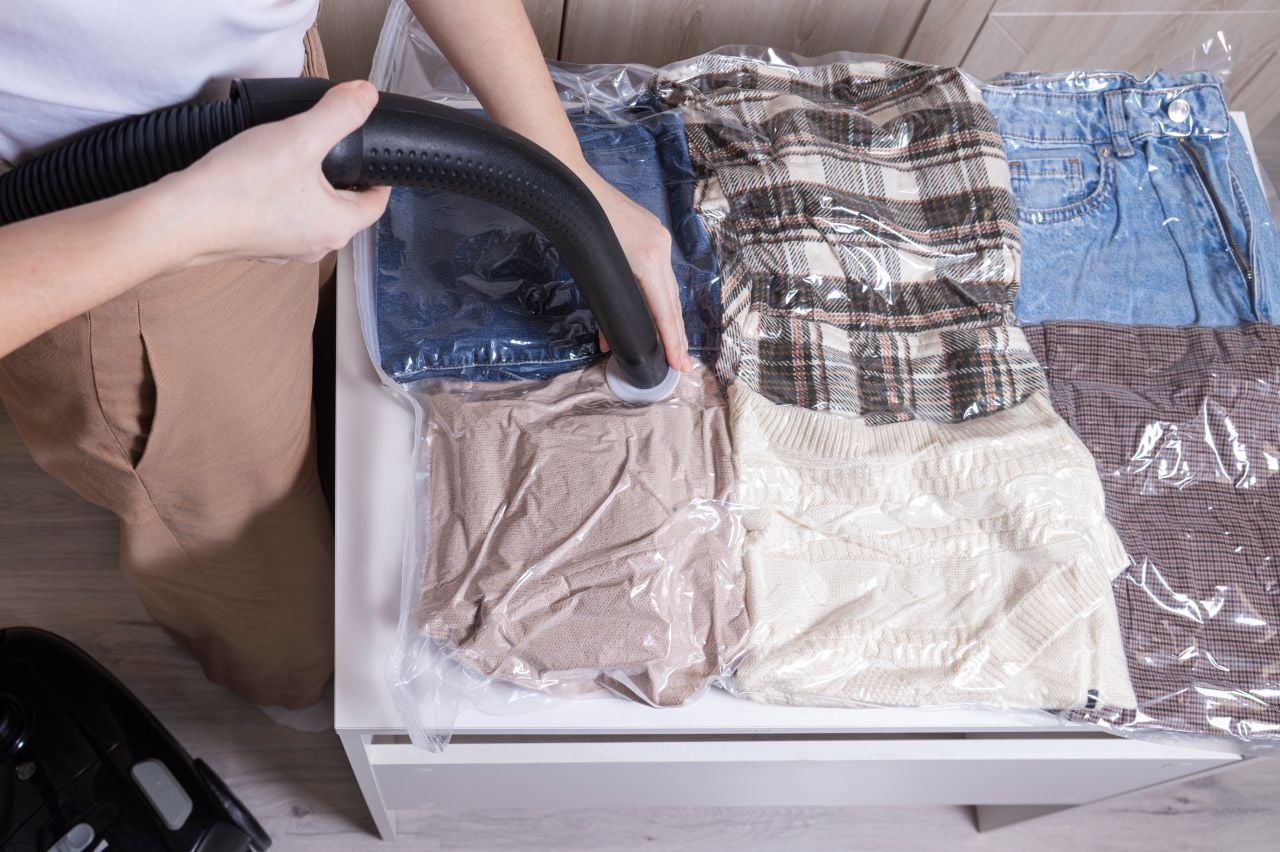
Vacuum storage bags seem like the perfect solution when storage space is an issue: suck out the air, shrink that pile of winter sweaters into a fraction of the space and suddenly your closet is no longer overflowing. For the right types of clothes or other household linens, vacuum bags are actually quite handy and a great way to save closet space.

ATV Storage Guide: How To Store and Winterize Your ATV
The riding season is winding down, and that’s when most people start thinking about ATV storage. Keeping an ATV at home isn’t always easy. Garages fill up fast, sheds are rarely built for a four-wheeler and some apartment complexes and homeowners associations don’t allow one in the parking lot or driveway.
21 Garage Storage Ideas: Free Up Your Floor Space
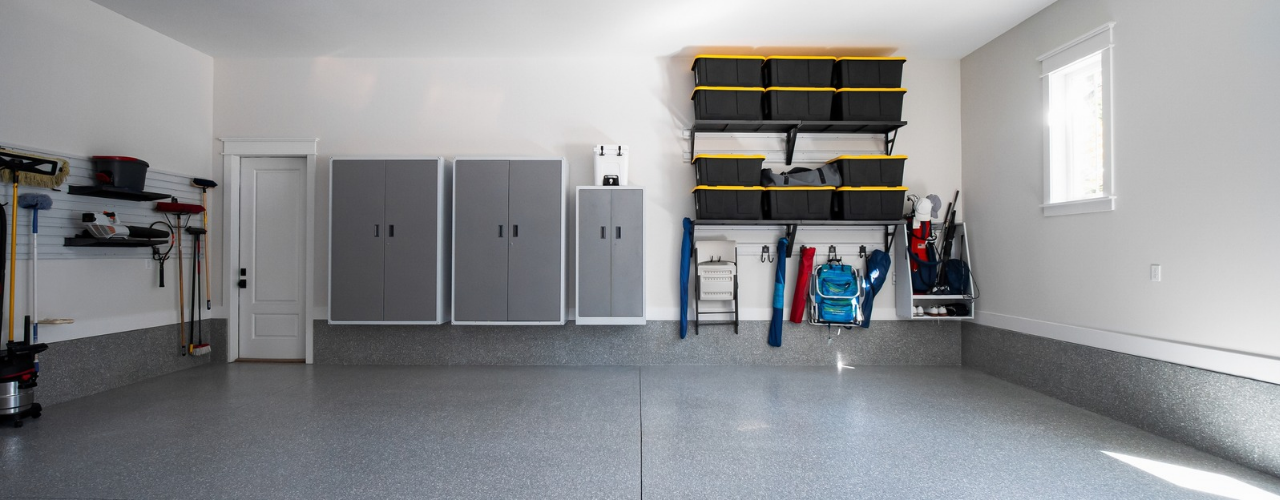
Garage storage is more important than it sounds, because it helps you move things off the floor and onto walls, ceilings and rolling units. In time, this makes a big difference and saves you from awkwardly tiptoeing around stuff you’ve left on the ground. Use the garage storage ideas below and you’ll build a setup that fits what you own, how often you use it and how much space you have.
How to Move a Piano: Moving, Insurance & Storage Guide
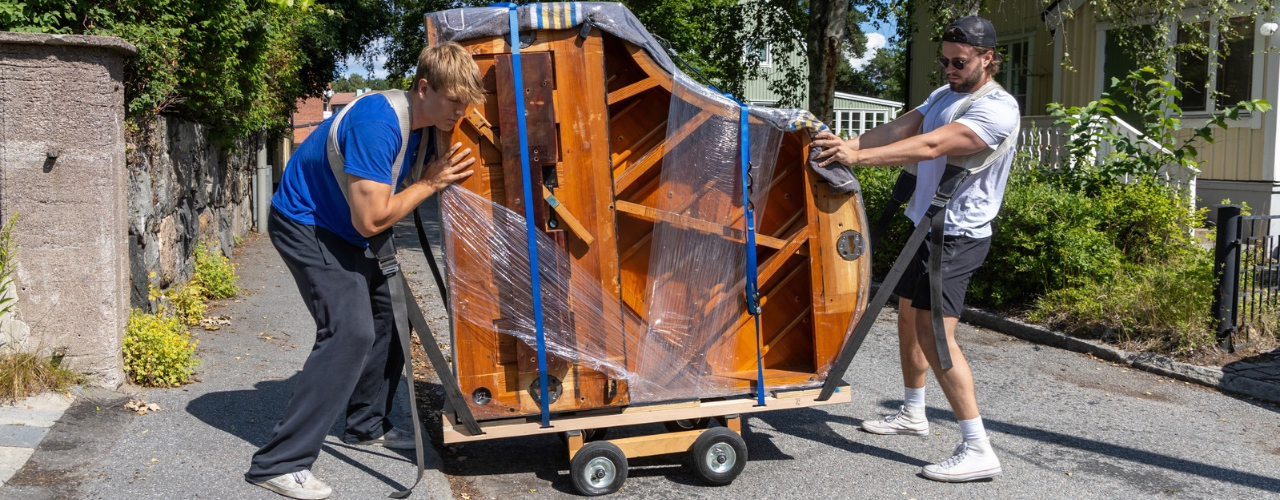
Before we get into the nitty-gritty of the matter, let’s agree on the simple fact that, unlike other types of relocation conundrums, moving a piano is just a very cool thing to see, let alone accomplish. The labor that makes piano concerts possible and keeps legendary instruments alive, a piano relocation takes meticulous planning, special equipment and a crew that really knows their stuff. That is, unless you’re set on recreating the piano crash of a classic Looney Toons gag.

Hall Closet Organization: 30 Ideas for Simpler Storage
Be it built-in, freestanding, or wholly improvised, your hall closet works best when you can grab anything quickly and put it back just as fast. These 30 ideas for organizing your hall closet walk you through planning, deciding where things go, choosing the right containers and way more. By the end, you’ll even know what to do when your closet still runs out of room.

Holiday Decoration Storage: A Guide for Every Season
Taking down the holiday decorations is never as exciting as putting them up. One minute, your home is looking wonderfully festive, and the next, you’re trying to remember which box the Christmas ornaments came in while wrestling with a string of lights that managed to tie itself into a dozen knots. With every holiday bringing its own collection of decorations, a good holiday decoration storage system helps you keep a growing collection under control.

Where to Get Moving Boxes in Philadelphia
Philadelphia’s historic charm can put your patience to the test on moving day. Between cobblestone streets, narrow rowhouse entrances and the occasional pothole, you don’t want to worry about not having enough boxes on top of it all. Start gathering your moving boxes early and you’ll have one less box to check off on packing day. Luckily, you have plenty of places to get your boxes from.

Art Supply Storage from A to Easel
Paint tubes, brushes, sketchbooks, scraps of paper, beads, half-used rolls of tape and that one very specific pen you swear you just had in your hand. Building up an art supply collection is rarely a neat process, and each new material brings its own storage needs.

Scary Good DIY Halloween Decorations That Won’t Haunt Your Wallet
A few floating candles in the hallway, a family of ghosts by the front door and a suspicious number of bats climbing up the bedroom wall can make October feel a whole lot spookier. While Halloween stores are full of tempting finds, some of the best DIY Halloween decorations can come from things you already have tucked away in drawers, closets or the recycling bin.