

Key Takeaways
- Restrict access to authorized staff with keycard systems and maintaining detailed logs.
- Label, index, and digitize medical records for easy retrieval and protection from physical damage.
- Store paper records in locked, fireproof cabinets.
- Document all destruction of medical records with receipts from certified shredding service.
- Run regular audits to maintain compliance.
These days, medical record storage comes with higher stakes and tighter margins. Patient data continues to grow quickly, but paper records remain part of the parcel in medical practices. Many systems are still a mix of old and new, which makes storage more complicated and less forgiving.
One lost file or unsecured cabinet can lead to penalties, delays, and broken trust with the people you serve. Expectations have changed. Security must be thorough. Access needs to be controlled and documented. Storage systems have to match the pace and pressure of modern healthcare without adding friction.
The practices below reflect what actually works. They are based on current laws, lived experience, and the reality that storing medical records is an essential part of patient care.
How to comply with security laws
A medical record is any document that includes health information linked to a specific person. That means patient intake forms, doctor’s notes, lab results, prescriptions, signed consent forms, billing paperwork, X-rays; the list is long. And because this stuff includes personal health information, it falls under privacy laws.
At a federal level, health providers must comply with the Health Insurance Portability and Accountability Act(opens in new tab), also known as HIPAA(opens in new tab). “Security and HIPAA compliance are maintained by heavily restricting access to the files,” says Dr. Gregory Gasic, neuroscientist and co-founder of VMeDX. “Only authorized staff are permitted to access the storage areas which are protected by keycard access and sign-in logs. Everyone interfacing with the records is taught the covering rules, and secure containers are used to transport files. HIPAA compliance is also maintained due to routine compliance monitoring.”
But don’t forget about state rules too. Most states require you to hold onto records for seven to ten years, sometimes longer if the patient was a minor. After that, they can be destroyed, but not before.
How to store paper records properly
Think of medical record storage as a clockwork where every wheel needs to work just right. “We follow a strictly structured filing system to keep our paper medical records well-organized and secure,” says Jessica Plonchak(opens in new tab), clinical director & mental health expert at ChoicePoint. “For this, our records are chronologically categorized and indexed with unique identifiers to maintain privacy and safety. We also ensure that our paperwork is stored in locked filing cabinets, allowing very restricted access. In addition to this, we do regular audits to make sure all the files are updated. In case of inactive records, we either secure them in off-site storage or save them in digital form as per retention policies.”
Let’s take a closer look into all of that.
Label, index and digitize records
Every file should be clearly labeled and organized according to: patient name, ID number, maybe a date of service if that helps. For each patient, assign a unique identifier that only you and your colleagues know, for security.
On top of that, it’s pretty much the norm today to scan and digitally archive all your records, especially older or inactive ones. You’ll free up space, cut down on storage costs, and keep documents safe from physical damage. Plus, digital archives make it easier to back things up, find files quickly, and track who accessed what.
Prioritize safety and security
When it comes to the storage space itself, it’s all about layered protection. Here’s what you should have in place:
- Keycard entry systems and digital access logs (or at minimum, a sign-out sheet) to track who goes in and out of file storage rooms.
- Security cameras in storage areas and anywhere files are moved to discourage unauthorized access.
- Metal filing cabinets that lock and are fireproof.
- Lockable containers for safely transporting physical files between locations.

Keep active and inactive records separate
Not every file needs to stay in the main office. Charts that haven’t been touched in years can go into storage, but they still need protection. But before you take them to a secure off-site storage, make it easy to tell what’s current and what’s archived. It saves time when someone needs to pull a recent chart quickly.
Get documentation for everything you shred
When it’s time to get rid of old records (10+ years), shred them, and not with a cheap shredder from the office supply store. Go with a cross-cut shredder or a certified shredding service. Get documentation that proves the records were destroyed properly(opens in new tab). Tossing them in the trash is not an option.
Regularly check medical file storage compliance
HIPAA compliance requires continuous action. That means you’ll have to run regular file audits, so you can verify accuracy, detect unauthorized access, and correct outdated records. That goes for the whole team, so train staff on a recurring basis to keep up with policy updates and emerging risks. Ideally, you should use automated tools to monitor file access and flag compliance issues in real time.
If you have to use self storage, do it right
In most cases, active medical records should stay within the practice. But for inactive or overflow files, self storage(opens in new tab) can be a practical option — especially during office moves, renovations, or when digital transitions take time. “Although it is not recommended to use self storage of medical or insurance records, there still might be cases when it is required” says Rami Sneineh, vice president of Insurance Navy Brokers(opens in new tab). “Self storage can be temporarily used at worst case scenarios like when refurbishing the office or when a large inventory of records increases the volume dramatically. This is, however, considered only when the facility has a high level of security and that it has appropriate access rules to help in maintaining the sensitive information to be safe. Even in such cases, there are strong measures that observe compliance and confidentiality.”
If your situation calls for self storage, it’s crucial to meet every standard for security and compliance. “HIPAA compliance is ensured by having a signed Business Associate Agreement (BAA) with the storage provider whenever possible,” says Jessica Plonchak. BAA is an agreement signed between your office and the facility that lays out who can access the unit and how security will be handled. If those records include personal health information, you need that agreement in writing.
To safeguard against the unexpected, it’s advisable to rent a climate-controlled unit. This helps protect records from mold, warping, and other types of deterioration – ensuring that documents remain in reliable, readable condition over time. The facility should also have round-the-clock surveillance and strict access controls to keep sensitive information secure. For added peace of mind, consider a unit with 24/7 access. That way, if an urgent situation arises outside of business hours, you’ll still be able to retrieve what you need quickly.
Frequently asked questions
How long must I keep medical records?
For adults, at least 6 years under HIPAA, but many states require 7–10 years after the last encounter. For minors, usually until the patient turns 18 (the “age of majority”) plus the standard retention period (often totaling 19 to 28 years). Some states or specialties (e.g., oncology, occupational medicine) may require longer retention, so always verify state-specific laws.
What documentation do I need for compliance?
- Access logs and sign-out sheets for all paper record rooms and digital records.
- Receipts for record destruction (paper and digital).
- Copies of BAAs with any third-party storage, shredding, or IT vendors.
- Records of regular audits and staff privacy/security training.
What are the penalties for non-compliance?
As of 2025(opens in new tab), HIPAA violations(opens in new tab) can lead to fines ranging from $141 to $2,134,831 per violation, depending on severity and negligence. Serious privacy breaches can also trigger lawsuits, patient loss, and reputational damage.
Conclusion
There’s a lot to think about when it comes to storing medical records, but if you hit the big things, the rest becomes easier to manage. Here are the essentials to stay on top of:
1. Keep things organized and backed up: Label everything clearly, archive old records digitally, and make sure nothing gets lost in the shuffle.
2. Lock it down: Use secure cabinets, keycard access, cameras, and tamper-proof containers to protect files wherever they are.
3. Know what stays and what goes: Keep active records close, move inactive ones to secure storage, and always use climate control if you go off-site.
4. Stay sharp on compliance: Run regular audits, keep training your team, and document everything, from access to shredding.



Scary Good DIY Halloween Decorations That Won’t Haunt Your Wallet
A few floating candles in the hallway, a family of ghosts by the front door and a suspicious number of bats climbing up the bedroom wall can make October feel a whole lot spookier. While Halloween stores are full of tempting finds, some of the best DIY Halloween decorations can come from things you already have tucked away in drawers, closets or the recycling bin.

Suburban Giants and Urban Risers: Where America’s 100 Largest Metros Fall on the Self Storage Map
Self storage has long been a suburban story. Across America largest 100 metros, 59% of the inventory built over the past decade sits outside city cores, largely preserving the ratio of the total existing inventory.

Sweatshirt Storage Ideas Worth Keeping Up Your Sleeve
Sweatshirts are great until you realize how much room they take up. A few thick hoodies can fill a drawer fast, with lighter crewnecks getting squashed underneath or pushed somewhere you forget about. Good sweatshirt storage can make that pile much easier to manage without requiring a bigger closet.

Living Room Storage Ideas: 28 Ways to Reclaim Your Hosting Space
If a living room is where most of a household’s living happens, good storage should be the top priority for setting up or revamping the place. After all, think of how easier it would be to have people over when tidying up the place is just a matter of putting things in their right place (in a time when fewer and fewer people are entertaining friends at home(opens in new tab)). The trick is making room for all those wayward clothes, blankets, chargers and other small things that end up on (or, inexplicably, in) the sofa. Here are 28 living room storage ideas to get you started and make tidying up a quick affair.
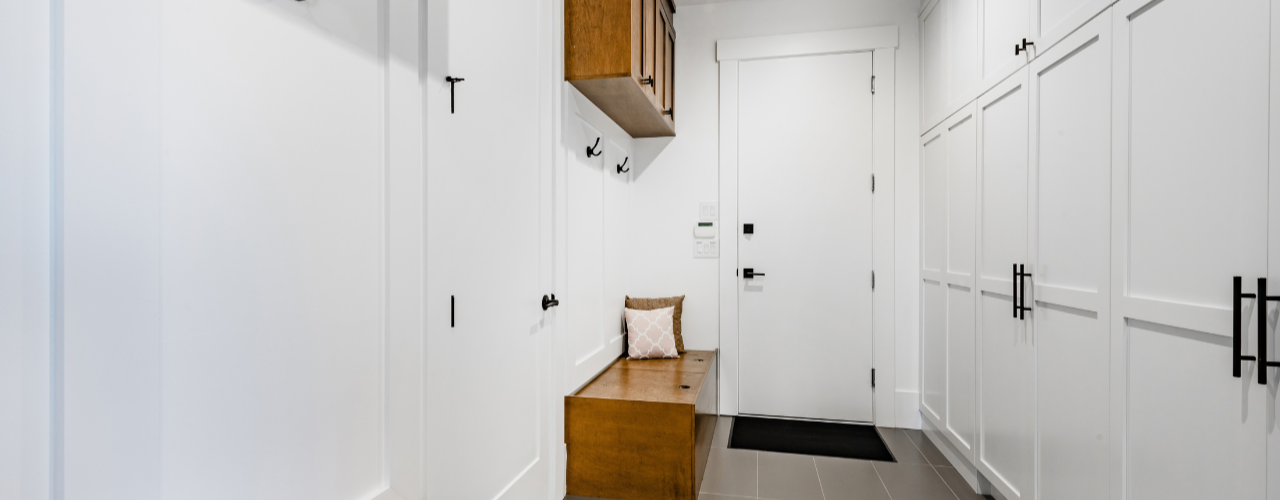
25 Mudroom Storage Ideas (And Mistakes to Avoid)
When you come home with muddy boots, an armful of bags and a coat you can’t wait to take off, it’s nice to have somewhere to put it all. With a mudroom, you can leave the outdoor mess at the door instead of carrying it through the house. Traditionally, you’d set aside a separate room, but you can just as easily use a hallway, an entryway closet, a laundry-room corner or a stretch of wall near the entrance.

Is Your Home Office Worth the Rent? What Coworking and Self Storage Could Save You
Every square foot of your apartment comes with a price tag, and a home office claims more of them than most renters expect. It starts with a desk. Then come the second monitor, the printer, the filing cabinet and the overflow boxes. Before long, the corner you set aside for work has turned into a small room you are paying for every month.

Best U.S. Cities to Live Uncluttered: Plano, TX, Offers the Most Room to Breathe
Clutter is in our homes as much as in our heads. Both are shaped by where we live.

America’s Top Snowbird Destinations for 2026–2027: Florida Leads in Numbers, Texas Wins on Value
For Americans living in colder states, the approach of winter is reason enough to start looking south. Cold weather carries costs that go beyond the heating bill and shoveling snow. Seasonal affective disorder(opens in new tab) is far more prevalent in northern states, so a temporary move south isn’t simply an escape from the cold, but a chance to spend the hardest stretch of winter outdoors and in the sun.

How Much Does Halloween Really Cost in 2026? Plan Wisely to Avoid the Scare of Hidden Costs
Americans’ love for Halloween is almost frightening — this year alone, we are on our way to spending $13.5 billion, according to data from the National Retail Federation(opens in new tab). That breaks down to about $115 Halloween costs per person, a whopping 49% more than 10 years ago.