




Key Takeaways
- Build a layered protection stack: penny sleeves for surfaces, toploaders or rigid holders for structure and archival boxes or binders for organization.
- Control the environment above all else, keeping cards at a steady 65–72°F and 40–50% humidity, since consistent climate protects your collection more than any single product.
- Protect your cards from sun-damage by storing them in opaque boxes and using UV-resistant holders for display, because UV fading silently destroys ink and coatings over time.
- Organize by set, game, or value tier and label everything, since good organization means less handling and less handling means fewer fingerprints and safer cards.
- Move to a climate-controlled self storage unit once your collection outgrows the house, solving space, year-round climate stability and security in one step.
Every card has to face off the same four enemies in an ordinary home: surface damage from oils and scratches, bending and warping from pressure or moisture, UV fading from light exposure, and environmental swings in temperature and humidity. So, the right way to store trading cards is a layered system, like gearing up for a boss: You’ll need penny sleeves to protect surfaces, rigid holders to protect structure, plus archival boxes or binders to provide organization and access. That combination keeps cards mint whether you have fifty or five thousand of them.
Luckily, you don’t need a Batcave-level vault to pull it off. Here’s how to build it, from your first sleeve to your last box. And if you’re having second thoughts about putting in the effort, know that value is soaring in the trading-card world right now, be they Pokémon(opens in new tab), Magic the Gathering(opens in new tab) or baseball cards(opens in new tab).
Know your enemy (your cards have four)
As long as you know what to avoid, there’s no need to overthink this. The experts agree. “A few sleeves and a good setup go a long way toward making sure the cards you love stay that way,” says Anca Lenta, StorageCafe’s(opens in new tab) in-house trading card expert.
Every card faces the same handful of threats:
- Surface damage from scratches, dust, and the natural oils on your hands
- Bending and warping from pressure and swings in heat or moisture
- Fading from UV and strong indoor light (the silent collection killer)
- The environment itself: humidity, dust, temperature swings, and, yes, pests
Each layer you add should counter all of the above (especially if we’re talking long-term storage).
Start with penny sleeves
Penny sleeves are your baseline. These thin, clear, acid-free sleeves keep hand oils off the surface and stop cards from grinding against each other. Depending on how many cards you want to protect, buy them in bulk.
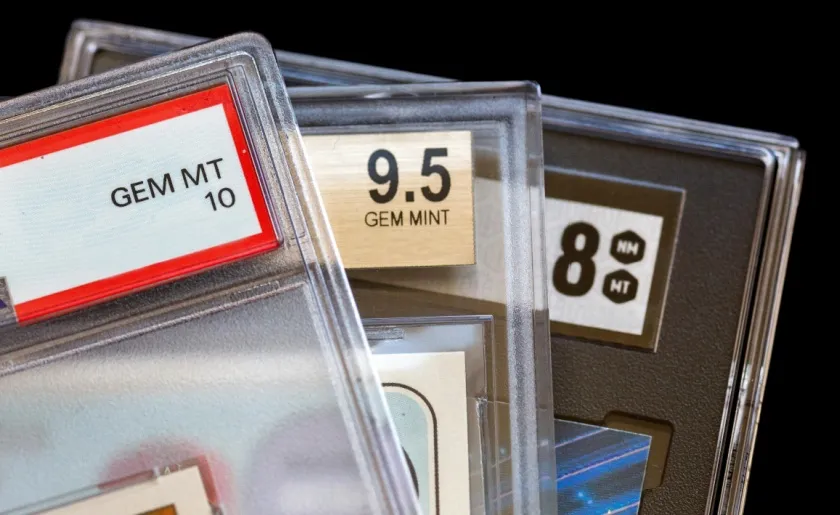
From there, match the holder to the card’s value:
- Under a few bucks? Penny sleeve alone is fine.
- Mid-value hits? Penny sleeve + a standard toploader.
- Display pieces and special cards? Penny sleeve + a UV toploader.
- High-value chase cards? Semi-rigid holders or graded slabs, which travel, trade and display beautifully and pair well with a box or safe.
Boxes vs. binders: Both, actually
Boxes are your density-and-defense option. Sturdy cardboard storage boxes from reputable brands (BCW(opens in new tab) is a classic) hold a ton of cards in a small footprint, block dust and light, and label cleanly by set, game, or value tier.
Binders are your browsing-and-flexing option. A well-built binder gives you instant visual access to a set, a theme, or your favorite deck. Used correctly, they’re safe for long-term storage of select cards.
To use binders safely, look for acid-free, PVC-free, archival-safe construction (Dragon Shield, VaultX, and Ultra Pro’s archival lines are popular for good reason), then follow the golden rules:
- Penny-sleeve every card before it goes in a pocket
- Use side-loading pages so cards can’t slide out
- One card per pocket — no doubling up
- Store binders upright, never stacked
- Leave a little slack in the spine so pages sit flat without crushing anything
Pick containers and furniture that earn their keep
Your containers are the outer shell of your trading-card protection, so materials matter. Archival cardboard boxes handle long-term storage well; steel cabinets or lockers get boxes off the floor and add security in a closet or office.
You can also get creative with furniture you already own — storage beds that swallow banker boxes, or shallow headboards that hold sealed product. Stackable plastic tool cases sized for card boxes are great for mobility, just check the material and seal info before you commit.
Dial in the temperature and humidity (this matters more than any product)
Honestly, climate control beats any single gadget you can buy. Aim for a stable, moderate space: roughly 65–72°F and 40–50% relative humidity. Consistency matters more than hitting perfect numbers.
A cheap digital hygrometer(opens in new tab) gives you constant feedback. Add a small dehumidifier(opens in new tab) in damp spots (or a humidifier in bone-dry climates), and toss refreshable silica gel packets(opens in new tab) into closed boxes as a final moisture buffer. Interior closets, hallways, home offices, and spare bedrooms are ideal — they ride the home’s central climate and dodge direct sun, kitchen steam, and temperature swings.
Win the war against light
UV light slowly eats ink and coatings, and it never announces itself. Opaque boxes and dark tubs eliminate the problem entirely in storage. For display, UV-resistant toploaders(opens in new tab) and magnetic holders put a barrier between your card and the light.
“My shiny Espeon sits in a UV-protective display frame on a shelf next to my PC, safely out of direct sunlight,” says Anca. “Sunlight is an absolute no-go if you want to keep colors from fading — and this way I get to admire it every day without worrying about wrecking it.”
Bonus tips: LED lighting is far kinder to cards than old fluorescents, and rotating your display cards each season spreads UV exposure around instead of frying the same few.
Organize for speed (and fewer fingerprints)
Good organization means less handling, and less handling means safer cards. Most collectors sort by some mix of:
- Set and year
- Game or sport
- Team, character, or archetype
- Value tier (bulk / mid-range / hits)
A common winning combo: binders by set for the core collection, a dedicated box of toploadered hits, and bulk boxes split by game. Label every box and binder spine with something concise — “Box A1: MTG Modern bulk,” “Binder B2: Pokémon rares” — and match it to your inventory.
“Once a collection starts growing, sort by value or rarity instead of treating everything the same,” advises Anca. “Bulk goes in storage boxes; binders get reserved for your best pulls. It also makes deck-building way less of a Pokémon battle when you’re hunting for one specific card.”
Storage plans by collection size
Small (under ~500 cards): Sleeve everything, toploader the best, use one box and maybe a display binder, store it in an interior room or closet.
Medium (~500–5,000): Multiple binders by set or game, several boxes for bulk and toploadered cards, rigid holders for anything above a modest value, a simple labeled inventory.
Large (5,000+): Dedicate a closet or room, run rows of labeled multi-row boxes, keep a full location-tagged inventory, invest in real humidity/temp control, and look into collectibles insurance. This is also the stage where an off-site storage unit(opens in new tab) makes sense (just go for climate control, if you’re storing long-term).
Maintenance, insurance, and security
Once or twice a year, do a quick health check: wash and dry your hands before sessions, work on clean flat surfaces, inspect boxes and binders for warping or moisture, and swap out worn sleeves and cloudy toploaders.
For insurance, check your homeowner’s or renter’s policy limits on valuables and see if you can switch to an insurance company that’s great on collectibles(opens in new tab) — a growing collection may justify a rider or a dedicated collectibles policy, and your inventory and photos make that conversation painless. For security, keep high-value slabs in a discreet, sturdy safe in a climate-stable room, and keep its location to yourself.
Game-specific playbooks
Magic: The Gathering
MTG collections tend to be three things at once: active decks, draft bulk, and long-term specs. Keep decks up front — double-sleeved, in a solid deck box with room for tokens and a life pad. Park draft bulk and set-completion cards in labeled cardboard boxes (“Modern bulk,” “Commander staples,” “Cube pool”). Reserve-list staples, premium foils, and key Commander pieces go in penny sleeves inside rigid holders, tucked into a dedicated hits box or binder section — ideally split by format or color identity so your next brew comes together fast.
Baseball Cards
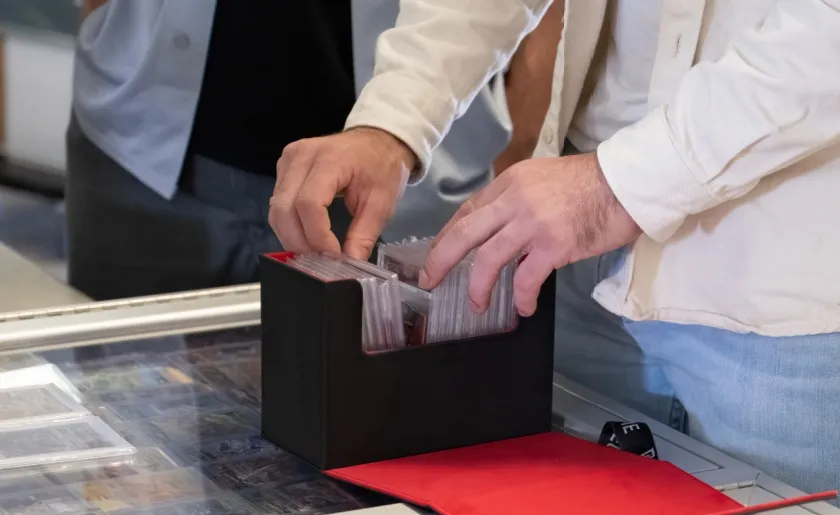
Baseball collectors track sets, teams, seasons, and careers all at once. Set builders love binders with nine-pocket pages ordered by year and brand — a full page at a glance, with gaps that highlight what to hunt next. Team- and player-focused runs fit boxes with labeled dividers. Graded cards and key rookies get the top tier: slabs, one-touch holders with UV protection, and magnetic holders in a secure box or safe, backed by an inventory noting grade, year, and purchase price.
When self storage works for card collections
When your collection outgrows a closet, a climate-controlled self storage(opens in new tab) unit solves three problems at once: space, climate, and separation from daily life.
Climate. A controlled unit holds steady temperature and humidity across all four seasons — exactly what paper and cardboard want, and exactly what protects sleeves, toploaders, binders, and slabs alike.
Security. Modern facilities typically offer self storage security features(opens in new tab) such as access control, cameras, and on-site staff. Inside, a simple shelf layout — bulk boxes at the base, binders and hits at eye level, a safe in the corner — keeps high-value handling in a controlled space instead of the living room.
Room to grow. A unit scales from a few banker boxes to rows of multi-row boxes, display cases, and a work table, with no pressure on shared household space. Label the shelves and boxes, and you’ve got a satellite card room ready for shows, trades, and sales. To know what type of unit you need, you can check our storage unit size guide(opens in new tab) and calculator(opens in new tab), before deciding on the right amenities(opens in new tab), too.
Self storage is an especially good solution for households with young kids, pets, or frequent moves. A unit also means continuity — the collection stays in the same controlled environment even when the address changes, safely away from kitchen steam, garage dust, and daily traffic.
FAQ
What’s the best way to store trading cards long-term?
A layered setup: penny-sleeve every card, add a toploader or rigid holder for anything with value, then store them in archival boxes or archival-safe binders. Keep the whole thing in a climate-stable spot around 65–72°F and 40–50% humidity, out of direct light. The sleeve protects the surface, the holder protects the structure, and the environment protects everything.
Are penny sleeves enough to protect trading cards?
Penny sleeves alone are enough for bulk commons and low-value cards — they protect the surface from oils, scratches, and grinding. For anything mid-value or above, add a toploader or rigid holder for structural protection as well.
Can you store trading cards in plastic bins?
Plastic bins can work for short-term or transit storage, but check that they’re airtight enough to hold silica gel packets effectively and avoid containers that off-gas chemicals. Archival cardboard boxes remain the standard for long-term storage because they breathe appropriately and won’t trap moisture against the cards.
How do you store graded trading card slabs?
Graded slabs are already fully enclosed, so storage focus shifts to preventing slab cracking and surface scratches — keep them upright in a dedicated slab case or box, away from anything that can press against the label or case edges, and in the same 65–72°F, 40–50% humidity environment as the rest of your collection.
What’s the best storage for foil or holo trading cards?
Foil and holo cards are more prone to warping than standard cards because the foil layer and cardboard expand and contract at different rates with humidity changes. Double sleeving — a perfect-fit inner sleeve under a standard penny sleeve, then into a toploader — helps keep them flat, and tighter humidity control (staying toward the middle of the 40–50% range) reduces the risk of curl.
When does self storage make sense for a card collection?
Once the collection outgrows your shelf space or you want steadier climate control than a home can offer. A climate-controlled unit holds stable temperature and humidity year-round, adds security features like cameras and access control, and gives you room to grow into a proper card room.
Bottom line
It all comes back to one simple structure: sleeves protect surfaces, rigid holders protect structure, boxes and binders provide form and access, and climate, light control, and organization wrap around everything. Nail that framework and you can adapt the details to a garage, a closet, a spare room, or an office anywhere.
Your cards stay ready for play, display, or sale, even as life keeps rearranging the space around them.

Scary Good DIY Halloween Decorations That Won’t Haunt Your Wallet
A few floating candles in the hallway, a family of ghosts by the front door and a suspicious number of bats climbing up the bedroom wall can make October feel a whole lot spookier. While Halloween stores are full of tempting finds, some of the best DIY Halloween decorations can come from things you already have tucked away in drawers, closets or the recycling bin.
Suburban Giants and Urban Risers: Where America’s 100 Largest Metros Fall on the Self Storage Map
Self storage has long been a suburban story. Across America largest 100 metros, 59% of the inventory built over the past decade sits outside city cores, largely preserving the ratio of the total existing inventory.
Sweatshirt Storage Ideas Worth Keeping Up Your Sleeve
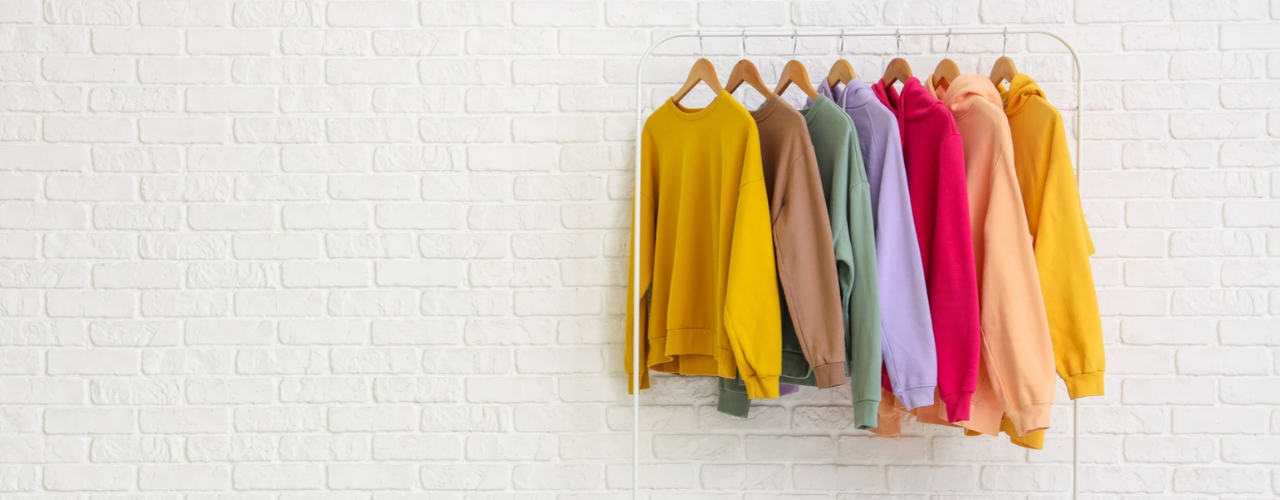
Sweatshirts are great until you realize how much room they take up. A few thick hoodies can fill a drawer fast, with lighter crewnecks getting squashed underneath or pushed somewhere you forget about. Good sweatshirt storage can make that pile much easier to manage without requiring a bigger closet.

Living Room Storage Ideas: 28 Ways to Reclaim Your Hosting Space
If a living room is where most of a household’s living happens, good storage should be the top priority for setting up or revamping the place. After all, think of how easier it would be to have people over when tidying up the place is just a matter of putting things in their right place (in a time when fewer and fewer people are entertaining friends at home(opens in new tab)). The trick is making room for all those wayward clothes, blankets, chargers and other small things that end up on (or, inexplicably, in) the sofa. Here are 28 living room storage ideas to get you started and make tidying up a quick affair.
25 Mudroom Storage Ideas (And Mistakes to Avoid)
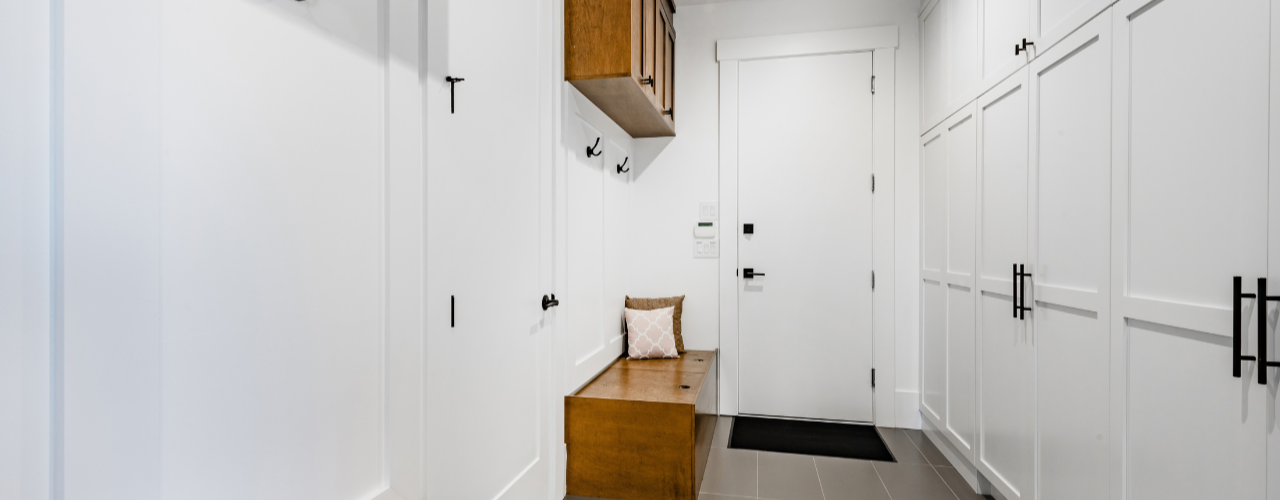
When you come home with muddy boots, an armful of bags and a coat you can’t wait to take off, it’s nice to have somewhere to put it all. With a mudroom, you can leave the outdoor mess at the door instead of carrying it through the house. Traditionally, you’d set aside a separate room, but you can just as easily use a hallway, an entryway closet, a laundry-room corner or a stretch of wall near the entrance.
Is Your Home Office Worth the Rent? What Coworking and Self Storage Could Save You
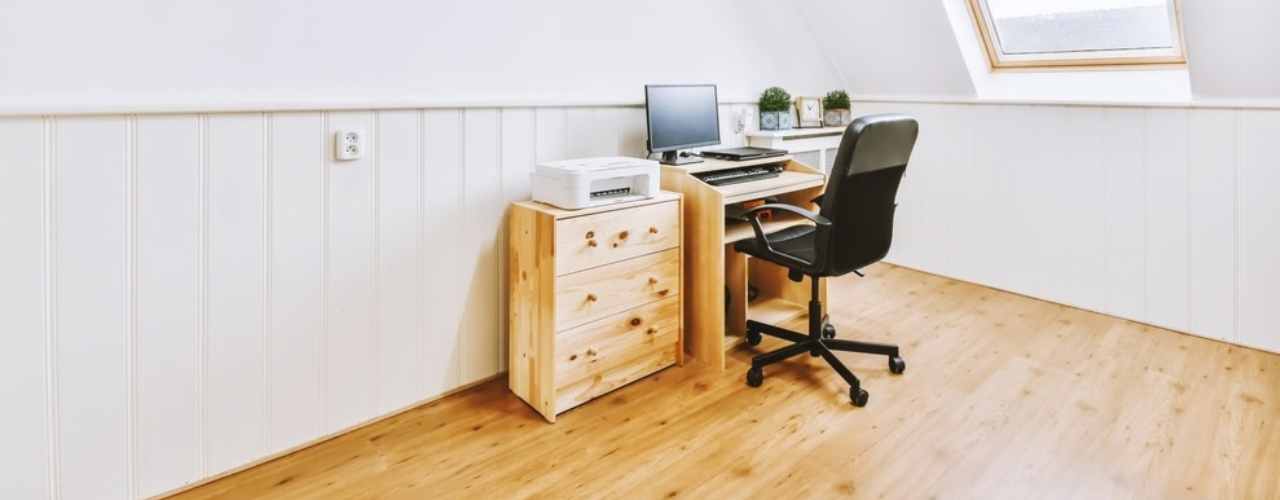
Every square foot of your apartment comes with a price tag, and a home office claims more of them than most renters expect. It starts with a desk. Then come the second monitor, the printer, the filing cabinet and the overflow boxes. Before long, the corner you set aside for work has turned into a small room you are paying for every month.

Best U.S. Cities to Live Uncluttered: Plano, TX, Offers the Most Room to Breathe
Clutter is in our homes as much as in our heads. Both are shaped by where we live.

America’s Top Snowbird Destinations for 2026–2027: Florida Leads in Numbers, Texas Wins on Value
For Americans living in colder states, the approach of winter is reason enough to start looking south. Cold weather carries costs that go beyond the heating bill and shoveling snow. Seasonal affective disorder(opens in new tab) is far more prevalent in northern states, so a temporary move south isn’t simply an escape from the cold, but a chance to spend the hardest stretch of winter outdoors and in the sun.
How Much Does Halloween Really Cost in 2026? Plan Wisely to Avoid the Scare of Hidden Costs
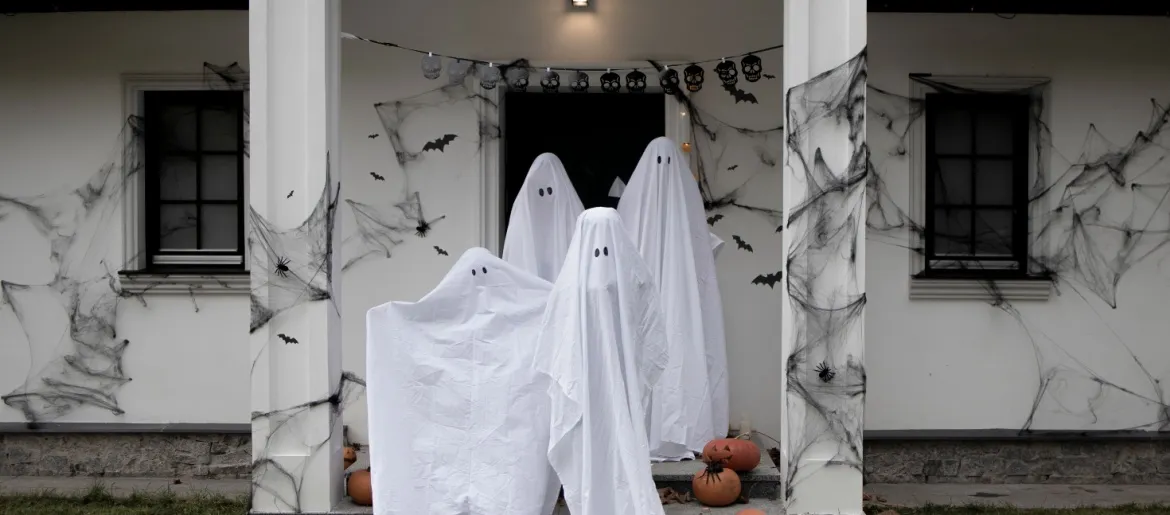
Americans’ love for Halloween is almost frightening — this year alone, we are on our way to spending $13.5 billion, according to data from the National Retail Federation(opens in new tab). That breaks down to about $115 Halloween costs per person, a whopping 49% more than 10 years ago.