

When it comes to self storage, the hard part is finding data that’s both current and retrospective, both granular and sweeping, but also — and most importantly — trustworthy enough to act on. After all, national averages age quickly, and the numbers that move decisions live at the metro and submarket level. Regularly refreshed and highly authoritative, StorageCafe’s Self Storage Industry Trends page exists to close that very gap for professionals in the self storage sector, as well as real estate reporters and journalists. It brings live, nationwide market data into one place and breaks it down city by city, drawing on the same intelligence the professional side of the business relies on. Here’s what it covers and why it’s worth keeping open in a tab.
A national snapshot that keeps pace with the market
The industry statistics page gives you the state of U.S. self storage, refreshed every month rather than published once and left to age. It tracks total inventory across the country, new rentable space delivered in the most recent year, and the volume of construction projected to come online next — including the year-over-year direction of the development pipeline, which has been easing from its recent peak.
Alongside supply, the page tracks the demand side: the share of Americans currently using self storage, the share who expect to rent in the future, and the scale of monthly search interest in storage nationwide. These figures explain a market that has kept absorbing new supply even as the construction pace moderates.
What you can explore on the industry statistics page
The page is more than a set of headline figures. It’s organized into sections that each answer a different question about the market, most of them paired with clear, interactive visuals that make the trends easy to read:
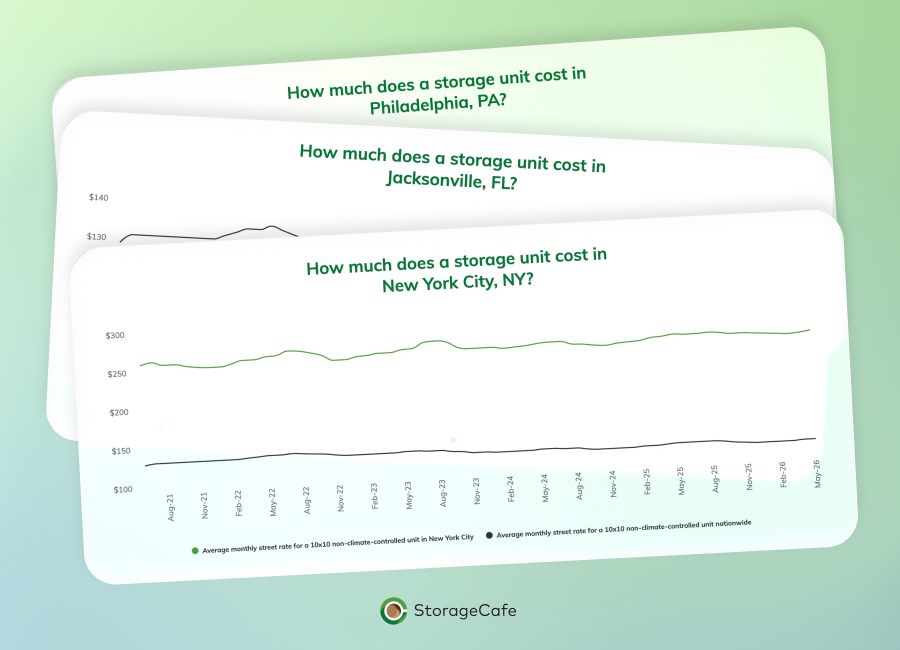
- Rent evolution in major cities — how street rates have moved over time across the country’s largest markets, so you can see the direction of travel rather than just a single point in time. For even more information on this topic, you can check out our storage price guide.
- Construction trends — what’s been delivered, what’s in the pipeline, and how the pace of new supply is shifting year over year, both nationally and by market.
- How many self storage facilities are there in the U.S.? — a running count of facilities and inventory across the country, the baseline figure behind almost every other metric on the page.
- Self storage customer profile — who is renting, drawn from demand research, including the life stages and circumstances that bring people to storage in the first place.
- Self storage interest (how customers search for storage online) — what search behavior reveals about where and when demand is building, often ahead of the moves that show up in rent and occupancy data.
- Expert insights on the self storage market — perspective from people active in the sector, adding the read-between-the-lines context that raw figures can’t supply on their own.
Together these turn the page from a reference table into something you can interpret — the visuals do a lot of the work of showing a trend rather than asking you to reconstruct it from numbers.
City-level pages built for submarket analysis
The national view sets context, but almost no decision gets made at the national average. What matters is the metro — and that’s where the page’s local pages do the work. Each major market has its own dedicated trends page covering current street rates by unit size, the count of facilities and units in the market, square feet of storage per capita, and the volume of new space scheduled to deliver, with year-over-year movement on each.
The local data is sourced from Yardi Matrix, StorageCafe’s sister company and one of the most comprehensive market-intelligence platforms in commercial real estate, used by investors, lenders, and asset managers underwriting the multifamily, office, industrial, and self storage sectors. Yardi Matrix maintains operational profiles for more than 40,000 self storage facilities across the U.S., so the figures behind these pages carry the same provenance as the data used to underwrite deals.
This diversity across different markets led us to also create pages dedicated to the self storage industry in the biggest U.S. cities:
- New York City — a dense, supply-constrained market with low square footage per capita, where tight inventory sustains premium rents.
- Houston — a deep, well-supplied market with high per-capita inventory and a large forward construction pipeline.
- Los Angeles — an aggressive recent build-out paired with one of the lowest per-capita supply figures among major metros, a combination worth watching for absorption.
The throughline is the balance between local demand and local supply, and the per-capita and pipeline figures on each page are what let you judge whether a given submarket is tightening or loosening. That’s the read that informs an acquisition, a development go/no-go, or a rate strategy — and it’s now in one consistent format across markets.
How the page fits into a market overview
The pages are organized so you can move from national context to a specific market quickly, then pull the comparison points you need.
For anyone tracking demand drivers, the StorageCafe Blog pairs the trends page with deeper research — studies on migration patterns, the life events behind storage demand, and sector reports covering specialized storage such as RV, boat, and car. Those pieces add the “why” behind the movements the page quantifies, which is often the part that’s hardest to source elsewhere.
Frequently asked questions
Where does the data come from?
The market figures are compiled by the StorageCafe Newsroom and sourced from Yardi Matrix, StorageCafe’s sister company and one of the most comprehensive market-intelligence platforms in commercial real estate. Yardi Matrix maintains operational profiles for more than 40,000 self storage facilities across the U.S., which is what gives the numbers their depth and reliability.
How often is it updated?
Data on self storage rents and construction is updated every month.
The page is designed to track the market as it moves rather than capture a single moment, so the figures refresh on an ongoing basis rather than being published once a year.
What can I see for a specific market?
Each city page covers current rates by unit size, the number of facilities and units in the market, square feet of storage per capita, and the volume of new space scheduled to deliver — with the year-over-year direction on each. Together those tell you whether a market is tightening or loosening.
How do I find the markets I care about?
City pages are organized by state and metro under the main trends page, so you can move between markets directly. Start from the Industry Trends page and drill into any city from there.
———————————————-
The market intelligence that used to be locked inside paid reports is now organized, current, and consistent across markets in one place. The national page frames where the sector sits; the city pages tell you what’s true in the markets you operate, build, or invest in; and the underlying Yardi Matrix provenance means the figures hold up to scrutiny. Start with the markets you cover and build the read from there.


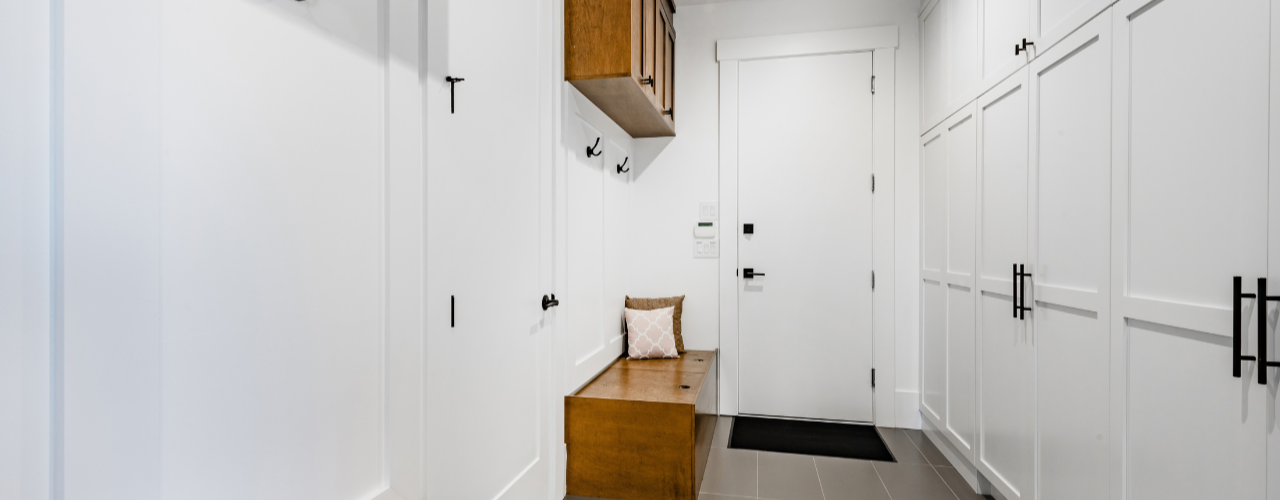
25 Mudroom Storage Ideas (And Mistakes to Avoid)
When you come home with muddy boots, an armful of bags and a coat you can’t wait to take off, it’s nice to have somewhere to put it all. With a mudroom, you can leave the outdoor mess at the door instead of carrying it through the house. Traditionally, you’d set aside a separate room, but you can just as easily use a hallway, an entryway closet, a laundry-room corner or a stretch of wall near the entrance.

Is Your Home Office Worth the Rent? What Coworking and Self Storage Could Save You
Every square foot of your apartment comes with a price tag, and a home office claims more of them than most renters expect. It starts with a desk. Then come the second monitor, the printer, the filing cabinet and the overflow boxes. Before long, the corner you set aside for work has turned into a small room you are paying for every month.

America’s Top Snowbird Destinations for 2026–2027: Florida Leads in Numbers, Texas Wins on Value
For Americans living in colder states, the approach of winter is reason enough to start looking south. Cold weather carries costs that go beyond the heating bill and shoveling snow. Seasonal affective disorder(opens in new tab) is far more prevalent in northern states, so a temporary move south isn’t simply an escape from the cold, but a chance to spend the hardest stretch of winter outdoors and in the sun.

How Much Does Halloween Really Cost in 2026? Plan Wisely to Avoid the Scare of Hidden Costs
Americans’ love for Halloween is almost frightening — this year alone, we are on our way to spending $13.5 billion, according to data from the National Retail Federation(opens in new tab). That breaks down to about $115 Halloween costs per person, a whopping 49% more than 10 years ago.

How to Store LEGOs: All the Fun, None of the Clutter
How to store LEGOs largely comes down to how your household uses them. If the bricks are part of everyday play, you need a setup that keeps them within easy reach and makes cleanup quick (for your feet’s sake, at least). Toy storage(opens in new tab) such as simple bins, playmats or containers that children can put away themselves may be enough. Larger or more serious collections usually need more organization, such as labelled drawers for loose pieces, trays for unfinished builds, shelves for completed models and separate storage for retired sets.

Cardboard Costume Guide: Tips and Ideas for a DIY Halloween
Whether for kids or adults, cardboard costume ideas often make the biggest splash once materialized, and that’s for a simple reason: doing a lot with a little is a universally impressive feat (especially in this economy). If you don’t have enough boxes you could temporarily repurpose, don’t worry! There are many places where you can find free moving boxes(opens in new tab), from stores and supermarkets to online groups and recycling drop-off spots. On the run? Try your luck at a self storage(opens in new tab) facility that sells moving supplies, often for cheap. This way, you can choose moving boxes of different shapes and sizes(opens in new tab), so you can make your costumes as complex as you want.

How to Celebrate Halloween: 9 Non-Spooky Ways To Enjoy It
As soon as October starts, it’s the official Halloween month. And while for many people it means it’s open season to get the scare of a lifetime, others, especially families with small children, might prefer to celebrate in a tamer way that’s both kid- and adult-friendly. While you’re likely to find more events where the spook factor is high, here’s how to celebrate Halloween in a not-so-scary way:

Motorcycle Storage Guide: How to Store Your Bike Safely
Motorcycles may be born to be wild, but eventually even the wild ones need somewhere to park. Whether riding season is winding down or your current living situation comes with plenty of square footage for you and less for your bike, motorcycle storage is one of those parts of ownership that doesn’t get as much airtime as the open road.

Halloween Decorating on a Budget (And Cheap Ideas for Everything Elsee)
Halloween has crept a long way from its eerie origins. While All Hallows’ Eve has transformed through the centuries, it wasn’t until the 1930s that trick-or-treating became a tradition in the U.S. and businesses began conjuring up mass-produced Halloween costumes. Now, Halloween is a monster-sized, billion-dollar industry, with a cauldron full of costumes and decorations ranging from the mainstream to the macabre. But is it all really worth your wallet? Maybe, but we’ll let you in on a little secret: You can keep your Halloween decorating on a budget and save on everything else, too. Take this plan and see it through!