

Swapping out your closet from one season to the next can feel overwhelming — bulky winter coats taking over in spring, or sundresses piling up once the chill sets in. If you love fashion but dread the hassle of seasonal clothing storage, you’re not alone. The good news? With the right approach, you can save space, protect your clothes, and maintain a stress-free wardrobe rotation.
In this guide, we’ll walk you through every step of seasonal clothing storage—from decluttering and repairing clothes, to choosing the best containers, setting a storage calendar, and even deciding whether a self storage unit is worth it. By following these strategies, you’ll keep your garments in top condition and make each seasonal swap easier year after year
1. Declutter your clothes for seasonal clothing storage
One way to start your seasonal clothing storage journey is to declutter. Begin by going through your closet with a clear plan:
- Keep the pieces you’ve worn in the last year and know you’ll reach for again.
- Donate the items you haven’t worn but are still in good condition—someone else will love them.
- Toss anything that’s damaged, stretched out, or simply beyond repair.
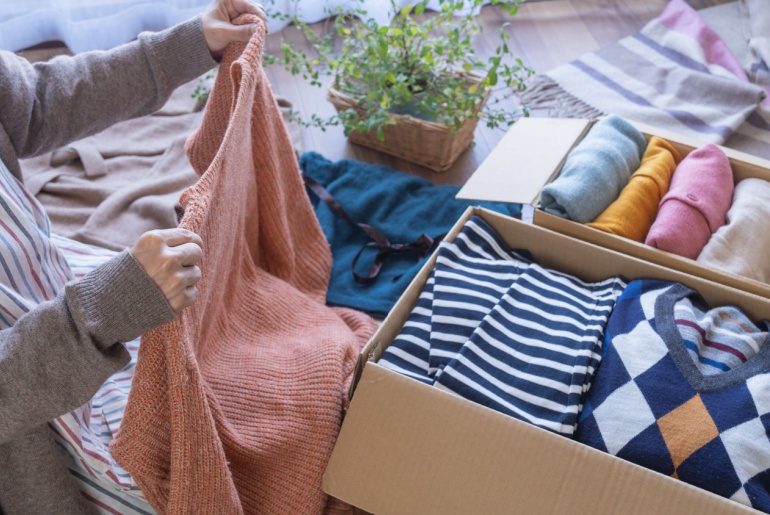
From your old college shirts to your newly acquired jeans, this process helps you quickly see what truly deserves its place. For maximum efficiency, focus on what makes you feel like your best self. Good quality fabrics, flattering cuts, and comfortable staples are the pieces worth carrying into the new season.
2. Restore, repair, and prepare clothes before storage
When caring for your clothing, simply washing and drying it will not suffice. If you want to build a wardrobe that stands the test of time, a little patchwork may be necessary for items you’d like to hold on to the next season. If you’re handy with a needle and thread, simple fixes like sewing on a loose button or closing up a small tear can extend the life of your favorite pieces.
For more extensive repairs or alterations, it’s worth turning to a professional tailor. Investing in skilled help ensures that your clothes are properly restored and ready to wear again. By addressing these small issues before storage, you can rest assured that when you bring out your seasonal wardrobe, everything will be in excellent condition.
3. Go for smart containers for clothing storage
When storing a large portion of your wardrobe, choosing the right the containers makes all the difference. Vacuum-sealed bags, fabric storage bins, and dust covers help keep clothes compact, clean, and safe. Clear plastic bins can work just as well, and their transparency makes it easy to spot what you need when the seasons change.
Personalizing your storage solution based on the type of fabric and item stored for best results:
- Chiffon, satin, linen: Fabric storage boxes for gentle protection
- Knits, sweaters and casual wear: plastic bins with tight lids and vacuum-sealed bags
- Coats, suits and dresses: Breathable garment bags
- Leather, padded coats: Felt-coated hangers with dust covers
- Jeans, cotton t-shirts and hoodies: Vacuum-sealed bags for space efficiency
- Scarves, hats and belts: hat boxes or breathable bags.
- Footwear: shoe trees and/or stuffing for the insides and breathable shoe bags to keep them in

Still, be mindful of fabric type — some materials are sturdier, while others require extra care. How you pack today will go a long way in keeping your clothes in good shape for the future.
-
- Pro Tip: Avoid cardboard boxes as they can attract pests and lock moisture in. Also, don’t overpack containers to prevent wrinkles and fabric damage – you can also insert acid-free tissue paper in-between clothing for the same purpose.
For extra peace of mind, tuck in a few cedar wood balls or lavender sachets. They’ll freshen up your stored clothes and naturally help keep pests away.
4. Organize a seasonal wardrobe system
When packing your clothing, you have plenty of options for organizing your wardrobe in a way that works best for you. Some prefer sorting by categories, such as tops, bottoms, or outerwear, while others group pieces by fabric type to make it easier to care for them later.
Another useful method is arranging items by season, so when it’s time to rotate your wardrobe, you can pull out everything you need at once without digging through unrelated pieces. Regardless of the system you choose, label bins by clothing types and/or season so that you can easily find your clothes the following season.
If you’re feeling more ambitious, you might try creating a capsule wardrobe. This approach focuses on making all your items work together seamlessly—for example, ensuring every shirt pairs well with every pair of pants. While it takes some effort, building a capsule wardrobe not only simplifies daily outfit choices but also encourages you to reflect on your personal style and shopping habits.
5. When to rotate clothes? Follow a seasonal storage calendar
Timing plays a big role in keeping your wardrobe organized year-round. A simple schedule can help you stay ahead of seasonal shifts without feeling rushed. As a rule of thumb, plan to rotate your clothing about twice a year—once in late spring, when heavier coats and knits can be packed away, and again in early fall, when summer items make room for layers and warmer fabrics.
If you live in an area with more extreme weather changes, you might benefit from a quarterly approach: refresh your wardrobe every three months to ensure you always have what you need on hand. Marking these changeovers on your calendar can make the process a habit, much like spring cleaning.

It also helps to leave a small buffer zone — don’t rush to put away all your winter jackets the first warm day, or stash every summer dress at the first cool breeze. Keeping a few transitional pieces available will save you from those in-between weeks when the weather can surprise you.
Sample seasonal storage calendar ideas
To make this easier to put into practice, here’s a simple month-by-month guide you can follow:
- March–April: Begin packing away heavy winter coats, boots, and thick knits as the weather warms. Keep a few lighter jackets handy for chilly evenings.
- May–June: Transition into summer wear. Store away spring layers you no longer need, and bring out shorts, dresses, and breathable fabrics.
- September: Rotate again for fall. Put summer pieces into storage and bring forward sweaters, jeans, and light jackets.
- October–November: Prepare for colder weather by pulling out heavier coats, scarves, and boots. Store away most of your summer wardrobe.
- December–January: Do a quick mid-winter check—pack away anything you’re not wearing and ensure your current storage remains dry and organized.
- February: Begin sorting through winter clothes to identify items you no longer wear. Donate, sell, or repurpose them before the next swap.
Following this kind of schedule keeps your wardrobe rotation predictable, saves time during seasonal changes, and helps you maintain an intentional collection year-round. Feel free to adjust it based on seasonal variation in your area.
6. Where to store clothes for the season
The key to keeping clothing in good condition during storage is providing the right environment. Most garments do best in spaces that are cool, dry, and shielded from direct sunlight, while also avoiding humidity and sudden temperature changes. Always check the care tags for fabric-specific recommendations before deciding on a storage spot.
- At home
For many, the simplest solution is to store clothing at home. Closets in spare bedrooms, under-bed storage boxes, or extra closets and dressers can hold seasonal items until you need them again. This option is convenient and budget-friendly, but it can also lead to clutter, especially if you’re trying to make space for the clothes you wear every day.
- In a storage unit
When home space is limited, a self storage unit can serve as an extension of your closet. Climate-controlled units are particularly effective for clothing, as they maintain steady temperature and humidity levels—ideal for preserving natural fabrics, bright colors, and delicate details. This option works especially well for bulky seasonal items like heavy coats or boots that would otherwise crowd your home. With the right packing methods, self storage offers peace of mind that your wardrobe will be ready to wear when the next season arrives.

Going for self storage is a great way to keep clothes safe long-term. Besides climate-control, there are aspects you should consider such as:
Storage unit size
When choosing a storage unit for clothing, size can make all the difference. Here are the most common unit sizes for clothing:
5′ x 5′ unit – It can be great option popular for clothing. Acts like an extra closet, perfect for boxes, bins, and smaller seasonal items.
5′ x 10′ unit – A practical middle ground. Offers more room than a 5′ x 5′ without the higher cost of larger units, making it ideal for those with extra wardrobe pieces or small furniture alongside clothing.
10′ x 10′ unit – A spacious option for those who want flexibility and have plenty of clothing such as families. Provides enough room for bulkier wardrobes, household items or simply more breathing room to organize creatively.
Storage unit prices
Self storage is generally affordable, though costs can vary depending on unit size, location, and amenities. Smaller lockers are budget-friendly, while larger units naturally come with higher monthly rates.
Here’s how prices compare:
- Average 5’x5’ unit: $54/month
- Average 5’x10’ unit: $77/month
- Average 10’x10’ unit: $123/month
- Rates can vary from $306/month in Los Angeles, CA, to $153/month in Austin, TX, and $158/month in Cleveland, OH.
FAQs about seasonal clothing storage
1. What is seasonal clothing storage and why is it important?
Seasonal storage means packing away out-of-season clothes to save space and protect them. It keeps your wardrobe organized and extends the life of your garments.
2. When should I rotate my clothes for seasonal storage?
Most people rotate twice a year—spring for summer clothes and fall for winter clothes—based on local weather patterns.
3. How do I prepare my clothes before putting them into storage?
Always clean items first. Dirt, sweat, and oils can attract pests and cause permanent stains over time.
4. How should I fold vs. hang clothes for storage?
Fold knits, sweaters, and casual wear to prevent stretching. Hang structured garments like coats, suits, and dresses in breathable garment bags.
5. Can I store seasonal clothes in a garage or shed?
Not ideal—temperature swings and humidity can damage fabrics. If unavoidable, use airtight containers with added protection.
6. What size storage unit do I need for seasonal clothes?
A 5’x5′ storage unit typically provides sufficient space for seasonal clothing storage, acting as an extension of your closet. A 5’x10′ unit is better suited for multiple seasons of clothing.
Finally, seasonal clothing storage may take more effort than simply filling your closet, but it offers a chance to rethink how you engage with your wardrobe, encouraging more intentional choices about what you wear. At the end of the day, clothing remains an extension of who we are, our likes, our quirks, and our ways of breaking from the ordinary. By caring for garments properly in storage, we give ourselves the best chance to preserve both our style and our sense of self.
This article was written by Andra Avram, a StorageCafe intern. With a passion for writing and a keen eye for research, Andra is excited to develop her skills as a marketing writer. She is highly organized, creative, and ambitious, and is eager to see how these qualities will shape her professional path.



Storage Ideas for Small Spaces: 9 Ways to Max Out Your Home
A messy home contains the seeds of its organization. Those seeds everywhere: the space above doors, under beds, behind sofas and inside furniture can all become storage. Here are the best storage ideas for small spaces, so you can make the most of your cozy home.
How to Organize Your Bathroom: 8 Ways to Stay Tidy
You already know why an organized bathroom is worth the effort, but let us remind you: it makes rushed mornings easier, keeps counters cleaner and just helps get you in the mood to go through your skincare routine like you should. Plus, in bigger households, it helps everyone find what they need. And you know how much a tidy bathroom counts for your self-esteem when a guest or a partner shows up. Luckily, you don’t need a degree to know how to organize your bathroom. The secret is keeping less, giving every item a home and making that home simple to use. Let’s go through some practical steps can help you create a bathroom that stays functional and nice to look at.

Best U.S. Cities to Live Uncluttered: Plano, TX, Offers the Most Room to Breathe
Clutter is in our homes as much as in our heads. Both are shaped by where we live.

How to Use Silica Gel Packets for Storage
Moisture can cause significant damage to items in storage, leading to rust on tools, mold on clothing and warping in documents. Silica gel uses science to fix that. Often found in small packets inside product packaging, silica gel is a desiccant that absorbs moisture from the air, keeping your stored items dry and protected. This guide explains what silica gel is, how it works and how you can use it to preserve your belongings in self storage.

Where to Find Moving Boxes in Los Angeles
Moving in Los Angeles is its own thing, and figuring out where to get moving boxes sorted is just the start of everything you’ll need to organize before moving day.

10 Best Places to Donate Books in Philadelphia
Did you know Philadelphia’s book-sharing roots go back to 1731? Benjamin Franklin and The Junto Club gathered their personal collections into a shared library, thus sparking a tradition of pooling knowledge for the common good. Today, you can carry on that spirit by donating books to local organizations and free libraries.

How to Sell Furniture (For Quick Deals and Side-Hustles)
Selling used furniture can be quick, profitable and even rewarding if you know where to list, how to present your pieces and what buyers are looking for. Just a tiny bit of patience and some good planning will take you a long way. This guide covers everything you need to sell your furniture efficiently and safely, for the best possible price.

1 in 4 Americans Rent Self Storage — and the Next Wave Is Already Coming
About one in four Americans is already using self storage and just as many are actively searching for a unit online right now. Across the 150 largest U.S. cities, self storage searches rose 23% year-over-year in 2025 — nearly triple the growth recorded the previous year, up from around 8% in 2024.
Where to Donate Furniture in Philadelphia
Philadelphia has a strong tradition of giving back, and donating furniture is a practical way to support local charities while freeing up space in your home. Whether you’re downsizing, moving, or just decluttering, there are plenty of organizations ready to take your gently used furniture. And if you’re not ready to part with certain pieces just yet, self-storage can buy you time to decide.