

Buying a home is still part of the American dream, but budgeting for this endeavor can be challenging. When someone takes on a mortgage to finance the purchase, the decision to become a homeowner affects them for decades to come. You need to make sure you know all that the process entails financially. If you are aware of the conditions you must meet financially, you can make a plan to fit buying a home into your budget.
Here’s how to get started on creating a budget for buying a home:
1. Perform an expenses audit
To incorporate buying a home into your budget, you first need to establish where most of your budget goes. Keep track of your expenses related to housing, groceries, entertainment, clothing, personal and more. Now, look at your expenses and see whether you can cut some of them to save for a down payment and other expenses related to homebuying. You might also consider clearing other financial obligations to ensure that the lender approves your mortgage application. Many homebuyers find that organizing this data in a structured format makes it easier to spot patterns and identify where they can cut back, which is why some choose to convert bank statements to Excel for a clearer overview of their spending.
2. Budget for homebuying
Now that you’ve looked into your finances, it’s time to see how homebuying could fit into your financial picture. As a general rule, you shouldn’t spend more than 28% of your monthly income on housing costs, which include mortgage, credit cards and other loans. You can check the Freddie Mac home affordability calculator to see if you can fit homebuying into your budget.
Another option you can consider is the Consumer Financial Protection Bureau online calculator, which also accounts for location, type of loan and interest. The 30-year fixed-rate mortgage is one of the most popular options, as it isn’t subject to market fluctuations.
Just keep in mind that banks and mortgage companies may give you a different response than you get from online calculators, so make sure to have extra funds in your budget to cover every contingency. Understanding mortgage rates is crucial when budgeting for a home purchase. Various elements, including economic conditions and your credit score, influence these rates. To make informed decisions, it’s important to know what are the factors that can affect your mortgage rate so you can secure the best terms available.

3. Find the financing option that’s best for you
When buying a home, it’s customary to save for a down payment. However, the down payment closely relates to the type of loan you’re taking on.
Here are the most common types of loans you can consider:
- Conventional loan
A conventional loan is the most common type of loan, and it requires a 20% down payment. For a few homebuyers, the down payment can be as low as 3%, but that only happens in rare cases. If you’re buying a new home before selling your current one, you might also consider a bridging loan, which can provide short-term financing to help cover the gap between the two transactions.
- FHA loan
When you’re going with a Federal Housing Administration (FHA) loan, down payments can be as low as 3.5%, and you might also qualify for a lower interest rate than a conventional loan. However, you will have to pay for PMI (private mortgage insurance) for the duration of your mortgage.
- VA loan
A VA loan is for current and former military personnel, and you can get one with zero down payment. On average, you pay a funding fee of 2.3%, but it can range from 0.5% to 3.6%, based on the loan type, if you’ve accessed a VA loan before and also you’ve paid more than 5% upfront.
4. Prepare for other homebuying expenses
Besides the down payment and the mortgage payments, there are a couple of additional expenses you should account for when buying a home, such as:
Private mortgage insurance
If you choose a conventional loan and your down payment is below 20%, you can expect to pay private mortgage insurance (PMI) each month until you gain 20% equity in your home. It costs about 0.5% to 1% of the loan per year. Keep in mind that if you’ve gone for an FHA loan, your PMI will not go away for the entirety of the mortgage.
Closing costs
On closing day, when you’re signing the paperwork that makes you the homeowner, it’s also time to pay for the closing costs.

Closing costs include several fees as follows:
- Appraisal fee
- Credit report fee
- Application fee
- Title search
- Title insurance
- Underwriting fee
In general, closing costs vary depending on location, but you can expect to pay between 2% to 5% of the loan. In 2021, the national average closing costs for single-family homes were around $6,800.
If paying these extra costs upfront proves too burdensome, you can consider no-closing-cost options. For example, you can include closing costs in the overall loan. However, this means that you will end up paying more interest for the entire mortgage.
Earnest money
Earnest money represents a security deposit put down before filing the paperwork for buying the home. It’s a sort of guarantee that you’re serious about the transaction. It can be as low as a couple hundred dollars or as high as a couple thousand dollars.
If you finalize the sale, you can get it back or you can use it to fund your home purchase as it’s customary to do. However, if you back away from the deal, you do not. Make sure the contract clearly covers every case.
Escrow
Buyers typically deposit money upfront for property taxes and insurance. This is a requirement for most lenders.
Homeowners insurance
While the homeowners insurance and home warranty coverage might be a part of your monthly mortgage payments, it’s still an expense you need to account for. For a $300,000 home, home insurance costs can be around $1,850/year on average, but rates can vary based on your insurance provider.

Homeowners Association (HOA) fees
If your home is in a community that has an HOA, expect to factor in an associated fee. HOA fees are used to maintain community amenities such as landscaping, gyms or pools. Expect to pay $100 or more for this fee.
Local taxes
Local taxes are another type of expense that homeowners typically pay, and they can vary from state to state. Make sure to research local taxes before buying. Here are the types of local taxes you may cover:
- Property taxes
While property taxes might also get lumped together with your monthly payment, they are still an additional expense you should consider. Some communities can charge quite a lot in local taxes, so make sure you also budget for this expense. Additionally, you might pay more property tax at the end of the year if the county determines that your house has increased in value.
- School taxes
Depending on the school district, school taxes can also differ very much. If you choose a neighborhood for the quality of the schooling, you might be comfortable paying a little more to ensure your child gets a good education.
Make sure to consider how you can lessen the burden of homeownership when it comes to property taxes and mortgage interest. The tax code changed in 2018, but you can still write off up to $10,000 of your state and local taxes under the Tax Cuts and Jobs Act (TCJA).
Home maintenance and repairs
Make sure to also budget for potential home repairs and maintenance, whether you’re buying an old house or a new one. You might even want to do some remodeling to the home after the purchase, so that means you’ll need to have savings at the ready after the closing. You can also postpone it and apply for a home equity loan or a home equity line of credit (HELOC) after you’ve built some equity. Consider that taking out another loan could add financial strain to your budget.
Even if you’re not planning any home remodeling any time soon, you still need an emergency fund in case the furnace breaks and needs replacing or for any other large, household-related expense. Additionally, light maintenance tasks such as landscaping, painting and more require a set budget.

Utilities
If you lived in an apartment or even a smaller home, moving into a larger one will impact your utilities. If you were a tenant before, you are probably used to having some of the utilities covered by the landlord. That isn’t the case when you own a home.
Here are some of the common utilities you will be fully responsible for as a homeowner:
- Gas
- Electricity
- Sewer
- Water
- Cable & internet
When you’re getting started, add installation fees to your utility budget too, as you’ll be much better off if you plan for these expenses.
Moving costs and storage
Your homebuying budget should also account for moving costs. Hiring a moving company to help you bring your belongings to your new abode isn’t cheap, especially if you move long-distance. Moving from Atlanta to Chicago can cost you in the $2,000-$3,500 range.

Moving across the country takes a lot of planning. If you’re sending your belongings before you get there, you can have them put in storage. Upon arrival, you can make several trips to your storage unit and gradually unpack your household items as you get organized. If you’re moving the contents of a two-bedroom home, you can easily rent a 10’x20′ unit. If you’re looking to put the belongings for a three- or four-bedroom home in storage, you’re better off with a 10’x30′ unit.
Even after you settle into your new home, it’s worth using self storage. Not only are you keeping your home breezy and uncluttered but you’re also making sure that seasonal items, such as clothing, décor and hobby gear, don’t get damaged. This is especially important if you live in an area with a hot and humid climate, such as Florida. Renting a self storage unit in Jacksonville, Florida is rather inexpensive, as you’d pay about $119/month. A 10’x10′ unit would probably suffice if you’re storing regular household items.
5. Ready to buy a home?
Once you’ve financially prepared to start looking for a home – with plenty of savings, low debt and a stellar credit score – and you’re pre-approved for a home loan, there are still some things you should keep in mind, such as:
- Finding a realtor to advocate for you
Your realtor is one of the most important people helping you realize your dream of becoming a homeowner. Make sure they know exactly what you’re looking for and that they’re knowledgeable about the market in which you’re about to buy. Clarify their fees upfront so that you know what to expect.
- Negotiating with the seller
If you put an offer on a home that doesn’t come with all the bells and whistles you’re looking for, you can try negotiating with the seller for concessions. However, keep in mind that the seller can refuse.
- Giving up a deal if it isn’t right
If the home you’re looking at isn’t what you’re looking for — it could have structural issues — or you realize buying it might be outside of your budget, it’s better to walk away and look for another listing.
Perhaps making major repairs won’t be financially beneficial to you at this point. Or you might even end up being house poor if you overspend in buying this house, meaning you spend too much of your income on homeownership expenses such as mortgage payments, property taxes, insurance and all the other household-related expenses.
Buying a home is one of the most important financial decisions you can make, but being aware of all the costs involved will ensure that your homebuying experience can be as rewarding as you expect it to be.



How to Store LEGOs: All the Fun, None of the Clutter
How to store LEGOs largely comes down to how your household uses them. If the bricks are part of everyday play, you need a setup that keeps them within easy reach and makes cleanup quick (for your feet’s sake, at least). Toy storage(opens in new tab) such as simple bins, playmats or containers that children can put away themselves may be enough. Larger or more serious collections usually need more organization, such as labelled drawers for loose pieces, trays for unfinished builds, shelves for completed models and separate storage for retired sets.

Cardboard Costume Guide: Tips and Ideas for a DIY Halloween
Whether for kids or adults, cardboard costume ideas often make the biggest splash once materialized, and that’s for a simple reason: doing a lot with a little is a universally impressive feat (especially in this economy). If you don’t have enough boxes you could temporarily repurpose, don’t worry! There are many places where you can find free moving boxes(opens in new tab), from stores and supermarkets to online groups and recycling drop-off spots. On the run? Try your luck at a self storage(opens in new tab) facility that sells moving supplies, often for cheap. This way, you can choose moving boxes of different shapes and sizes(opens in new tab), so you can make your costumes as complex as you want.

How to Celebrate Halloween: 9 Non-Spooky Ways To Enjoy It
As soon as October starts, it’s the official Halloween month. And while for many people it means it’s open season to get the scare of a lifetime, others, especially families with small children, might prefer to celebrate in a tamer way that’s both kid- and adult-friendly. While you’re likely to find more events where the spook factor is high, here’s how to celebrate Halloween in a not-so-scary way:

Motorcycle Storage Guide: How to Store Your Bike Safely
Motorcycles may be born to be wild, but eventually even the wild ones need somewhere to park. Whether riding season is winding down or your current living situation comes with plenty of square footage for you and less for your bike, motorcycle storage is one of those parts of ownership that doesn’t get as much airtime as the open road.

Halloween Decorating on a Budget (And Cheap Ideas for Everything Elsee)
Halloween has crept a long way from its eerie origins. While All Hallows’ Eve has transformed through the centuries, it wasn’t until the 1930s that trick-or-treating became a tradition in the U.S. and businesses began conjuring up mass-produced Halloween costumes. Now, Halloween is a monster-sized, billion-dollar industry, with a cauldron full of costumes and decorations ranging from the mainstream to the macabre. But is it all really worth your wallet? Maybe, but we’ll let you in on a little secret: You can keep your Halloween decorating on a budget and save on everything else, too. Take this plan and see it through!

Moving From a House to an Apartment: What to Expect, How to Downsize & How Self Storage Helps
For some, moving from a house to an apartment is a financial decision. For others, it’s about simplifying life. Maybe the kids have moved out and half the house sits empty, or you’re approaching retirement and no longer want to spend weekends on repairs. Or perhaps you’ve been weighing the cost of buying a home and wondering whether renting simply makes more sense right now.

Family Heirlooms Overload: How to Handle Family Inheritance Without Regret
Handling family heirlooms after a loss requires managing legal authority, emotional pressure and practical logistics at the same time, and the order you take them on matters more than most people expect.
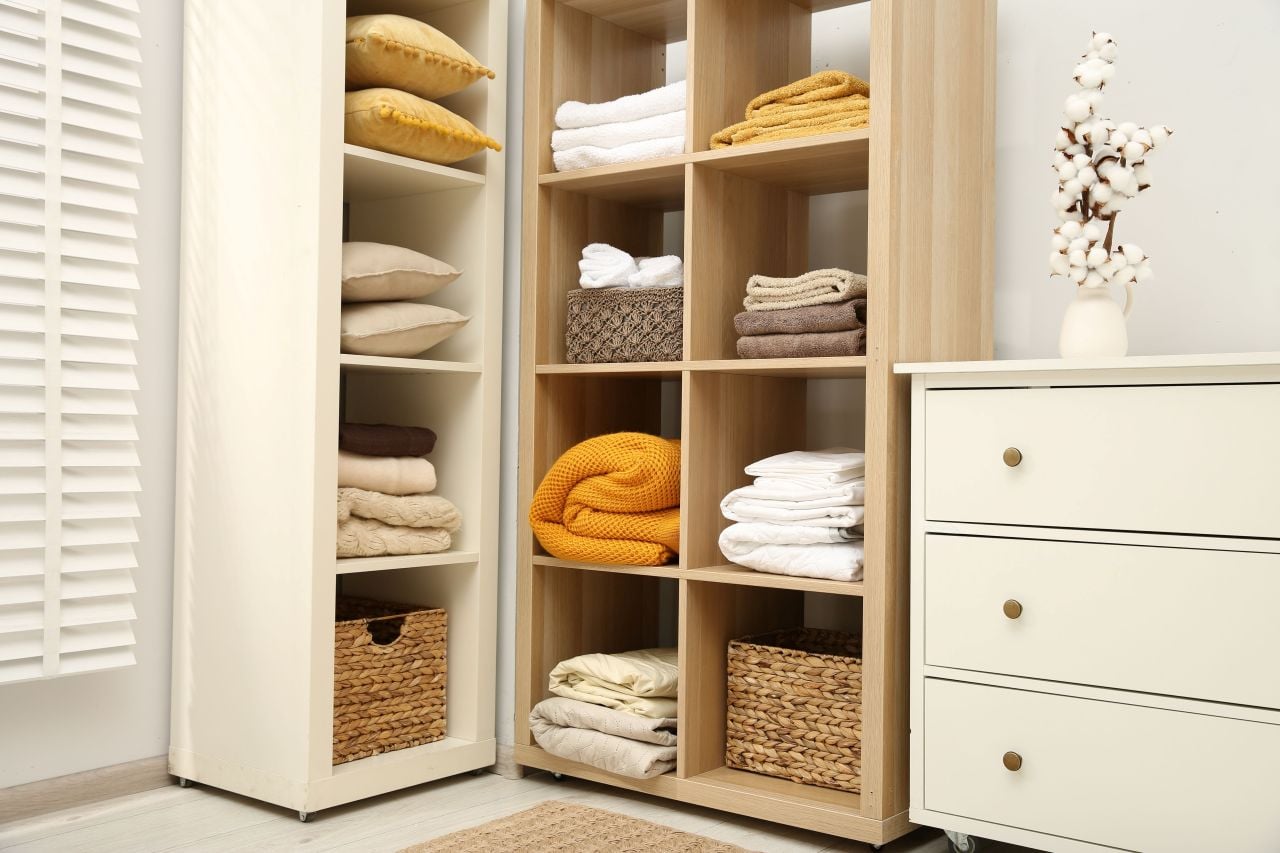
Blanket Storage: The Right Method for Every Space and Season
Blankets make our lives cozier, and storing them well is what keeps them soft and comfortable in the long run. Knowing how to store a blanket properly means your favorites come out of storage smelling fresh, feeling the same as when they went in, and lasting years longer than they otherwise would.

Board Game Storage Ideas That Keep Your Collection in Fighting Shape
Nobody warns you that getting into board games usually unlocks a second hobby, the much dreaded one that includes figuring out where on earth to put them. One game becomes a few, expansions start spawning beside their base boxes and before long, board game storage requires as much strategy as whatever is waiting on the other side of those lids.