
U.S. Capitals of Manufactured Housing (2025): Mesa, AZ, & Largo, FL, Lead America’s Mobile Housing Movement


Key Takeaways
- Mesa, Arizona, leads all U.S. cities in total manufactured home inventory, with more than 29,300 units – the largest in the country.
- Largo, Florida, takes the lead by share, with 28% of all housing made up of mobile homes – more than one in four homes in the city.
- Florida also tops the charts at the state level, home to over 824,400 manufactured homes, which make up 7.8% of its total housing stock.
- Ten states now count manufactured homes as more than 10% of their overall housing inventory. New Mexico leads the pack, with 15% of its homes being manufactured.
- Among states with a strong manufactured housing presence, Texas and Louisiana stand out for continuing to grow. Both have expanded their inventories over the past two decades – by 9% in Texas and 8% in Louisiana – at a time when many others have seen little change.
- The states with the largest shares of manufactured homes also tend to have more affordable housing markets overall. All ten fall below the national median home price of $360K. On the flip side, states with very few mobile homes are also some of the priciest places to live, with median home prices climbing to $876K in Hawaii, $607K in Massachusetts, and $575K in Colorado.
- The top ten states leading in share of manufactured housing also shine in self storage availability, each offering more than 7 sq. ft. of storage space per person — above the national average. Wyoming ranks first, with a remarkable 16 sq. ft. per capita.
With costs at half the value of a standard home, manufactured housing remains a cornerstone of affordability in the U.S. While generally widespread across the US, its footprint is uneven, with some areas much better equipped than others to respond to the need for more diverse housing options.
At the city level, Mesa, Arizona, leads in overall inventory with 29,300 mobile homes, while Largo, Florida, leads by share, with 28% of its housing stock made up of mobile homes.
Nationally, there are about 7.9 million units, equal to 5.4% of all housing stock. Regionally, the Sunbelt stands out as the capital of manufactured housing in terms of both share and sheer number of units. Florida tops in total inventory with 824K mobile units, while New Mexico holds the highest statewide share at 15%.
Keeping housing costs under control is the main reason many Americans are embracing the manufactured housing lifestyle. In 2024, the average new manufactured home sold for about $123,300 – less than half the national median home price. While that figure doesn’t include the cost of land, it still makes manufactured homes one of the few reliable paths to ownership, especially in an era of relentless housing price growth.
In fact, in the 10 states where mobile homes make up more than 10% of all housing, every one of them has a median home price below the national average of $360.6K.
On the other hand, in states where mobile homes are rare — such as Hawaii (0.3%), Massachusetts (0.9%), and California (3.4%) — home prices skyrocket, often ranging from $600K to $875K.
Interestingly, self storage is part of this ripple effect. Because manufactured homes come with less built-in space, many residents rely on self storage units for the extra room they need — and storage development often grows alongside these communities. According to our research, states with the highest share of mobile homes also tend to have above-average storage availability. Montana, for example, boasts an impressive 25 square feet of storage space per person.
The hotbeds of manufactured housing: The Sunbelt at the center of America’s mobile home movement
Mobile homes have their deepest roots in the Sunbelt and the Southeast, where warm weather, flexible zoning, and wide-open land make them both a practical and popular choice. From Florida and Texas to the Carolinas, Mississippi, and New Mexico, these regions have embraced factory-built homes as both an affordable path to ownership and a modern lifestyle choice.
Whether in coastal communities, desert towns, or quiet rural settings, residents are drawn by the promise of comfort, community, and financial freedom — a combination that continues to put the Sunbelt at the heart of America’s manufactured housing story.
Largest inventories of manufactured homes: Texas and Florida remain the powerhouses
Texas and Florida stand out for the sheer scale of their manufactured housing markets, joined by California and the Carolinas among the nation’s top hubs. We took a closer look at the states leading in manufactured and mobile home stock to see what life really looks like on the ground — from home prices and zoning flexibility to the ways residents live, organize, and make the most of their space.
Florida
Florida holds the largest inventory of manufactured homes in the United States, with about 824,400 units — roughly 7.8% of all housing statewide. The price gap compared to traditional housing is striking: $135K, compared with a median price of $397K for homes of all types and ages in Florida. That’s nearly a 200% difference, even after accounting for potential land lease costs in non-co-op communities.
Florida’s placement rules are generally statewide and permissive, but the details vary by location. Rural areas tend to welcome manufactured homes more easily, making them attractive to those buying land for RV or mobile home use. In urban and suburban areas, stricter conditions apply — such as permanent foundations, hurricane straps, or design standards that ensure homes fit into neighborhood aesthetics.
The Sunshine State also boasts one of the largest self storage markets in the country, offering nearly 10 square feet of storage space per person. That’s no coincidence — smaller homes often mean higher demand for extra storage, and Florida’s warm climate and mobile lifestyle make it a perfect match.
Texas
Texas comes in a close second, with about 776,200 manufactured homes, making up 6.2% of the state’s housing stock. In 2024, the average manufactured home sold for roughly $122.5K, compared to a median price of $313K for the state’s broader housing market — a 156% affordability gap that underscores how important manufactured housing is for keeping ownership within reach.
One big reason for Texas’s strong showing is zoning flexibility. The 2025 legislative brief on manufactured housing requires most Texas cities to establish at least one zoning district where manufactured homes are allowed by right — a significant move that expands access and reduces exclusionary zoning practices. It’s paying off: Texas is the only major state that’s actually grown its mobile home inventory, up an impressive 9% over the last 20 years.
Of course, local rules still apply. Deed restrictions and municipal ordinances can limit where homes are placed, and most residents own their structures but lease the land beneath them unless they purchase a lot outright.
Like Florida, Texas also supports a booming self storage market, with about 11.4 square feet of space per person and average monthly rents around $119, well below the national norm.
North Carolina
North Carolina is home to about 525,500 manufactured homes, representing 10.4% of all housing – one of the highest concentrations in the nation.
In 2024, the average new manufactured home sold for around $125K, compared to an average home price of $333K for NC’s overall housing market – a 166% price gap that keeps ownership within reach for many households.
In the state’s rural counties, fragmented land parcels and limited large-scale development make manufactured homes a practical, cost-effective alternative. Local economies built around industries like textiles and agriculture align more closely with the costs of manufactured housing than with traditional construction.
A 2025 state bill reaffirmed the right to install manufactured homes in most residential zones, with some areas now allowing them by-right in higher-density districts.
North Carolina also supports a strong self storage market, with average rents around $118 per month, helping residents balance smaller living spaces with added flexibility.
California
California shows the nation’s affordability divide in sharp focus. The state has about 507,800 manufactured homes, representing just 3.4% of its 15 million housing units. Yet their impact is significant – the average new manufactured home sold for roughly $167K in 2024, while overall home prices reached a staggering $759.5K. That’s a 355% price gap, the widest in the country.
For many working- and middle-class families, manufactured housing remains one of the few attainable entry points into homeownership, especially in regions where traditional homes easily exceed $1 million.
The challenge in California isn’t demand – it’s land scarcity. While space is tight, the state has taken steps to protect and expand manufactured housing communities. Laws like the Mobilehome Parks Act safeguard existing residents, while streamlined approval processes for smaller developments have made it easier to establish new communities in suitable areas.
Other major players: Georgia, South Carolina and Alabama
Georgia contributes 345,500 manufactured homes, or 7.4% of its total housing stock, with average prices around $124.8K, compared to $343.3K for the overall housing inventory. The result is a 175% affordability gap, supporting demand in both rural and suburban markets.
South Carolina and Alabama deepen the Southeastern footprint. Manufactured housing accounts for 12–13% of all housing stock in these states, among the highest shares nationally. Local zoning historically limited manufactured homes to designated parks or districts, but reforms are reducing exclusionary barriers, particularly in rural counties. The established base has also produced stable financing, servicing, and storage networks, reinforcing manufactured housing as a normalized housing option in the region.
Highest concentration of manufactured homes
New Mexico and Mississippi set the pace
When it comes to share of inventory, New Mexico leads with manufactured homes making up 15% of its housing stock — more than one in seven homes.
Close behind are Mississippi (14%), West Virginia (13.2%), and South Carolina (12.8%). These states share two traits: housing markets priced well below the national median of $360.6K, and large manufactured inventories that keep ownership within reach. For example, Mississippi’s average home costs $186.5K, while a new manufactured unit here averages $121.6K.
This is essentially a supply-side adjustment — markets with high manufactured housing shares maintain lower overall housing costs because supply fills in where traditional development does not. Here, manufactured housing acts as a price anchor, preventing runaway escalation and keeping housing accessible for a wider range of incomes.
Contrast that to pricier states with lower shares of manufactured housing — places like Colorado and California. There, zoning constraints, land scarcity, and local political resistance keep manufactured housing marginal. The result is market segmentation: the affordable end of the spectrum is undersupplied, forcing prices upward across the board.
Cities leading in manufactured housing: Mesa and Phoenix, AZ, take the top spots
Mobile homes aren’t spread evenly across the country — some metro areas rely on them far more than others, whether as retirement havens, affordable housing anchors, or practical footholds in high-cost markets. The top 10 cities below show how manufactured housing adapts to a variety of local economies and landscapes, meeting different needs across the map.
At the same time, self storage plays a quiet but important supporting role. In cities where homes are smaller, storage facilities help bridge the space gap, providing the extra room households need. And in tighter housing markets, storage rents often reflect just how much pressure residents face when space comes at a premium.
1. Mesa, Arizona
Mesa tops the list with 29,300 mobile homes, making up 13.1% of the city’s housing stock — the highest concentration among major U.S. cities. Retirement communities are a defining feature, and zoning codes clearly designate where manufactured housing is permitted, giving interested buyers predictability. For many on fixed incomes, mobile homes provide a way to stay in a fast-growing metro where site-built homes are increasingly out of reach.
Self storage adds to the equation. Mesa has 6 square feet of storage per person, a bit below the national average of 7.5, but with rents averaging $109 per month, well under the national rate of $137. That combination keeps monthly costs manageable for households supplementing smaller living spaces.
2. Phoenix, Arizona
Just west of Mesa, Phoenix takes a different form. The city has 20,500 mobile homes, about 3% of all housing units. Unlike Mesa, Phoenix mixes historic mobile home neighborhoods with newer developments, reflecting its role as both a retirement hub and a landing spot for younger households priced out of site-built homes.
Here, self storage fills the gap left by smaller dwellings. Phoenix averages nearly 6 square feet per person, close to Mesa’s level, with rents around $123 per month. While higher than Mesa, that’s still affordable compared with housing costs in the metro overall.
3. Jacksonville, Florida
On the Atlantic coast, Jacksonville has 15,400 manufactured homes, or 3.4% of its 449,900 housing units. The city falls under HUD Wind Zone II, which requires homes to withstand winds up to 100 mph. That makes construction more costly than in inland regions, but manufactured housing still helps keep ownership within reach in a city squeezed by coastal land values.
Jacksonville’s self storage market is notably large: 10 square feet per person, well above the national average, with monthly rents around $133. Families often pair manufactured housing with storage as a way to balance smaller home footprints with coastal living needs.
4. Largo, Florida
Largo is a standout. Out of just 50,400 housing units, 14,100 are manufactured homes — a remarkable 28% share. That scale makes manufactured housing the norm rather than the exception, shaping local financing, services, and community amenities.
Interestingly, Largo has relatively little self storage by national standards — only 5 square feet per person — and higher average rents of $144 per month. With manufactured housing so normalized, the need for external storage is less acute than in other markets, but costs are steeper for those who need it.
5. Tucson, Arizona
Tucson records 14,100 mobile homes, or 5.6% of its overall inventory. The city blends the character of a university town with strong retirement demand, creating a mixed community of younger and older residents. Zoning supports manufactured housing in designated districts, reinforcing its presence as a stable housing option.
Self storage plays a supporting role here, too. Seasonal residents and families alike often rely on rental units for gear, equipment, or overflow. While per-capita figures vary by neighborhood, the trend mirrors Mesa and Phoenix: manufactured homes paired with storage create a flexible way to manage space.
6. San Jose, California
San Jose has 11,700 mobile homes, about 3.4% of its housing stock. In a market where site-built homes can be prohibitively expensive, manufactured housing provides one of the few footholds left for middle-income households. Zoning and land scarcity keep the share modest, but the absolute number is significant for such a high-cost metro.
Self storage here has its own story. With only 4 square feet per person, availability is tight, and rents run high at $187 per month, well above the national average. For many households, manufactured housing plus storage is the only realistic path to staying in the Bay Area.
7. San Antonio, Texas
San Antonio counts 11,200 mobile homes, about 1.8% of total inventory. Texas’s pro-housing stance and 2025 law requiring cities to permit manufactured housing in at least one district by right help maintain this base.
For storage, San Antonio is relatively affordable, with average rents of $121 per month, easing costs for households that balance smaller home sizes with storage needs.
8. Houston, Texas
Houston lists 11,000 mobile homes, or 1% of its massive housing base. While the share is small, Houston’s role is outsized thanks to its 27.8 million square feet of self storage space, equating to nearly 7 square feet per person.
This reflects the close link between manufactured housing and self storage demand. Texas’s legal framework — requiring by-right manufactured housing districts — makes this relationship more sustainable over time, even in the state’s largest metro.
9. Los Angeles, California
Los Angeles supports fewer mobile homes by share but large numbers overall, given its scale: a whopping 10,600 mobile units. State protections for mobile home parks help preserve what exists, but local zoning still limits expansion.
Storage here is scarce and costly: just 2 square feet per person, with average rents of $267 per month — among the highest in the country. This reflects the pressure of extreme land scarcity, where space of any kind commands a premium.
10. Sunrise Manor, Nevada
Rounding out the top 10, the Las Vegas-adjacent Sunrise Manor has close to 10,000 mobile homes, making up 14.2% of all housing units. That’s one of the highest concentrations in any major U.S. city. Manufactured housing here plays a critical role in meeting demand in a fast-growing metro where affordability pressures are mounting.
Manufactured housing in the U.S.: Once a boomer mainstay, now on millennials’ radar
For decades, manufactured housing has been a practical choice for retirees and downsizers, offering comfort, lower costs, and a sense of community without the financial strain of traditional homeownership. But times are changing — and a new wave of buyers is beginning to take notice.
Recent Freddie Mac consumer surveys show that Millennials and Gen Z are becoming increasingly open to manufactured homes as home prices and interest rates continue to climb. Younger generations, often priced out of conventional housing markets, are looking for affordable alternatives that don’t compromise on quality or independence.
While actual ownership still skews older — the average manufactured homeowner is around 50 years old — there’s a growing sense that this landscape is shifting. Older buyers, typically late Gen Xers, early Boomers, and older Millennials, have the savings or credit history needed to make the purchase. Meanwhile, younger households are watching closely, seeing manufactured homes as a potential gateway to ownership once financing options expand and zoning barriers ease.
The attraction goes beyond price. Today’s younger buyers value flexibility, efficiency, and minimal maintenance, and many are drawn to simpler lifestyles that align with financial freedom and mobility. With the rise of remote work, more Millennials and Gen Zers are exploring the idea of living affordably in smaller, well-designed spaces, often in communities with shared amenities or scenic settings that were once thought to appeal only to retirees.
Industry experts note that modern manufactured homes have evolved dramatically from the “trailers” of decades past. They’re now built with quality materials, contemporary designs, and lasting appeal — a far cry from the temporary structures many people still imagine. “Major industry players already aim to have 100% zero-energy homes, and the move toward better energy performance and indoor air quality will continue,” says Fernando Ruiz, master builder and residential construction consultant. “Disaster resilience will also be a key focus. By every measure, manufactured housing is turning every challenge into a positive, and at an accelerated pace. I believe they will also improve aesthetics. In the future, a factory-built home will be like a factory-built automobile, with tradespeople unable to match the engineering tolerances and built-in smart features that will become standard.”
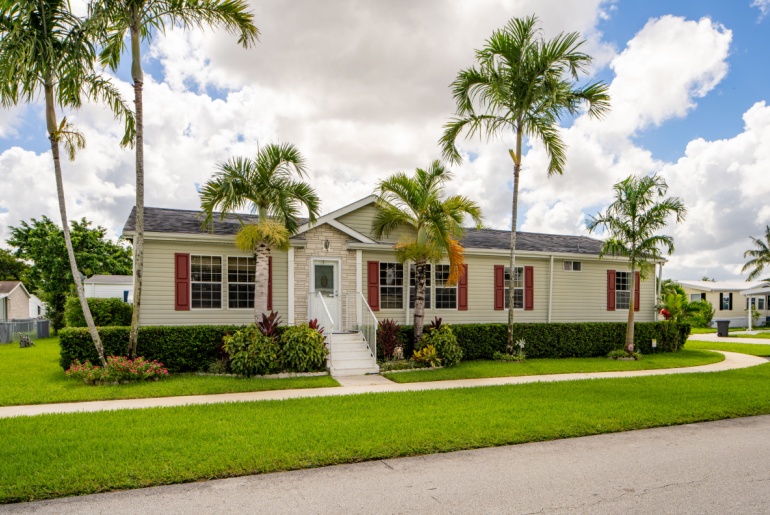
Today’s manufactured homes often come equipped with open floor plans, smart-home technology, and energy-efficient features, along with stylish interiors that rival their site-built counterparts — all at a fraction of the price. As a result, they’re no longer viewed as a fallback option, but rather as a savvy, forward-thinking path to homeownership for cost-conscious Americans of all ages.
First-hand insights: Why people choose mobile homes
The numbers show where manufactured housing is concentrated, but it’s the voices of residents that reveal what it really means in everyday life. From Oklahoma to California, Texas, and Colorado, we spoke with homeowners and renters who shared their stories – why they chose manufactured homes or RVs, what life looks like in their communities, and what they wish they’d known before making the move.
Jamie R. Wright — Pittsburg County, Oklahoma
What drove you to manufactured housing?
“I purchased some land in SE Oklahoma and needed to be able to have an affordable house put on the land, so I began exploring manufactured homes.”
Most important things to consider:
Jamie learned quickly that costs extend far beyond the purchase price. “The land I put my house on had never had plumbing, water, or electricity. I had to obtain a property easement from my neighbor…and I had to pay to get the utilities installed.” She also warns about sales practices: “Make sure you are buying from a reputable retailer…everything started out awesome, but at the end of the sale, several business transactions lacked integrity.” Her single biggest piece of advice? “Get everything in writing. If it isn’t in writing, it doesn’t exist.”
Darrelle Radcliff — Atascadero, California
What drove you to RV living?
“My boyfriend and I were pushed into this lifestyle after we had to leave the home where we were renting a room. With a Siberian Husky and two cats, our housing options were limited—most apartments in our county allow cats, but not large dogs. That led us to explore RV living.”
Most important things to consider:
Darrelle’s credit qualified her for an older 1997 Fleetwood Wilderness travel trailer, which presented challenges. “We soon learned that most RV parks in California don’t accept trailers more than 10 years old.”
Her lessons? “Age matters. Maintenance is essential. And if you have pets, think carefully about how much room you’ll actually need. I wish I had known the importance of checking my credit score and shopping around. We later discovered we could have qualified for a newer, better trailer.”
Richie David — Austin, Texas
What drove you to manufactured housing?
“It brings together the best aspects of affordability and durability that exist in traditional housing. Families want spaces that are safe and comfortable, without committing to decades of excessive debt, and manufactured housing enables that.”
Most important things to consider:
Richie emphasizes the bigger picture. “Often the buyer is only considering the price per square foot and hasn’t contemplated long-term considerations like the cost of transporting it, zoning regulations, or foundation maintenance.”
His key advice is to think in decades, beyond the short run. “Calculate the total cost of ownership over a 10-year period, not just the price paid at the outset. Once I did that, it was very obvious how a few dollars in quality construction or financing could add up to thousands of dollars.”
Brian Rudderow — Walsenburg, Colorado
What drove you to manufactured housing?
“Regular housing became too expensive, so I started looking at alternative types of homes.”
Most important things to consider:
Brian urges buyers to look closely at the basics. “Is the roof solid? Are the walls assembled correctly?”
Brian, a real estate investor at HBR Colorado, also suggests budgeting for upgrades that improve efficiency and comfort, like better fixtures, vanities, and water heaters. The advice he wishes he’d had sooner? “There is nothing wrong with living in a manufactured home. I think a lot of people are turned off by the idea…but nothing could be further from the truth. In fact, these days, manufactured homes are highly sought after with the rising costs of single-family homes in the U.S.”
Q&A: Understanding mobile and manufactured homes
As manufactured housing gains ground across the country – from Florida’s retirement-friendly parks to Texas’s expanding communities and California’s affordability push – many people are still unsure what exactly qualifies as a “mobile home” or how these homes differ from traditional construction.
To help clear things up, we’ve rounded up a few key questions and answers about how manufactured housing works in practice — from what defines it and how much it costs to the safety standards and zoning factors that shape where people live.
Q: What exactly is a mobile home?
A: The term mobile home broadly refers to housing units built off-site and transported to the location where they’ll be lived in. That umbrella includes two main types:
- Manufactured homes, which have been built to federal HUD standards since 1976 and are usually installed as permanent residences.
- Recreational vehicles (RVs), which are towable and mobile by design, often used for long-term living or seasonal stays but built under different construction codes.
Q: Why are mobile and manufactured homes so appealing?
A: Affordability is the biggest draw. Prices for new manufactured homes, though gradually rising, remain far below traditional home prices. In 2024, the average new manufactured home sold for about $123.3K, compared with a national median home price of around $360.6K — less than half the cost.
That price gap makes manufactured housing one of the few remaining entry points to homeownership, particularly for first-time buyers, retirees, and seasonal residents.
Q: Can owning the land under a manufactured home make a difference?
A: Yes. Most manufactured homes sit either in parks (land rent, higher exposure to rent hikes or park closures) or subdivisions (you own the land). Researchers who have mapped manufactured housing in the U.S. note this tenure difference is the biggest driver of stability.
In some communities, resident-owned cooperatives (co-ops) allow homeowners to collectively purchase the land beneath their homes. This setup provides stability and protection against rising lot rents, which can otherwise affect those living in privately owned parks.
Q: How do weather and safety standards affect affordability?
A: Manufactured homes are built according to federal wind zone standards that vary by region, ensuring homes are designed for local weather conditions:
Zone I – Covers most inland states, including Texas, Arizona, and California’s interior. Homes must withstand 70 mph winds, keeping costs lower.
Zone II – Includes coastal areas like North Carolina and Jacksonville, Florida, where homes are built to resist up to 100 mph winds.
Zone III – Found in coastal Florida, where homes must withstand up to 150 mph winds — the highest standard nationwide.
While tougher standards can increase construction costs by 20–30%, homes in all zones still remain significantly cheaper than site-built options, helping more Americans find a safe and affordable path to ownership.
Conclusion
Mobile homes now account for 7.9 million units nationwide, or 5.4% of U.S. housing stock, but its impact depends heavily on geography. Florida leads in total numbers with more than 824,400 units, while New Mexico claims the highest share, at 15% of all homes in the state. States with larger mobile home footprints — such as Mississippi, West Virginia, and South Carolina — also tend to have site-built home prices far below the national median of $360.6K, keeping ownership accessible where incomes are modest. At the other extreme, states with the lowest shares, like Hawaii, Massachusetts, and California, are among the most expensive housing markets in the country.
At the city level, Mesa, Arizona, boasts the largest inventory, while Largo, Florida, normalizes mobile homes with nearly 28% of its homes built this way. Phoenix, Jacksonville, Houston, and San Jose each show how the model adapts to local economies, from retirement enclaves to high-cost metros. And everywhere it’s booming, mobile homes move in tandem with self storage.
Below, you can find the 100 U.S. cities leading in mobile homes, and how the self storage industry is keeping up.
Expert opinions
For further insights into manufactured housing, we consulted with experts in the field.
Michael J. Nissley
- Vice Chair & National Director of Colliers MHRV Group
How do manufactured homes play into housing affordability today?
Manufactured home communities are crucial amid a deepening housing affordability crisis, serving as a non-subsidized affordable housing option providing residents with an attainable path to homeownership.
How do regional factors like land availability and zoning shape where these homes are most common?
Zoning constraints on new MHC developments continue to drive investor demand in existing communities and sustain high occupancy across North America.
What will be the biggest forces driving or constraining the industry’s growth in the coming decade?
Persistent housing shortages, estimated at over 4 million units, along with limited affordability are fueling continued demand growth for MHCs. As supply tightens from redevelopment and aging assets, institutional consolidation and improved home quality further strengthen investment opportunities in the Manufactured Housing industry.
Fernando Pages Ruiz
- Founder and Owner of Building Affordable, Project Manager at No Nonsense Housing
How important is manufactured housing to today’s housing affordability landscape?
Today, it’s the only affordable option but not well appreciated by the public, which still views it as inferior to site-built homes. This is technically incorrect, but also the industry’s fault for not developing an aesthetic suitable for manufacturing that appeals to more sophisticated tastes. As a result, cultural resistance limits the availability of an otherwise excellent housing product, not just affordable housing.
How do regional factors like land availability and zoning affect where manufactured housing is most common?
Since it is considered the most affordable housing option, the land must be very inexpensive, so it is usually found in rural areas and less developed neighborhoods. However, it doesn’t always have to be that way, and in the future, it likely won’t be.
What do you see as the most significant forces driving or constraining the industry’s growth in the coming decade?
In the future, economical housing will all be factory-built and of higher quality and energy efficiency than high-end site-built homes. Major industry players already aim to have 100% zero-energy homes, and the move toward better energy performance and indoor air quality will continue. Disaster resilience will also be a key focus.
By every measure, manufactured housing is turning every challenge into a positive, and at an accelerated pace. I believe they will also improve aesthetics. In the future, a factory-built home will be like a factory-built automobile, with tradespeople unable to match the engineering tolerances and built-in smart features that will become standard. Would you build your own car? By 2035, I will be able to ask you the same about your house, and the answer will be just as obvious — hell no.
Noah J. Durst
- Associate Professor of Urban and Regional Planning at Michigan State University
How can the public and private sectors work together more effectively to support the long-term stability and infrastructure needs of manufactured housing communities?
Tenure security and displacement of residents in manufactured home parks is a serious concern due to redevelopment pressure. Most manufactured home parks are privately owned, and thus more susceptible to park closure. Resident-owned parks provide residents with greater tenure security than privately owned (for profit) parks. Targeted investment in infrastructure improvements is needed in both manufactured home parks and informal/manufactured home subdivisions. Community Development Block Grants provide one of the largest potential sources of funding for these improvements.
What’s the difference between where mobile home parks and informal subdivisions are located, and how does that shape long-term affordability?
Manufactured home parks are more common in the Midwest and Northeast, while informal subdivisions are more common in the South and West. Both are typically located along the urban fringe where land is less expensive, but subdivisions are considerably more affordable over the long-term because residents own the land on which the dwelling sits.
What do you see as the most significant factors that will drive — or limit — the growth of the manufactured housing industry over the next decade?
Zoning is perhaps the largest barrier to the widespread use of manufactured housing. Many jurisdictions – in particular cities and towns – prohibit the placement of a manufactured housing unit anywhere within the jurisdiction.
Methodology
This analysis was conducted by StorageCafe, an online platform that offers nationwide storage unit listings.
For the purposes of this report, we examined the volume of manufactured housing across the United States using data from multiple sources.
- Manufactured housing data was sourced from the U.S. Census American Community Survey (ACS) 2024. We included the full manufactured and mobile housing inventory, covering both pre-1976 mobile homes and post-1976 HUD-certified manufactured homes.
- At the state level, we compared the average sales price of new manufactured homes to the median value of all housing units, regardless of construction date.
- Home price benchmarks were drawn from the 2024 ACS, which reports median values for owner-occupied housing units across states.
- Self storage data was provided by Yardi Matrix, StorageCafe’s sister division. Data on rents and square footage per capita figures reflect August 2025, and facility inventory is up to date as of the time of extraction.
Fair use and distribution
This study serves as a resource for the general public on issues of common interest and should not be regarded as investment advice. The data is true to the best of our knowledge but may change if amendments to it are made. We agree to the distribution of this content but we do require a mention in return for attribution purposes.

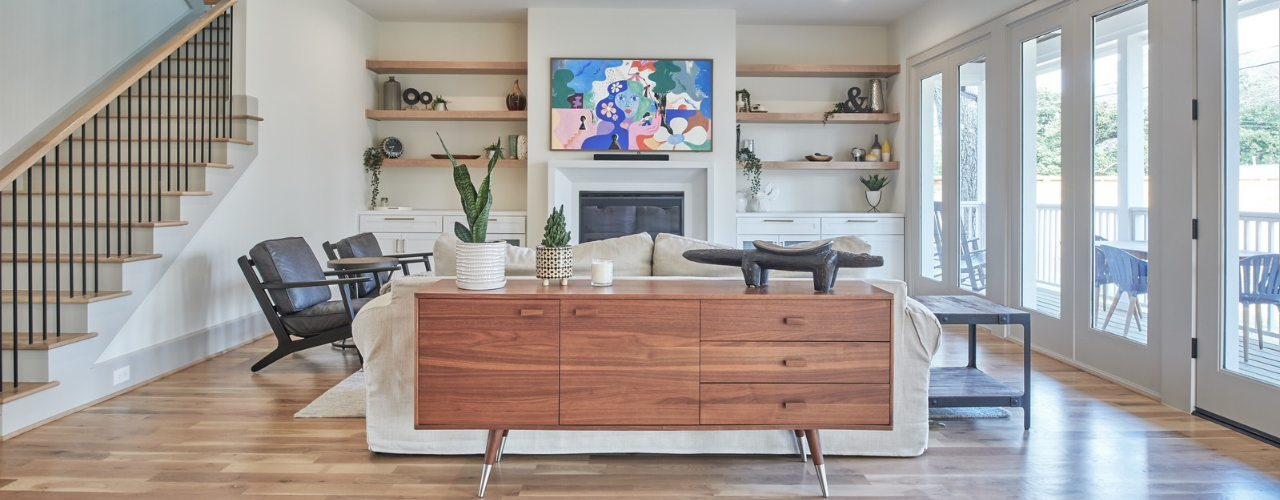
Living Room Storage Ideas: 28 Ways to Reclaim Your Hosting Space
If a living room is where most of a household’s living happens, good storage should be the top priority for setting up or revamping the place. After all, think of how easier it would be to have people over when tidying up the place is just a matter of putting things in their right place (in a time when fewer and fewer people are entertaining friends at home(opens in new tab)). The trick is making room for all those wayward clothes, blankets, chargers and other small things that end up on (or, inexplicably, in) the sofa. Here are 28 living room storage ideas to get you started and make tidying up a quick affair.
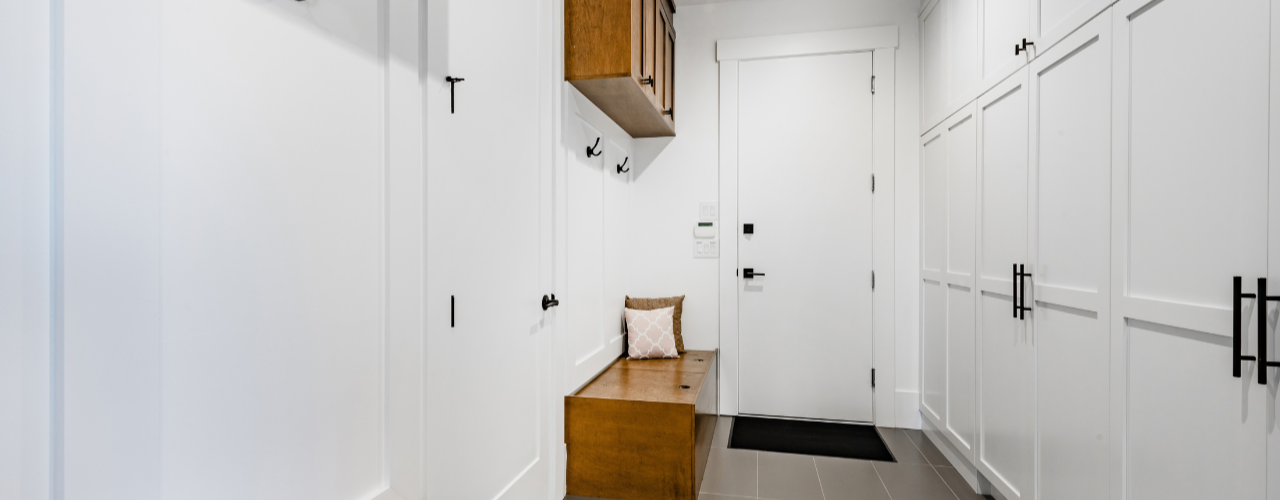
25 Mudroom Storage Ideas (And Mistakes to Avoid)
When you come home with muddy boots, an armful of bags and a coat you can’t wait to take off, it’s nice to have somewhere to put it all. With a mudroom, you can leave the outdoor mess at the door instead of carrying it through the house. Traditionally, you’d set aside a separate room, but you can just as easily use a hallway, an entryway closet, a laundry-room corner or a stretch of wall near the entrance.
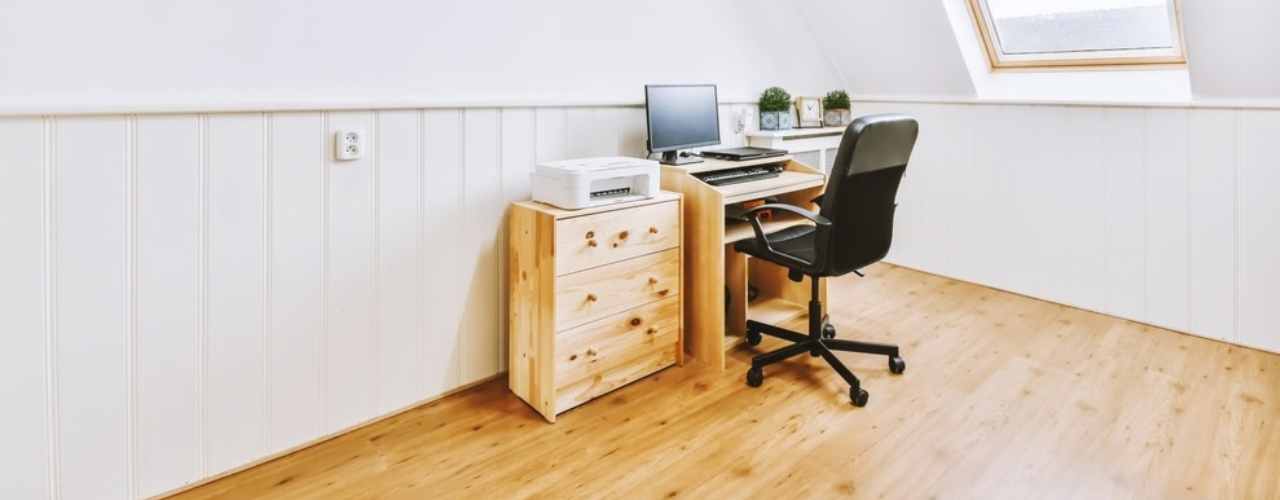
Is Your Home Office Worth the Rent? What Coworking and Self Storage Could Save You
Every square foot of your apartment comes with a price tag, and a home office claims more of them than most renters expect. It starts with a desk. Then come the second monitor, the printer, the filing cabinet and the overflow boxes. Before long, the corner you set aside for work has turned into a small room you are paying for every month.

Best U.S. Cities to Live Uncluttered: Plano, TX, Offers the Most Room to Breathe
Clutter is in our homes as much as in our heads. Both are shaped by where we live.
America’s Top Snowbird Destinations for 2026–2027: Florida Leads in Numbers, Texas Wins on Value
For Americans living in colder states, the approach of winter is reason enough to start looking south. Cold weather carries costs that go beyond the heating bill and shoveling snow. Seasonal affective disorder(opens in new tab) is far more prevalent in northern states, so a temporary move south isn’t simply an escape from the cold, but a chance to spend the hardest stretch of winter outdoors and in the sun.

How Much Does Halloween Really Cost in 2026? Plan Wisely to Avoid the Scare of Hidden Costs
Americans’ love for Halloween is almost frightening — this year alone, we are on our way to spending $13.5 billion, according to data from the National Retail Federation(opens in new tab). That breaks down to about $115 Halloween costs per person, a whopping 49% more than 10 years ago.

How to Store LEGOs: All the Fun, None of the Clutter
How to store LEGOs largely comes down to how your household uses them. If the bricks are part of everyday play, you need a setup that keeps them within easy reach and makes cleanup quick (for your feet’s sake, at least). Toy storage(opens in new tab) such as simple bins, playmats or containers that children can put away themselves may be enough. Larger or more serious collections usually need more organization, such as labelled drawers for loose pieces, trays for unfinished builds, shelves for completed models and separate storage for retired sets.

Cardboard Costume Guide: Tips and Ideas for a DIY Halloween
Whether for kids or adults, cardboard costume ideas often make the biggest splash once materialized, and that’s for a simple reason: doing a lot with a little is a universally impressive feat (especially in this economy). If you don’t have enough boxes you could temporarily repurpose, don’t worry! There are many places where you can find free moving boxes(opens in new tab), from stores and supermarkets to online groups and recycling drop-off spots. On the run? Try your luck at a self storage(opens in new tab) facility that sells moving supplies, often for cheap. This way, you can choose moving boxes of different shapes and sizes(opens in new tab), so you can make your costumes as complex as you want.

How to Celebrate Halloween: 9 Non-Spooky Ways To Enjoy It
As soon as October starts, it’s the official Halloween month. And while for many people it means it’s open season to get the scare of a lifetime, others, especially families with small children, might prefer to celebrate in a tamer way that’s both kid- and adult-friendly. While you’re likely to find more events where the spook factor is high, here’s how to celebrate Halloween in a not-so-scary way: